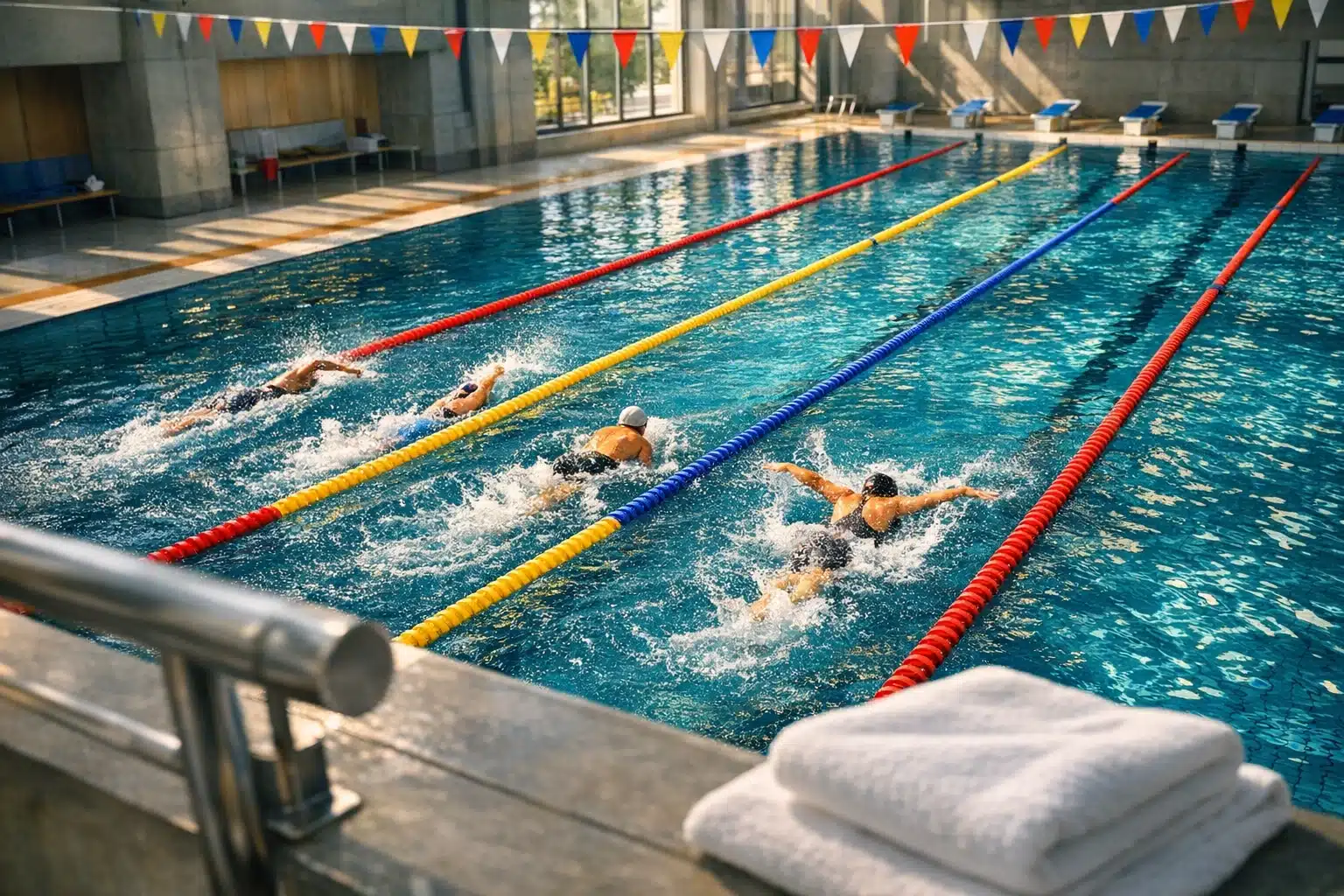
Explore the world of swimming
Swimming is one of those rare activities that feels playful on the surface yet demands real skill underneath, which is exactly why it stays relevant from childhood lessons to elite sport. It develops endurance, strength, timing, and confidence without the repeated impact that running or jumping can place on joints. Pools, lakes, and coastlines also make it a practical survival skill rather than just another workout. This article maps the essentials, from technique and health benefits to training habits and safety, so readers can approach the water with more knowledge and less guesswork.
Outline
- The broad appeal of swimming and why it matters across ages, goals, and settings
- The four main strokes, how they differ, and what efficient movement in water looks like
- Physical and mental health benefits supported by practical examples and training logic
- How to train, what gear helps, and which safety habits matter most in pools and open water
- A reader-focused conclusion on building a realistic and rewarding swimming journey
Why Swimming Matters More Than Many People Realize
Swimming occupies a fascinating space between sport, recreation, and life skill. A person can enter the water for very different reasons and still find value there. One swimmer might be chasing faster race times, another may be recovering from an injury, and someone else may simply want to feel less anxious near the deep end on vacation. That flexibility helps explain why swimming has endured across cultures and generations. It is not only about exercise; it is also about mobility, confidence, and self-reliance in an environment that behaves by a different set of rules than land.
Compared with many popular forms of exercise, swimming asks the body to work in a unique way. Water is denser than air, so every pull and kick meets constant resistance. At the same time, buoyancy reduces the strain placed on joints, which is one reason swimming is often recommended as a lower-impact option for older adults, people returning to movement after a break, and those managing certain orthopedic issues. It can still be demanding, of course. A relaxed swim may feel almost meditative, while a hard set of intervals can leave even trained athletes breathless.
Its practical value is just as important as its athletic one. Learning to swim improves safety around pools, rivers, lakes, and the sea. According to global public health organizations, drowning remains a serious safety issue in many parts of the world, especially for children and people without basic water competency. Knowing how to float, tread water, control breathing, and move calmly to an exit can matter far more than shaving seconds off a lap time. In that sense, swimming is one of the few sports where the beginner lessons may carry lifelong protective value.
Swimming also offers variety that keeps people engaged. It can be social or solitary, structured or playful. Some of its most appealing formats include:
- Lap swimming for fitness and stamina
- Technique sessions for efficiency and control
- Masters programs for adults who want coached training
- Open-water swimming for adventure and navigation skills
- Aquatic exercise for lower-impact conditioning
There is something quietly honest about the water. It magnifies rushed breathing, punishes poor timing, and rewards patience. Unlike some activities where momentum can hide technical flaws, swimming reveals inefficiency almost immediately. That challenge is part of its appeal. Progress is measurable, but it is also deeply felt: a smoother stroke, a calmer breath, a length completed with less effort. For many people, that is where swimming becomes more than exercise. It becomes a conversation between body, technique, and the water itself.
Understanding the Strokes and the Craft of Moving Through Water
If swimming has a grammar, the four main competitive strokes are its core vocabulary: freestyle, backstroke, breaststroke, and butterfly. Each stroke has distinct mechanics, rhythms, and demands, and understanding their differences helps swimmers train smarter rather than simply harder. Freestyle, usually performed as front crawl, is typically the fastest and most efficient for sustained speed. The body stays long and horizontal, the kick remains relatively compact, and the alternating arm action supports continuous propulsion. For beginners, freestyle can feel awkward at first because breathing must be timed to body rotation, but once that pattern clicks, it often becomes the easiest stroke for distance.
Backstroke shares some features with freestyle, especially the alternating arm cycle, but it changes orientation and awareness completely. Because the swimmer faces upward, breathing is less restricted, yet maintaining a straight line becomes trickier without looking ahead. Good backstroke depends on steady hip position, controlled rotation, and a flutter kick that keeps the body near the surface. It can be a useful training choice for swimmers who need a break from face-down breathing while still developing coordination and aerobic capacity.
Breaststroke is different enough that it almost feels like a separate language. Its pull, breath, kick, and glide happen in a more segmented rhythm, and timing matters enormously. A strong kick can provide major propulsion, but if the head lifts too high or the glide is mistimed, momentum disappears quickly. Many recreational swimmers find breaststroke comfortable because the forward view feels natural, yet efficient breaststroke is technically demanding. Small changes in knee position, ankle angle, or recovery timing can alter speed dramatically.
Butterfly is the stroke most associated with power and spectacle. It uses a simultaneous arm recovery and a dolphin kick driven by a wave-like body motion. When performed well, it looks almost musical; when performed poorly, it feels brutally expensive in energy. Butterfly is often the most physically taxing stroke, but learning parts of it can still benefit non-competitive swimmers by improving body awareness, core control, and kick timing.
Across all strokes, several technical principles matter again and again:
- Body position should stay streamlined to reduce drag
- Breathing should fit the rhythm of the stroke rather than interrupt it
- Propulsion works best when the hands and feet apply pressure in useful directions
- Relaxation matters because tension wastes energy
That final point surprises many learners. Swimming is not won by muscling through the water. Water does not negotiate with force alone. It responds to angle, timing, and shape. A smaller swimmer with better technique can move farther and faster than a stronger swimmer who splashes without control. That is why good coaching, video analysis, or even careful self-observation can accelerate improvement so much. In swimming, efficiency is not a bonus feature. It is the engine.
Health Benefits: Strength, Endurance, Recovery, and Mental Reset
Swimming is often praised as a full-body workout, and that description is accurate, though a little incomplete. What makes it especially valuable is the way it combines cardiovascular training, muscular endurance, mobility, and breath control inside a single activity. A steady swim challenges the heart and lungs much like brisk cycling or jogging, yet the surrounding water changes the experience. Because the body is supported, many people can exercise for meaningful periods with less impact stress than they would feel during repeated foot strikes on pavement. For that reason, swimming is frequently chosen by people managing joint discomfort, carrying extra body weight, or easing back into exercise after time away.
In physical terms, swimming recruits a broad range of muscle groups. The shoulders, back, chest, core, glutes, and legs all contribute, though the balance changes by stroke. Freestyle and backstroke emphasize continuous rotation and upper-body pulling mechanics, breaststroke brings a different lower-body pattern, and butterfly demands coordinated power from the entire chain. That broad involvement helps explain why swimmers often develop balanced endurance rather than highly localized fatigue. Depending on intensity, duration, body size, and stroke choice, swimming can also contribute significantly to energy expenditure. Vigorous sessions commonly burn several hundred calories per hour, though exact numbers vary widely.
The mental benefits are just as compelling. Water naturally reduces noise, narrows focus, and gives rhythm to breathing. Many swimmers describe the lane as a place where everyday clutter loses volume. The repeated cycles of stroke and breath can create a calm, almost metronomic state that resembles moving meditation. This does not mean every workout feels peaceful; hard sets can be demanding and uncomfortable. Still, even those sessions provide a different kind of mental clarity, the sort that comes from doing one difficult thing with full attention.
Swimming can support long-term health habits because it adapts well to different needs:
- Beginners can start with short intervals and rest often
- Older adults can use it for sustainable aerobic work
- Athletes can use it for conditioning or active recovery
- People under stress may benefit from its repetitive, regulating rhythm
Public health guidance generally recommends at least 150 minutes of moderate aerobic activity per week for adults, and swimming fits that framework well. A few sessions each week can improve stamina, support heart health, and build consistency without demanding extreme equipment or a complicated learning curve. It is not effortless, and it is not automatically easy just because the body floats. But that is part of its value. Swimming offers challenge without constant pounding, intensity without monotony, and progress that is felt not only in muscles and lungs, but often in mood, confidence, and mental steadiness.
Training Smarter: Practice Structure, Useful Gear, and Safety Fundamentals
Many people approach swimming with one of two unhelpful assumptions: either they believe laps alone will magically improve everything, or they think the sport is too technical to begin without perfect coaching. The truth sits between those extremes. Improvement comes fastest when practice has structure, but structure does not need to be complicated. A well-designed session usually includes a warm-up, drills or technique work, a main set with a clear purpose, and a short cooldown. That format works for beginners and advanced swimmers alike because it separates the different jobs a session can do.
A beginner session might include easy lengths, kickboard work, breathing drills, and short repeats with plenty of rest. An intermediate swimmer may add pull buoy sets, pacing work, and moderate intervals such as 8 x 50 meters with controlled recovery. More experienced athletes often use pace clocks, heart-rate awareness, and carefully planned sets to target speed, threshold endurance, or race-specific preparation. Regardless of level, purposeful repetition matters more than random mileage. Swimming rewards intention. A single focused drill on body rotation or catch mechanics can improve a whole session more than ten rushed lengths with poor form.
Equipment can help, but it works best as support rather than shortcut. Common tools include:
- Goggles for visibility and comfort
- A swim cap to reduce drag and manage hair
- A kickboard for lower-body focus
- A pull buoy for upper-body emphasis and body position awareness
- Fins for kick strength and improved feel for the water
- A pace clock or waterproof watch for structured training
Safety deserves equal attention, especially because confidence in water can drift into overconfidence. Pool swimmers should know lane etiquette, watch for fatigue, and avoid breath-holding contests, which can be dangerous. Open-water swimmers face added variables such as current, waves, cold water, poor visibility, and navigation errors. In those settings, swimming with a partner or group is wise, and bright gear can improve visibility. Understanding entry and exit points matters just as much as the swim itself.
A few basic safety habits go a long way:
- Never assume fitness on land equals safety in open water
- Build distance gradually instead of chasing sudden milestones
- Respect weather changes and water temperature
- Learn to float, tread water, and rest calmly when needed
- Stop early if technique collapses from exhaustion
Swimming can feel graceful when everything lines up, but grace is usually built on preparation. The most confident swimmers are rarely the reckless ones. They are the people who know their limits, train with patience, and treat the water with respect.
Conclusion: Finding Your Place in the Water
For readers wondering whether swimming is worth the effort, the most honest answer is yes, provided they allow it to be learned on its own terms. Swimming is not simply walking in water, and it does not reward impatience for long. Early sessions may feel clumsy. Breathing may seem mistimed, legs may sink, and a single length can feel strangely demanding. None of that means a person is unsuited to the sport. In fact, those awkward first steps are common because water changes balance, resistance, and rhythm all at once. Skill grows when expectations become realistic and practice becomes regular.
What makes swimming especially rewarding is its long shelf life. Children can begin with basic water familiarity, adults can learn later than they think, and older swimmers often stay active through the sport even when high-impact exercise becomes less appealing. It scales remarkably well. A novice can celebrate crossing the pool without stopping, while an experienced swimmer can chase technical refinement measured in fractions of a second. Both are participating in the same craft, just at different points along the path.
If you are deciding how to begin, the best route is usually the simplest one:
- Choose a realistic schedule, even if it starts with one or two short sessions a week
- Focus first on comfort in the water and controlled breathing
- Learn basic technique before worrying about speed
- Use instruction, feedback, or classes if progress stalls
- Treat consistency as the main goal during the first months
For fitness-minded readers, swimming offers an efficient and sustainable training option. For parents, it represents both recreation and an essential safety skill. For stressed professionals, it can become a structured escape where the noise of the day fades to the hush of bubbles and the steady count of strokes. For competitive personalities, it provides endless room for measurable progress.
In the end, swimming gives back what people are willing to bring into it: patience, curiosity, discipline, and respect. The water can be humbling, but it is also generous. It teaches economy of movement, steadiness under pressure, and the quiet satisfaction of doing something difficult a little better than last week. For almost anyone willing to enter the pool with an open mind, that is a world worth exploring.