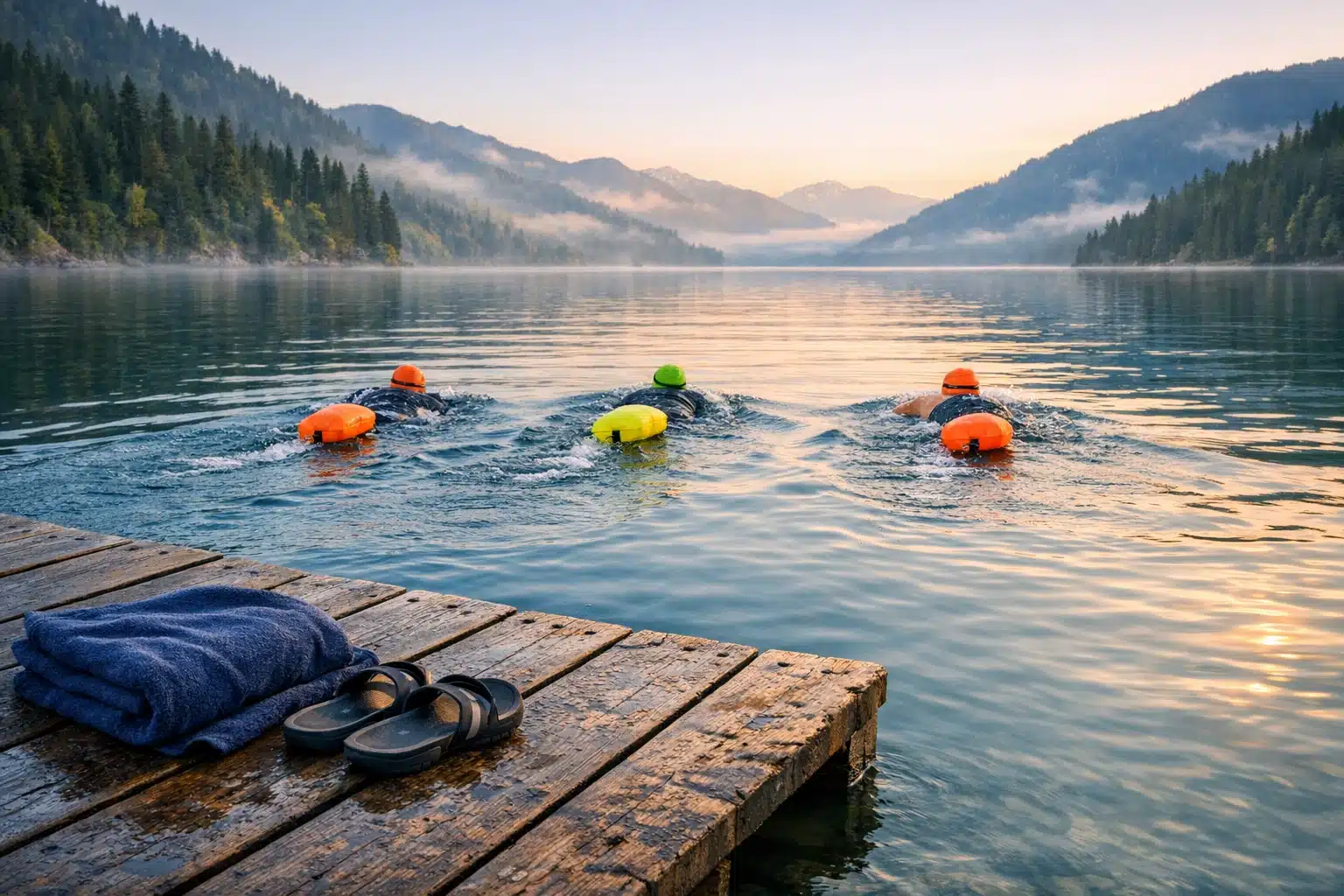
Explore the world of swimming
Swimming belongs to that small group of activities that can be a sport, a survival skill, a form of therapy, and a quiet personal ritual all at once. Its relevance is hard to overstate: children gain confidence, adults build endurance, older people often find joint-friendly movement, and athletes sharpen discipline. Step into a pool and the body meets resistance from every direction, while the mind finds a rhythm that daily noise rarely allows.
Outline:
• Swimming as a life skill, sport, and cultural practice
• The main strokes, essential technique, and what separates efficient swimmers from tired ones
• Physical and mental benefits, with practical comparisons to other forms of exercise
• Training methods, basic gear, safety habits, and frequent beginner errors
• A concluding guide for readers who want to start, improve, or return to swimming with purpose
Swimming as a Life Skill, Sport, and Cultural Practice
Swimming matters for reasons that reach far beyond lanes, stopwatches, and medals. At the most practical level, it is a safety skill. Knowing how to float, breathe calmly, and move through water can reduce panic and increase the chance of making good decisions in an emergency. That alone gives swimming a place in education and public health. The World Health Organization has long treated drowning as a serious global issue, which is one reason many countries support learn-to-swim programs for children. Unlike hobbies that stay in the realm of leisure, swimming sits at the intersection of recreation and real-world preparedness.
As a sport, swimming is both simple and highly technical. The goal sounds straightforward: move through water efficiently. Yet the details are demanding. Water is roughly 800 times denser than air, which means every small movement matters. A dropped elbow, lifted head, or rushed kick can waste energy immediately. That instant feedback is part of swimming’s appeal. Running may let you hide a few mechanical flaws for a while, but water exposes them quickly. It is an honest teacher.
Swimming also has a deep cultural story. Humans have swum for transport, work, military training, ritual, and pleasure for thousands of years. Today, that history branches into many forms:
• competitive pool swimming
• diving and artistic swimming
• open-water races in lakes, rivers, and the sea
• lap swimming for fitness
• rehabilitation and therapeutic exercise
• family recreation and childhood lessons
Another reason swimming stays relevant is its unusual inclusiveness. A child learning to blow bubbles, a triathlete chasing efficiency, and an older adult rebuilding confidence after injury can all share the same pool. Few activities welcome such different goals under one roof. The environment itself changes the experience: the echo of an indoor pool feels disciplined and contained, while open water can feel expansive, unpredictable, and almost literary, as if each stroke writes a line across the surface. That range keeps swimming fresh. It is structured enough for measurable progress, but rich enough to remain meaningful for a lifetime.
The Four Main Strokes and the Technique Behind Efficient Movement
To a new swimmer, strokes can look like separate styles with separate rules. In reality, they are different solutions to the same puzzle: how do you reduce drag, maintain balance, and produce forward motion without burning through all your energy? The four competitive strokes are freestyle, backstroke, breaststroke, and butterfly. Each has its own rhythm, strengths, and challenges, and comparing them helps explain why swimming is as much about mechanics as effort.
Freestyle, usually swum as front crawl, is the fastest and most common stroke for fitness. Its alternating arm action and flutter kick allow continuous movement, which makes it efficient over many distances. Good freestyle depends on body position. Swimmers who keep the hips high and the head neutral usually move more cleanly than swimmers who look forward and let the legs sink. Breathing is another dividing line. Turning the head just enough to inhale, rather than lifting it, saves energy and protects alignment.
Backstroke shares the alternating pattern of freestyle, but the face stays above water. Many beginners find it easier for breathing, though staying straight can be surprisingly difficult without visual reference. Breaststroke is slower, but it has a clear glide phase that many recreational swimmers enjoy. Timing is everything: pull, breathe, kick, glide. If those pieces overlap poorly, the stroke becomes tiring and jerky. Butterfly is the most dramatic and often the most feared. When done well, it looks almost musical, driven by body undulation and powerful simultaneous arm recovery. When done poorly, it feels like wrestling the water.
Across all strokes, a few technical principles appear again and again:
• streamline reduces resistance
• controlled breathing supports endurance
• balance in the water prevents wasted effort
• timing matters as much as strength
• relaxed efficiency usually beats frantic force
This is why experienced swimmers often seem calm even when moving quickly. They are not merely stronger; they are better organized. Their hands enter cleanly, their kick supports rather than fights the stroke, and their breathing fits the rhythm instead of interrupting it. In swimming, speed does not come only from trying harder. It comes from learning how to stop arguing with the water and start cooperating with it.
Health Benefits: Endurance, Strength, Mobility, and Mental Reset
Swimming is often recommended because it trains multiple systems at once without the pounding associated with many land-based activities. It can improve cardiovascular fitness, muscular endurance, coordination, and mobility in a single session. For adults trying to meet general activity guidelines, including the widely cited recommendation of at least 150 minutes of moderate aerobic activity per week, swimming can be a practical and sustainable option. A steady swim set challenges the heart and lungs, but the buoyancy of water reduces weight-bearing stress on the joints, which is one reason many people with knee, hip, or back discomfort find it more approachable than running.
The full-body nature of swimming is another major advantage. The shoulders, back, core, glutes, and legs all contribute, though in different ways depending on the stroke. Freestyle and backstroke reward rotational control and shoulder endurance. Breaststroke places more emphasis on timing and lower-body coordination. Butterfly demands powerful trunk involvement and rhythm. Because water resists movement in every direction, even drills and easy recovery lengths can create useful muscular work. For many adults, that makes swimming feel efficient: one workout can cover aerobic exercise, posture awareness, and gentle resistance training at the same time.
Calorie use varies widely by body size, stroke, pace, and skill, but moderate to vigorous swimming can expend substantial energy, often in the same broad range as cycling or jogging. More important than the exact number is adherence. An exercise plan only works if people return to it. Swimming has a habit of inviting return because it cools the body, changes the sensory environment, and breaks the monotony that some gym routines create.
The mental side deserves equal attention. Water can act like a reset button. Repetitive strokes and controlled breathing encourage concentration, and many swimmers describe a calmer state after a session. There are likely several reasons:
• rhythmic breathing can reduce tension
• immersion changes sensory input and narrows attention
• visible progress in laps or drills supports motivation
• the pool creates distance from screens, traffic, and noise
This does not make swimming a cure-all, and it should not replace medical care where needed. Still, as a habit for energy, mood, and long-term movement, it offers rare breadth. It can be intense without feeling punishing, disciplined without being dull, and restorative without becoming passive. That balance helps explain its enduring popularity.
Training, Equipment, Safety, and the Mistakes That Slow Progress
One reason some people abandon swimming early is that they mistake effort for progress. They swim hard, become breathless within a few lengths, and assume they are simply “not built for it.” In most cases, the issue is not talent but structure. Swimming responds well to thoughtful training. A productive session usually includes a warm-up, a skill focus, a main set, and an easy finish. Even a short workout becomes more useful when it has a purpose. For example, a swimmer might start with relaxed lengths, continue with kick or breathing drills, then complete a main set such as eight repeats at a manageable pace with short rest. That approach builds capacity far more reliably than splashing through random laps.
Equipment can help, but it works best when it supports technique rather than replaces it. The essentials are simple: a comfortable swimsuit, goggles that seal well, and access to a safe swimming environment. After that, tools can add variety:
• a kickboard to isolate leg work
• a pull buoy to emphasize body position and upper-body effort
• fins to assist propulsion and highlight alignment
• a pace clock or watch to structure rest and intervals
• a cap for comfort, warmth, or reduced drag
Beginners often assume more gear means faster improvement. Usually the opposite is true. First learn to float well, exhale underwater, keep the body long, and move with control. Fancy tools cannot fix a tense neck or a rushed breath. Common mistakes include holding the breath, kicking from the knees instead of the hips, lifting the head too high, and starting too fast. In swimming, early impatience is expensive.
Safety should always sit above performance. Pools feel controlled, but water deserves respect. Open water adds further complexity through temperature, currents, visibility, and navigation. Core safety habits include:
• never leaving children unsupervised near water
• choosing lifeguarded areas when possible
• learning the rules of lane etiquette
• stopping when dizziness, pain, or cramping appears
• checking weather and water conditions before open-water swims
• using visible safety gear, such as a brightly colored cap or tow float, when appropriate
There is also a quiet skill in learning to read fatigue. A swimmer who shortens the stroke, loses coordination, or begins swallowing water is receiving useful information. Good training listens to those signals. The smartest swimmers are not always the ones who finish exhausted. Often they are the ones who leave the pool knowing exactly what they practiced and why it mattered.
Conclusion for Beginners, Busy Adults, Parents, and Lifelong Learners
If you are wondering whether swimming is worth your time, the answer depends less on your starting level than on your reasons for beginning. For beginners, swimming offers a rare combination of challenge and forgiveness. The learning curve is real, but progress comes in clear, memorable moments: the first relaxed float, the first length without stopping, the first breath that no longer feels rushed. Each small gain changes your relationship with the water. That shift matters. Once fear becomes familiarity, practice becomes far more enjoyable.
For busy adults, swimming can be one of the most efficient ways to use limited exercise time. It trains the heart, asks for coordination, and can leave the body worked without leaving the joints battered. A 30- to 45-minute session, done consistently, can support fitness better than irregular bursts of more punishing exercise. For parents, swimming lessons give children more than a sport. They build water confidence, listening skills, and awareness in an environment where safety knowledge is genuinely valuable. For older adults or people returning after a long break, swimming can reopen the door to movement when other forms of exercise feel intimidating.
The most practical way to begin is modestly:
• choose one or two sessions per week
• focus on comfort and breathing before speed
• ask for technique feedback early
• keep sessions short enough to end with good form
• measure progress by ease and control, not only by distance
Swimming also rewards patience in a way modern life rarely does. The water does not care about shortcuts, but it responds generously to consistency. Show up, refine one detail, repeat. Over time, those details become fluency. What begins as exercise can turn into a durable habit, a social outlet, a stress valve, or a private space for clear thinking. That is why swimming deserves attention from such a wide audience. It is useful, demanding, elegant, and adaptable. Whether you enter the pool to get fitter, feel safer, recover mobility, or simply try something new, swimming offers a path that can grow with you for years rather than weeks.