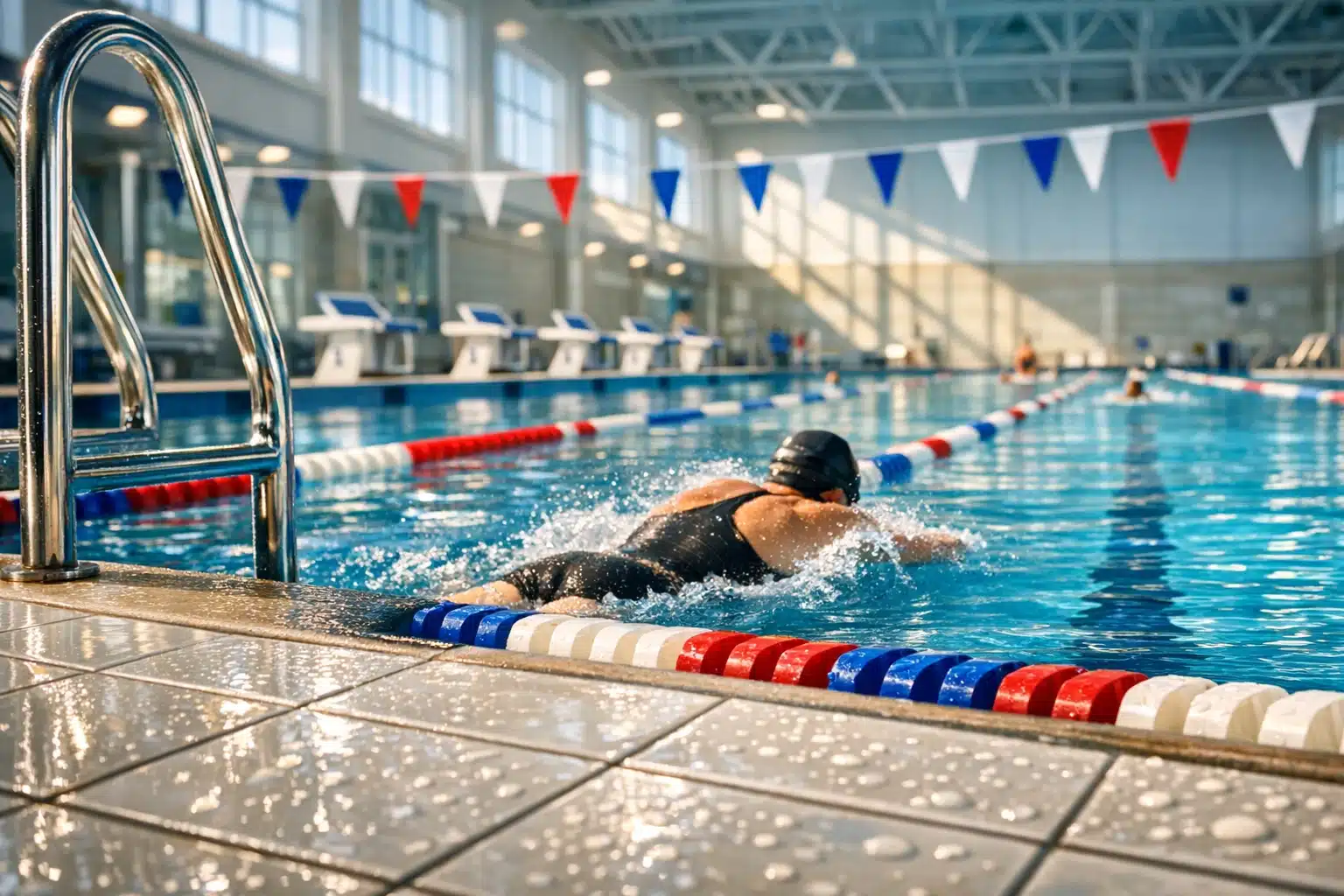
Explore the world of swimming
Swimming is one of those rare activities that feels playful on the surface yet delivers serious physical and mental rewards underneath. From school lessons and neighborhood pools to open-water adventures and Olympic races, it connects safety, sport, and lifelong wellness in a single skill. This article explores how swimming works, why it matters, and how readers can approach it with more confidence and curiosity. Whether you want better fitness, safer summer habits, or a new sport to grow into, swimming offers a surprisingly wide lane forward.
Outline: the article begins by defining swimming as a life skill, pastime, and competitive discipline; then it compares the main strokes; next it examines the body and mind benefits that keep swimmers returning to the water; after that it explains training methods, lessons, and equipment; finally it closes with safety principles and practical advice for readers who want to start or improve.
The Meaning of Swimming: More Than Motion in Water
Swimming is easy to underestimate because it often enters life through familiar scenes: a child gripping the pool edge, a family vacation by the sea, a school sports day, or a televised championship where athletes move with machine-like smoothness. Yet swimming is far more than the act of moving from one end of the water to the other. At its core, it combines breath control, body alignment, propulsion, and awareness of an environment that behaves very differently from land. That mix gives swimming unusual reach. It is a survival skill, a leisure activity, a rehabilitation tool, a competitive sport, and for many people a quiet form of moving meditation.
Historically, humans have swum for necessity long before they swam for medals. River crossings, fishing, transport, and military training all relied on water competence. Over time, swimming pools turned the activity into a teachable system, while clubs and federations transformed it into organized sport. Today, modern pools are commonly 25 or 50 meters long, lane ropes reduce wave interference, and standardized rules make performances comparable across countries. Open water, by contrast, removes that predictability. Lakes, rivers, and oceans introduce currents, temperature shifts, visibility problems, and navigation demands. A swimmer in a pool chases technique and pace; a swimmer in open water must also negotiate nature.
A useful way to understand swimming is to compare its main settings:
– Pools offer controlled conditions, marked distances, and ideal spaces for drills and beginners.
– Lakes often provide calmer scenery, but water temperature and depth can change quickly.
– Rivers add current, which can alter effort and safety.
– Oceans bring salt buoyancy, waves, tides, and the need for stronger judgment.
That variety is part of swimming’s appeal. It can be structured or free, social or solitary, gentle or exhausting. A pool can feel like a laboratory where tiny changes in hand position matter. A sea swim can feel like entering a moving landscape, where each breath must be timed with the swell. Because swimming serves so many roles, its relevance remains high across generations. Parents value it for safety, adults appreciate it for fitness, athletes pursue it for performance, and older swimmers often keep it because water supports movement without the pounding of many land sports. In short, swimming matters not because it does one thing well, but because it does many things exceptionally well.
Understanding the Main Strokes and How They Differ
If swimming were a language, its strokes would be distinct dialects: related, recognizable, and expressive in different ways. The four main competitive strokes are freestyle, backstroke, breaststroke, and butterfly, and each asks the body to solve the same problem with a different pattern of movement. Learning these differences helps beginners choose where to start and helps experienced swimmers understand why one stroke feels smooth while another feels like an argument with the water.
Freestyle, which in competition is almost always swum as front crawl, is generally the fastest and most efficient stroke for covering distance. The body stays relatively long and horizontal, the arms recover over the water one at a time, and the flutter kick keeps balance while adding propulsion. Breathing turns to the side, ideally without lifting the head too high. Freestyle is often the first stroke taught for fitness because it scales well: a new swimmer can practice short lengths with breaks, while advanced swimmers can hold steady pace over long sets.
Backstroke flips the swimmer onto the back and changes the challenge. Breathing becomes easier because the face stays out of the water, but navigation becomes harder since the swimmer cannot see straight ahead. Backstroke encourages a long body line, rotating shoulders, and a continuous flutter kick. Many learners find it freeing at first, then tricky when they realize that drifting sideways or over-kicking can quickly break the rhythm.
Breaststroke is slower than freestyle for most swimmers, but it feels more intuitive to many beginners because both arms move together and the breath comes forward during each cycle. Its timing is distinctive: pull, breathe, kick, glide. When performed well, breaststroke can look calm and elegant. When rushed, it turns inefficient fast. Butterfly is the most demanding of the four competitive strokes. Both arms recover simultaneously, the body undulates, and a powerful dolphin kick drives the motion. It is spectacular to watch and exhausting to swim badly.
A simple comparison makes the differences clearer:
– Freestyle: fastest for most people, efficient for fitness and racing.
– Backstroke: accessible for breathing, useful for balance and shoulder rhythm.
– Breaststroke: easier pace control, strong timing demands, common in recreational swimming.
– Butterfly: technically complex, high power requirement, often trained in short repeats.
Beyond these strokes, swimmers also learn practical skills such as floating, sculling, treading water, streamlined pushing off the wall, and safe entries into the pool. Those skills matter because technique is not only about speed. It is about economy, comfort, and control. A swimmer who understands how the strokes differ is not just collecting styles; that swimmer is learning how water rewards precision.
Health, Fitness, and Mental Benefits of Time in the Water
One reason swimming has endured across centuries is that it offers a rare combination of cardiovascular exercise, muscular engagement, and reduced impact on joints. On land, gravity and hard surfaces can punish ankles, knees, hips, and lower backs. In water, buoyancy supports part of body weight, which often makes movement feel smoother and less jarring. That does not mean swimming is effortless. Water provides resistance in every direction, so even moderate laps ask the heart, lungs, shoulders, back, core, and legs to work together. The result is a form of exercise that can be gentle in sensation while still being demanding in effect.
For general fitness, swimming can help people meet widely recommended activity goals, such as around 150 minutes of moderate aerobic exercise per week for adults. Intensity can be adjusted almost endlessly. A beginner may swim a few short lengths with generous rest. A trained athlete might complete interval sets, sprint work, or long endurance sessions. Energy expenditure varies with speed, stroke choice, and body size, but many swimmers burn several hundred calories in an hour. Breaststroke at a relaxed pace feels very different from a fast butterfly set, yet both contribute to conditioning in their own way.
The physical benefits extend beyond the heart. Swimming can improve:
– aerobic capacity and breath control
– shoulder and back strength when technique is sound
– core stability through body alignment
– flexibility, especially in ankles, hips, and thoracic rotation
– coordination, because breathing and movement must be timed carefully
Mental benefits are just as important, even if they are harder to measure with a stopwatch. The repetitive sound of water, the focus required for breathing patterns, and the absence of phone notifications during a set can create a rare pocket of attention. Many swimmers describe the experience as mentally clearing. Count the strokes, exhale steadily, turn at the wall, repeat. Stress does not vanish, but it often loses volume. For some people, swimming offers relief precisely because it narrows the world to what the next breath and next movement require.
Swimming can also be suitable across life stages. Children gain confidence and safety skills. Adults often use it to diversify training or return to exercise after inactivity. Older adults may appreciate the lower-impact environment, especially when a medical professional has recommended joint-friendly movement. People recovering from certain injuries sometimes use aquatic therapy under supervision because water can support controlled motion. The key phrase, however, is “when technique is sound.” Poor mechanics, especially repeated shoulder strain or forceful kicking without control, can create problems. Like any activity, swimming rewards consistency, patience, and instruction more than brute effort. Done thoughtfully, it becomes not merely exercise, but sustainable exercise.
How to Learn, Train, and Choose Equipment Without Overcomplicating It
Swimming rewards humility. Strong runners, capable cyclists, and enthusiastic gym-goers often discover that fitness on land does not automatically translate into comfort in water. That is not failure; it is simply a reminder that swimming is technical. Learning usually works best when broken into small, manageable parts. A solid pathway begins with water comfort, then floating, then breathing, then gliding, then kicking and arm actions, and only after that full-stroke coordination. Trying to force all of it at once often leads to tension, and tension is the enemy of efficient swimming.
For beginners, formal instruction is often worth the investment. A coach or qualified teacher can spot issues that are difficult to self-diagnose, such as lifting the head too high, crossing the arms over the center line, dropping the hips, or holding the breath underwater. Video feedback can also help because swimming feels different from how it looks. Intermediate swimmers usually benefit most from a blend of drills and structured sets. Drills isolate problems; sets build fitness. A swimmer working on freestyle may practice side-kicking for balance, fingertip-drag for relaxed recovery, and catch-up drill for front-end timing before moving into full lengths.
A simple weekly practice might include:
– warm-up: easy swimming to settle breathing and loosen joints
– drill set: short repeats focused on one technical goal
– main set: intervals for endurance, speed, or pacing
– recovery swimming: easier lengths to maintain form while tired
– cool-down: relaxed movement to finish without rushing out of the pool
Equipment can help, but it should serve technique rather than distract from it. Essential gear is modest: a comfortable swimsuit, well-fitting goggles, and access to safe water. A swim cap is useful in many pools and helps reduce drag, especially for longer hair. Training aids come next. Kickboards isolate lower-body work, pull buoys support the legs while emphasizing the upper body, fins can improve ankle flexibility and body position, and paddles increase resistance for stronger swimmers when used carefully. Pace clocks and waterproof watches are valuable for structured training, though they matter far less than consistency.
One of the most common mistakes in swim training is chasing exhaustion instead of improvement. More laps are not always better laps. Because water hides poor movement more gracefully than land does, people can repeat inefficient patterns for months without realizing it. Smart progress usually looks less dramatic: one better breath, one calmer exhale, one straighter line off the wall, one less panicked start to a session. Over time, those details compound. The swimmer who learns patiently often surpasses the swimmer who merely thrashes harder. In that sense, the pool is an honest teacher. It does not care about your intentions; it responds to your technique.
Swimming for Life: Safety, Access, and Practical Next Steps for Readers
If there is one idea that should stay with readers after exploring swimming, it is this: progress in water should always travel alongside safety. Confidence is valuable, but false confidence is risky. Even experienced swimmers can misjudge fatigue, temperature, waves, or depth. Pools are usually the best learning environment because supervision, lane lines, and predictable conditions reduce variables. Open water demands more caution. A swimmer who glides comfortably through a heated pool may struggle in a cold lake or a choppy sea. Safety is not fearfulness; it is respect for an environment that can change faster than a person can improvise.
Basic habits make a significant difference:
– learn with qualified instruction if you are not yet comfortable in deep water
– never assume children are safe near water without close adult supervision
– check local conditions before open-water swimming, including weather and currents
– use visible swim buoys or bright caps in open water when appropriate
– avoid swimming alone whenever possible
– stop early if cramping, dizziness, or unusual breathlessness appears
Access also matters. Not everyone grows up near a pool, a safe beach, or affordable lessons. That reality shapes who feels welcome in the water and who does not. Community programs, school instruction, public pools, and inclusive coaching can change that. For many families, the first goal is not performance at all; it is simple water competence. Being able to float, tread water, and move to safety can be more important than mastering butterfly. For others, swimming becomes a pathway into competition, triathlon, lifeguarding, coaching, or social belonging. One lane may hold a retiree rehabbing a shoulder, a teenager chasing qualifying times, and a beginner celebrating the first uninterrupted 25 meters. All are participating meaningfully.
For readers deciding what to do next, the answer depends on your starting point. If you are anxious in water, begin with lessons focused on comfort and breathing. If you can already swim a little, choose one stroke and improve it before scattering your attention. If you want fitness, aim for regularity rather than heroic sessions. Two or three manageable swims a week usually teach more than one punishing workout followed by long gaps. If you are drawn to open water, build pool skills first and then learn local safety practices from experienced groups.
Swimming does not ask for perfection on day one. It asks for patience, respect, and repetition. That is why it remains so powerful for such a wide audience. It can teach a child calm, give an adult a sustainable workout, offer an athlete a technical challenge, and provide older swimmers with motion that still feels possible. For anyone standing at the edge wondering whether it is worth the effort, the conclusion is clear: swimming is not only a sport to watch or a skill to admire. It is a lifelong companion worth learning well.