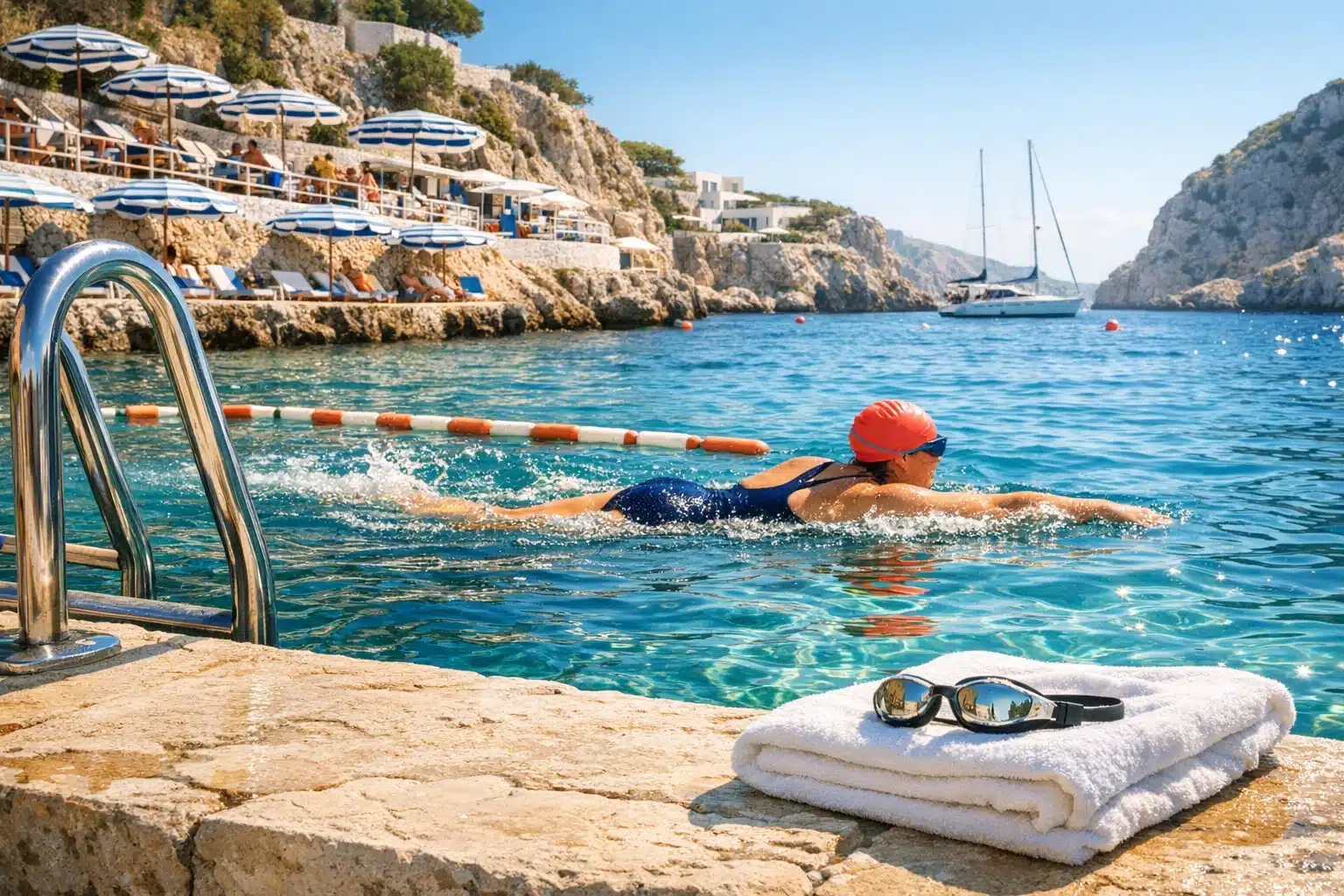
Explore the world of swimming
Swimming is more than a sport or a warm-weather pastime; it is a practical life skill, a full-body workout, and for many people a steady way to clear the mind. In one lane, a child learns confidence, an adult rebuilds fitness, and an older swimmer protects mobility with less impact than many land-based exercises create. That unusual mix of safety, health, discipline, and enjoyment gives swimming lasting relevance and makes it worth exploring in depth.
Article Outline
- The importance of swimming as a life skill, fitness tool, and mental reset.
- The main strokes, technical foundations, and how they compare in effort and purpose.
- Training methods, safety habits, and equipment choices that support progress.
- The wider role of swimming in sport, recreation, rehabilitation, and community life.
- A practical conclusion for readers who want to begin, improve, or stay consistent.
Swimming as a Life Skill, Workout, and Mental Reset
Swimming occupies a rare place among physical activities because it is useful, demanding, and enjoyable at the same time. Unlike some sports that remain optional hobbies, swimming also functions as a basic life skill. Learning how to float, tread water, control breathing, and move efficiently through water can directly improve safety in pools, lakes, rivers, and coastal environments. For parents, this makes swimming education about more than recreation. For adults, it is a reminder that confidence in water is not something reserved for elite athletes; it is a practical form of self-reliance.
As exercise, swimming is often praised for being low impact, but that description only tells part of the story. Water supports body weight, which reduces stress on joints and can make movement more comfortable for people with knee, hip, or back concerns. At the same time, the body must work against steady resistance from the water. That means a swim session can challenge the heart, lungs, shoulders, back, core, and legs in a single workout. A relaxed set of easy laps may feel meditative, while an interval session can leave even trained swimmers breathing hard. Few forms of exercise move so easily between gentle recovery and serious conditioning.
Swimming also compares well with more familiar cardio options. Running is efficient and accessible, but it can be tough on joints for some people. Cycling develops endurance, yet it does not always involve the upper body in a meaningful way. Swimming asks for coordination from head to toe. Even simple actions such as keeping the body horizontal, timing a breath, and maintaining rhythm build body awareness. A pool can become a quiet teacher: if posture slips or timing breaks, the water gives immediate feedback.
There is also a mental dimension that helps explain swimming’s lasting appeal. Repetitive strokes, controlled breathing, and the muffled soundscape of the pool often create a calming effect. Many swimmers describe a session as part workout, part reset button. This matters in a time when stress and screen fatigue shape daily life. Swimming offers an environment where attention narrows to simple essentials: inhale, exhale, reach, pull, kick, glide.
Its broad value can be summed up in a few key points:
- It supports cardiovascular fitness and muscular endurance.
- It can be adapted for different ages and ability levels.
- It helps many people exercise with less impact on joints.
- It improves water safety and personal confidence.
- It often provides a calming, almost meditative rhythm.
Public health guidance commonly encourages adults to achieve at least 150 minutes of moderate aerobic activity each week, and swimming can help meet that target in a way that feels varied rather than repetitive. For beginners, the first goal may simply be comfort in the water. For experienced swimmers, the attraction may lie in speed, technique, or endurance. Either way, swimming remains one of the few activities that can accompany a person from childhood lessons to older age without losing relevance.
Understanding the Main Strokes and the Craft of Good Technique
To an untrained eye, swimming can appear simple: enter the water and move forward. In practice, good swimming is a technical craft. Small changes in head position, hand entry, breathing timing, or kick rhythm can make the difference between smooth movement and rapid fatigue. This is one reason swimming is both humbling and rewarding. Progress does not depend on brute effort alone. It often comes from efficiency, patience, and repeated correction.
The four competitive strokes are freestyle, backstroke, breaststroke, and butterfly. Freestyle, usually swum with a front crawl technique, is typically the fastest and most widely used stroke. It relies on a streamlined body position, alternating arm recovery, a flutter kick, and side breathing. For fitness swimmers, freestyle is often the main stroke because it balances speed and endurance well. Backstroke shares the alternating arm action of freestyle but places the swimmer face-up, which can make breathing easier while introducing different challenges in balance and navigation.
Breaststroke is slower for many swimmers, but it is highly technical and often more approachable for beginners because the face comes out of the water regularly. Its pull, breath, kick, and glide pattern requires timing rather than constant turnover. Butterfly, by contrast, is powerful, demanding, and rhythm-driven. It uses simultaneous arm action and a dolphin kick, placing heavy emphasis on core strength and coordination. Butterfly can look dramatic, but it quickly exposes technical flaws and inefficient effort.
Comparing these strokes reveals how varied swimming can be:
-
Freestyle is usually the most efficient choice for long-distance fitness swimming.
-
Backstroke promotes body awareness and can feel less restrictive in breathing.
-
Breaststroke often suits recreational swimmers who prefer a clear forward view and a measured rhythm.
-
Butterfly develops power and timing but demands the highest energy cost for most people.
Beyond stroke choice, several technical foundations matter across all styles. Body position comes first. A swimmer who keeps the body long and aligned generally creates less drag than someone whose hips drop or whose head lifts too high. Breathing is another decisive factor. New swimmers often hold tension in the neck and rush for air, which disrupts rhythm. Learning to exhale steadily into the water makes inhalation quicker and calmer. Kicking also deserves perspective. Beginners sometimes assume speed comes mainly from hard kicking, but effective propulsion usually depends on coordination between the kick, the pull, and a stable body line.
Technique work can feel repetitive, yet it pays off more than many people expect. Drills such as catch-up freestyle, single-arm backstroke, breaststroke timing drills, or kicking with a board isolate specific skills that are easy to lose in full swimming. Video analysis, when available, can be especially useful because swimming often feels different from how it looks. A swimmer may think the stroke is long and relaxed while the footage shows crossed arms, dropped elbows, or rushed breathing.
In this sense, swimming resembles learning a musical instrument. Force alone does not create quality. Rhythm, control, and attention to detail matter. The reward is clear: once technique improves, swimming becomes less of a struggle and more of a glide, as if the water has shifted from opponent to partner.
Training, Safety, and the Habits That Build Steady Progress
One of the most useful things to understand about swimming is that improvement rarely comes from random effort. People often enter the pool with good intentions, swim until tired, and wonder why progress stalls. Structured training makes a difference because it organizes effort around specific goals such as endurance, speed, technique, confidence, or recovery. Even a simple plan is more effective than guessing each session.
For beginners, the first phase should emphasize comfort and control. That may include floating, pushing off the wall, kicking with support, learning to exhale into the water, and swimming short distances with regular rest. There is no shame in slow beginnings. In fact, rushing past these basics often leads to tension and poor habits. A swimmer who cannot relax the breath or hold a balanced position will usually waste energy no matter how strong they are on land.
Intermediate swimmers benefit from workouts built around sets. A set is a group of repeated distances or drills with planned rest. For example, a session might include a warm-up, a technique block, a main endurance set, and a cool-down. This structure brings purpose to the workout and makes progress measurable. If 8 x 50 meters on fixed rest becomes easier over time, fitness is improving. If stroke count drops while pace stays steady, efficiency is improving.
A practical training session may include:
- A warm-up to raise body temperature and loosen movement patterns.
- Drills that focus on one technical issue at a time.
- Main sets for aerobic endurance, sprint work, or pacing.
- Recovery swimming to reduce tension and reinforce control.
- Occasional dryland strength or mobility work outside the pool.
Safety deserves equal attention. Swimming is rewarding precisely because water changes the usual rules of movement, but that difference also demands respect. New swimmers should learn in supervised environments whenever possible. Open water adds variables such as currents, waves, low visibility, changing temperatures, and distance from assistance. A person who feels comfortable in a pool may still be unprepared for a lake or sea swim. Using lifeguarded areas, swimming with a partner, checking weather and water conditions, and wearing visible gear are sensible habits rather than signs of inexperience.
Equipment can support training, though it should never replace sound technique. Goggles improve visibility and comfort. A well-fitted swimsuit reduces drag and distraction. Kickboards, pull buoys, paddles, fins, and snorkels can all serve useful purposes when chosen carefully. Fins can help body position and confidence. Pull buoys allow greater focus on upper-body mechanics. Paddles can build awareness of the catch phase, but they should be used thoughtfully to avoid shoulder overload. More gear does not automatically mean better training.
Consistency matters more than heroic single sessions. Two or three purposeful swims each week usually produce better long-term results than one exhausting workout followed by long gaps. Tracking simple measures can help: total distance, how hard the session felt, a few repeat times, or even just how controlled the breathing felt. Progress in swimming is sometimes subtle before it becomes obvious. One day the wall stops arriving too soon, the breath settles, and the water no longer feels heavy. That quiet shift is often the result of disciplined habits built one lap at a time.
Swimming Beyond the Lane: Competition, Rehabilitation, and Everyday Enjoyment
Although swimming is easy to associate with lap pools and race clocks, its world is far wider than formal training. It exists as a competitive sport, a recreational pastime, a rehabilitation tool, and a social activity that can shape communities. This range is one reason swimming remains so relevant across ages and lifestyles. The same medium that hosts Olympic finals also supports toddler lessons, water aerobics, therapeutic exercise, and weekend family recreation.
In competition, swimming is a sport of precision. Races can be decided by fractions of a second, and performance depends on details that casual observers may miss: starts, turns, underwater phases, pacing, and stroke efficiency. Sprint events reward explosive power and technical sharpness, while distance events demand pacing discipline and aerobic capacity. Relay races add strategy and teamwork. Open-water events introduce further complexity through navigation, drafting, and environmental conditions. These formats show that swimming is not one sport in a narrow sense but a family of related challenges.
Outside competition, swimming has strong value in rehabilitation and general wellness. Because water supports the body, it is commonly used in exercise programs for people returning from injury or managing chronic discomfort. That does not mean every water-based activity is automatically therapeutic, but it does mean the environment can make movement more accessible. Gentle water exercise may help individuals who struggle with impact-heavy training on land. For older adults in particular, swimming and related aquatic activities can support mobility, confidence, and routine physical activity.
Swimming also creates forms of enjoyment that pure performance cannot explain. Recreational swimming gives people freedom to play, explore movement, and reconnect with an element that feels both natural and slightly mysterious. A morning pool can feel disciplined and bright; open water at sunrise can feel almost literary, as if the day begins not with noise but with a long blue sentence. That emotional texture matters. People are more likely to stay active when the activity offers pleasure as well as measurable benefit.
The social side is equally important:
- Children often gain confidence through lessons and group practice.
- Masters programs give adults structure, coaching, and community.
- Local pools can serve as important public spaces for health and inclusion.
- Family swimming encourages shared activity across generations.
Access, of course, remains a real issue. Not every community has affordable facilities, year-round pools, or equal access to instruction. That gap affects safety and participation. Expanding swim education, maintaining public pools, and supporting inclusive programming can have benefits that reach beyond sport. Better access means more people can learn a lifesaving skill, find a manageable form of exercise, and participate in a welcoming shared activity.
Seen this way, swimming is not only about distance covered or calories burned. It is about capability, trust, and presence. It invites serious athletes to chase performance, supports recovering bodies with gentler movement, and offers ordinary readers a realistic path toward better health. That breadth is part of its strength. Few activities can be competitive, restorative, and joyful without changing their essential nature.
Conclusion: How Readers Can Build a Lasting Relationship with Swimming
For readers who are curious about swimming, the most encouraging truth is that there is no single correct way to belong in the water. Some people want to learn basic survival skills. Others want a reliable fitness routine that feels different from the gym. Some are drawn to technique and race times, while others simply want the calm that comes from moving through water with steady breathing and a clear mind. Swimming has room for all of these goals.
If you are a beginner, start with confidence before intensity. Learn to float, breathe comfortably, and move short distances without panic. A few coached sessions can accelerate progress because swimming is technical, and small corrections can spare months of frustration. If you already know the basics, focus on consistency and form rather than trying to overpower the water. Two thoughtful swims a week can do more for skill and fitness than occasional all-out efforts that leave you exhausted and discouraged.
It also helps to define what success means for you. That could be swimming 200 meters without stopping, joining a local class, mastering backstroke, or feeling safe enough to enjoy open water responsibly. Measurable goals are useful, but the deeper reward often arrives in quieter ways: better posture, easier breathing, improved sleep, reduced stress, or the simple pleasure of feeling lighter in the water than on land. These are not dramatic promises. They are realistic benefits that grow through practice.
For busy adults, swimming can become a practical anchor habit. For older readers, it may offer a sustainable way to stay active. For parents, it is both a health tool and a safety priority for children. For sport-minded readers, it provides endless technical depth. In every case, progress tends to follow the same pattern: patience first, rhythm next, confidence after that.
If there is one final lesson in swimming, it may be this: the water rewards attention. It does not respond well to haste, but it responds beautifully to control, repetition, and respect. Start where you are, learn deliberately, and give the process time. Whether you end up swimming for health, sport, recovery, or joy, you will be taking part in an activity that can remain valuable for a lifetime.