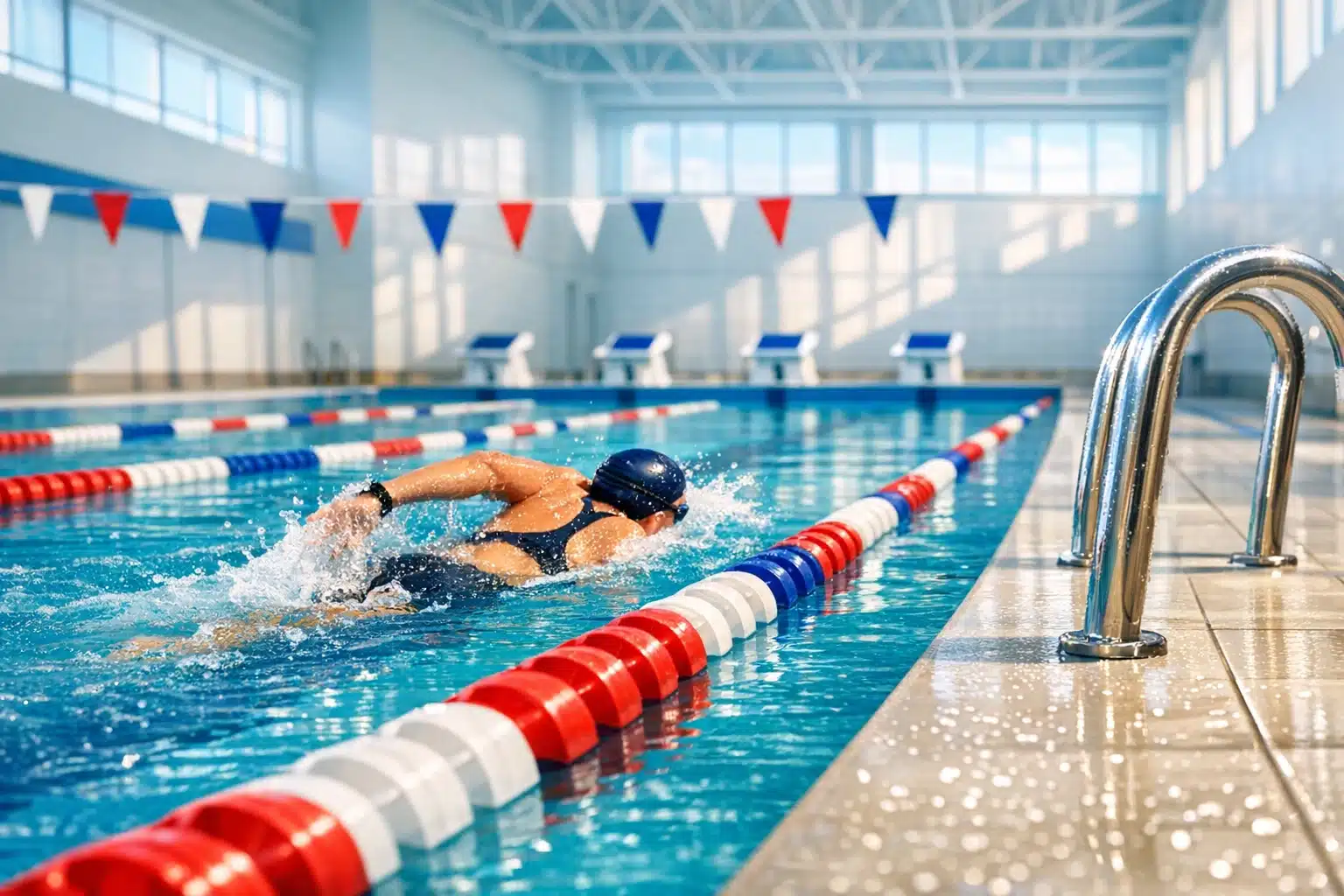
Explore the world of swimming
Swimming is one of those rare activities that can feel playful, competitive, meditative, and practical all at once. It teaches survival skills, builds fitness without constant impact on the joints, and opens the door to pools, lakes, rivers, and coastlines around the world. From a child learning to float to an athlete chasing faster splits, the water offers a challenge that adapts to different ages, goals, and abilities. This article explores how swimming works, why it matters, and how to enjoy it with confidence.
Outline: this article first explains why swimming matters beyond recreation, then compares the main strokes and their technical demands. After that, it looks at training methods, safety habits, and useful equipment. The final sections examine the wider health benefits of regular practice and offer practical guidance for beginners, families, and adults who want swimming to become a lasting part of life.
Why Swimming Matters: More Than a Sport
Swimming holds an unusual place among physical activities because it is both a life skill and a form of exercise. Many sports are optional; knowing how to move safely in water can be essential. Public health organizations around the world continue to treat drowning as a serious preventable risk, especially for children and inexperienced swimmers. That simple fact gives swimming a depth of importance that goes far beyond medals, lap times, or fitness trends. Learning to float, breathe calmly, and travel a short distance in water can change a person’s relationship with lakes, beaches, boats, and even everyday leisure.
At the same time, swimming offers something many land-based activities struggle to match: resistance without hard impact. In water, the body is supported by buoyancy, which reduces stress on the knees, hips, and spine. That makes swimming especially attractive for older adults, people returning from certain injuries, and anyone who wants demanding exercise without the pounding of repeated foot strikes. Running may be wonderfully efficient for building endurance, and cycling may be gentler on joints than sprinting, but swimming has a unique ability to challenge the heart, lungs, and muscles while keeping movement fluid and low impact.
There is also a mental dimension that helps explain the lasting appeal of time in the pool. Water changes the soundscape, narrows attention, and creates a rhythm built around breath and movement. For some people, a session feels like structured training; for others, it feels like slipping into a quieter room inside the day. Few activities combine technical precision with that kind of sensory reset.
Swimming can matter in several ways at once:
- It improves personal water safety and confidence.
- It serves as recreation, exercise, and competition.
- It can be adapted for many age groups and ability levels.
- It builds endurance, coordination, and body awareness.
Another reason swimming stays relevant is its flexibility across settings. A public pool offers measured lanes and predictable conditions. Open water adds navigation, weather, temperature shifts, and currents. Water polo, synchronized swimming, triathlon, masters racing, and casual family swimming all grow from the same basic skill set. In that sense, swimming is not one narrow pursuit but a whole ecosystem of movement. It is a survival tool, a training method, a competitive discipline, and for many people, a source of freedom. To enter the water with skill is to gain access to a world that can be demanding, beautiful, and remarkably honest: the water always tells you how well you move.
Understanding the Main Strokes and How They Differ
To someone watching from the deck, the main swimming strokes may look like simple variations on going forward. In practice, each stroke asks for its own timing, body position, breathing pattern, and energy cost. Learning the differences helps swimmers choose the right technique for their goals, whether those goals involve speed, efficiency, comfort, or race rules.
Front crawl, often called freestyle, is usually the first stroke associated with speed. The body stays long and horizontal, the arms recover over the water in alternating turns, and the kick comes from the hips in a steady flutter. Rotating the torso is one of the secrets that makes the stroke work well. Without rotation, the shoulders tend to fight the water; with it, the swimmer can reach farther, breathe more smoothly, and reduce drag. Freestyle is typically the fastest competitive stroke because it allows continuous propulsion and a streamlined profile.
Backstroke shares much of freestyle’s alternating rhythm, but it changes the swimmer’s orientation completely. Because the face stays above the surface, breathing is easier for many beginners. However, holding a straight line can be trickier, especially in a pool without strong spatial awareness. Backstroke also exposes flaws in hip position; if the legs sink, the stroke quickly becomes hard work.
Breaststroke is slower but often feels more intuitive to new swimmers because the breathing window is obvious and the movement pattern is symmetrical. The arms sweep outward and inward while the legs perform a whip kick. Timing matters enormously. If the kick arrives too early or too late, momentum vanishes and the swimmer feels as though the water has quietly put on the brakes. Breaststroke is useful for teaching control and pace, though it can place stress on the knees if technique is poor.
Butterfly is the most dramatic and, for many, the most demanding. Both arms recover together, the body undulates, and the dolphin kick drives the stroke. Butterfly rewards rhythm more than brute force alone. When the timing clicks, it feels powerful and almost airborne; when it does not, every length seems twice as long.
A simple comparison helps clarify the differences:
- Freestyle: fastest, efficient, ideal for distance and conditioning.
- Backstroke: good for shoulder balance and easier breathing, but harder to steer.
- Breaststroke: slower, technical, often approachable for learners.
- Butterfly: powerful and demanding, best introduced gradually.
Beyond these four, practical skills such as treading water, floating, and turning over from front to back are just as valuable, especially for safety. Competitive swimmers may focus on fractions of a second, yet beginners often benefit more from mastering balance and breathing than from chasing speed too early. In swimming, technique is not decoration added after fitness; it is the engine. A modestly fit swimmer with good form can move more easily than a stronger swimmer who fights the water every stroke. That is one of the sport’s great lessons: elegance is efficient.
Training, Technique, and Safety: What Good Swimming Practice Looks Like
Good swimming practice is part skill rehearsal, part conditioning, and part risk management. Unlike a casual walk, a session in the water rewards planning. Strong swimmers may make the pool look effortless, but most effective training is built from deliberate pieces: warm-up, drills, focused sets, recovery, and reflection. That structure matters because water is wonderfully responsive. Small technical changes can produce surprisingly large differences in speed, fatigue, and confidence.
A typical session often begins with an easy warm-up to raise body temperature, loosen the shoulders, and establish breathing rhythm. Drills come next, not as busywork but as targeted tools. One drill may improve body rotation in freestyle, another may sharpen the feel for the catch, and another may teach a calmer exhale underwater. After that, swimmers move into working sets. These can be steady aerobic repeats, faster intervals with rest, kick sets that build leg endurance, or mixed pieces that train pacing and transitions. Competitive athletes may follow detailed plans based on heart rate, race distance, or stroke specialization, while recreational swimmers can benefit from simpler goals such as maintaining form across several lengths.
Useful pool equipment can support learning when used carefully:
- Goggles improve visibility and reduce irritation.
- A kickboard isolates leg work and body alignment.
- A pull buoy helps swimmers focus on arm mechanics.
- Fins can reinforce body position and add propulsion during drills.
- A pace clock or waterproof watch helps track rest and consistency.
Technique should stay at the center of training. Many swimmers assume that more effort automatically means more improvement. In truth, thrashing harder usually creates extra drag. Common technical priorities include a long body line, relaxed recovery, controlled breathing, and a catch that holds water rather than slaps at it. Video analysis, coaching feedback, or even one well-timed correction from a lesson can save months of inefficient practice.
Safety, meanwhile, deserves equal attention. In pools, that means following lane etiquette, respecting lifeguards, staying aware of fatigue, and never overestimating ability. Open water introduces a different layer of responsibility. Temperature can shift suddenly. Visibility may be poor. Wind, current, waves, and boat traffic add complexity that a tiled lane never does. Swimming with a partner, using a bright tow float where appropriate, checking local conditions, and exiting early when something feels wrong are not signs of caution gone too far; they are marks of sound judgment.
The smartest swimmers combine ambition with humility. They know when to push a set and when to back off. They treat breath control as a skill, not a contest. They understand that safe progress is usually steady rather than dramatic. In a sport defined by resistance, patience becomes part of performance. The water does not reward impatience for long, but it responds generously to consistency, respect, and careful practice.
The Physical and Mental Benefits of Regular Swimming
Swimming is often praised as a full-body workout, and that description is justified, but it only captures part of the picture. What makes the activity especially compelling is the way multiple benefits stack together. A single session can challenge the cardiovascular system, recruit major muscle groups, improve coordination, and create a calming mental rhythm, all without the impact stress common in many land-based workouts.
From a physical standpoint, swimming works through water resistance rather than gravity and ground contact. Every stroke asks the arms, shoulders, back, core, and legs to contribute in a coordinated sequence. Even maintaining a streamlined body line requires muscular engagement. Because water is denser than air, moving through it takes sustained effort, yet buoyancy supports much of the body’s weight. That combination explains why swimming can feel both demanding and forgiving. For many adults, moderate lap swimming may expend roughly 400 to 500 calories per hour, while harder sets can push higher depending on body size, pace, and stroke choice. The exact number matters less than the broader point: swimming can provide meaningful aerobic work while remaining easier on joints than many other conditioning options.
There are also practical reasons people use swimming across life stages. Some older adults appreciate the reduced impact. Some recovering exercisers use water to rebuild confidence after time away from sport. Many parents choose lessons because water familiarity supports safety and coordination early in life. Athletes from other disciplines, including runners and triathletes, often add pool sessions to diversify training and reduce repetitive stress.
Mental benefits are harder to measure but just as real for many swimmers. The pattern of inhale, exhale, reach, and glide can become deeply regulating. Unlike forms of exercise shaped by constant noise or heavy screen use, swimming removes many distractions. The body hears the splash, the turn, the breath, the muted hum of the pool. That sensory simplicity can make a session feel restorative, even when the work is strenuous.
Regular swimming may support well-being in several ways:
- It helps develop cardiovascular endurance.
- It strengthens large and small muscle groups through resistance.
- It can improve mobility and body awareness.
- It may reduce exercise monotony by offering varied strokes and set styles.
- It often leaves swimmers feeling mentally clearer after training.
None of this means swimming is magically perfect for everyone. Access to pools can be limited, technique takes time, and some people simply prefer dry land. Still, the breadth of benefits is striking. Few activities balance challenge and gentleness so effectively. A swimmer leaves the water not only tired but reorganized, as if the body has done its work and the mind has had a chance to catch up. That is a rare bargain in modern exercise.
Making Swimming a Lifelong Habit: Practical Advice for Beginners and Everyday Swimmers
If swimming is going to stay in your life, it helps to stop thinking about it as an all-or-nothing pursuit. You do not need to train like an elite racer to benefit from regular time in the water. For most people, success starts with consistency, modest goals, and a realistic understanding of where they are now. A nervous beginner, a parent choosing lessons for a child, a former swimmer returning after years away, and a fitness-minded adult looking for a joint-friendly workout all need slightly different approaches, but they share one requirement: a start that feels manageable.
For complete beginners, comfort comes before speed. Learning to exhale underwater, float on front and back, and recover calmly after swallowing a little water can be more valuable than forcing full lengths too early. Formal lessons are often worth the investment because they shorten the awkward stage and reduce the risk of building habits that later need to be undone. Adults sometimes hesitate to take lessons out of embarrassment, yet instructors teach beginners of all ages. In practice, the pool is full of people working on something.
Children benefit from age-appropriate instruction that blends safety with play. The goal is not to create instant champions but to build respect for water, listening skills, and a sense that movement in the pool can be enjoyable rather than frightening. Parents can help by choosing programs with qualified staff, clear supervision, and gradual progressions.
For adults building a routine, a simple weekly structure often works well:
- One easy technique-focused session.
- One moderate endurance swim with short rests.
- One optional fun or mixed session using different strokes or drills.
That pattern keeps training varied without becoming overwhelming. Tracking tiny improvements also helps. Maybe the first win is swimming 100 meters without stopping. Next, it is breathing more calmly on each third stroke. Later, it might be joining a masters group, finishing an open-water event, or simply feeling at ease on holiday near the sea.
The deeper reward of swimming is not only fitness but familiarity. Water stops feeling like a place you visit occasionally and starts feeling like a place you understand. That shift is powerful. It makes beach trips safer, workouts more interesting, and aging a little less restrictive. For readers considering whether swimming is worth their time, the answer is less about perfection and more about possibility. Start small, learn well, and give the process room to unfold. The first few lengths may feel clumsy, but skill grows quietly. One day, almost without noticing, you stop negotiating with the water and begin moving through it with trust. That is when swimming becomes more than an activity. It becomes a companion that can stay useful, challenging, and enjoyable for decades.