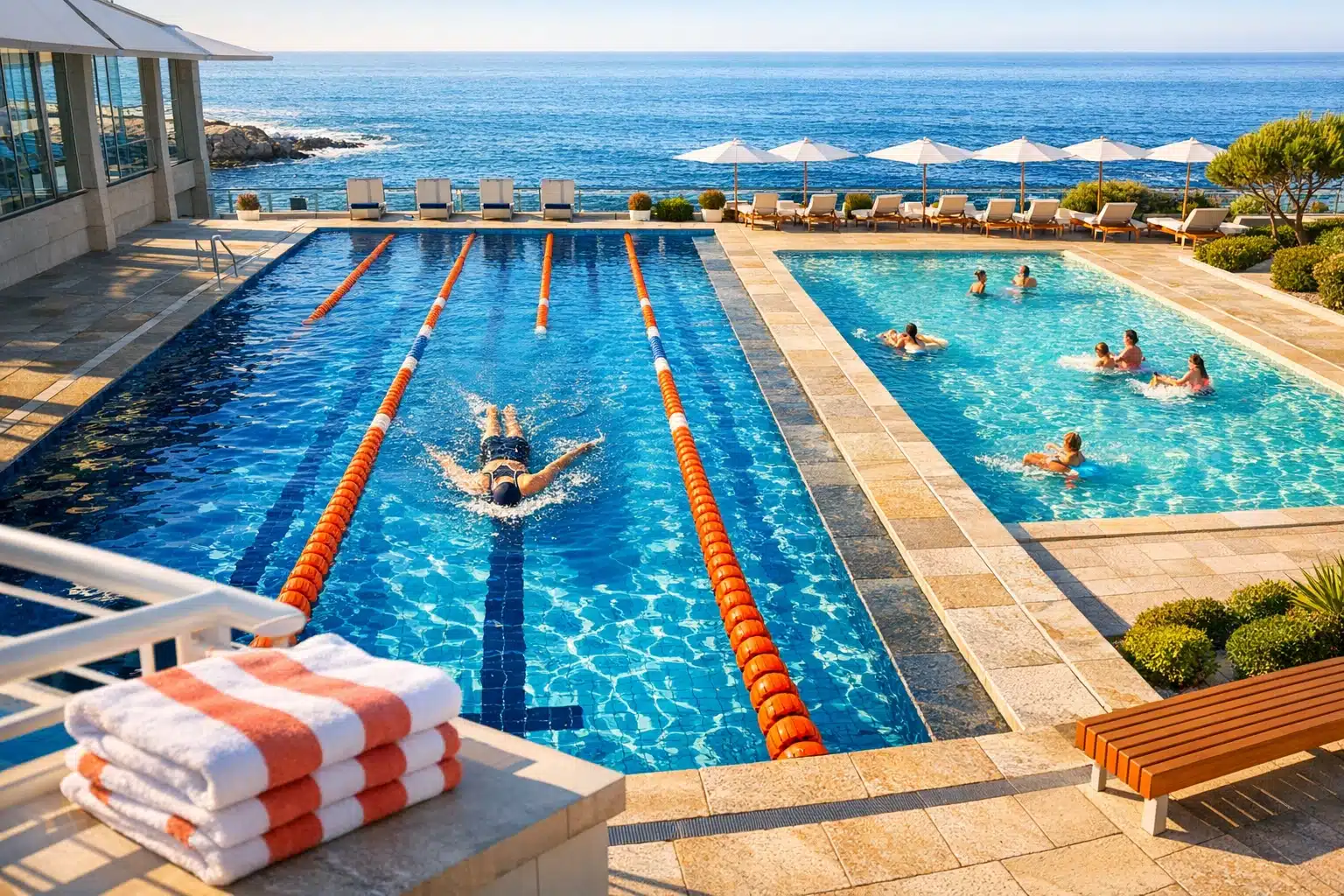
Explore the world of swimming
Swimming sits at a rare crossroads where survival, sport, and simple joy meet in the same stretch of water. It can challenge elite athletes, help beginners build confidence, and offer a low-impact way to stay active across almost every stage of life. From quiet morning laps to crowded summer beaches, knowing how water behaves and how the body moves through it matters more than many people realize. This guide explores swimming from technique to safety, so readers can understand not just how to swim, but why it remains such a relevant skill today.
Outline:
- The role of swimming in health, culture, recreation, and personal safety
- The main swimming strokes and how they differ in rhythm, breathing, and efficiency
- The physical and mental benefits supported by training principles and practical examples
- Water safety, equipment choices, and the differences between pools and open water
- Ways to build a realistic swimming habit for beginners, families, and fitness-focused readers
Why Swimming Matters Beyond the Pool
Swimming is one of the few activities that can be described as a life skill, a competitive sport, a therapeutic exercise, and a leisure pastime without stretching the truth. That range matters. A person may first enter the water as a child learning to float, return years later to recover fitness after an injury, and then discover that the same activity offers stress relief after work. Few forms of movement have that kind of adaptability. Water does not ask whether someone is training for a medal, learning basic safety, or simply trying to move without pain; it meets each swimmer where they are.
Its importance begins with safety. In many regions, access to beaches, rivers, lakes, or pools is common, yet swimming ability remains uneven. Basic water competence can reduce risk in emergencies, and that alone gives swimming a level of relevance that goes far beyond recreation. At the same time, the activity is deeply woven into everyday life. School programs, summer camps, triathlons, rehabilitation clinics, community pools, and holiday travel all place people near water. Knowing how to handle that environment is practical, not optional.
Swimming also stands apart because it combines resistance and support at the same time. On land, gravity loads the joints. In water, buoyancy reduces that load, often making movement more comfortable for older adults, people with excess body weight, or those recovering from certain injuries. Yet comfort does not mean ease. Water is dense, and moving through it requires steady effort. That creates a unique training effect: swimmers work against resistance in nearly every direction while avoiding the pounding associated with some land-based activities.
There is a quieter reason swimming matters too. A pool has its own atmosphere: the echo of splashes, the black line on the lane floor, the brief hush when the head goes under. For many people, that environment encourages focus in a way that busy gyms do not. A single lap can feel technical, meditative, and demanding all at once. Swimming becomes a conversation between breath, balance, and rhythm.
Its broad value can be summed up in a few practical points:
- It teaches water confidence and basic survival skills.
- It supports cardiovascular fitness with relatively low joint impact.
- It suits many ages and ability levels.
- It can be social, competitive, or solitary depending on preference.
- It transfers well to other activities such as surfing, rowing, diving, and triathlon.
That combination of utility and enjoyment explains why swimming remains relevant in modern life. It is not only about moving from one end of the pool to the other. It is about learning how to move well in an environment humans were not built to dominate, yet continue to return to for challenge, health, and freedom.
Understanding the Main Strokes and the Mechanics of Efficient Movement
To an untrained eye, swimming can look simple: arms pull, legs kick, body travels forward. In practice, it is a technical craft built on position, timing, and controlled breathing. The four competitive strokes, freestyle, backstroke, breaststroke, and butterfly, each solve the same problem in different ways: how to move efficiently through water while maintaining rhythm and direction. Learning even the basic differences between them helps new swimmers train smarter and appreciate why some strokes feel natural while others feel like negotiating with the laws of physics.
Freestyle, often called front crawl, is usually the first stroke people learn for lap swimming because it is generally the fastest and most efficient over distance. The body stays long and relatively horizontal, the arms alternate in a windmill-like pattern, and the swimmer rotates through the torso rather than relying only on the shoulders. Breathing turns to the side, ideally without lifting the head too high. When done well, freestyle feels less like fighting the water and more like sliding through it. When done poorly, it becomes a choppy effort that wastes energy.
Backstroke uses similar alternating arm action, but the swimmer remains face-up. This makes breathing easier because the mouth stays above water, yet it introduces a different challenge: navigation. In a lane pool, swimmers rely on ceiling markers and stroke counts to judge distance before the wall. Backstroke rewards body alignment and a steady flutter kick, and it often feels approachable for people who dislike face-down breathing.
Breaststroke is slower for most swimmers, but it is often easier to learn at a basic level because the head can rise regularly and the stroke cycle is more symmetrical. The arms sweep outward and inward while the legs perform a whip kick. Timing is everything. If the pull, breath, kick, and glide are out of sequence, the stroke becomes tiring very quickly. Breaststroke is a good example of how patience creates speed in water.
Butterfly is the most demanding of the four. Both arms recover over the water together, the body undulates, and the legs use a dolphin kick. It requires power, coordination, and rhythm, which is why beginners usually learn parts of it before the full stroke. Butterfly can look dramatic, but underneath the spectacle is precise timing. Without timing, strength alone is not enough.
Across all strokes, efficient movement depends on a few common principles:
- Streamline the body to reduce drag.
- Use the core, not only the arms and legs.
- Match breathing to stroke rhythm.
- Keep movements purposeful instead of rushed.
- Practice technique regularly, because habits form quickly in the water.
Swimming technique often improves in small, almost invisible increments. A better head position, a quieter kick, or a smoother exhale can change the feel of an entire session. That is part of the appeal. Water gives honest feedback. It does not flatter inefficiency, but it rewards refinement.
Health Benefits, Training Effects, and What Swimming Does for the Body and Mind
Swimming has earned its strong reputation in health and fitness for good reason. It challenges the cardiovascular system, builds muscular endurance, and does so in a way that can be more forgiving on joints than many impact-heavy activities. Because water provides constant resistance, every lap asks the body to coordinate multiple muscle groups at once. The shoulders pull, the back stabilizes, the core transfers force, the hips help maintain alignment, and the legs either drive propulsion or support balance depending on the stroke. It is a whole-body effort disguised as graceful repetition.
For heart and lung fitness, swimming can be highly effective. Like brisk walking, cycling, and running, it can contribute to the general physical activity targets commonly recommended by health authorities, such as at least 150 minutes of moderate-intensity aerobic activity per week for adults. The difference is in the environment. Breathing in swimming is restricted by stroke timing and face position, which can train breath control and improve awareness of pacing. A beginner who starts too fast often learns the lesson within one lap.
Swimming is also useful for people seeking exercise with less mechanical stress. When the body is submerged, buoyancy offsets much of its weight, which can reduce pressure on the knees, hips, and spine. That is one reason aquatic exercise is often recommended in rehabilitation and active aging settings, though individual medical advice still matters. For some people, the pool becomes a bridge back to movement when other exercise feels too uncomfortable.
Calorie expenditure in swimming varies by body size, stroke, intensity, and skill level, but moderate to vigorous sessions can burn several hundred calories per hour. More importantly, swimming encourages sustained effort. A steady 30-minute session can train endurance, while interval work, such as alternating fast and easy laps, can improve speed and aerobic capacity.
The mental benefits deserve equal attention. Repetitive lap swimming can create a focused state that many swimmers describe as calming. The sensory environment is different from most workouts: sound softens underwater, visual distractions narrow, and breathing becomes intentional. For busy people, that structure can feel like a rare pause button.
Some practical benefits include:
- Improved cardiovascular endurance
- Enhanced muscular coordination and posture awareness
- Low-impact conditioning for many populations
- Potential support for stress management and routine building
- A training option that scales from gentle movement to elite performance
Still, swimming is not magic. Shoulders can become overworked with poor technique, and progress often requires patience. Yet that is part of its value. It teaches sustainable effort. In a culture that loves quick results, swimming quietly reminds people that rhythm, consistency, and efficiency usually win in the long run.
Safety, Equipment, and the Difference Between Pool Swimming and Open Water
Swimming is enjoyable precisely because water can feel inviting, but that same quality can encourage overconfidence. Safety deserves a central place in any serious discussion of swimming, especially for beginners, children, and people transitioning from pools to natural bodies of water. The skills needed to complete laps in a controlled pool do not automatically prepare someone for waves, currents, cold water, or limited visibility. Respecting those differences is not fearfulness; it is intelligence.
In a pool, the environment is structured. Distances are marked, walls provide rest points, lane lines separate swimmers, and lifeguards may be present. That predictability makes pools ideal for learning technique and fitness habits. Even so, good pool behavior matters. Swimmers should understand lane etiquette, avoid diving in shallow areas, and know their limits during hard sets. A crowded lane can feel like a moving puzzle, and awareness of others is part of safe participation.
Open water is another world. Lakes, rivers, and the sea add variables that can unsettle even experienced pool swimmers. Water temperature may be lower than expected, wind can create chop, visibility can be poor, and depth removes the psychological comfort of the pool floor. Currents deserve special respect. A swimmer may feel strong and still make little progress against moving water. That is why open-water swimming is best approached gradually and, ideally, with local knowledge, visible safety gear, and a companion or organized group.
Equipment can support both comfort and safety, though skill matters more than gadgets. Common gear includes goggles, a swim cap, a kickboard, pull buoy, fins, and training paddles. For open water, bright caps and tow floats improve visibility. Well-fitted goggles can transform a session; leaking goggles can make even a short swim irritating. The right tools help, but they do not replace technique, supervision, or judgment.
Key safety habits include:
- Learn floating, treading water, and basic rescue awareness, not only forward swimming.
- Never assume confidence in shallow water equals readiness for open water.
- Check weather, temperature, and local conditions before outdoor swims.
- Supervise children actively and continuously near any water.
- Stop if pain, dizziness, panic, or unusual fatigue appears.
There is also a subtle safety principle many people overlook: calm saves energy. Panic lifts the head, tightens the body, disrupts breathing, and makes efficient movement harder. Good instruction teaches swimmers how to reset, float, and regain control. That knowledge can make the difference between a difficult moment and a dangerous one.
Water can be playful, beautiful, and restorative, but it is never passive. The safest swimmers are not the ones who boast the loudest; they are the ones who combine skill with humility every time they enter the water.
Conclusion: Making Swimming Part of Your Life
For beginners, swimmers returning after a long break, parents guiding children, or fitness-minded readers searching for a sustainable activity, swimming offers a rare blend of practicality and possibility. It teaches a useful skill while opening doors to exercise, recreation, travel, and even community. The beauty of swimming is that it does not demand a single identity from the person doing it. You do not need to be a racer, a club member, or a technical expert to benefit from it. You only need a starting point and a willingness to improve one small piece at a time.
A realistic approach works best. Someone new to swimming may begin with water confidence, breathing practice, and short supervised lengths. A regular exerciser might use swimming to complement running or strength training. Older adults may value the reduced joint stress and steady cardiovascular work. Children often discover it first as play, then gradually learn that the games were quietly teaching balance, control, and respect for the water all along.
If the goal is to build a lasting habit, simplicity helps. Choose a manageable schedule, focus on technique before speed, and track progress in ways that go beyond distance alone. Better breathing, less anxiety in deep water, smoother turns, and more relaxed pacing are meaningful milestones. In swimming, progress is not always loud. Often it arrives as a feeling: the stroke suddenly connects, the body rides higher, the breath no longer feels rushed, and a length that once seemed long becomes routine.
A practical starting plan might look like this:
- Swim two or three times per week for short, consistent sessions.
- Spend part of each session on drills that improve body position and breathing.
- Use easy intervals with rest instead of forcing nonstop laps too early.
- Take lessons or ask for coaching feedback if technique stalls.
- Keep safety habits non-negotiable, especially around children or open water.
Swimming rewards patience more than bravado. It asks people to listen to the water, to their breath, and to the small corrections that gradually create confidence. For readers wondering whether it is worth the effort, the answer is straightforward: yes, because swimming gives back in more than one currency. It improves health, builds competence, and creates moments of freedom that are hard to match elsewhere. Whether your first step is a lesson, a pair of goggles, or a cautious walk into the shallow end, the journey is well worth beginning.