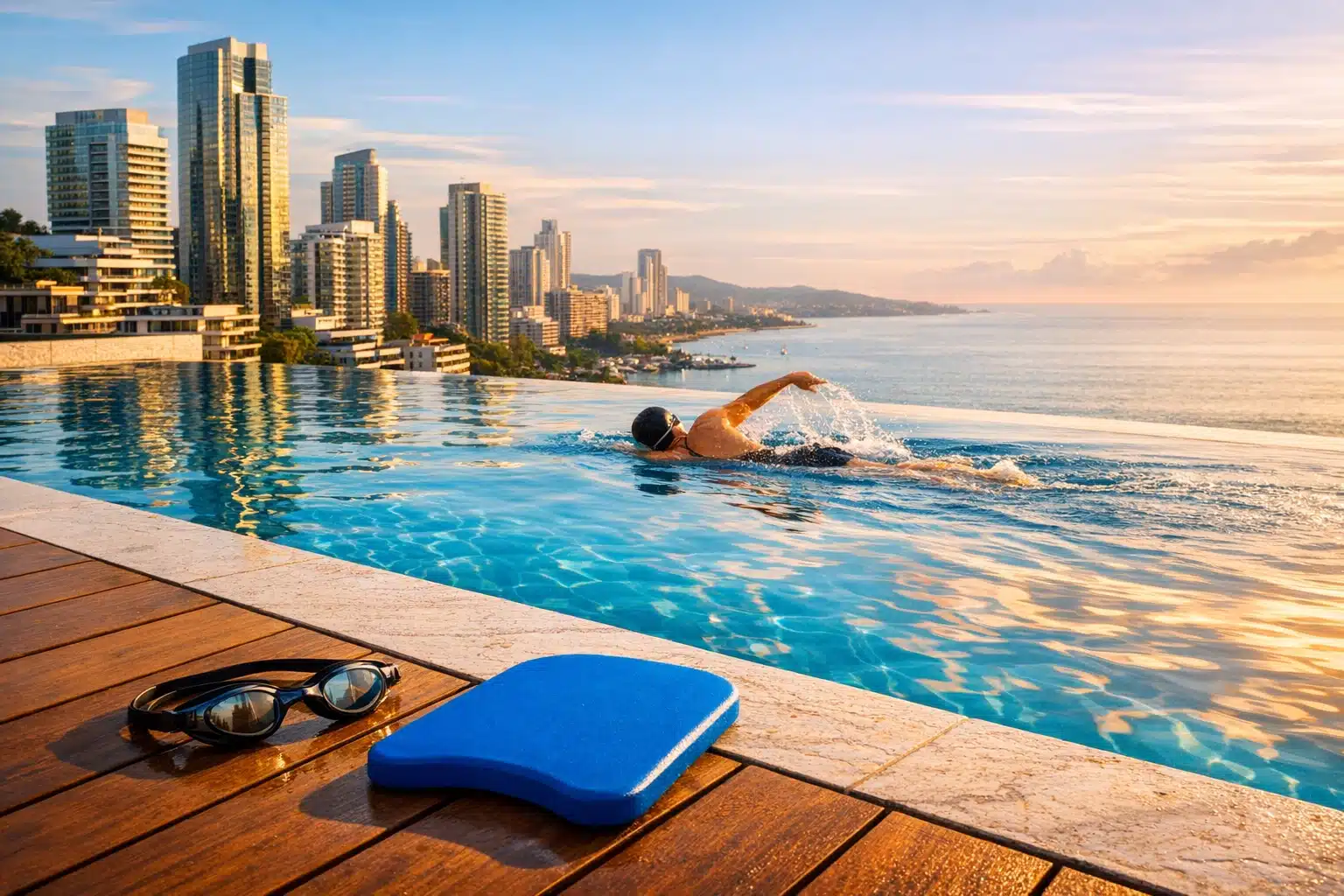
Explore the world of swimming
Swimming sits at a rare crossroads where survival skill, sport, and quiet pleasure meet. A child learns trust in the water, an athlete learns efficiency, and an older adult may rediscover movement without punishing impact on the joints. Because it can be practiced for health, recreation, competition, and safety, swimming stays relevant in nearly every stage of life. The deeper you look, the more this simple act of moving through water opens into technique, discipline, and freedom.
Outline of the Article: What the World of Swimming Really Includes
Before diving into details, it helps to map the subject clearly. Swimming is often reduced to a few familiar images: a lane pool, a beach holiday, or an Olympic race decided by fractions of a second. In reality, the topic is much broader. It includes physical fitness, water safety, movement science, skill development, access to facilities, and even social experience. This article begins with that wider frame because understanding swimming as a complete practice makes every later section more useful.
The first major idea is relevance. Swimming matters not only because it burns energy or strengthens the body, but because it teaches people how to function in an environment humans do not naturally master. That makes it different from many land-based activities. Walking and running rely on instincts refined since childhood, while swimming asks the body to coordinate breathing, floating, balance, propulsion, and direction all at once. It can feel awkward at first, which is exactly why learning it well is so valuable.
The article then moves through several layers of the subject. Readers will find a structured path through the following themes:
- why swimming is important for health, mobility, and mental well-being
- how the main strokes differ in rhythm, efficiency, and typical use
- what training looks like for beginners, recreational swimmers, and competitors
- how equipment supports practice without replacing sound technique
- why safety, especially in open water and public settings, should never be an afterthought
Another reason for starting with an outline is expectation. Some readers arrive wanting better fitness, others want to understand technique, and some simply want to feel less uncertain in the water. Swimming can support all of those goals, but the route changes depending on the swimmer. A child learning to float, an adult returning after years away, and a trained athlete chasing splits are all participating in the same activity through very different demands.
Think of this article as a guided walk along the edge of a pool before the first push off the wall. You can see the surface, but not yet the full depth beneath it. The sections ahead turn that still water into something more revealing: a living subject shaped by body mechanics, habit, confidence, and environment. By the end, swimming should feel less like a single sport and more like a practical, adaptable skill with remarkable range.
Why Swimming Matters: Fitness, Health, and Mental Balance
One reason swimming remains so widely recommended is that it combines aerobic work, muscular engagement, and technical concentration in a single session. Public health guidelines in many countries encourage adults to accumulate at least 150 minutes of moderate aerobic activity each week, and swimming can contribute meaningfully to that target. Unlike some high-impact activities, however, it does so in water, where buoyancy helps support body weight. That does not mean swimming is easy. It means the stress profile is different. For many people with joint sensitivity, those returning to exercise, or older adults seeking sustainable movement, that difference matters.
Swimming also asks the body to work as a coordinated system. The arms pull, the legs stabilize or drive, the torso rotates or holds alignment, and the breath must be timed rather than taken whenever convenient. This integrated demand can improve cardiovascular endurance, body awareness, and muscular balance. In contrast to exercises that heavily isolate one muscle group, swimming often rewards whole-body efficiency. Even a short session can reveal weaknesses in posture, rhythm, or breathing control that remain hidden on land.
The mental side is just as important. Water changes sensory experience. Sound dulls, movement slows visually, and attention narrows to stroke count, bubbles, and breath timing. For some swimmers, that creates a near-meditative state; for others, it sharpens discipline and focus. Either way, the environment encourages presence. You cannot rush through a poorly timed inhale or fake a streamlined position for long. The water gives immediate feedback, and that honesty can be strangely refreshing.
Swimming offers several practical advantages:
- it can be scaled from gentle rehabilitation work to intense interval training
- it supports endurance while placing less impact on many joints than repeated pounding sports
- it is suitable for solo practice, coached lessons, or social club settings
- it develops water confidence, which has safety value beyond fitness
There are limits, of course. Not everyone has easy access to a pool, lessons can be expensive in some areas, and beginners often find breathing patterns frustrating. But those barriers do not erase the activity’s value; they simply remind us that swimming is both beneficial and technical. A leisurely session may feel graceful from a distance, yet beneath the surface it is a conversation between physics and physiology. The swimmer learns to manage resistance, maintain calm, and convert effort into forward motion. That combination of health benefit and skill depth is a large part of swimming’s lasting appeal.
Understanding the Strokes: Technique, Rhythm, and Efficiency in the Water
To understand swimming well, it helps to understand that not all strokes ask the same question of the body. Freestyle, backstroke, breaststroke, and butterfly are the four competitive strokes, but they are also four distinct ways of negotiating water. Each has its own rhythm, energy cost, technical traps, and emotional feel. Freestyle often becomes the default stroke for fitness and distance because it is usually the fastest and most efficient for sustained movement. When done well, it looks simple: long reach, body rotation, steady kick, and controlled side breathing. When done poorly, it becomes a struggle of dropped hips, rushed arms, and gasping at the wrong moment.
Backstroke flips the relationship with space. Because the swimmer faces upward, breathing is easier, but direction and body line become harder to monitor. Many beginners feel relief in the open airway yet lose stability through overbending the knees or letting the hips sink. Good backstroke depends on alignment, shoulder mobility, and a relaxed but purposeful kick. It rewards patience more than force.
Breaststroke is often the most familiar to casual swimmers, partly because the head can remain higher and the pace feels more manageable. Yet technically, it is not the easiest stroke at all. Timing is everything. The pull, breath, kick, and glide must occur in sequence, and a mistimed kick can act like a brake rather than a propeller. Breaststroke can be useful for instruction and recreation, but it also places unique demands on the knees and hips, so sound form matters.
Butterfly is the dramatic sibling: powerful, beautiful, and unforgiving. It requires coordinated dolphin kick, symmetrical arm recovery, and strong timing through the chest and hips. Spectators often admire it for its spectacle, but swimmers respect it for its cost. Butterfly punishes inefficiency quickly. If freestyle can hide a technical flaw for a lap or two, butterfly exposes it almost immediately.
Across all strokes, a few technical principles appear again and again:
- body position influences drag more than many beginners expect
- breathing must fit the stroke rather than interrupt it
- kicking is not just propulsion; it is also balance and timing
- relaxed efficiency usually outperforms frantic effort
This is where swimming becomes quietly fascinating. Water is far denser than air, so small mistakes can feel expensive. Lifting the head too high, crossing the arms over the center line, or kicking from the knees instead of the hips can waste energy every few seconds. A coach may describe technique in mechanical terms, but to the swimmer it often feels more poetic. One day the stroke splashes and fights. The next day, after a tiny correction, it suddenly slides. That transformation is one of swimming’s great rewards: progress does not always arrive as brute strength, but as smoother contact with the water itself.
Training, Equipment, and the Long Process of Getting Better
Improving at swimming rarely comes from swimming harder all the time. Progress usually depends on a smarter balance of technique work, aerobic conditioning, speed sets, recovery, and consistency. Beginners often assume that more laps automatically lead to better swimming, but lap count alone can reinforce bad habits if form collapses. A swimmer who completes 1,000 meters with poor breathing and a sinking body line may simply become more efficient at struggling. That is why structured practice matters.
A basic training week might include easy endurance swimming, drill-focused sessions, and short interval work. Drills help isolate pieces of the stroke, such as catch position, rotation, kick timing, or balance. Intervals improve pacing and cardiovascular capacity while teaching swimmers to manage effort. More advanced athletes add race-pace sets, turn practice, and dryland strength work. The exact plan depends on the goal. Training for a triathlon, improving general fitness, preparing for a school meet, and learning to swim confidently are related paths, but they are not identical ones.
Equipment can help, though it should support skill rather than distract from it. Common tools include:
- goggles for visibility and comfort
- a kickboard for isolated leg work
- a pull buoy to emphasize upper-body mechanics and body position
- fins for propulsion, ankle flexibility, and drill assistance
- a pace clock or waterproof watch for timing intervals and rest
Each tool has value when used deliberately. Fins, for example, can help a swimmer feel proper body line and sustain drill quality, but they can also mask weak kicking mechanics if overused. A pull buoy can teach alignment, yet relying on it too often may reduce attention to core stability. The best equipment serves learning. It does not replace it.
There is also a practical side to getting better that many articles skip: adaptation in swimming can feel uneven. Because water punishes poor coordination, progress often arrives in bursts. You may feel stuck for weeks, then suddenly hold a calmer breath pattern or shave meaningful seconds off a repeat set. That stop-start rhythm frustrates many learners, but it is normal. Swimming is technical enough that a small improvement in efficiency can matter as much as a large increase in effort.
Perhaps the most useful comparison is with learning a musical instrument. Fitness is part of it, certainly, but repetition alone is not enough. Timing, feel, and refinement count. The swimmer is not merely exercising in water; the swimmer is learning how to move through resistance with less waste. Once that idea clicks, training stops feeling like punishment and starts feeling like craftsmanship.
Safety, Access, and Final Thoughts for New and Returning Swimmers
No discussion of swimming is complete without safety. Water can be playful, restorative, and exhilarating, but it is also an environment that demands respect. Knowing a few strokes is not the same as being fully water competent. Conditions change, fatigue arrives quietly, and panic can undo technique faster than most beginners expect. Public health agencies repeatedly emphasize swimming lessons, supervision for children, and caution around natural bodies of water because drowning remains a serious and preventable risk.
Pool swimming and open-water swimming deserve to be distinguished clearly. Pools offer lane lines, marked distances, predictable depth, and usually lifeguard oversight. Open water adds variables: current, temperature, visibility, waves, marine life, weather, and navigation. A swimmer who feels confident in a calm 25-meter pool may be surprised by how different a lake or sea feels. That does not make open-water swimming a bad idea. It simply means the setting changes the skill demands. Preparation, local knowledge, and conservative judgment matter.
Simple safety habits go a long way:
- swim in supervised areas when possible
- never overestimate endurance, especially in unfamiliar water
- use visibility gear such as bright caps or tow floats in open water when appropriate
- learn how to rest, float, and signal for help instead of treating every swim as a test
- pay attention to temperature, since cold water can change breathing and muscle control quickly
Access is another part of the conversation. Swimming’s benefits mean little if communities lack safe pools, affordable lessons, or inclusive programming. Many adults avoid learning because they feel embarrassed, yet adult instruction is both common and worthwhile. Children benefit from early exposure, but there is no age limit on becoming more capable in the water. In fact, some of the most determined swimmers are adults who arrive with no illusions, only patience and a clear reason to learn.
For readers who are curious, hesitant, or returning after time away, the best conclusion is reassuringly practical. You do not need to begin with speed, stylish flip turns, or elite mileage. Start with comfort, technique, and regular exposure. Let the water become familiar rather than dramatic. Over time, swimming can become many things at once: exercise, relief, skill, challenge, and quiet confidence. That is the real invitation at the center of this subject. The pool is not asking for perfection; it is asking for attention, respect, and a willingness to learn one stroke at a time.