Explore the world of swimming
Water changes the rules of movement in a fascinating way. In a pool, effort meets resistance without the hard pounding that running or court sports can place on the body, which helps explain why swimming suits children, athletes, older adults, and people returning to exercise. It is both a survival skill and a refined sport. The deeper you look, the more it reveals a mix of science, rhythm, discipline, and quiet confidence.
This article follows a clear path through the topic:
- Why swimming remains relevant as a life skill, fitness practice, and competitive sport
- How the main strokes differ in technique, difficulty, and purpose
- What research and experience suggest about physical and mental benefits
- Which training habits, safety principles, and equipment choices matter most
- How new and returning swimmers can build a sustainable routine
Swimming as a Life Skill, Sport, and Lasting Practice
Swimming stands apart from many other activities because it serves several roles at once. It can be a basic safety skill, a leisure activity, a structured workout, and a serious competitive discipline. Few sports move so easily across these worlds. A child learning to float is doing something fundamentally different from an Olympic sprinter racing 50 meters freestyle, yet both are part of the same aquatic tradition. That range helps explain why swimming remains relevant in schools, community centers, rehabilitation programs, and elite training environments.
Its history is much older than modern lanes and starting blocks. Humans have swum for survival, travel, and fishing for thousands of years. Over time, what began as necessity gradually became recreation and sport. Today, swimming is organized in multiple formats, including pool racing, open-water events, synchronized disciplines, and triathlon segments. Standard competitive pools are often 25 or 50 meters long, and races test not only speed but also pacing, turns, starts, and technical efficiency. In open water, swimmers face a different challenge: currents, temperature changes, waves, and navigation replace the predictability of a marked lane.
Swimming also has unusual staying power across the lifespan. Many impact-heavy sports become harder to continue because of joint stress or accumulated wear. By contrast, water supports the body through buoyancy, reducing impact while still creating resistance in every direction. That means a session can be physically demanding without feeling punishing. For some people, the pool becomes a training ground. For others, it becomes a place of recovery. And for many, it is both. The lane line may look simple, but it divides more than water; it separates noise from focus, haste from rhythm.
Several qualities make swimming especially valuable:
- It teaches water confidence and improves personal safety.
- It can be scaled for beginners, recreational swimmers, and serious athletes.
- It supports cardiovascular fitness while limiting impact on joints.
- It offers solo concentration as well as club-based community.
That combination is rare. Swimming does not belong only to competitors or fitness enthusiasts. It belongs to anyone willing to learn how to work with the water instead of fighting it.
Understanding the Main Strokes and How They Compare
To watch a skilled swimmer is to watch technique become economy. The four primary competitive strokesfreestyle, backstroke, breaststroke, and butterflyall move through the same water, yet they ask the body to solve the problem of movement in very different ways. Learning those differences helps beginners choose where to start and helps experienced swimmers train with more purpose.
Freestyle, usually swum with the front crawl, is generally the fastest and most widely practiced stroke. It relies on alternating arm recovery, a steady flutter kick, and side breathing coordinated with body rotation. Because it allows continuous forward momentum, it often becomes the foundation for lap swimming and conditioning. Freestyle rewards efficiency. A swimmer who lowers head lift, lengthens reach, and times the kick well can travel farther per stroke and waste less energy.
Backstroke is the only competitive stroke performed on the back. That position gives the face constant access to air, which many learners appreciate, but it introduces another challenge: staying aligned without directly seeing where you are going. Backstroke encourages body rotation and strong shoulder control. It often feels smoother once rhythm develops, though beginners may drift off line before they understand balance in the water.
Breaststroke is sometimes considered more intuitive because of its frog-like kick and more upright breathing pattern. It is often slower than freestyle and backstroke, but its timing is highly technical. Arms pull, the body glides, the kick snaps, and everything must happen in sequence. If the timing slips, speed drops quickly. Many recreational swimmers enjoy breaststroke because it allows a clear view forward and a calmer pace.
Butterfly is the most physically demanding for many people. It uses a symmetrical arm action and a dolphin kick driven by a wave-like motion through the body. When done well, it looks almost theatrical, as though the swimmer is briefly rising out of the water to challenge gravity itself. When done poorly, it becomes exhausting very fast. Butterfly requires coordination, core strength, and careful breathing rhythm.
A simple comparison helps:
- Freestyle: fastest, efficient, ideal for endurance and general training
- Backstroke: good for posture awareness and shoulder rhythm, easier breathing access
- Breaststroke: technical timing, slower pace, popular for recreational swimming
- Butterfly: powerful and demanding, best approached gradually with coaching
No stroke is automatically the best. Each teaches different patterns of balance, propulsion, and control. Together, they turn swimming from repetitive exercise into a broader language of movement.
What Swimming Can Do for the Body and Mind
Swimming is often praised as a full-body workout, and that description is broadly accurate. Unlike exercises that isolate a few muscle groups, swimming asks the arms, shoulders, back, core, hips, and legs to work together in a coordinated chain. Every stroke requires propulsion, alignment, and breathing control. At the same time, water resistance increases the workload without the impact associated with pavement or hard indoor floors. That mix makes swimming appealing to people who want challenge without constant joint stress.
From a cardiovascular standpoint, regular swimming can contribute meaningfully to weekly activity goals. Public health guidance from organizations such as the World Health Organization recommends that adults get 150 to 300 minutes of moderate-intensity aerobic activity each week, or 75 to 150 minutes of vigorous activity. Swimming can fit either category depending on pace and stroke choice. A gentle breaststroke session feels very different from a hard interval set of freestyle sprints. Both count, but they place distinct demands on the heart and lungs.
Energy use also varies with body size, water temperature, and intensity, yet many swimmers find lap sessions surprisingly demanding. Because the body must move through dense resistance while also regulating temperature in water, moderate or vigorous swimming can burn substantial calories. More important than the exact number, however, is the training effect: better endurance, improved muscular stamina, and often a noticeable increase in breathing efficiency. Learning to exhale fully underwater and inhale in a controlled pattern trains calm under effort, a skill that carries over into other activities.
Mental benefits matter too. The pool can be a strangely honest place. There is little room for distraction when your next breath depends on rhythm. Many swimmers describe the repetitive sound of water and the steady pattern of laps as calming, almost meditative. Structured aquatic exercise has been associated with improved mood, reduced stress, and better general well-being in many populations. For people returning from injury or dealing with exercise anxiety, swimming may feel less intimidating than crowded gym spaces.
Common benefits often include:
- Improved cardiovascular fitness and endurance
- Stronger muscular coordination across the whole body
- Reduced impact stress compared with many land-based sports
- Better body awareness, breath control, and confidence
- A practical option for active recovery and long-term exercise adherence
Swimming is not magic, and it does not replace every other form of training. Strength work, mobility, and skill practice still matter. But as a balanced foundation for health and function, it remains one of the most versatile options available.
Training Smarter: Technique, Safety, and Essential Equipment
A productive swim session is not simply a matter of jumping in and collecting laps. Progress comes faster when training includes structure, technical feedback, and safety awareness. Beginners often improve most not by trying harder, but by moving more cleanly through the water. Small adjustments in head position, hand entry, body rotation, or kick timing can reduce drag and save a surprising amount of energy. In swimming, efficiency is not a luxury for advanced athletes. It is the engine of improvement at every level.
A well-designed session usually includes a warm-up, a skill or drill phase, a main set, and a short cool-down. The warm-up raises body temperature and helps the swimmer settle into breathing rhythm. Drills might focus on one technical theme, such as balance, catch position, or kick timing. The main set then applies those ideas under more demanding conditions. For example, a newer swimmer might alternate easy and moderate 50-meter repeats with generous rest, while an experienced swimmer may complete threshold intervals with precise pacing targets.
Equipment can help, but it works best as support rather than distraction. Goggles are essential for visibility and comfort. A properly fitted swimsuit reduces drag and allows unrestricted movement. Caps help manage hair and can modestly reduce resistance. Kickboards isolate leg work, pull buoys emphasize upper-body mechanics, and fins can assist body position while also increasing propulsion. Paddles and snorkels are useful in some training contexts, though beginners should use them carefully and ideally with guidance.
Safety deserves equal attention. Pool swimming is controlled, but hazards still exist, including fatigue, collisions, slipping on wet decks, and overestimating ability. Open-water swimming adds further variables such as currents, cold shock, poor visibility, and boat traffic. Even strong swimmers should respect those risks.
Good practice usually includes:
- Never swimming alone in unfamiliar or unsupervised conditions
- Building distance and intensity gradually rather than all at once
- Learning pool etiquette, including circle swimming and passing rules
- Checking weather, water temperature, and visibility before open-water sessions
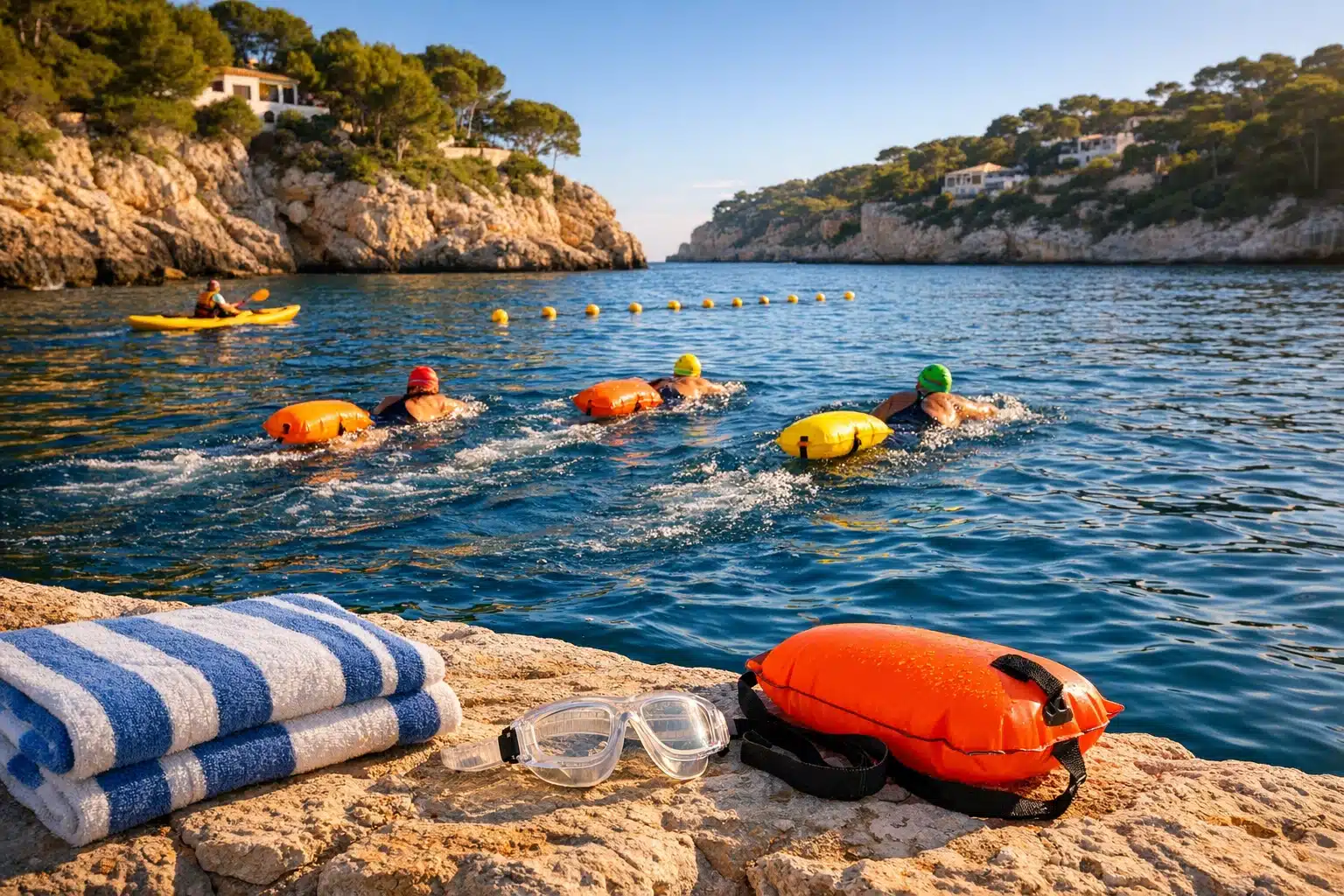
- Using bright caps, tow floats, or partners when swimming outdoors
Swimming rewards patience. The water does not respond well to forceful impatience, but it responds remarkably well to consistency, awareness, and respect. Train with a plan, listen to your body, and let technique carry part of the load.
Conclusion for New and Returning Swimmers: Building a Habit That Lasts
If you are new to swimming, or if you have been away from it for years, the smartest approach is not to chase perfect form on day one. Start with frequency, comfort, and manageable goals. Two or three short sessions a week can be more useful than one exhausting effort that leaves you discouraged. Focus first on breathing calmly, floating comfortably, and moving with control. Speed can wait. Endurance can wait. Confidence is the first milestone that makes every later milestone possible.
For recreational swimmers who already enjoy the water, the next step is usually variety. Rotate strokes, include simple drills, and alternate easy days with more focused sets. That keeps training interesting and develops broader skill. If fitness is the goal, measure progress with practical markers rather than dramatic expectations. You might notice that your rest periods shrink, your stroke count becomes more consistent, or a distance that once felt long now feels routine. Those are meaningful signs of growth.
For adults balancing work, family, and limited free time, swimming offers unusual efficiency. It trains the heart and lungs, challenges major muscle groups, and provides mental reset in the same session. The pool can feel like a small pocket of order in an overfull day. No notifications, no traffic, no clutterjust breath, movement, and the quiet arithmetic of one lap followed by the next. That simplicity is part of its appeal.
A sustainable starting plan can be very simple:
- Choose realistic session lengths, such as 20 to 40 minutes
- Set one technical focus each week instead of trying to fix everything
- Track consistency, not just distance or speed
- Ask for instruction if breathing, floating, or timing feels frustrating
- Keep the experience enjoyable enough that you want to return
Swimming is not only for racers, former club athletes, or naturally confident people. It is for the curious beginner, the careful rebuilder, the fitness-minded adult, and the person who simply feels better after time in the water. If that sounds like you, the invitation is straightforward: begin where you are, learn patiently, and let the habit grow one honest session at a time.