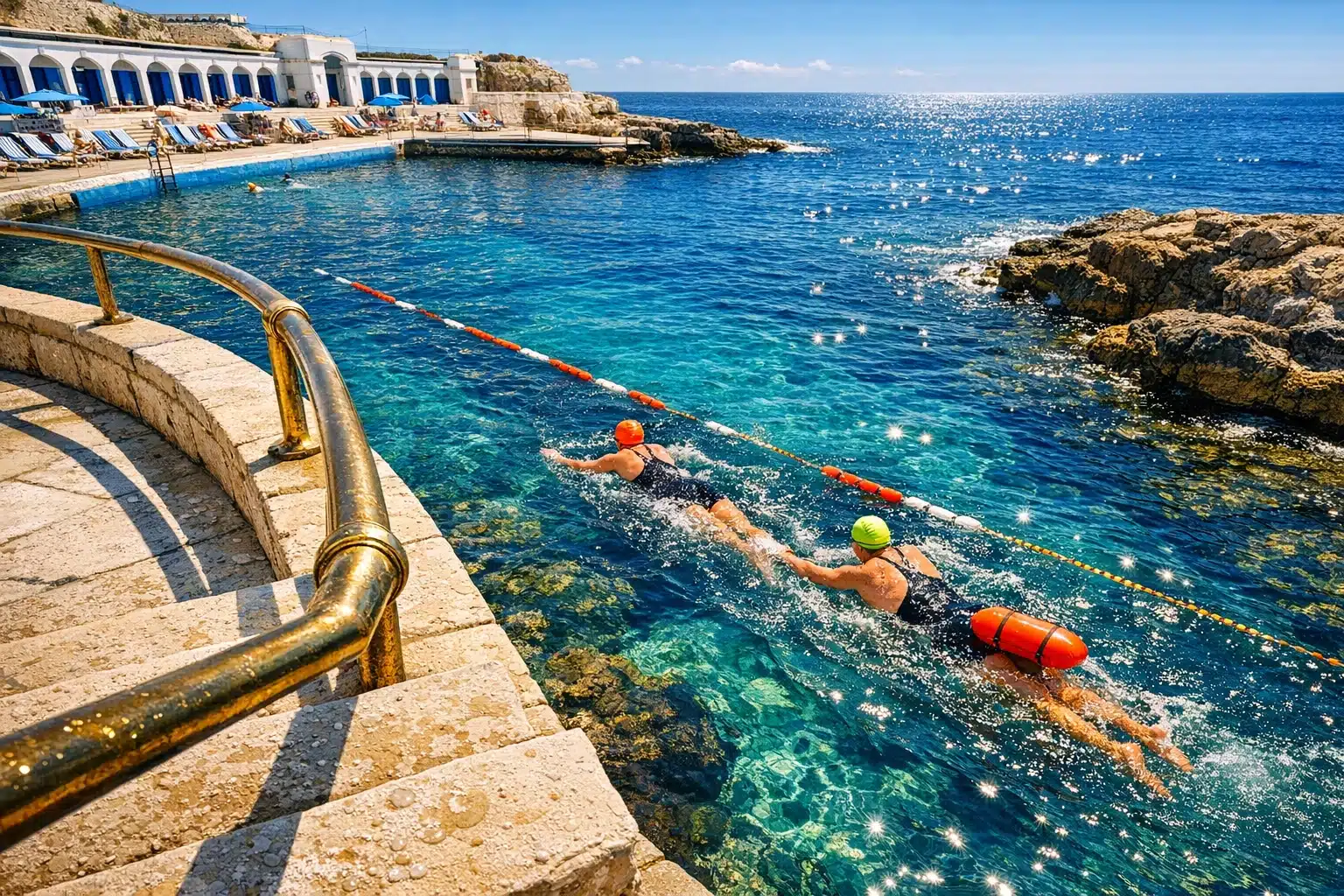
Explore the world of swimming
Swimming blends play, discipline, and everyday usefulness in a way few activities can match. It strengthens the body without the pounding many land-based workouts bring, while also teaching water confidence that can become a genuine safety skill. This article follows the subject from core strokes and training principles to health effects, equipment choices, and the culture that surrounds the lane line. If you have ever wondered why the pool keeps calling people back, the sections ahead offer plenty of reasons to stay and learn.
Outline: 1. Why swimming matters as both a sport and a life skill. 2. How the main strokes differ in technique, rhythm, and purpose. 3. What science and experience say about swimming for health and fitness. 4. How to train safely in pools and open water while avoiding common mistakes. 5. How readers can make swimming a realistic and rewarding part of daily life.
Why Swimming Matters: More Than a Sport, More Than a Workout
Swimming is often introduced as a recreational activity, yet that description barely covers its reach. It is a sport, a survival skill, a form of therapy, a social activity, and for many people, a lifelong exercise option. Few physical activities move across age groups as smoothly. A child can start with floating games, a teenager may discover racing, an adult might use swimming for stress relief or triathlon training, and an older person may return to it because it is gentler on the knees, hips, and back than many land-based exercises.
One reason swimming remains so relevant is that water changes the rules of movement. Buoyancy reduces the load placed on joints, while resistance creates steady work for muscles. That combination is unusual. Running can build stamina, and strength training can build power, but swimming asks the body to coordinate breathing, balance, rhythm, and propulsion all at once. It is almost like solving a moving puzzle while exercising. The water gives support, but it also refuses shortcuts. If your timing is off, you feel it immediately.
Swimming also carries a practical importance that goes beyond fitness. Water safety is not a minor extra. Knowing how to float, tread water, control breathing, and move efficiently can reduce panic and improve decision-making in an emergency. For parents, this is one of the strongest arguments for swimming lessons. For adults who never learned properly, it is a reminder that it is never too late to gain a skill with real-world value.
Its variety adds to its appeal. Swimming can be:
• quiet and meditative during an easy morning session
• highly structured in a coached workout
• competitive in races from 50 meters to marathon open-water events
• rehabilitative after injury under professional guidance
There is also a cultural dimension. Pools, lakes, rivers, and coastlines all shape how communities relate to swimming. In some places it is tied to school programs and public health. In others it is woven into beach life, local clubs, or endurance sports. That broad identity helps explain why swimming keeps renewing itself generation after generation. It is not locked into one purpose. It can meet people where they are, whether they want exercise, skill, confidence, or simply a place to clear the mind.
Understanding the Strokes: Technique, Efficiency, and the Feel of the Water
To an observer, swimming strokes may look like a set of formal patterns. In practice, each stroke has its own logic, strengths, and learning curve. The four competitive strokes are freestyle, backstroke, breaststroke, and butterfly, and each teaches something different about movement in water. Freestyle is usually the first serious stroke people learn because it is efficient, adaptable, and commonly the fastest. The body stays long, the kick helps balance, and the rotating torso makes breathing possible without stopping forward motion. When freestyle feels smooth, it can seem less like fighting water and more like borrowing its momentum.
Backstroke flips the situation quite literally. Because the swimmer is on the back, breathing is less stressful than in freestyle, but body alignment becomes more demanding. Hips that sink create drag quickly. Many beginners like the freedom of not having to turn the head to breathe, while others find it strange to move in a straight line without looking forward. Backstroke is excellent for teaching posture, rotation, and awareness of how small changes in body position affect speed.
Breaststroke is often seen as the most approachable stroke for casual swimmers because the pace can be relaxed and the head can rise more naturally. Yet technical breaststroke is harder than it looks. Timing matters a great deal. Pull too early, kick too wide, or glide too long, and the stroke loses efficiency. Among the four strokes, breaststroke tends to have the most distinct rhythm: pull, breathe, kick, glide. It is less about constant turnover and more about sequencing.
Butterfly is the stroke that draws the most attention. It is powerful, dramatic, and demanding. The motion relies on whole-body timing, with both arms recovering together and the torso driving a wave-like action through the water. Butterfly is not just about strength. Poor timing makes it exhausting very quickly, while good timing makes it surprisingly fluid. That contrast teaches an important lesson found across all swimming: technique often matters as much as effort.
A useful comparison for readers is this:
• Freestyle rewards efficiency and endurance.
• Backstroke rewards alignment and rotation.
• Breaststroke rewards timing and rhythm.
• Butterfly rewards coordination and controlled power.
Many recreational swimmers do not need all four strokes to enjoy the water, but learning the basics of each expands body awareness and reduces monotony in training. Different strokes also spread workload across muscle groups and movement patterns. A swimmer who understands stroke differences does more than collect techniques. They begin to read the water better, and that changes everything from confidence to performance.
Health Benefits of Swimming: What the Water Does to the Body and Mind
Swimming has long been praised as full-body exercise, and that description is deserved, though it can sound vague until you unpack it. In a typical session, the shoulders, back, chest, core, glutes, and legs all contribute to movement. Even breathing becomes active work. Unlike many forms of exercise where inhaling and exhaling happen in the background, swimming forces breath control into the foreground. That is one reason beginners may feel challenged even at easy paces. The heart and lungs are working, but so is timing.
For cardiovascular health, swimming can support improved endurance when practiced consistently. Lap sessions that alternate moderate and harder efforts can raise heart rate in a structured way, similar in principle to interval training on land. Depending on body size, technique, and intensity, an hour of swimming often uses a substantial amount of energy, sometimes comparable to brisk running or cycling, though exact calorie burn varies widely. What matters more than chasing a perfect number is the fact that swimming can be both demanding and sustainable.
Its lower-impact nature makes it especially appealing for people managing joint stress. Water supports body weight, which may help reduce discomfort during exercise for some individuals with arthritis, previous injuries, or general sensitivity to impact. This is why swimming and water-based exercise are commonly recommended as part of broader fitness or rehabilitation plans, always depending on personal medical guidance. The pool can feel like a rare place where movement becomes possible again without sharp feedback from every step.
Mental benefits deserve equal attention. Repetitive laps create rhythm, and rhythm can calm the mind. Many swimmers describe a session as mentally cleansing, not because the water performs magic, but because breathing patterns, steady repetition, and sensory focus crowd out noise for a while. There is evidence that regular physical activity supports mood, sleep quality, and stress management, and swimming fits well within that picture.
Other practical health advantages include:
• improved muscular endurance through repeated resisted movement
• better posture awareness, especially in strokes that emphasize length and alignment
• flexibility demands around the shoulders, ankles, and thoracic spine
• a training option for hot weather when outdoor exercise feels harsh
That said, swimming is not automatically perfect for everyone. Poor technique can irritate shoulders, and some people dislike chlorinated environments or struggle with access to pools. Still, its mix of aerobic challenge, whole-body coordination, and joint-friendly movement explains why it remains one of the most respected and widely recommended physical activities in the world.
Training, Safety, and Common Mistakes in Pools and Open Water
A good swimming routine is rarely built on intensity alone. It is built on progression, consistency, and respect for the environment. Many new swimmers make the same understandable mistake: they try to turn every session into a test. Because even short distances can feel hard at first, there is a temptation to push through fatigue with sloppy technique. The better approach is to divide training into manageable pieces. Short repeats with rest, simple drills, and pace awareness usually produce more improvement than grinding out exhausted lengths.
A balanced session often includes a warm-up, a skill phase, a main set, and an easy finish. For example, a swimmer might begin with relaxed laps, then practice kicking or breathing drills, then complete several moderate intervals, and finally cool down at an easy pace. This structure matters because swimming is technical. Fresh attention at the start helps build skill, while the main set develops fitness without turning the whole session into chaos.
Common technical mistakes include lifting the head too high, kicking from the knees instead of the hips, crossing arms over the center line in freestyle, and holding the breath rather than exhaling smoothly underwater. These errors usually create drag or tension. In water, inefficiency is costly. A tiny flaw can feel like someone quietly adding weight to every movement. That is why lessons, video feedback, or occasional coaching can be so valuable, even for adults who are not interested in racing.
Safety deserves its own spotlight. In a pool, basic rules matter: know lane etiquette, avoid diving in shallow water, and respect signs of fatigue or cramping. In open water, the demands multiply. Visibility changes, currents shift, temperatures vary, and distances can feel different without walls for rest or orientation. Open-water swimmers should consider:
• checking weather and local water conditions before entering
• using a bright cap and, where appropriate, a tow float for visibility
• swimming with a partner or under organized supervision
• understanding cold-water risk, including rapid loss of coordination
Beginners sometimes assume open water is just pool swimming without lane ropes. It is not. It requires navigation, composure, and environmental judgment. Even strong pool swimmers may need time to adapt. On the other hand, learning both settings can make a swimmer more complete. The pool sharpens technique and pacing. Open water teaches awareness and calm under changing conditions. Together they create a richer understanding of what swimming really asks of the body and mind.
Making Swimming Part of Real Life: A Practical Conclusion for Curious and Committed Readers
If you are new to swimming, returning after years away, or wondering whether it deserves a place in your routine, the most useful conclusion is also the most reassuring one: you do not need to become a fast swimmer to gain meaningful value from the water. Progress in swimming often arrives quietly. One week you stop panicking during breathing. Another week you notice your kick no longer feels frantic. Then, almost without ceremony, the pool changes from a challenge you endure into a space you understand.
For most readers, the smartest starting point is modest. A basic swimsuit, goggles that fit properly, and access to a supervised pool are enough to begin. Fancy gear can wait. Kickboards, pull buoys, fins, paddles, smart watches, and open-water accessories all have their place, but they are tools, not substitutes for skill. A swimmer with simple equipment and good habits will usually improve more steadily than someone carrying a full bag of gadgets without a plan.
It also helps to choose a realistic goal. Different readers may want different things:
• parents may want children to become safer and more confident in water
• adults with joint concerns may want sustainable exercise
• recreational athletes may want cross-training for running or cycling
• competitive personalities may want times, technique goals, or event preparation
Once the goal is clear, consistency becomes easier. Two or three well-planned sessions per week can be enough to build confidence and noticeable fitness over time. Variety keeps motivation alive. One session can focus on easy endurance, another on drills, and another on mixed strokes or short intervals. If public pools feel intimidating, off-peak hours or beginner classes can make the first steps more comfortable. Most experienced swimmers remember their own awkward beginnings better than they let on.
Swimming rewards patience more than bravado. The water does not care about ego, but it responds beautifully to attention. That is part of its charm. For readers deciding whether to invest time in it, the answer is simple: swimming offers exercise, skill, safety, and mental refreshment in one activity, and few pursuits combine those benefits so neatly. Whether you swim for health, confidence, competition, or pure enjoyment, the lane ahead is wide enough to meet you where you are and long enough to keep teaching you something new.