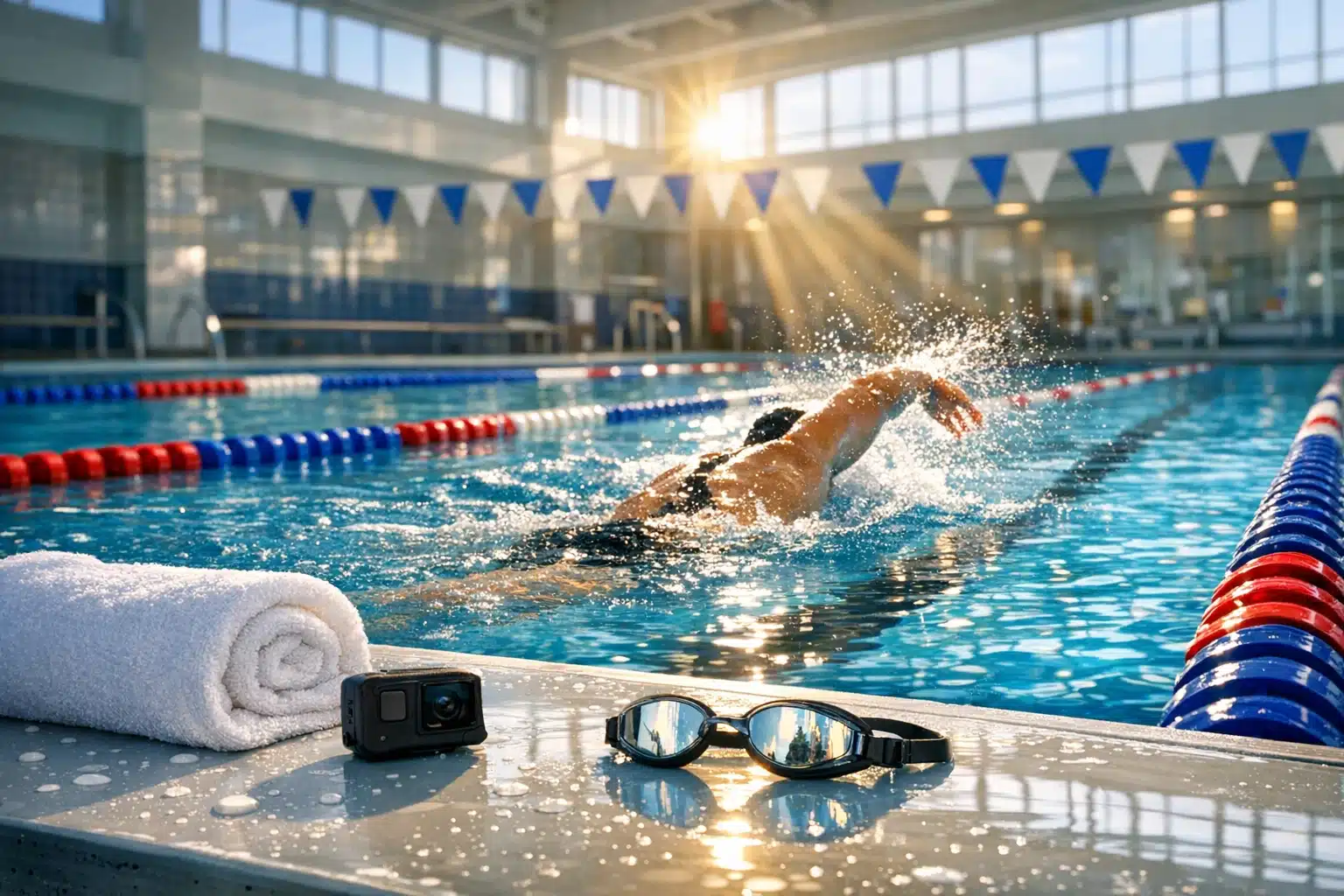
Explore the world of swimming
Swimming sits at the meeting point of survival, sport, and simple joy, which is why it matters far beyond the pool deck. It strengthens the heart, challenges the lungs, and trains the whole body without the jarring impact that many land-based exercises create. For children, adults, athletes, and older beginners, it offers a rare mix of practical safety and lifelong fitness. This article explores how swimming works, why it remains relevant today, and how readers can approach it with more confidence and curiosity.
Article outline: this guide begins with swimming’s broader importance in daily life, moves into physical and mental benefits, compares the main strokes, explains safe learning and training habits, and ends with a reader-focused conclusion on how to make swimming part of a lasting routine.
Swimming in Human Life: From Basic Survival to Modern Recreation
Swimming has a special place among physical activities because it began as a necessity long before it became a pastime. People first learned to move through water for survival, travel, fishing, and military purposes, and that practical origin still shapes how swimming is taught today. A person who knows how to float, breathe calmly, and cover a short distance in water holds a skill that can be genuinely life-protective. That alone separates swimming from many other forms of exercise. You can stop playing tennis, pause cycling, or skip a run with little consequence, but water competence carries weight in emergencies, family outings, and everyday confidence near pools, lakes, and coastlines.
Modern swimming grew into something much broader than survival training. It now exists in several overlapping worlds: recreation, fitness, rehabilitation, competition, education, and tourism. One swimmer may use the pool as a quiet refuge after work, another may race at regional meets, and a third may join lessons simply to feel less anxious during beach vacations. This flexibility makes swimming unusually inclusive. A fast teenager training for medals, a parent introducing a child to the shallow end, and an older adult rebuilding movement after an injury can all share the same facility while pursuing very different outcomes.
Compared with many land-based sports, swimming also changes the emotional texture of exercise. Water does not behave like a track or a gym floor. It supports the body, resists every motion, and softens sound, creating an environment that can feel both demanding and calming. For some people, entering a pool feels like stepping into a workshop where technique matters. For others, it resembles entering a second landscape, one where effort ripples outward and every mistake immediately speaks back through drag, balance, and breath.
Several factors explain why swimming remains relevant across generations:
• It teaches practical water safety.
• It suits both casual and structured participation.
• It can be adapted for different ages and abilities.
• It connects exercise with leisure in a natural way.
That combination of utility and enjoyment gives swimming remarkable staying power. Few activities can claim such a wide range of uses while still feeling approachable to beginners. Whether a person enters the water for health, confidence, or pure pleasure, swimming meets them at a very human level: it asks for respect, rewards patience, and offers a skill that can last for life.
How Swimming Benefits the Body and Mind
One of swimming’s greatest strengths is that it trains the body in a comprehensive way without relying on impact. When you swim, the arms pull, the legs kick, the core stabilizes, and the breathing system must coordinate with rhythmic movement. Instead of isolating a single muscle group, the water invites the body to work as a connected unit. That makes swimming especially useful for people who want a full-body workout but prefer to avoid the repetitive pounding that can come with some forms of running or jumping. Because water supports part of the body’s weight, many people with joint sensitivity find the pool more comfortable than hard surfaces.
Cardiovascular fitness is one of the clearest benefits. Steady lap swimming can raise the heart rate, improve endurance, and help people work toward public health recommendations that often suggest at least 150 minutes of moderate aerobic activity per week. The exact training effect depends on stroke choice, pace, rest periods, and individual fitness level, but the principle is consistent: swimming can be gentle enough for beginners and intense enough for highly conditioned athletes. A relaxed breaststroke session and a demanding butterfly set may happen in the same lane at different times, yet they sit on very different ends of the effort spectrum.
The mental side matters just as much. Swimming places unusual attention on breathing, timing, and body awareness, which can sharpen concentration and reduce mental clutter. Many swimmers describe the water as a reset button. The outside world becomes quieter, the face turns toward a black line or an open horizon, and the mind has fewer places to wander. That does not make swimming a cure for stress, and it should never be described as a magical fix, but it can be a steady and realistic tool for emotional regulation. Structured motion, controlled breathing, and a predictable environment often create a sense of calm that complements the physical workout.
Benefits often associated with regular swimming include:
• improved aerobic capacity
• better muscular endurance
• increased shoulder, hip, and ankle mobility when technique is sound
• lower impact on joints than many land activities
• enhanced comfort and confidence in water
Swimming also works well for different life stages. Children develop coordination and safety skills, working adults gain an efficient exercise option, and older adults often appreciate the combination of movement and support. Rehabilitation programs sometimes include aquatic exercise because buoyancy changes how forces move through the body, although specific plans should always come from qualified professionals. In practical terms, swimming succeeds because it does not force people into one rigid identity. You do not need to become a racer to benefit from the pool. You simply need a reason to begin and a routine sturdy enough to bring you back.
Understanding the Main Strokes and What Each One Offers
Swimming becomes much more enjoyable when the major strokes stop looking like a blur of splashing arms and start making mechanical sense. The four competitive strokes, freestyle, backstroke, breaststroke, and butterfly, each organize movement in a different way. They ask for distinct timing, breathing patterns, and body positions, so comparing them helps readers understand why one style feels natural while another feels almost impossible at first. Technique matters in every stroke, yet the experience of swimming them can feel dramatically different.
Freestyle, usually swum as front crawl, is the fastest and most commonly taught for fitness. The body stays long and relatively horizontal, the arms alternate, and the flutter kick supports balance and propulsion. Efficient freestyle depends heavily on body rotation, a relaxed recovery, and breathing that fits the stroke rhythm rather than interrupting it. Beginners often try to fight the water with short, hurried arm motions, but better freestyle usually comes from streamlining and patient mechanics. If swimming were a language, freestyle would be the everyday vocabulary: useful, flexible, and widely understood.
Backstroke shares some features with freestyle because the arms alternate and the kick remains continuous, yet being face-up changes everything. Breathing becomes easier because the mouth and nose are clear of the water, but orientation can feel awkward because the swimmer cannot see the direction of travel in the same way. Backstroke often helps learners understand hip position and balance. It can also offer a welcome contrast during training because it opens the chest and varies muscle emphasis. Some swimmers who feel boxed in by face-down strokes find backstroke unexpectedly liberating.
Breaststroke is often the first stroke casual swimmers use comfortably because the head rises more naturally and the pace can feel manageable. Still, good breaststroke is highly technical. The pull, breath, kick, and glide must happen in clean sequence. Poor timing turns it into a tiring struggle, while proper timing gives it a smooth, economical rhythm. Butterfly sits at the other extreme for many learners. It uses simultaneous arm recovery and a dolphin kick driven through the body, demanding coordination, strength, and timing. Butterfly is beautiful when done well, but it punishes rushed technique quickly.
A simple comparison helps:
• Freestyle: fastest for most swimmers and highly efficient for fitness.
• Backstroke: useful for balance, posture awareness, and varied breathing.
• Breaststroke: approachable for many beginners but deceptively technical.
• Butterfly: powerful, demanding, and best learned in careful stages.
Choosing a stroke depends on purpose. Someone training for endurance may favor freestyle, a learner building confidence may spend time on backstroke and breaststroke, and an advanced swimmer may use butterfly for power and challenge. No stroke is automatically better in every setting. Each one teaches a different conversation with the water, and together they turn swimming from simple movement into a skillful craft.
Learning to Swim Safely and Building a Smart Training Routine
Swimming skill grows best when safety and technique develop together. Many beginners want to jump straight into distance or speed, yet the wiser starting point is water comfort. Before worrying about lap counts, a learner should understand how to enter and exit safely, float on the front and back, submerge the face without panic, and recover to standing in shallow water. These basics create trust, and trust changes everything. A tense swimmer burns energy quickly, while a calmer swimmer can listen, adjust, and improve. Lessons with a qualified instructor often accelerate progress because small corrections in breathing, body line, or kick timing can prevent months of frustration.
Training should follow a gradual pattern instead of dramatic bursts of ambition. New swimmers often make one of two mistakes: they do too much too soon, or they repeat poor mechanics until fatigue locks them in. A stronger approach is to build sessions around short repeats, purposeful rest, and one technical focus at a time. For example, a practice may center on exhaling underwater, maintaining a long body position, or learning bilateral breathing in freestyle. Progress in swimming is rarely linear. One day the water feels smooth and cooperative; the next day it seems to resist every inch. That is normal, and it is one reason patience is such a valuable part of training.
Equipment can help when used thoughtfully. Goggles improve visibility and reduce distraction. A kickboard can isolate leg work, although relying on it too heavily may hide balance issues. Pull buoys, fins, and paddles each have a place, but none should replace sound technique. The most useful tools are often simple habits:
• warm up before harder efforts
• rest when form collapses
• learn lane etiquette in shared pools
• stay hydrated even when you do not feel sweaty
• respect lifeguard instructions and local rules
Open water introduces additional considerations. Lakes, rivers, and oceans are not pools with prettier scenery. Temperature, currents, visibility, weather, and boat traffic can all change the risk level. Even confident pool swimmers should approach natural water carefully, ideally with supervision, flotation support when appropriate, and knowledge of local conditions. The horizon may look inviting, but open water does not negotiate with overconfidence.
For long-term improvement, consistency beats heroic sessions. Two or three well-planned swims per week usually do more than an occasional all-out workout followed by long gaps. Technique drills, aerobic sets, and recovery days all matter. A smart routine treats swimming like a skill to be refined rather than a punishment to be survived, and that mindset keeps progress sustainable.
A Conclusion for Readers: Making Swimming Part of Real Life
For most readers, the biggest question is not whether swimming is admirable, but whether it fits ordinary life. The encouraging answer is yes, and it fits in more than one way. You do not need a competitive background, perfect technique, or expensive gear to benefit from time in the water. What you do need is a realistic entry point. That may mean beginner lessons at a local pool, one quiet lap session each week, family water-safety practice, or cross-training to support another sport. Swimming rewards the person who shows up consistently far more than the person who waits for ideal conditions.
The modern swimming world offers many paths. Some people thrive on structure and sign up for coached sessions, masters groups, or triathlon training. Others prefer recreational laps, hotel pools during travel, or open-water outings with experienced partners. Children may enter swimming through lessons and games, while adults often return to it after years away because they want exercise that feels sustainable. This variety is one of the sport’s strongest qualities. Swimming can be serious without becoming severe, and it can stay playful without becoming aimless.
There is also value in the community around swimming. Pools bring together people who would never otherwise meet: retirees counting steady lengths, students training before sunrise, parents cheering from plastic chairs, and beginners celebrating a first full lap without stopping. In those moments, swimming stops being just a workout and becomes a shared culture built on discipline, patience, and modest personal victories. Even the smallest milestone can feel vivid in the water. A smoother breath, a longer glide, or a calmer deep-end turn may not attract applause, yet those changes often matter deeply to the person achieving them.
If you are considering swimming, start with a clear purpose:
• choose safety if you are uncomfortable around water
• choose fitness if you want low-impact conditioning
• choose variety if other workouts feel stale
• choose skill-building if you enjoy technical progress
Swimming asks for respect, but it gives back generously. It can strengthen the body, steady the mind, and expand everyday confidence in ways that remain useful for years. For readers at any stage, from cautious beginner to returning athlete, the best next step is simple: begin where you are, learn deliberately, and let the water teach you one honest lesson at a time.