Explore the world of swimming
Swimming sits at a rare crossroads where sport, skill, therapy, and recreation meet in the same lane. It can test elite athletes, welcome cautious beginners, and give people with sore joints a way to move without pounding impact. From public pools to open water, its reach is broad and its lessons are genuinely useful. Learning how swimming works helps readers train better, stay safer, and enjoy the water with far more confidence.
Outline: 1. Why swimming matters and what makes it different from many land-based activities. 2. The main strokes, technical foundations, and how they compare in speed, effort, and coordination. 3. The physical and mental benefits of regular swimming, supported by practical examples and widely accepted health guidance. 4. Training methods, gear choices, and the differences between pool swimming and open-water swimming. 5. Safety, etiquette, and a practical conclusion for beginners, returning swimmers, and fitness-minded readers.
Why Swimming Matters: A Sport, a Life Skill, and a Different Kind of Exercise
Swimming occupies an unusual place in human activity because it is both a competitive sport and a practical survival skill. A person may swim to race, rehabilitate, relax, socialize, or simply stay safe around water. Very few forms of exercise carry that kind of range. Running can build endurance, cycling can strengthen the legs, and strength training can improve power, but swimming blends movement, rhythm, breathing control, and environmental awareness in a way that feels almost architectural. The swimmer does not merely move through space; the swimmer negotiates with the water, which supports and resists at the same time.
One reason swimming stands out is the medium itself. Water is far denser than air, which means every stroke meets resistance from multiple directions. That resistance can help develop muscular endurance in the shoulders, back, core, and legs without the repeated impact that comes from pounding pavement. For many adults, especially those managing joint discomfort, that makes swimming a welcome alternative to high-impact exercise. Immersion also changes how the body feels weight, so movement can seem smoother and more forgiving than it does on land.
Its relevance reaches beyond exercise science. Swimming lessons are strongly associated with water safety, and in many communities that matters as much as physical fitness. Beaches, lakes, rivers, and hotel pools are part of ordinary life for millions of people. Knowing how to float, breathe calmly, and move efficiently in water can reduce panic and improve decision-making in unexpected situations. Even recreational swimmers benefit from that confidence. There is a huge difference between splashing around and understanding how to rest, turn, and travel with purpose.
Swimming also adapts well to different ages and goals. Children often begin with playful instruction that teaches buoyancy and comfort. Teenagers may move into club programs or school teams. Adults frequently use swimming to improve cardiovascular fitness or balance another sport such as running. Older swimmers often value the way the pool allows regular training with less joint stress.
- It can serve as exercise, recreation, and safety education at once.
- It provides resistance without relying on hard impact.
- It suits a wide range of ages, body types, and training goals.
- It teaches calm breathing and body control in a changing environment.
There is also a mental dimension that many swimmers mention before they mention lap times. Pools have a steady rhythm: the push from the wall, the bubbles at the ears, the black line sliding beneath the body, the brief turn, and then the return. That repeated pattern can feel meditative without being passive. Unlike some activities that invite distraction, swimming tends to demand presence. You notice your breath, your timing, your posture, and your pace. In a noisy week, that focused simplicity can feel like opening a quiet door.
The Main Strokes and the Technical Foundations Behind Efficient Swimming
Anyone can enter the water and move around, but efficient swimming depends on technique more than many beginners expect. Strength helps, of course, yet skill often matters first. Two swimmers with similar fitness can perform very differently if one keeps a balanced body position, breathes smoothly, and catches the water well, while the other lifts the head too high, kicks unevenly, and fights the surface. In swimming, small adjustments can produce surprisingly large gains because drag punishes wasted motion.
Freestyle, usually called front crawl, is the stroke most people think of first. It is generally the fastest and most efficient stroke for distance. The body remains long and horizontal, the kick is relatively compact, and the alternating arm action allows a continuous rhythm. Good freestyle depends on rotation through the torso, not just windmilling the arms. Breathing should happen with a quick turn of the head rather than a dramatic lift, because lifting the head causes the hips to sink and increases resistance. For many learners, freestyle feels exciting at first and frustrating soon after, because breathing timing can unravel the whole pattern.
Backstroke is often underestimated. Because the face stays above water, some beginners assume it is automatically easier. In reality, it requires body awareness, straight alignment, and trust in balance. Since the swimmer cannot see the direction of travel clearly, counting strokes or using ceiling markers becomes useful in pools. Backstroke encourages shoulder mobility and can help swimmers feel what a streamlined body line should be, but it also exposes flaws in kick rhythm quickly.
Breaststroke is distinctive because of its glide and timing. It is often learned earlier in recreational settings because many people find the breathing pattern intuitive. However, efficient breaststroke is technical rather than simple. The pull, breath, kick, and glide must happen in sequence, and the kick must be precise. A wide, uncontrolled movement wastes energy. Competitive breaststroke is powerful and highly refined, while casual breaststroke often turns into a gentle, social stroke for steady movement.
Butterfly is the most demanding of the standard strokes for many swimmers. It requires coordination, upper-body strength, timing, and a well-controlled dolphin kick. When done well, it looks dramatic and smooth, almost like the swimmer is rising and folding with the water. When done poorly, it becomes exhausting very quickly. That does not mean ordinary swimmers should avoid it; even short butterfly drills can improve rhythm and body awareness.
- Freestyle: fastest for most people and useful for endurance.
- Backstroke: great for posture awareness and shoulder rhythm.
- Breaststroke: technical timing with a clear glide phase.
- Butterfly: demanding, powerful, and best approached gradually.
Across all strokes, several fundamentals matter repeatedly: a long body line, relaxed but purposeful breathing, controlled kicks, and an effective catch with the hands and forearms. Coaches often use drills to isolate these elements. A kickboard may help focus on leg work, while side-kick drills can improve balance. Pull buoys reduce leg involvement so swimmers can feel the upper-body pattern more clearly. The comparison is simple: strong effort can keep you moving, but polished technique lets effort travel farther. In a sport ruled by drag, efficiency is not a luxury; it is the difference between fighting the water and partnering with it.
Health, Fitness, and the Mental Value of Time in the Water
Swimming is often praised as a full-body workout, and that description is fair, though it deserves more detail. The activity challenges the cardiovascular system, builds muscular endurance, improves coordination, and can support flexibility through repeated movement across a broad range of motion. Because the body works against water resistance, even moderate swimming can feel substantial without producing the same joint impact as some land-based exercise. For people who want variety in their routine, that combination is especially appealing.
From a health perspective, swimming fits neatly into standard physical activity guidance. Public health organizations such as the World Health Organization recommend regular aerobic activity each week, and swimming can contribute directly to those targets. Depending on pace, stroke, body size, and session length, a swimmer can achieve moderate or vigorous effort. A steady recreational swim may build basic endurance, while interval sets with short rests can push heart rate and challenge recovery. In practical terms, that means the same pool can serve a beginner seeking gentle movement and an experienced athlete chasing demanding training.
The muscular benefits are different from what people often feel in a weight room. Swimming does not usually produce maximal strength in the same way heavy lifting does, but it develops sustained force production and coordination throughout the body. Freestyle and butterfly recruit the back, shoulders, chest, core, and hips in a continuous chain. Breaststroke places unique demands on timing and leg mechanics. Kicking sets can tax the lower body, while pulling sets shift focus to the upper body. Over time, swimmers often notice better postural awareness because the trunk has to stabilize while the limbs move through resistance.
Calorie use is another point of interest, though it should be viewed realistically rather than magically. A 30-minute swim can burn roughly 200 to 400 calories for many adults, and sometimes more, but the actual number changes with intensity, skill level, and stroke choice. Butterfly and hard freestyle generally demand more than an easy breaststroke cruise. Still, the larger point is not the exact number on a tracker. Swimming supports long-term energy expenditure while improving endurance, which can help people maintain consistent exercise habits.
The mental side of swimming deserves equal attention. Many swimmers report that the water creates a structured form of relief from daily noise. You cannot read emails in the middle of a set. You cannot carry a cup of coffee down lane three. For forty minutes, your priorities become immediate and physical: exhale, reach, roll, turn, repeat. That simplicity can lower stress for some people, and exercise in general is often linked with better mood, improved sleep, and reduced feelings of tension. Swimming also gives measurable progress markers, which can be motivating. A swimmer may not feel transformed after one week, but shaving ten seconds off a repeat set or finishing a formerly intimidating distance creates a clear sense of progress.
For rehabilitation and gentle return to exercise, swimming and water-based movement can be useful options when approved by a qualified clinician. The water environment can make movement more comfortable for some people recovering from injury or managing conditions that make impact unpleasant. It is not a cure-all, and certain shoulder issues or medical conditions may require specific guidance, but the pool often becomes a practical bridge between inactivity and more confident movement. In that sense, swimming is not only exercise; it can be a way back into exercise.
Training Smarter: Practice Structure, Useful Gear, and the Difference Between Pool and Open Water
Many people start swimming with enthusiasm and then stall because they treat every session the same way: jump in, do a few lengths, get tired, and leave. A better approach is to give practice a structure. Even a simple session can include a warm-up, a skill phase, a main set, and an easy cooldown. That structure creates purpose, and purpose tends to create progress. Swimmers do not need a coach or a stopwatch obsession to benefit from it; they simply need a plan that matches their current level.
A beginner session might begin with 200 easy meters or yards, broken into manageable lengths if needed. After that, a few drills could target breathing or body position. The main set might be 6 x 50 at a comfortable pace with rest between repeats, followed by a relaxed finish. Intermediate swimmers often use interval work to build endurance and pacing awareness, such as 8 x 100 freestyle with consistent rest. More advanced athletes may rotate sprint days, threshold work, and longer aerobic sessions across the week. The important idea is progression. Volume, intensity, or technical complexity should increase gradually rather than all at once.
- Warm-up: easy swimming to raise temperature and loosen movement.
- Drills: short, focused work on balance, catch, or breathing.
- Main set: the central training task, often based on distance or intervals.
- Cooldown: easy lengths that help the body settle after effort.
Equipment can support training, but it should serve technique instead of replacing it. A good pair of goggles matters more than flashy extras because poor visibility or water leaking into the eyes ruins concentration. Swim caps reduce drag slightly and help keep hair out of the face. Kickboards isolate the legs, pull buoys reduce kicking so swimmers can emphasize arm mechanics, and fins can help beginners feel body position and speed. Hand paddles increase resistance and can sharpen awareness of the catch, though they should be used carefully to avoid overloading the shoulders. A waterproof watch can help with pacing, but it is not essential for someone still learning basic comfort in the water.
Pool swimming and open-water swimming deserve comparison because they look related but feel different. Pools provide lane lines, measured distances, clear edges, and usually predictable temperature. That makes them ideal for technique work and controlled training. Open water introduces variables: currents, waves, visibility, weather, navigation, and temperature changes. A swimmer in a lake or sea must sight forward periodically, manage nerves, and understand safety procedures more carefully. The reward is a powerful sense of freedom. There is no tiled wall every 25 or 50 meters; the horizon becomes part of the experience.
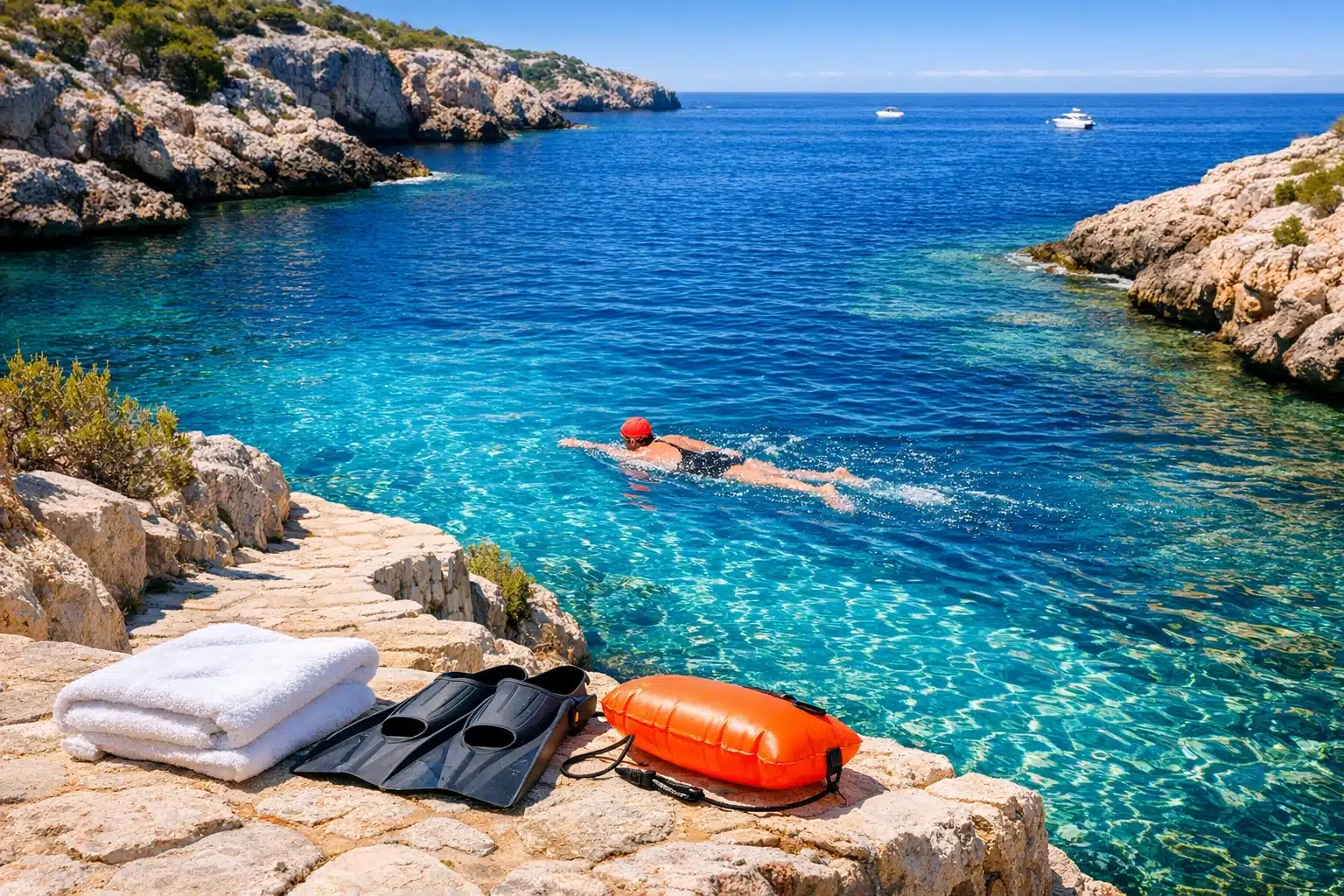
Still, open water is not simply pool swimming without a roof. It requires specific preparation. Swimmers often train with a bright cap, tow float, and a partner or supervised group. They learn entry and exit points, check local conditions, and avoid assuming calm water will stay calm. For fitness-minded readers, the takeaway is straightforward: choose the environment that matches your goals and skill. Use the pool to refine mechanics and pacing. Approach open water with respect, planning, and patience. The best training is not the hardest session you can survive today; it is the one you can repeat consistently, safely, and with improving quality next month.
Safety, Etiquette, and a Practical Conclusion for Everyday Swimmers
Swimming rewards confidence, but it punishes carelessness. That is why safety should be treated as part of the sport rather than an afterthought. Even capable swimmers can misjudge fatigue, temperature, currents, or their own stress levels. In pools, basic precautions include knowing the depth, respecting lane direction, and never assuming everyone around you is paying attention. In open water, the stakes are higher. Conditions can shift, visibility can drop, and distances can feel longer than they appear from shore. A smart swimmer checks the environment first and ego second.
For beginners, one of the most useful habits is choosing manageable goals. Trying to copy experienced swimmers too soon often leads to breathlessness and panic. It is far better to build comfort in stages: floating, exhaling underwater, swimming short distances with control, then extending duration over time. Adults who return to swimming after many years sometimes feel frustrated by how awkward the first sessions seem. That awkwardness is normal. Water has a way of exposing impatience. Progress arrives through repetition, not through forcing the issue.
Etiquette also matters because swimming is often a shared activity. Pool lanes are small ecosystems, and harmony depends on predictable behavior. Circle swimming, passing carefully, resting at the wall without blocking others, and choosing a lane that matches your speed all make the experience smoother. A strong swimmer blasting into a crowded slow lane creates chaos, while a beginner drifting across the center line can do the same accidentally. Courtesy is not decorative; it keeps training efficient and reduces risk.
- Swim where supervision or assistance is available whenever possible.
- Increase distance and intensity gradually instead of suddenly.
- Respect lane rules, other swimmers, and posted safety guidance.
- In open water, avoid solo swims in unfamiliar conditions.
Another practical point is sustainability. The most effective swimming routine is the one that fits real life. Three moderate sessions each week usually beat one heroic workout followed by ten days away from the pool. Some people stay motivated by tracking distance, others by refining technique, and others by linking swimming to stress relief or cross-training. There is no single correct reason to continue. One swimmer chases race times, another wants shoulder-friendly cardio, and another simply enjoys the quiet repetition of laps before work. All of those reasons are valid.
For the target audience of this article, the conclusion is simple and useful. If you are new to swimming, start with comfort, breathing, and short, purposeful practice. If you are returning after a long break, rebuild technique before chasing speed. If you already use the pool for fitness, refine structure, recovery, and stroke efficiency to make each session count more. Swimming offers far more than movement from one wall to the other. It teaches patience, body awareness, and calm under pressure, and those lessons stay valuable long after the towel dries.