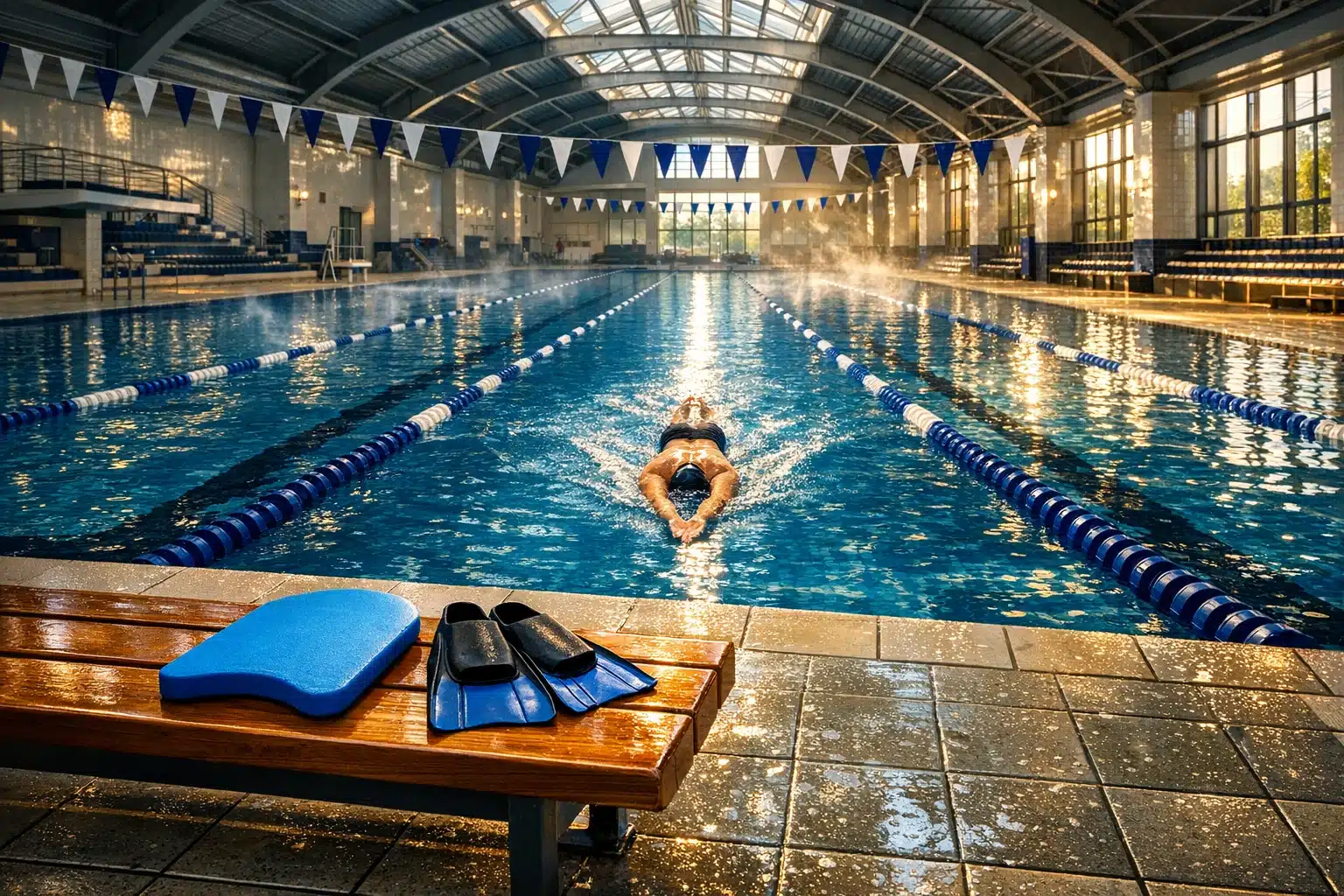
Explore the world of swimming
Swimming is one of those rare activities that feels playful and serious at the same time: a life skill, a competitive sport, and a practical form of exercise. It asks for little more than water, patience, and rhythm, yet it can build endurance, coordination, and confidence across almost every age group. From backyard lessons to Olympic lanes and open-water crossings, swimming matters because it connects safety, health, and human performance in a single flowing motion.
Outline:
- Why swimming matters as a life skill and social practice
- How swimming supports fitness, health, and recovery
- A comparison of the main strokes and the technique behind them
- The differences between pool swimming and open-water swimming, plus gear and safety
- How training, competition, and habit-building turn swimming into a lifelong pursuit
Swimming as a Life Skill and Cultural Practice
Before swimming becomes a sport or a workout, it is first a life skill. That distinction matters. Knowing how to move calmly and effectively in water can reduce risk, improve confidence, and open the door to activities that many people otherwise avoid. Public health organizations and safety advocates have long emphasized water competency because drowning remains a serious preventable danger worldwide. Swimming lessons do not eliminate risk on their own, but they help people recognize hazards, float, breathe, and respond more effectively if something goes wrong. In that sense, learning to swim is less like picking up a hobby and more like gaining a practical form of literacy.
Swimming also has a broad social and cultural role. In some communities it is tied to summer recreation, school programs, and neighborhood pools. In others it is connected to coastal life, fishing traditions, military training, or river crossings. Competitive swimming has global visibility through major events such as the Olympics and World Championships, yet everyday swimming is often quieter and more personal. A child who first manages to float without panic, an adult returning to the water after years away, and a retiree using the pool to stay mobile all participate in the same activity for very different reasons. That range is part of swimming’s appeal.
Compared with many field and court sports, swimming has an unusual relationship with environment. The athlete does not simply move through space; the athlete moves through a resisting medium that pushes back on every limb. Water changes balance, speed, breathing, and orientation. It can feel forgiving because buoyancy supports the body, but it can also feel demanding because inefficient movement is punished immediately. A rushed breath or a poorly timed kick becomes obvious at once. That direct feedback teaches patience. Water has a way of humbling people without humiliating them.
Access, however, shapes who gets to enjoy swimming. Safe facilities, instructors, transportation, and time all affect participation. Communities with well-maintained public pools and affordable lessons tend to create stronger swimming cultures. Where access is limited, fear of water can persist across generations. That is why swim education often carries social value beyond the individual. It can improve safety, expand recreation, and help reduce inequality in who feels welcome around water.
Seen this way, swimming is not merely laps and lane lines. It is a bridge between safety and freedom. It gives people the ability to relax at the beach, join friends on a kayaking trip, train for fitness, or simply feel less intimidated by an environment that covers most of the planet.
Health and Fitness Benefits in and out of the Water
Swimming is often praised as a full-body workout, and in many cases that description is fair. The arms pull, the legs kick, the core stabilizes, and the lungs must adapt to a breathing pattern that is more deliberate than in ordinary daily life. Unlike some exercises that isolate only a few muscle groups, swimming distributes effort across the body. Freestyle asks for shoulder endurance, trunk rotation, hip stability, and coordinated kicking. Breaststroke relies on timing and leg-driven propulsion. Backstroke challenges posture and body alignment. Butterfly, the most physically intense of the common strokes, demands powerful undulation and upper-body strength. Each stroke creates a different training effect, which means swimming can be tailored to many goals.
One of its biggest advantages is low impact. Water buoyancy supports body weight, which generally reduces stress on joints compared with running on hard surfaces. That makes swimming attractive for older adults, people returning to exercise, and individuals managing certain mobility limitations or overuse issues. It is not effortless, but it often feels friendlier to knees, hips, and ankles than high-impact training. For that reason, pools are common places for rehabilitation exercises and cross-training. Many athletes in land-based sports use swimming to maintain aerobic work while giving pounding tissues a break.
Swimming also aligns well with widely recommended activity goals. Health authorities such as the World Health Organization advise adults to accumulate regular moderate or vigorous physical activity each week, and swimming can contribute meaningfully to that target. The exact calorie use depends on body size, stroke, speed, and duration, so there is no single number that fits everyone, but moderate lap swimming can demand substantial energy. More importantly, it improves cardiovascular endurance. Over time, consistent training can help the heart and lungs work more efficiently, which supports stamina in everyday life as well as sport.
Its practical benefits can be grouped clearly:
- Cardiovascular conditioning through sustained rhythmic effort
- Muscle engagement across the upper body, lower body, and trunk
- Reduced joint loading because of buoyancy
- Improved coordination through timed breathing and stroke patterns
- Potential support for stress relief through repetitive movement and sensory calm
The mental side deserves attention too. Many swimmers describe the pool as both gym and refuge. The steady splash, lane markings, and repeated turns can create a meditative rhythm. Others enjoy the opposite feeling: the sharp discipline of intervals, the challenge of pace clocks, and the measurable satisfaction of shaving seconds from a set. Compared with a crowded fitness floor, the lane often strips the task down to essentials. Breathe, pull, kick, repeat.
None of this means swimming is automatically easy or ideal for everyone. Shoulder irritation can occur with poor technique or excessive volume, and some beginners find breathing patterns frustrating. Yet when taught well and practiced consistently, swimming offers a rare combination of aerobic training, muscular work, and recovery-friendly movement that few activities match so neatly.
Understanding the Main Strokes and Core Technique
To a new swimmer, all strokes can look smooth from a distance and surprisingly complicated up close. That is because technique matters enormously in water. On land, people can often force their way through inefficiency with extra effort. In the pool, wasted movement shows up immediately as drag, fatigue, or awkward timing. Learning the main strokes is therefore not just about memorizing limb patterns; it is about understanding how to travel through water with balance and control.
Freestyle, often called front crawl, is generally the fastest and most widely used stroke in fitness and competition. The body stays long and horizontal while the arms alternate in a pulling motion and the legs provide a steady flutter kick. Breathing happens by turning the head to the side rather than lifting it forward, which helps maintain alignment. Freestyle rewards rhythm. When the timing clicks, it can feel like slipping through a moving sheet of glass. When it does not, it can feel like arguing with the water.
Backstroke shares many features with freestyle but flips the swimmer onto the back. Because the face stays above water, many beginners find it less stressful for breathing. At the same time, backstroke demands strong body awareness because there is no direct view of the lane ahead. Good backstroke depends on hip position, shoulder rotation, and a flutter kick that keeps the body high in the water. It is often useful for balancing training loads because it works the body differently and can relieve some of the forward-rounded posture people bring from daily life.
Breaststroke is slower but highly technical. Its pull and kick happen in a coordinated cycle, followed by a brief glide. The whip kick creates much of the propulsion, and timing is everything: pull, breathe, kick, glide. Because the head rises more naturally during the stroke, some recreational swimmers prefer it. However, efficient breaststroke is harder than it appears. Done poorly, it becomes tiring and choppy. Done well, it looks economical and almost serene.
Butterfly is the most demanding of the four standard competitive strokes. Both arms recover together over the water, while the body moves in a wave-like undulation powered by the core and a dolphin kick. Butterfly can build strength and speed, but it punishes poor timing quickly. Even strong swimmers usually manage it best in controlled distances unless specifically trained for it.
Across all strokes, a few technical ideas matter most:
- Body position: staying long and reducing drag
- Breathing control: taking air without disrupting balance
- Propulsion: using the catch, pull, and kick efficiently rather than forcefully
- Timing: linking movements into a repeatable rhythm
Drills are often the bridge between understanding and execution. Kick sets, single-arm work, catch-up freestyle, and sculling can isolate pieces of a stroke so the swimmer feels what the water is doing. That sensory learning is essential. Swimming is not only visual; it is tactile. The hands learn to hold pressure, the lungs learn patience, and the body learns that speed in water often begins with calm.
Pools, Open Water, Gear, and Safety Basics
Not all swimming feels the same, because not all water behaves the same. A lane pool is controlled, measured, and predictable. Distances are known, walls arrive on schedule, and conditions change very little from one length to the next. Open water, by contrast, is variable and alive. Lakes, rivers, and oceans introduce currents, waves, temperature shifts, visibility issues, and the psychological challenge of depth and distance without lane ropes. Neither environment is inherently better; they simply ask for different skills and mindsets.
Pool swimming is ideal for learning technique and tracking progress. Standard competitive pools are usually 25 or 50 meters, though some facilities use yards. That predictable structure helps swimmers measure intervals, pace, and stroke count. Coaches can correct mechanics more easily, and beginners benefit from shallow ends, lifeguards, and clear boundaries. The pool also encourages routine. You can compare a workout from this week with one from last month and get meaningful information from the result.
Open-water swimming offers a different kind of satisfaction. It can feel adventurous, expansive, and deeply immersive. There is no tiled black line to follow, so swimmers must learn sighting, which means briefly looking forward to stay on course. They may also need to manage chop, cold shock, or crowded starts in races such as triathlons. Wetsuits can add buoyancy and warmth in some conditions, but local rules and water temperatures vary. Safety preparation becomes far more important when the environment is less controlled.
Basic gear is refreshingly simple, though quality matters. Many swimmers use:
- A well-fitted swimsuit that stays comfortable through repeated movement
- Goggles with a secure seal and appropriate tint for indoor or outdoor light
- A swim cap to reduce drag and keep hair managed
- A kickboard, pull buoy, or fins for specific drills and training focus
- A bright tow float for visibility in open water where recommended or required
Safety is where good habits matter most. New swimmers should start in supervised settings whenever possible. Open-water swimmers should check weather, currents, entry and exit points, and water quality. Swimming with a partner or organized group is far wiser than going alone. Even strong swimmers can misjudge fatigue or conditions. Cold water deserves particular respect, because it can affect breathing and coordination very quickly.
The smartest approach is to match ambition to environment. A beginner does not need rough surf to become a real swimmer, and an experienced pool athlete should not assume fitness alone guarantees open-water competence. Water is generous, but it is never casual. Respecting its differences is part of what makes swimming both safer and more rewarding.
Training, Competition, and Building a Lifelong Habit
Swimming can be many things at once: a lesson in discipline, a form of play, a serious sport, or simply a reliable routine that keeps a week anchored. That flexibility helps explain why people stay with it for years. Unlike activities that peak sharply in youth, swimming can adapt across life stages. Children may begin with basic water confidence, teenagers might chase race times, adults may use it for fitness or stress relief, and older swimmers often value its sustainable movement patterns. The water keeps changing with the person, which is one reason it continues to hold attention.
Structured training usually combines technique work, aerobic conditioning, and speed development. A typical session might begin with an easy warm-up, move into drills, build toward main sets of repeated distances, and finish with a cooldown. Competitive swimmers often organize training around pace and interval times, while recreational swimmers may focus more on duration, comfort, or stroke variety. Progress does not always arrive as dramatic speed gains. It may appear as steadier breathing, fewer strokes per length, better turns, or the ability to hold form when tired.
Competition adds another layer. In meets, races can be decided by fractions of a second, which makes efficiency crucial. Starts, underwater phases, turns, and finishes matter nearly as much as the central swimming itself. That precision is part of the sport’s appeal. Yet swimming competition is not limited to elite levels. Masters swimming, local meets, open-water events, and triathlons offer goals for adults who discover the sport later. Some people never race formally and still find motivation in personal benchmarks such as completing a nonstop kilometer or attending the pool three times a week for a season.
For people trying to build a lasting habit, a few principles work well:
- Choose a realistic schedule rather than an idealized one
- Focus on technique early so effort produces better movement
- Mix easy sessions with harder ones to avoid burnout
- Use variety in strokes, drills, and distances to keep training interesting
- Track simple markers such as consistency, comfort, and perceived effort
There is also a psychological benefit to repetition. The lane line does not care about yesterday’s emails or tomorrow’s errands. Once the set begins, attention narrows. Count the strokes. Hit the wall. Leave again. In a noisy world, that simplicity can feel luxurious. For some swimmers, progress is the reward. For others, the ritual is enough.
Ultimately, swimming lasts because it meets people where they are. It can welcome ambition without requiring it. It can offer solitude without isolation and challenge without spectacle. Whether someone enters the water to learn safety, rebuild fitness, race seriously, or find a calmer hour in the day, swimming gives back in proportion to the patience brought to it. That is why so many people do not merely try it; they return to it.
Conclusion for Readers Ready to Dive In
If you are curious about swimming, the smartest next step is not to aim for perfection but to begin with purpose. Learn the basics of breathing, floating, and body position in a safe setting, then build confidence through regular, manageable sessions. Over time, swimming can become more than exercise: it can be a safety skill, a stress reliever, a technical craft, and a lifelong source of challenge. For beginners, casual lap swimmers, and future competitors alike, the water rewards consistency, respect, and a willingness to keep learning.