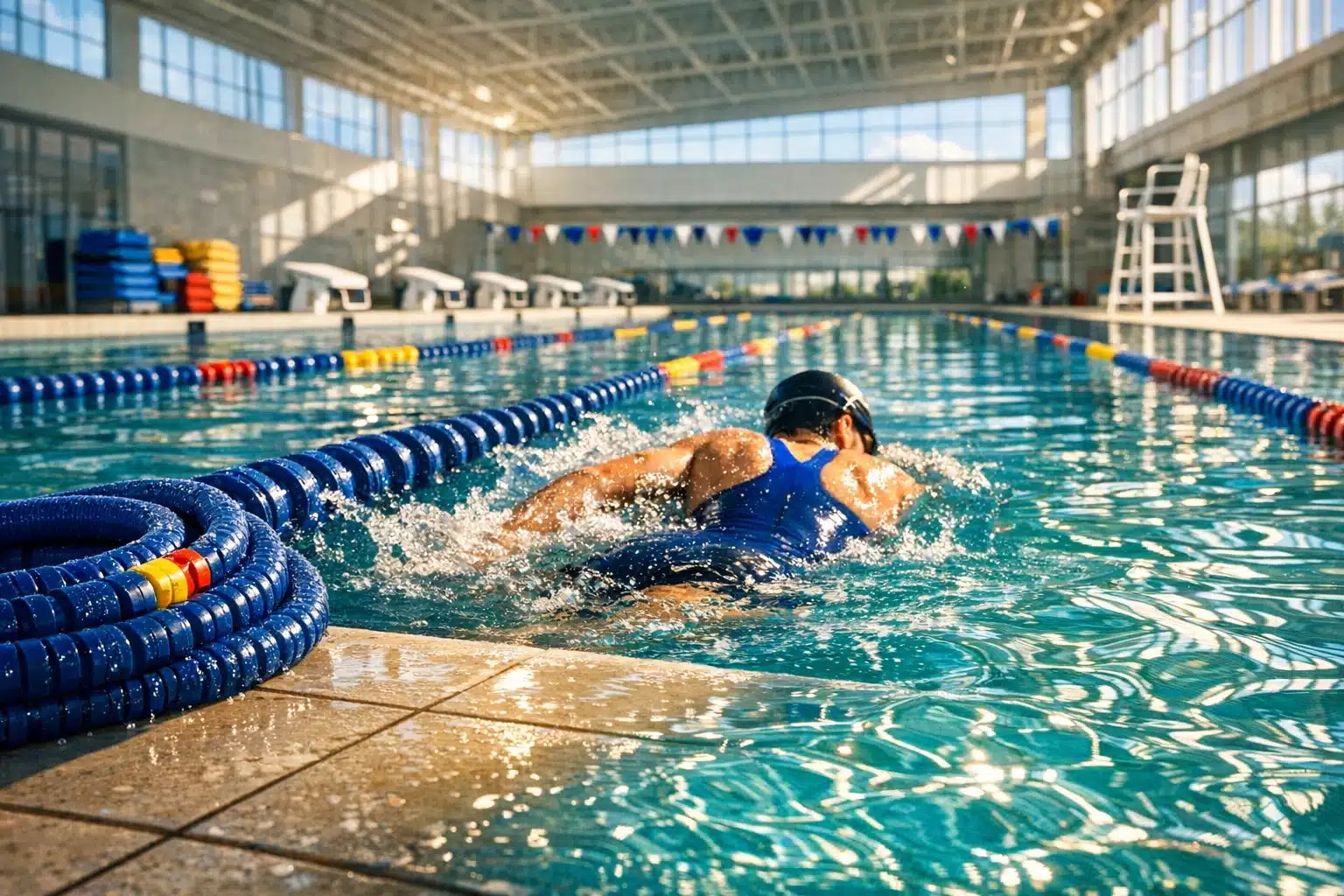
Explore the world of swimming
Swimming sits at the crossroads of sport, survival, and simple enjoyment. A child learning to float, an adult chasing better fitness, and an older swimmer protecting sore joints can all find something valuable in the same lane. Few activities train the heart, challenge the muscles, and calm the mind while also teaching a practical safety skill. That mix of usefulness and pleasure makes swimming worth understanding, not just as exercise, but as a lifelong habit with real depth.
Outline: This article first explains why swimming matters beyond competition. It then looks at how the body moves through water and how the main strokes compare. Next, it examines physical and mental health benefits with practical context. After that, it covers gear, lessons, safety, and beginner-friendly training ideas. Finally, it brings everything together with advice for readers who want to make swimming part of everyday life.
Why Swimming Matters: More Than a Sport
Swimming often gets introduced as a sport, but that description is too narrow. It is also a safety skill, a rehabilitation tool, a social activity, and a form of recreation that can follow a person from early childhood into old age. In many places, access to beaches, lakes, rivers, or pools is part of ordinary life, which means water competence is not a luxury. It is practical knowledge. Public health experts have long treated drowning prevention as a serious issue, and basic swimming ability, along with supervision and safe environments, plays an important role in reducing risk. That alone gives swimming a relevance that goes well beyond medals, stopwatch times, or fitness trends.
From a fitness perspective, swimming is unusually flexible. A relaxed session of easy laps can serve as low-impact aerobic exercise, while a structured interval workout can become intensely demanding. Water supports body weight, so the joints experience less pounding than they would during running or many court sports. That makes swimming appealing to people recovering from injury, managing arthritis, or returning to exercise after a long break. At the same time, the water resists every movement, so even smooth, controlled strokes ask the arms, shoulders, core, hips, and legs to work together. The result is an activity that can feel gentle and challenging at once, a combination few forms of exercise manage so well.
Swimming also stands out because it meets very different emotional needs. Some people love the structure of counting lengths, tracking pace, and refining technique. Others value the sensory side: the muffled sound underwater, the rhythm of breathing, and the cooling effect of the pool on a hot day. For children, the water can feel like a playground with rules; for adults, it can feel like a reset button after hours of screens, traffic, and noise. In a culture that often treats exercise as punishment for sitting too much or eating too freely, swimming offers another story. It can still be disciplined, but it also carries an element of play that keeps many people coming back.
Its accessibility across life stages is another reason it matters. A teenager might join a team for speed and competition, while a middle-aged office worker uses lap swimming to improve stamina. An older adult may choose water exercise because it allows movement without the sharp impact of hard surfaces. Key reasons people gravitate toward swimming include: • it can count toward the World Health Organization’s recommended weekly aerobic activity for adults • it develops confidence around water • it suits solo practice or group instruction • it can be scaled from beginner drills to elite training. That breadth is rare. Swimming does not belong to one age group, one body type, or one goal. It belongs to anyone willing to learn how to move with the water instead of fighting against it.
How Swimming Works: Body Position, Breathing, and Stroke Choices
On land, people can get away with awkward movement patterns because gravity and stable ground make balance simpler. In water, small technical errors become surprisingly expensive. A dropped hip, a tense neck, or a late breath can slow progress and increase fatigue much faster than most beginners expect. That is why swimming feels humbling at first. Being fit does not automatically translate into being efficient in a pool. Water rewards alignment, timing, and relaxation. The most useful image is not brute force but streamlining: the swimmer tries to become long, balanced, and smooth, reducing drag while applying force in the right direction.
Breathing is usually the first big challenge. New swimmers often hold their breath too long, lift the head too high, or rush the inhale. Those habits disturb body position and create a cycle of tension. A better pattern is steady exhalation into the water followed by a quick, calm inhale when the mouth clears the surface. Once breathing settles, the rest of the stroke often improves. Good swimming is rhythmic, almost musical. The arms pull, the body rotates, the legs assist, and the breath slips into the sequence rather than interrupting it. When that timing clicks, even a short swim can feel less like struggling through resistance and more like borrowing the water’s momentum.
The four competitive strokes illustrate different mechanical ideas. Freestyle, usually swum as front crawl, is generally the fastest and most efficient for distance because of its alternating arm action and body rotation. Backstroke shares that alternating rhythm but places the swimmer face-up, which changes orientation and often makes breathing less stressful for learners. Breaststroke is slower but highly popular in recreational settings because the head can surface more easily and the movement feels more symmetrical; however, its timing is technical, and poor form can strain the knees or lower back. Butterfly is the most demanding, combining simultaneous arm recovery with a wave-like body motion that requires power and coordination. Each stroke teaches something different about balance, propulsion, and timing.
Stroke choice also depends on goals. Freestyle suits fitness laps and triathlon training, backstroke can help vary muscle use and posture, breaststroke often appeals to leisure swimmers, and butterfly is valuable for advanced conditioning and technical development. Useful technique reminders include: • keep the head neutral rather than craning forward • let the hips ride high near the surface • think of the kick as support, not frantic splashing • enter the hand cleanly and avoid crossing the center line. Many swimmers improve not by working harder, but by removing wasted motion. That is one of the enduring lessons of the pool: in water, elegance is practical. Efficiency is not decoration. It is performance, comfort, and endurance wrapped into one skill.
Health Benefits of Swimming: Fitness, Recovery, and Mental Reset
Swimming offers a broad set of benefits because it combines aerobic work, muscular endurance, and controlled movement in a supportive environment. At a moderate pace, it can raise the heart rate enough to improve cardiovascular fitness, and at higher intensities it becomes a serious endurance challenge. Unlike exercises that focus heavily on one movement pattern, swimming asks multiple muscle groups to contribute through repeated cycles of pulling, stabilizing, rotating, and kicking. The shoulders, back, chest, core, glutes, and legs all have a role, though the exact balance shifts by stroke. That full-body demand is one reason swimmers can finish a session feeling worked over from fingertips to calves.
Compared with high-impact activities, swimming is often easier on the joints. Buoyancy reduces the load placed on knees, hips, and ankles, which is especially helpful for people managing excess body weight, joint discomfort, or the return to exercise after time away. This does not mean swimming is effortless or risk-free. Repetitive poor technique can irritate shoulders, and aggressive training without recovery can cause overuse issues. Still, the pool offers a training environment that many people find more forgiving than pavement or hard gym floors. That makes it attractive not only for athletes cross-training between seasons, but also for people who simply want movement they can repeat consistently without dreading the impact.
There is also a recovery and mobility dimension that often gets overlooked. Water provides gentle resistance in every direction, encouraging controlled range of motion. Hydrostatic pressure, the pressure exerted by the water around the body, may support circulation and create a sensation of compression that some swimmers find restorative. Warm-water sessions can be particularly useful in therapeutic settings, while cooler lap pools can leave swimmers feeling refreshed and alert. In practical terms, swimming can serve several purposes across the same week: a hard interval day for conditioning, an easy technical session for active recovery, and a relaxed swim for mental decompression. Few activities shift roles this smoothly.
The mental side deserves equal attention. Repetitive laps, patterned breathing, and reduced outside noise can make swimming feel meditative, even when the workout is physically demanding. Many swimmers describe the water as a place where scattered thoughts settle into sequence. Stress does not vanish, but it often loses volume. Benefits commonly reported by regular swimmers include: • improved mood after sessions • better stress management through rhythmic breathing • stronger confidence from mastering a difficult skill • a satisfying sense of progress because technique gains are easy to notice over time. For people who dislike crowded gyms or aggressive fitness culture, the pool can offer a different atmosphere. It still asks for discipline, but the lesson is subtler: progress is built stroke by stroke, length by length, with patience doing as much work as ambition.
Getting Started: Equipment, Lessons, Safety, and Smart Practice
Beginning swimmers sometimes assume they need expensive gear, advanced conditioning, or instant confidence before entering the pool. In reality, the entry point is simpler than it looks. Basic equipment usually includes a comfortable swimsuit, goggles that seal well, and a swim cap if required by the facility or preferred for hair management. Kickboards, pull buoys, fins, and paddles can be useful later, but they are tools, not prerequisites. The most valuable early investment is often not equipment at all. It is instruction. A good coach or learn-to-swim teacher can correct breathing mistakes, improve body position, and make the first sessions far less frustrating than solo trial and error.
Choosing the right environment matters. A shallow, quiet pool is usually better for beginners than a crowded lap lane where everyone seems faster. Adults sometimes avoid lessons because they feel self-conscious, but structured instruction saves time and reduces anxiety. It also builds safety habits. Learning how to float, tread water, enter and exit the pool safely, and stay calm after swallowing water may sound basic, yet these skills create the foundation for everything else. Confidence in water is not bravado. It is the ability to respond calmly, breathe, and make sensible decisions. That kind of confidence grows from repetition and supervision, not from pretending fear is weakness.
A beginner practice plan should be modest. Trying to swim long continuous distances on day one usually leads to sloppy technique and discouragement. Short repeats with rest work better. For example, a new swimmer might alternate easy 25-meter lengths with breathing drills, kicking practice, or supported floating. As comfort improves, those short efforts can gradually link together. A simple first-phase checklist could include: • exhale into the water instead of holding the breath • keep the face relaxed • practice rolling to breathe rather than lifting straight up • rest before technique falls apart. Improvement in swimming is rarely linear. One day the water feels friendly; the next it feels as if it has opinions. That is normal.
Safety should stay central even after basic skills develop. Pool rules, lane etiquette, weather awareness for open water, and respect for fatigue all matter. Children need active supervision, not a nearby distracted adult. Open-water swimmers need extra caution because currents, temperature, visibility, and navigation change the challenge completely. Even capable pool swimmers can feel unsettled in a lake or sea. Practical habits make a real difference: tell someone your plan, choose supervised locations, use bright caps or tow floats where appropriate, and never treat exhaustion as a badge of honor. Swimming rewards consistency much more than recklessness. The smartest path is steady: learn the basics well, add distance gradually, ask for feedback, and let confidence grow from skill rather than assumption.
Swimming for Life: Different Goals, Lasting Motivation, and a Practical Conclusion
One of swimming’s greatest strengths is that it can be shaped around very different ambitions without losing its value. A person training for a triathlon uses the pool differently from a parent introducing a child to water, yet both are participating in the same broad tradition of learning how to move well in an aquatic environment. Recreational swimmers may value routine and stress relief. Competitive swimmers chase time standards, race strategy, and technical precision. Masters swimmers often enjoy the blend of structured training and community. Open-water swimmers add navigation, sighting, and environmental awareness. Because the activity can stretch or shrink around personal goals, it remains surprisingly durable across changing seasons of life.
Motivation tends to last longer when goals are concrete and realistic. “Swim more” is vague; “attend two lessons a week for a month” has traction. Some people stay engaged by tracking distance, while others focus on skill milestones such as a smoother bilateral breath in freestyle or a more relaxed backstroke kick. Variety helps as well. Mixing easy recovery swims, drill sessions, interval sets, and occasional playful sessions prevents the water from becoming another checkbox on a crowded schedule. Community can help too. Lane partners, local clubs, or adult classes add accountability without requiring elite ambition. For many people, the social side quietly turns occasional effort into a lasting habit.
There are also practical reasons to keep swimming in the picture over time. It can serve as a primary sport, a companion to running or cycling, a rehabilitation tool, or a reliable option during hot weather and joint-sensitive phases of life. Families benefit when swimming becomes normal rather than seasonal. Children who see adults treat water skills seriously are more likely to value safety and confidence themselves. Older adults often appreciate the way a pool invites movement even on days when walking long distances feels less appealing. Swimming does not solve every fitness problem, and it is not universally convenient, but when access and instruction are available, it offers a rare combination of utility, challenge, and enjoyment.
For readers considering where to begin or how to return, the conclusion is simple: start smaller than your ego wants and stay longer than your impatience prefers. Learn to breathe well, respect technique, and let the water teach you patience. Focus on consistency before speed, confidence before distance, and safety before ambition. Keep these priorities in mind: • choose instruction over guessing • build frequency before intensity • use swimming as both exercise and life skill. If you do that, the pool stops feeling like a test and starts feeling like a place you belong. That is the real promise of swimming for beginners, returning adults, and experienced athletes alike: not perfection, but a deeper, steadier relationship with the water.