Explore the world of swimming
Step into a pool and the rules of movement change instantly. The body feels lighter, breathing becomes deliberate, and even a short distance asks for coordination rather than brute force. That unusual mix helps explain why swimming stays relevant in childhood lessons, public health advice, rehabilitation programs, and elite sport. Few activities combine safety, recreation, and physical conditioning in such a clean, practical way.
Outline: • The broad value of swimming for health, confidence, and daily life • The main strokes, how they differ, and what each teaches the body • Training methods that help beginners improve and experienced swimmers progress • Safety habits, equipment choices, and the added demands of open water • A final audience-focused look at how different people can make swimming part of a lasting routine
Why Swimming Matters: Health, Movement, and Everyday Relevance
Swimming occupies a special place among physical activities because it does more than train muscles or raise the heart rate. It teaches a person how to move in an unfamiliar environment, which makes it both a sport and a practical life skill. In many parts of the world, learning to swim is tied to basic water safety, not just leisure. That alone gives the activity unusual importance. A person who can swim confidently is often better prepared for beach holidays, boating trips, school programs, and emergencies around water. Unlike many sports that are shaped mainly by rules and competition, swimming begins with something simpler and more essential: learning not to panic when the body leaves solid ground.
From a fitness perspective, swimming offers several advantages that explain its staying power. Water is far denser than air, so every stroke meets resistance. At the same time, buoyancy reduces impact on the joints, which is why swimming is often recommended for people who want cardio exercise without the pounding associated with running. A lap session can challenge the shoulders, back, core, hips, and legs in a single workout. Depending on pace and body size, moderate to vigorous swimming may burn several hundred calories per hour, often in the broad range of about 400 to 700. Numbers vary, but the larger point is clear: swimming can be both gentle and demanding, a combination that few exercises manage well.
Mental benefits also deserve attention. Water has a way of narrowing focus. When breathing must follow timing, and timing must follow movement, the mind gets less room to wander. Many swimmers describe laps as a form of moving meditation. The black line at the bottom of the pool becomes a quiet guide, and the soundscape shrinks to bubbles, splashes, and breath. That does not mean swimming magically solves stress, but it can create a reliable pocket of concentration in an otherwise noisy day.
Its practical strengths can be summed up clearly: • it develops cardiovascular endurance • it improves coordination and body awareness • it supports exercise for people managing joint sensitivity • it builds confidence around water • it can be practiced recreationally, socially, or competitively. For children, it often opens the door to confidence and discipline. For adults, it can be a sustainable way to stay active across decades. For older swimmers, it may help preserve mobility and routine. In short, swimming matters because it is not locked into one role. It is useful, demanding, calming, and adaptable all at once.
Understanding the Main Strokes: Technique, Efficiency, and Comparison
To someone watching from the deck, swimming strokes may look like different ways to cross the same pool. In reality, each stroke organizes the body in its own rhythm and asks for a different balance of power, timing, and breath control. Freestyle, backstroke, breaststroke, and butterfly are the main competitive strokes, and each teaches something distinct. Freestyle is usually the fastest and most efficient for distance when performed well. The body stays long, the kick is steady rather than theatrical, and the arms alternate in a smooth cycle. Good freestyle depends less on thrashing effort than many beginners assume. Body position, rotation through the torso, and relaxed exhalation in the water matter as much as strength.
Backstroke is often the first stroke that makes newer swimmers feel strangely free. The face stays above the surface, which removes some of the anxiety linked to breathing, but the stroke has its own challenge: there is no forward view. Swimmers must trust alignment, rotation, and lane awareness. Backstroke rewards posture and balance. If freestyle feels like a forward engine, backstroke feels like floating on rails while the arms keep time overhead.
Breaststroke is slower in racing terms, yet it remains one of the most recognizable and widely practiced strokes. Its pull, breath, kick, and glide pattern feels more segmented than freestyle. Because the head rises naturally during the cycle, some recreational swimmers find it accessible at first. However, efficient breaststroke is technical. The timing of the whip kick and the length of the glide determine whether the swimmer moves cleanly or simply works hard with little payoff. It is also a stroke where small errors in knee position or timing can waste significant energy.
Butterfly is the most dramatic and often the most intimidating. Two arms recover together, the body moves in a wave-like pattern, and the kick usually comes from a dolphin motion generated through the core and hips. Butterfly exposes inefficiency immediately. If timing slips, the stroke becomes exhausting in a hurry. Yet when performed well, it looks less like force and more like controlled momentum. It is the stroke that most resembles a conversation with water rather than a struggle against it.
A useful comparison looks like this: • freestyle favors speed and distance efficiency • backstroke supports alignment and shoulder rhythm • breaststroke emphasizes timing and glide • butterfly demands coordination, power, and strong body control. Beginners do not need to master all four at once. In fact, trying to conquer everything immediately often slows progress. It is smarter to build a reliable foundation in floating, kicking, streamlined position, and breathing. Once those skills settle in, the strokes stop feeling like separate mysteries and start making sense as related movement patterns. Technique, in swimming, is not decoration. It is the difference between fighting the pool and learning how to travel through it.
How Swimmers Improve: Training Principles for Beginners and Experienced Athletes
Progress in swimming rarely arrives in one dramatic leap. More often, it appears in quiet signs: fewer stops at the wall, smoother breathing, a stroke count that drops, or a pace that suddenly feels sustainable. Because water punishes inefficiency, swimmers improve best when technique and conditioning grow together. A beginner who only tries to work harder usually tires quickly. An advanced swimmer who ignores conditioning may move beautifully for a short distance and then lose form as fatigue builds. Good training respects both mechanics and fitness.
For beginners, the first target should not be speed. It should be comfort and consistency. That starts with skills many adults wish they had practiced sooner: floating, exhaling underwater, pushing off in a streamlined position, and learning how to roll or lift for a calm breath. Short repeats with rest are often more useful than one long, stressful effort. A simple early session might include easy kicking with a board, several 25-meter swims with generous pauses, and drills that isolate one technical idea at a time. When the nervous system stops treating the pool like a threat, improvement comes much faster.
Intermediate swimmers usually reach a point where they can cover distance, but their performance plateaus. This is where structure becomes valuable. Instead of swimming the same comfortable pace every visit, they benefit from varied sets. A balanced workout often includes: • a warm-up to raise body temperature gradually • drills to reinforce technique • a main set built around endurance, speed, or pacing • a cool-down to recover while preserving good movement quality. For example, a swimmer might complete 8 x 50 meters at a controlled pace, followed by 4 x 25 meters faster with full recovery. That shift between aerobic work and short intensity helps develop both stamina and speed.
Advanced swimmers train with even more precision. They pay attention to split times, stroke count, turn efficiency, tempo, and recovery. Dryland work also becomes important. Core strength, shoulder stability, hip mobility, and general strength training support faster, safer swimming. The strongest programs do not treat the body as a collection of separate parts; they connect gym work to what happens in the lane. A more stable trunk can improve body position. Better ankle flexibility can support a more effective kick. Smarter recovery can protect the shoulders from overuse.
It is also worth noting that swimming progress is not linear. Some days the water feels cooperative, and some days it feels like heavy glass. That is normal. Improvement tends to follow habits more than heroic effort. Two or three thoughtful sessions each week can outperform random bursts of hard training. Swimmers who keep notes on distance, effort, and technique cues often make better decisions because they can see patterns instead of guessing. In the end, successful training is less about punishing mileage and more about repeated quality. The water rewards patience, and it remembers every habit, good or bad.
Safety, Equipment, and the Difference Between Pool Confidence and Open-Water Judgment
Swimming may look serene, but confidence in the water should never be confused with carelessness. Safety is the frame that makes the rest of the experience possible. In pools, the basics sound familiar for a reason: respect depth markings, never dive into unknown water, avoid rough behavior near edges, and pay attention to lifeguard instructions. These rules can seem obvious, yet most safety failures begin with a casual shortcut. A slippery deck, a breath held too long, or a moment of overconfidence can turn an ordinary swim into a problem surprisingly fast.
Breathing deserves special mention. New swimmers sometimes panic because they treat breathing as an emergency action instead of a rhythmic part of movement. The goal is steady exhalation in the water followed by a quick, relaxed inhale when the stroke allows it. Holding the breath too long often creates tension, and tension quickly damages technique. Another common issue is fatigue. Swimming can hide tiredness until form collapses. Unlike a jog, where stopping is simple, swimming demands enough energy to stay composed while resting or returning to the wall. That is why honest pacing matters so much.
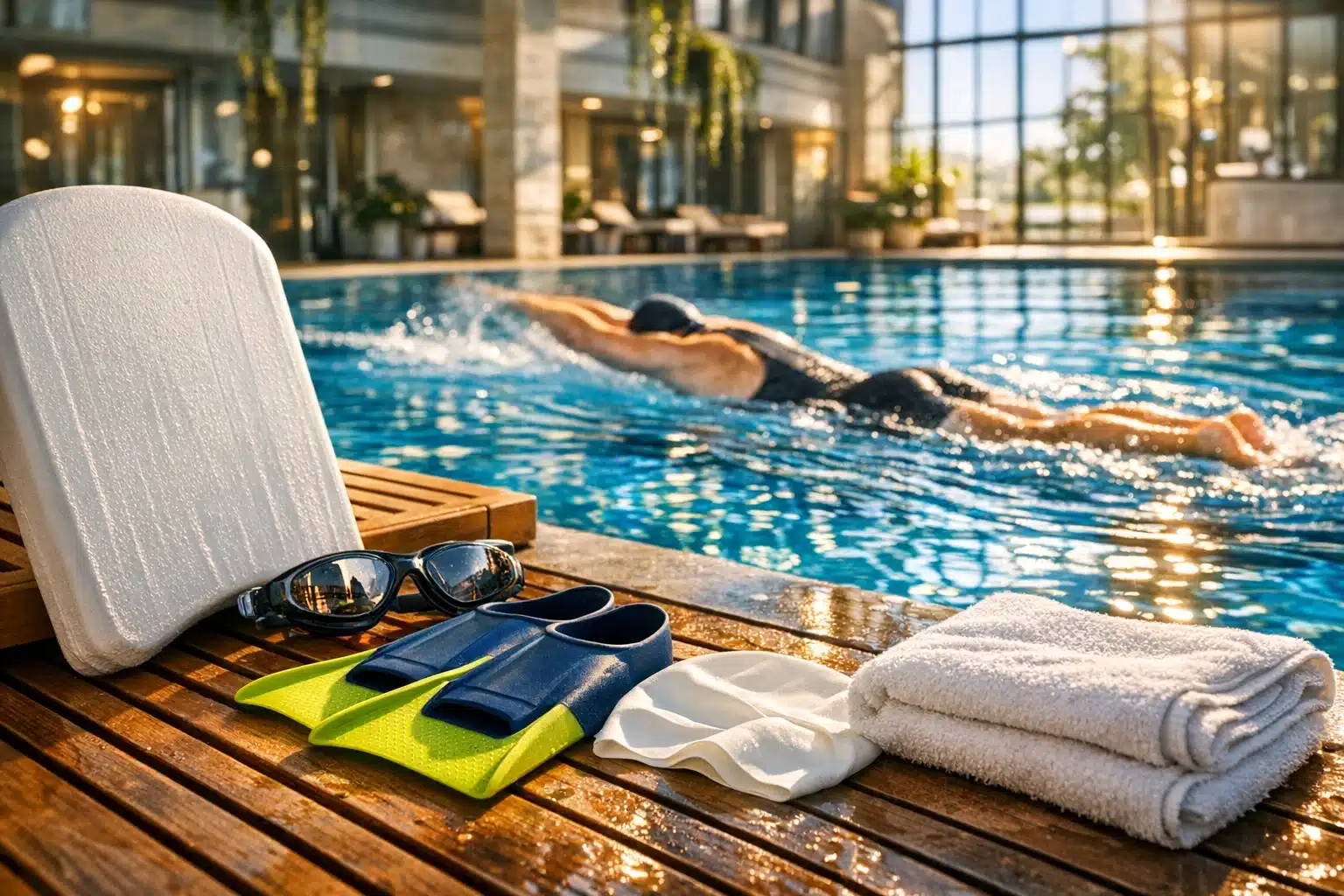
Equipment can help, but it should serve skill rather than replace it. A well-fitted swimsuit reduces drag and distraction. Goggles improve visibility and comfort. Swim caps can help manage hair and, in some cases, modestly reduce resistance. Kickboards, pull buoys, fins, and paddles all have their place in training, though paddles should be used thoughtfully because poor technique plus extra load can strain the shoulders. For open water, additional tools may be wise, such as a brightly colored cap, a tow float for visibility, and in colder conditions, a wetsuit appropriate to the environment.
The pool, however, is only one version of swimming. Open water changes the equation completely. Lakes, rivers, and oceans add variables that do not care about a swimmer’s confidence in lane lines. Visibility may be low. Distance can be deceptive. Wind, waves, current, and water temperature can shift mid-session. A strong pool swimmer may still struggle outdoors if sighting is poor or conditions worsen. Open-water safety depends on planning: • check weather and local conditions • swim with a partner or organized group • enter gradually if the water is cold • know landmarks and exit points • avoid boat traffic areas • respect currents rather than challenging them head-on.
Judgment is the true safety skill. A wise swimmer knows when to continue, when to modify the plan, and when to get out. That decision-making is not dramatic, yet it is one of the most important abilities the sport can teach. Skill keeps you moving; judgment keeps you safe. The strongest swimmers value both.
Conclusion for Beginners, Parents, Fitness Seekers, and Competitors
Swimming rewards different people in different ways, which is exactly why it deserves lasting attention. For beginners, the first victory is often emotional rather than athletic. Learning to float without fear, breathe without rushing, and cross a pool with composure can feel bigger than a stopwatch result. For parents, swimming carries an additional meaning: it is one of the most useful skills a child can learn, blending enjoyment with real-world safety. For fitness seekers, it offers a rare combination of cardiovascular challenge, muscular engagement, and reduced impact on joints. For competitive swimmers, it becomes a craft measured in tenths of a second, technical detail, and discipline accumulated over years.
If there is one message worth carrying from this article, it is that swimming is not reserved for a single body type, age group, or ambition level. The person training for a triathlon, the older adult returning to exercise after a long break, the child in weekend lessons, and the recreational swimmer who simply likes the quiet of morning laps are all participating in the same broad tradition. They just meet the water for different reasons. That flexibility gives swimming unusual staying power. Trends come and go, but the basic appeal remains sturdy: it is useful, it can be joyful, and it scales from gentle movement to world-class performance.
Readers deciding whether to begin or improve should keep the next steps simple. Start with access, instruction, and consistency. A local pool, a qualified coach or lesson program, and a realistic schedule are more valuable than grand plans that collapse after a week. Aim for comfort before speed and rhythm before intensity. Notice small gains. In swimming, a smoother breath or calmer stroke often matters more than a dramatic workout. Progress tends to arrive quietly, then suddenly feels obvious.
The image many people hold of swimming is a lane, a clock, and a repetition of laps. That picture is incomplete. Swimming can also be the first fearless jump into deeper water, the patient rebuilding of fitness after injury, the social bond of a masters group, or the steady confidence of knowing you belong in the water rather than merely tolerate it. For the target audience of this article, whether you are curious, cautious, or already committed, the invitation is straightforward: start where you are, learn with care, and let the water teach you what efficient movement, patience, and persistence really feel like.