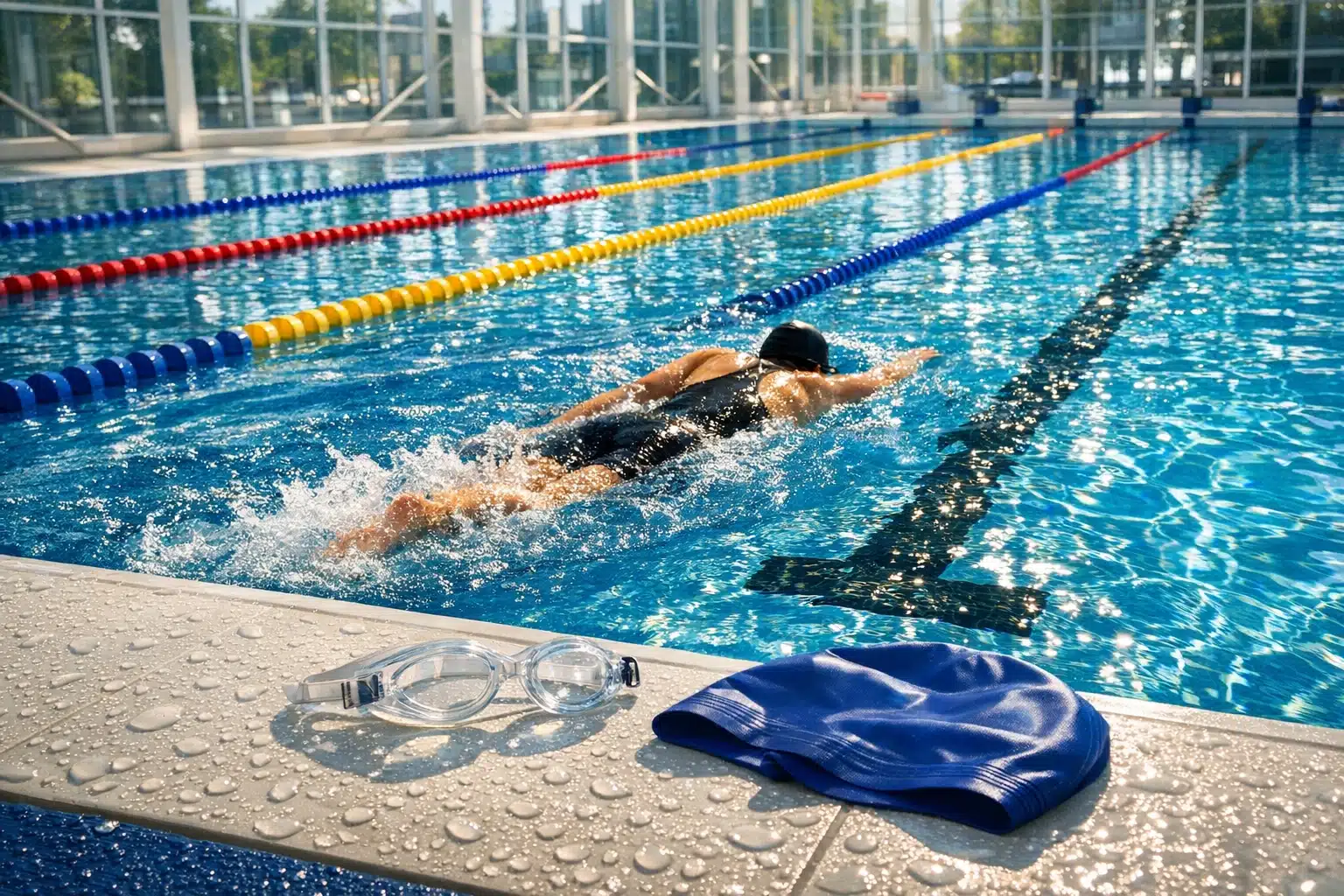
Explore the world of swimming
Swimming sits at a rare crossroads where fitness, safety, recreation, and sport meet in the same lane. It strengthens the heart, challenges the lungs, and recruits nearly every major muscle group while sparing the joints from repeated impact. For children it can be a life skill, for adults a sustainable workout, and for older people a practical way to stay active. This article explores how swimming works, why technique matters, and how the water becomes a place for health, focus, and enjoyment.
Outline: the article begins with the physical principles that make water both supportive and demanding. It then compares the major strokes, examines health and fitness benefits, explains how swimmers learn and train, and closes with safety, etiquette, and the broader culture that keeps the sport relevant across every age group.
The Nature of Swimming: Why Water Changes Everything
Swimming looks simple from the pool deck. A person enters the water, pushes away from the wall, and begins to glide. Yet the moment the body is surrounded by water, the usual rules of movement begin to shift. Gravity still exists, of course, but buoyancy lightens its effect. Resistance presses against every arm pull and leg kick. Breathing, which most people take for granted on land, suddenly becomes rhythmic, timed, and strategic. That combination is what makes swimming so distinctive: it supports the body while also demanding skill from it.
Compared with land-based exercise such as running, swimming is typically gentler on the joints. The body is partially supported by the water, so ankles, knees, hips, and the lower back often tolerate it well. That is one reason aquatic exercise is frequently recommended in rehabilitation settings and for people who want movement without constant impact. At the same time, water is denser than air, which means even a relaxed session can create meaningful muscular work. Every stroke asks the swimmer to press against resistance, and every mistake in posture adds drag that slows progress.
Three ideas help explain what the swimmer feels in the water: • buoyancy reduces weight-bearing stress • drag punishes poor body position • propulsion depends on coordinated movement rather than raw effort alone. A beginner may discover this within the first lesson. Kicking hard without balance often leads to splashing but little speed. Pulling strongly with the arms while lifting the head too high can cause the hips to sink. In swimming, efficiency is not a luxury for advanced athletes; it is the foundation of movement itself.
Water also changes the mind. A lane can feel like a narrow blue corridor that invites concentration. The sound of each exhale bubbles away, and the repetitive rhythm can become almost meditative. This is one reason many swimmers remain loyal to the sport for decades. The pool offers structure without noise, effort without traffic, and challenge without the pounding that comes from many other endurance activities.
There is a practical side to the importance of swimming as well. Being comfortable in water is a safety skill, not merely a hobby. People who can float, tread water, and move calmly are better prepared in recreational settings such as beaches, lakes, or hotel pools. In that sense, swimming occupies a rare place in modern life. It is exercise, yes, but it is also competence. Learning it does not simply build fitness; it expands confidence in an environment that can be joyful, restorative, and unforgiving all at once.
The Four Main Strokes and What Each One Teaches
When people say they are going swimming, they may be talking about very different movements. Competitive swimming recognizes four main strokes: freestyle, backstroke, breaststroke, and butterfly. Each has its own rhythm, technical demands, and personality in the water. Freestyle, which in races usually means front crawl, is the fastest and most common. Backstroke flips the swimmer face-up and changes orientation entirely. Breaststroke emphasizes timing and glide. Butterfly is powerful, dramatic, and technically demanding, often admired from the deck even by people who never intend to race it.
Freestyle is often the first stroke taught for fitness because it is efficient over distance once breathing and body position improve. The swimmer stays long and horizontal, rotates through the torso, and coordinates a flutter kick with alternating arm recovery. Beginners sometimes treat it as an arm-driven effort, but stronger freestyle actually begins in alignment. A stable head, relaxed neck, and rotating core reduce drag and make each stroke more productive. Breathing to the side rather than lifting the face forward helps preserve that line.
Backstroke shares some features with freestyle, particularly the alternating arm action and flutter kick, but it feels completely different because the swimmer is face-up. That position allows easier breathing yet introduces a new challenge: direction. Swimmers must maintain balance without visually tracking where they are going. Backstroke rewards shoulder mobility, calm rhythm, and an even body line. It can be especially useful for variety in training because it opens the chest and changes the muscular emphasis.
Breaststroke stands apart from the first two strokes because its kick and pull are symmetrical. The movement uses a whip-like kick, a shorter arm pull, and a pronounced timing pattern of pull, breathe, kick, and glide. Recreational swimmers often favor breaststroke because the face returns forward regularly, making navigation easy. Competitive breaststroke, however, is anything but casual. Small differences in timing, ankle flexibility, and streamline can separate efficient swimmers from those who feel as if they are pushing water rather than sliding through it.
Butterfly is the most physically demanding of the four for many swimmers, yet it also teaches important lessons about rhythm and body connection. The undulating action is driven by the chest, core, hips, and a dolphin kick that travels through the entire body. When a novice tries to muscle butterfly with the shoulders alone, the stroke becomes exhausting almost immediately. When the timing clicks, it looks less like struggle and more like a wave borrowing a human shape for a few seconds.
Each stroke develops different qualities: • freestyle builds efficient endurance • backstroke encourages balance and shoulder awareness • breaststroke sharpens timing • butterfly trains whole-body coordination and power. Learning more than one stroke is valuable even for non-competitive swimmers because variety spreads workload across different muscles and reduces monotony. The best comparison is not to ask which stroke is superior, but what each one reveals. Freestyle shows how speed grows from efficiency. Backstroke teaches trust in body position. Breaststroke proves timing can outrun force. Butterfly reminds swimmers that rhythm may be the closest thing sport has to music.
Health Benefits: Cardiovascular Fitness, Strength, Mobility, and Mental Focus
Swimming earns its reputation as a full-body activity because it combines aerobic demand with muscular effort in a low-impact setting. During a sustained session, the heart and lungs work steadily to deliver oxygen, while the shoulders, back, core, hips, and legs coordinate against the resistance of the water. That is a rare combination. Many forms of exercise are either strongly cardiovascular or strongly strength-oriented. Swimming sits somewhere between them, especially when workouts include a mix of technique drills, continuous laps, and faster intervals.
For general fitness, one of swimming’s greatest strengths is adaptability. A beginner can start with short lengths, generous rest, and simple drills. An experienced swimmer can turn the same pool into a demanding training environment through pace work and interval sets. The water does not care about age in the way some sports do. It resists everyone equally. What changes is how efficiently each person moves through it.
Swimming is also useful for people who cannot comfortably tolerate repetitive impact. Those recovering from certain injuries, living with joint discomfort, or carrying extra body weight often find that water allows exercise to feel possible again. In chest-deep or deeper water, the body bears less load than it would on land, which can make movement more comfortable. That does not mean swimming is effortless. Rather, it relocates the challenge from pounding impact to controlled resistance.
In terms of energy use, estimates vary by body size, stroke, pace, and skill level, but lap swimming can expend a meaningful number of calories, often in the broad range associated with moderate to vigorous aerobic exercise. The better the technique, the farther that effort travels. A beginner may tire quickly after a few lengths because coordination is still developing. A trained swimmer may cover a much greater distance with smoother mechanics and steadier breathing. That contrast reveals an important truth: efficiency improves performance, but it also changes how exercise feels.
Mental benefits are worth noting as well. Repetitive swimming can reduce mental clutter because it narrows attention to stroke count, breath timing, and the black line on the pool floor. Many swimmers describe the sport as calming even when the workout is hard. The immersion of the body, the predictable rhythm, and the absence of digital distraction all contribute to that effect. Useful outcomes commonly reported by regular swimmers include: • improved stress management • better sleep quality • a stronger sense of routine • renewed confidence after returning to exercise.
There are limitations, of course. Swimming alone may not provide the bone-loading stimulus associated with weight-bearing exercise such as walking, resistance training, or jumping. That is why many coaches and health professionals view it as part of a balanced activity plan rather than the only tool in the box. Even so, few activities match its range. It can help a child gain water confidence, give an office worker a sustainable workout, support an older adult’s mobility, and offer an athlete a demanding conditioning session. Few sports travel so well across the lifespan.
Learning to Swim and Training Well: Technique, Workouts, and Equipment
People often imagine progress in swimming as a simple matter of doing more laps, but improvement is usually less dramatic and more methodical than that. The early stages are built on comfort, breath control, floating, and body position. Before speed matters, the swimmer has to learn how not to fight the water. This may sound modest, yet it is the true beginning. A person who can exhale underwater calmly, roll for air without panic, and maintain a long line through the torso has already solved several of the sport’s hardest beginner problems.
A useful learning sequence usually moves from basic water confidence to supported glide, kicking balance, arm coordination, and rhythmic breathing. Children often learn through games and repeated exposure. Adults may benefit from direct explanation because they want to understand why a movement works. In both cases, short practice blocks are effective. Ten focused repetitions of one skill often do more than mindless distance covered with poor form. Drills can sharpen awareness in a way that full-stroke swimming sometimes hides.
Common training tools help for different reasons. Kickboards isolate the legs, though overuse can encourage a poor body position if the swimmer constantly lifts the head. Pull buoys support the hips and allow focus on the upper body. Fins can improve body line and help learners feel propulsion, but they should not replace sound technique. Goggles make training practical for most swimmers, while a well-fitted cap can reduce drag and keep hair out of the face. None of this equipment is magical. The best gear is the gear that serves a clear purpose.
Workouts usually become more productive when they include structure. A balanced session often contains: • a warm-up to raise temperature and settle breathing • a drill set to reinforce mechanics • a main set that targets endurance, speed, or pacing • a cool-down that restores control. For example, a beginner might swim short repeats of 25 meters with rest between lengths, alternating easy freestyle and kicking practice. An intermediate swimmer might complete a main set of 8 x 100 meters at a steady pace with 20 seconds of rest. A competitive athlete may use threshold sets, sprint work, race-pace repetitions, and detailed timing data.
Comparisons with other endurance sports are helpful here. In running, an athlete can often tolerate imperfect form for quite a while before efficiency becomes a visible limiter. In swimming, technical flaws reveal themselves almost immediately through fatigue, breathlessness, and lost speed. That is why two swimmers with similar general fitness can produce very different results in the pool. The better technician appears smoother, quieter, and less hurried, yet frequently travels faster.
Open water training adds another layer. Without walls, lane ropes, and fixed distances, swimmers must learn sighting, pace judgment, and comfort in less predictable conditions. Pools, by contrast, offer repeatable measurement and controlled practice. Both environments are valuable. The pool is a laboratory; open water is the wider world. One teaches precision, the other adaptability. Together they show that swimming is not only a workout but a craft, refined one breath and one stroke at a time.
Safety, Etiquette, and the Lifelong Culture of Swimming
No discussion of swimming is complete without safety. Water can be inviting and dangerous in the same moment, which is why confidence should never drift into carelessness. Basic skills such as floating, treading water, controlled breathing, and safe entry matter for everyone, not only competitive swimmers. Supervision is essential for children, and even strong adults should respect unfamiliar conditions. A calm pool offers a very different set of risks than a surf beach, a river current, or a cold lake.
Open water demands special caution. Conditions can change quickly through wind, temperature, visibility, or current. Distances are harder to judge without lane lines, and cold water can affect breathing and coordination far sooner than some people expect. Sensible habits include: • swim with a partner or in an organized group • use a brightly colored tow float where appropriate • check local rules and weather • enter gradually when the water is cold. These are not signs of timidity. They are the habits of people who intend to keep swimming for years.
Pool etiquette matters too because the sport often unfolds in shared space. Circle swimming, lane selection based on speed, and awareness at the wall make public sessions smoother for everyone. A fast swimmer charging into a beginner lane creates tension. A slow swimmer stopping in the middle of a lane can do the same. Good manners in the pool are practical rather than ceremonial. They reduce collisions, frustration, and wasted training time. In that sense, etiquette is part of safety as much as politeness.
Beyond rules, swimming has a culture that stretches from learn-to-swim classes to the Olympic stage. It includes masters programs for adults, community clubs for children, triathlon training groups, open-water events, diving boards, synchronized disciplines now called artistic swimming, and para swimming that demonstrates how adaptable the sport can be. Competitive pools are commonly 25 or 50 meters long, but the meaning of swimming is never contained by those measurements alone. For one person it is a race against the clock. For another it is recovery after injury. For someone else it is simply the one hour of the day when the mind goes quiet.
There is also something democratic about swimming when access is available. Water does not ask what job you have, whether you like team sports, or how old you were when you started. It responds to skill, patience, and consistency. That is why many swimmers return even after long breaks. The first session back may feel humbling, but the memory of movement tends to linger. Soon the body remembers how to slide, rotate, and breathe with less resistance. The lane begins to feel familiar again, like a sentence you once knew by heart and can almost speak before you realize it.
Conclusion for Readers Ready to Get in the Water
Swimming rewards curiosity more than bravado. You do not need to begin with perfect technique, expensive gear, or competitive ambitions. What matters most is learning the basics well, respecting the environment, and practicing often enough for the movements to become familiar. If you are new to swimming, start with lessons or guided sessions so breath control and body position develop correctly from the start. If you already swim, variety in strokes, structured training, and attention to safety can make the sport richer and more sustainable.
For readers choosing an activity they can carry through different stages of life, swimming is unusually versatile. It can be playful, demanding, solitary, social, therapeutic, or fiercely competitive depending on what you need from it. A short session may clear the head after work, while a longer program can build serious endurance and discipline. That flexibility is part of its enduring value. Water asks for respect, but it gives back range, resilience, and a skill that extends beyond exercise. In the end, swimming is not only about covering distance. It is about learning how to move with confidence in a world that changes the moment you step into it.