Explore the world of swimming
Swimming is one of those rare activities that feels both ancient and immediate: a survival skill, a sport, and a quiet form of freedom all at once. It matters because it meets people where they are, from children taking lessons to adults rebuilding fitness without punishing their joints. In an era shaped by screens and sitting, water brings resistance, rhythm, and mental space. This article maps the essentials so readers can understand technique, health benefits, safety, and practical ways to make swimming part of everyday life.
Before diving into the details, here is a simple outline of the journey ahead. We will begin with swimming’s wider meaning and usefulness, then move into the main strokes and the mechanics behind efficient movement. After that, the article explores physical and mental benefits, explains safe learning and training habits, and ends with practical advice for turning occasional sessions into a lasting routine.
- Why swimming matters as a skill, exercise, and sport
- The four main strokes and the fundamentals of good technique
- Health benefits, fitness effects, and the science of water resistance
- Safety, training habits, and essential equipment
- Ways to build a sustainable swimming practice for different goals
Why Swimming Matters: More Than Exercise in a Pool
Swimming has a wider identity than many people first assume. It is recreation, transportation, rehabilitation, competition, and in some contexts, a lifesaving ability. That range alone explains why swimming has remained relevant across centuries and cultures. Long before modern pools and lane ropes existed, people entered water out of necessity, curiosity, and survival. Today, the setting may be cleaner and more structured, but the core value remains strikingly similar: being able to move through water changes what a person can safely do in the world.
From a practical standpoint, swimming stands apart from many land-based activities because the environment changes the body’s experience. Water supports body weight, so the joints usually absorb less impact than they would during running or jumping. That makes swimming attractive to people recovering from injury, older adults managing stiffness, or beginners who feel intimidated by high-impact exercise. At the same time, water is never passive. Every stroke works against resistance, meaning a relaxed session can still demand coordination, muscular effort, and cardiovascular output.
Swimming is also unusually democratic. A child learning to float, a triathlete chasing efficiency, and a retiree using aqua exercise for mobility can all share the same facility while pursuing very different goals. Few sports accommodate such a broad spectrum so naturally. Compared with cycling, swimming requires no road access and avoids traffic. Compared with gym machines, it often feels less repetitive because the body is moving through a dynamic medium. Compared with walking, it calls for more total-body coordination, especially through the shoulders, back, core, and hips.
Its relevance extends beyond fitness. Water confidence can reduce fear, expand travel options, and improve safety during holidays, boating trips, and family outings near lakes or beaches. Public health experts regularly highlight swimming lessons and supervised water education as important tools in drowning prevention. The value here is not only athletic; it is social and protective.
A few reasons swimming remains so enduring include:
- It combines skill development with physical conditioning.
- It can be gentle enough for beginners and demanding enough for elite athletes.
- It offers solo focus while still supporting clubs, teams, and community spaces.
- It contributes to water safety in everyday life.
Perhaps that is why swimming often leaves a stronger impression than other workouts. A run may measure distance, and a weight session may measure load, but a swim can feel like entering another element entirely. The body must negotiate balance, breathing, propulsion, and calmness at once. That layered challenge is exactly what keeps the sport meaningful long after the first lesson ends.
The Four Main Strokes and the Technique Behind Efficient Movement
To understand swimming well, it helps to see the four competitive strokes not as isolated skills but as variations on a central idea: move forward by reducing drag while creating useful propulsion. The four main strokes are freestyle, backstroke, breaststroke, and butterfly. Each has a distinct rhythm, body position, and breathing pattern, yet all reward similar fundamentals such as alignment, timing, and controlled effort.
Freestyle, often called front crawl, is usually the fastest and most commonly taught stroke for fitness swimming. Its efficiency comes from a streamlined body position and alternating arm recovery. When done well, the swimmer rotates slightly through the torso, keeps the head steady, and breathes to the side without lifting too much. Many beginners think speed comes mainly from kicking harder, but freestyle usually improves more through better balance and a stronger catch phase underwater. A tidy line through the spine often matters more than frantic motion.
Backstroke is sometimes described as freestyle turned upward, but it has its own challenges. Because the face stays out of the water, breathing is easier for many learners. However, orientation becomes trickier, and a stable hip position is essential. Backstroke teaches body alignment beautifully because any bending at the waist increases drag. It is also a useful stroke for people who want to build comfort in the water without worrying about breath timing every few seconds.
Breaststroke is often chosen by casual swimmers because the breathing pattern feels intuitive, yet it is one of the most technical strokes. The timing of the pull, breath, kick, and glide must fit together like gears. A powerful breaststroke kick can move the swimmer well, but only if the knees and feet track efficiently. Poor timing wastes energy and creates a stop-and-go feeling. Butterfly, by contrast, is the most physically demanding of the four for many adults. Its simultaneous arm action and dolphin kick require rhythm, mobility, and core power. When butterfly clicks, it looks almost musical; when it does not, it quickly becomes exhausting.
Across all four strokes, several technique cues consistently help:
- Keep the body as long and balanced as possible.
- Exhale steadily in the water instead of holding the breath.
- Use the core to connect the upper and lower body.
- Think about moving water backward, not slapping at the surface.
- Prioritize timing and control before chasing speed.
A useful comparison is this: poor technique in swimming resembles driving with the handbrake on. The swimmer may work hard, but drag, mistimed breathing, or poor alignment keeps canceling the effort. Good technique does not remove effort; it allows effort to travel. That is why lessons, drills, and video feedback can transform progress faster than simply adding more laps. In swimming, elegance is not decoration. It is efficiency made visible.
Health Benefits, Fitness Gains, and the Science of Water
Swimming earns its reputation as a full-body workout because water changes the rules of movement. On land, gravity dominates and surfaces push back in familiar ways. In the pool, buoyancy reduces apparent body weight, while water resistance surrounds the body from nearly every angle. That combination lets swimmers train the heart, lungs, muscles, and coordination systems at the same time. Few activities blend those demands so smoothly.
From a cardiovascular perspective, swimming can contribute meaningfully to the general adult target of at least 150 minutes of moderate aerobic activity per week, a benchmark commonly cited by major health authorities. Session intensity varies widely. A gentle technique swim may feel restorative, while a hard interval set can leave even trained athletes gasping at the wall. Because resistance in water increases with speed, doubling effort does not produce a simple, linear result. Fast swimming becomes dramatically more demanding, which is one reason short race events are so explosive.
Muscularly, swimming emphasizes endurance, posture, and coordinated power more than isolated brute strength. Freestyle and backstroke recruit the shoulders, lats, upper back, and core in a repeating chain. Breaststroke draws more heavily on adductors and specific hip and leg timing. Butterfly demands strong trunk control and shoulder mobility. Unlike many gym routines, the movements are continuous and integrated. Even the smallest technique adjustment can shift which muscles carry the load.
The low-impact nature of swimming is one of its biggest advantages, but low impact does not mean low value. For people with joint discomfort, higher body weight, or a long break from exercise, water can create a manageable starting point. The pressure of water around the body may also help some swimmers feel more physically supported during movement. Mentally, the effect can be just as important. Repeated breathing patterns, lane rhythm, and sensory quiet often create a meditative quality that many people do not find in louder forms of exercise.
Some benefits swimmers commonly report include:
- Improved aerobic endurance and recovery capacity
- Better shoulder and trunk coordination when technique is sound
- A training option that is easier on knees, hips, and ankles than many impact sports
- Reduced stress through repetitive, focused movement
- Greater body awareness and breathing control
Calorie expenditure is often discussed, but it is best viewed carefully. The number burned depends on body size, stroke choice, water temperature, skill level, and intensity. A stronger swimmer may move faster with less wasted energy, while a beginner may tire quickly because technique is less efficient. That is why swimming should not be judged only by smartwatch numbers. Its deeper benefit lies in the blend of fitness, skill, and sustainability. For many people, the water becomes not just a place to exercise, but a place where exercise finally feels possible.
Learning Safely, Training Wisely, and Choosing the Right Gear
Swimming is rewarding, but the water deserves respect. Safety is not a gloomy side note to the sport; it is part of its foundation. Global health organizations have long noted that drowning remains a serious public health issue, claiming hundreds of thousands of lives worldwide each year. That fact gives swimming lessons a significance beyond fitness. Knowing how to float, tread water, breathe calmly, and move to safety can be as important as knowing how to complete a workout.
For beginners, formal instruction is often the smartest investment. A coach or qualified teacher can correct habits that self-taught swimmers may repeat for years, such as holding the breath, dropping the hips, or kicking from the knees. Structured learning also reduces anxiety because the swimmer progresses through controlled steps: water comfort, submersion, floating, gliding, breathing, then stroke patterns. Adults sometimes avoid lessons out of embarrassment, but mixed-age classes and private sessions have made entry points far more accessible than many people assume.
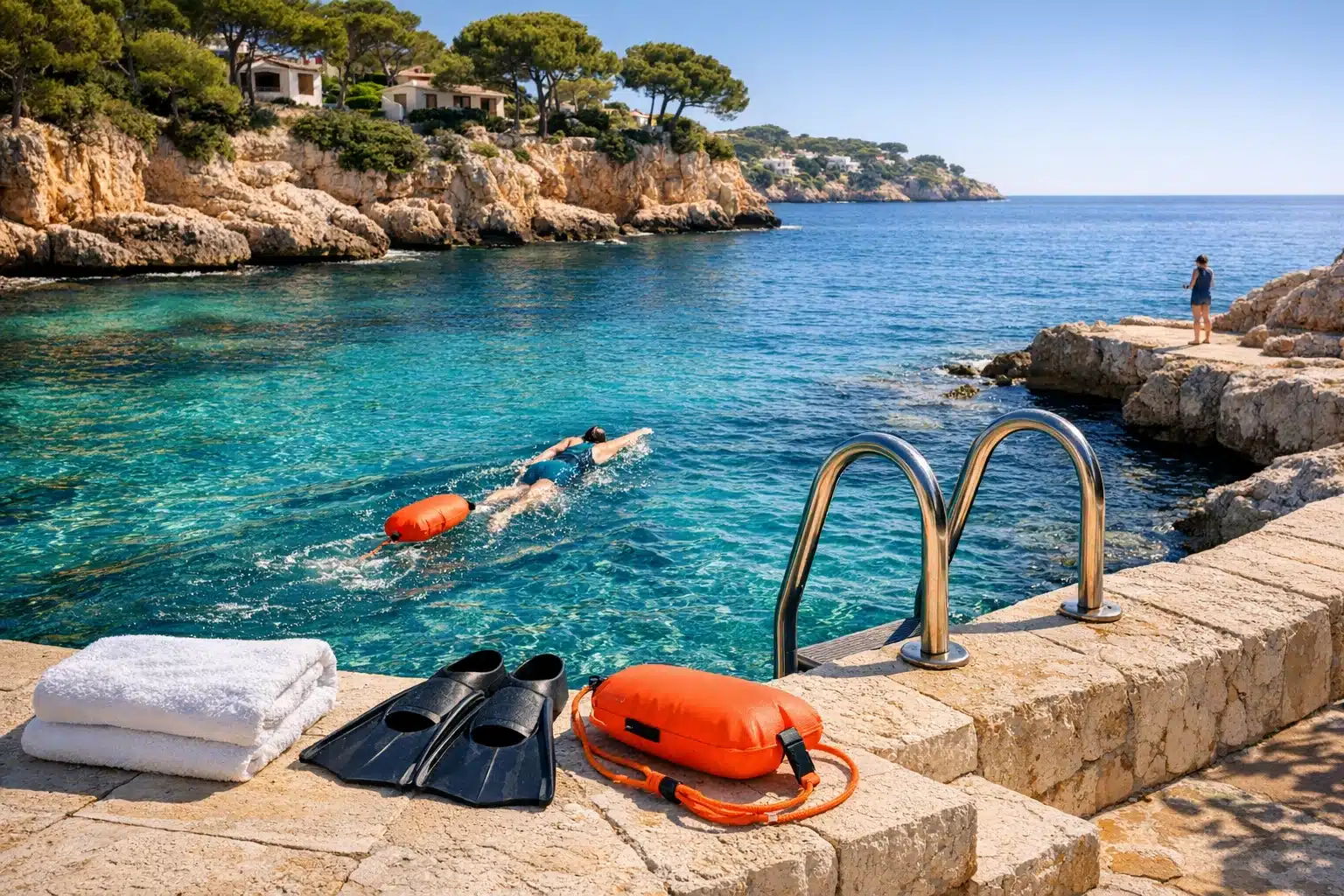
Training wisely matters just as much as learning safely. In pools, swimmers benefit from warm-ups, drills, and pacing rather than jumping straight into hard laps. A session with easy swimming, a few focused technique exercises, a main set, and a short cool-down usually produces better long-term results than an all-out effort from the first length. Open water introduces additional factors such as visibility, currents, water temperature, weather, and navigation. In those settings, swimming with a partner, using a brightly colored tow float where appropriate, and checking local guidance are sensible precautions.
Gear can remain refreshingly simple. The essentials are modest compared with many sports:
- A comfortable swimsuit that stays secure during movement
- Goggles that fit well and do not leak
- A swim cap if required by the facility or helpful for comfort
- A towel, sandals, and a water bottle
- Optional tools such as a kickboard, pull buoy, fins, or paddles for drills
Equipment should support technique, not replace it. Fins may help a learner feel body position more clearly, and a pull buoy can isolate upper-body work, but neither fixes poor timing on its own. Similarly, smartwatches and lap counters are useful for tracking distance and pace, yet they can distract swimmers who have not first built feel for the water.
The best training environments are predictable, supervised, and matched to ability. A shallow teaching pool may be ideal for one person, while another thrives in a masters club or triathlon squad. Either way, wise swimmers build skill before intensity. Water can be playful, calming, and exhilarating, but it should never be taken for granted. The strongest habit a swimmer can develop is not speed. It is judgment.
Making Swimming Part of Your Life: A Practical Conclusion for New and Returning Swimmers
The biggest challenge for many readers is not understanding why swimming is valuable; it is figuring out how to fit it into ordinary life. That matters because consistency beats occasional heroics. A person who swims twice a week for a year will usually gain more confidence, skill, and fitness than someone who attacks the pool for two intense weeks and disappears for two months. Swimming rewards patience in a very honest way. The water does not care about big intentions; it responds to repeated practice.
For beginners, the first goal should be comfort, not mileage. That may mean learning to exhale underwater, floating on the back, or completing short lengths with rest between them. Adults returning after years away often benefit from simple benchmarks: two sessions per week, twenty to thirty minutes per visit, and one technical focus per session. Parents introducing children to swimming can think in layers: safety first, enjoyment second, technique third. Competitive ambitions can come later if the child remains enthusiastic. Older adults may find that swimming offers a rare combination of movement and recovery, especially when combined with mobility work on land.
A practical weekly structure could look like this:
- One session focused on drills and relaxed technique
- One session built around steady aerobic swimming
- An optional third session with short intervals, kicking, or mixed strokes
- Brief dryland work for shoulders, core stability, and mobility
It also helps to match swimming to personality. Some people love the order of lane swimming and measurable splits. Others prefer aqua classes, social clubs, sea dips, or family sessions that remove pressure. There is no single correct swimming identity. The right version is the one you can sustain. If motivation fades, variety often helps: alternate strokes, change pools, set a distance challenge, or train with a friend. A notebook or app can track patterns without turning every swim into a test.
For the target reader of this article, the most useful conclusion is simple. You do not need to become a racer to benefit from swimming, and you do not need perfect technique before you begin. Start with safety, learn the basics well, and let regular exposure do its work. Over time, the pool becomes less like a place you visit and more like a language your body remembers. That is when swimming shifts from an activity on the calendar to a durable skill that supports health, confidence, and pleasure for years to come.