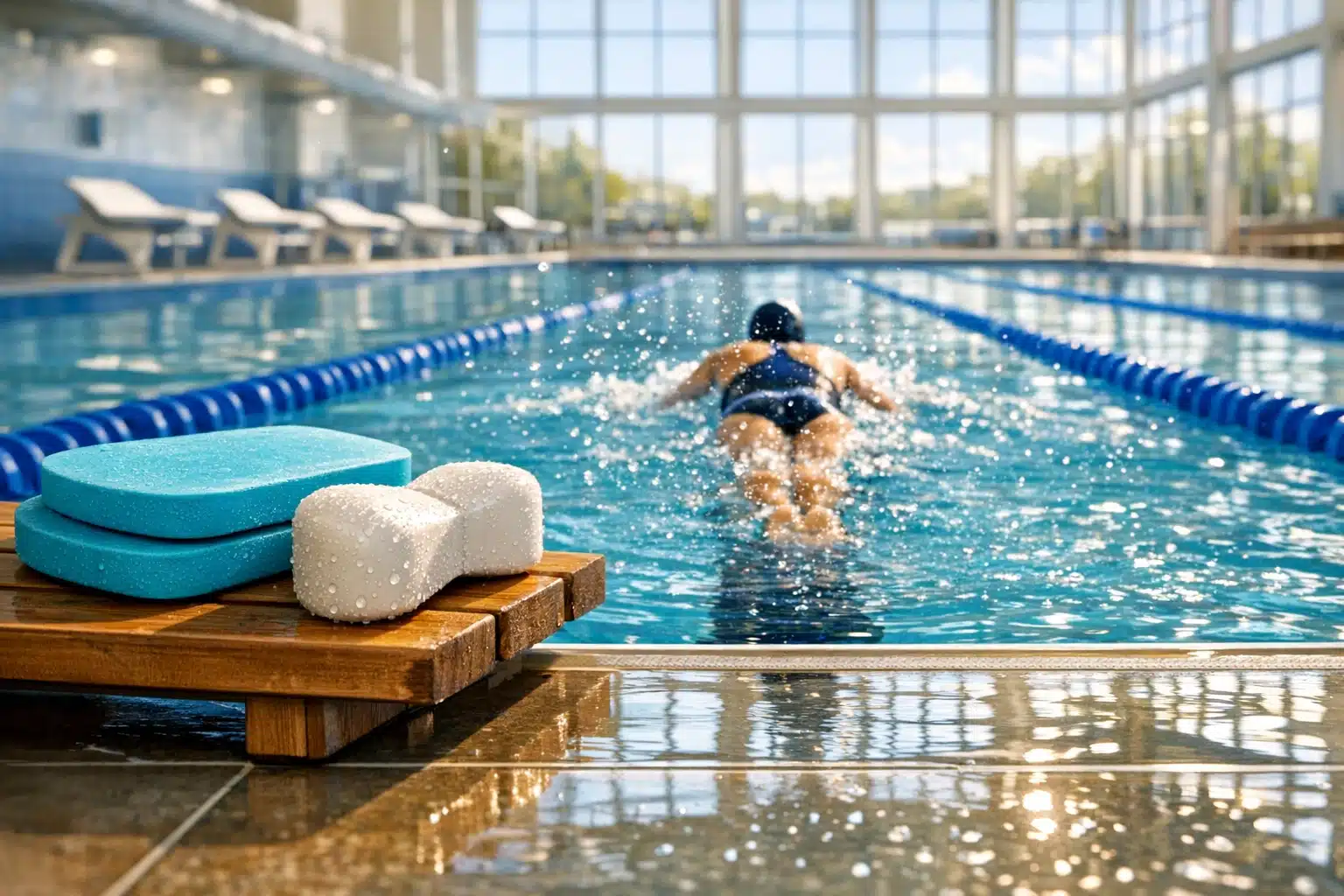
Explore the world of swimming
Outline and Introduction: Why Swimming Matters
Swimming is one of those rare activities that feels playful and purposeful at the same time. It can sharpen technique, build endurance, support joint-friendly exercise, and teach calm when the body is working hard. From a child learning to float to an adult chasing fitness or recovery, the pool offers something remarkably inclusive. This article maps the essentials, from strokes and training basics to safety, health benefits, and the many ways swimming fits into everyday life.
Outline:
• Why swimming remains relevant in modern life
• The main strokes and how they compare
• Physical and mental benefits backed by practical evidence
• Safety, learning methods, and common mistakes
• Swimming as sport, leisure, and a lifelong routine
Swimming matters because it combines survival skill, exercise, and recreation in a single discipline. Many sports improve fitness, but not many can also help a person feel safer around lakes, rivers, beaches, and pools. That practical value gives swimming a different kind of importance. It is not only about times on a stopwatch or laps on a training plan. It is also about confidence, mobility, and the ability to move through an environment that can be both inviting and unforgiving.
Its relevance has grown as more people look for exercise that is effective without being punishing on the joints. Water supports body weight, which reduces impact compared with running or many court sports. For older adults, people returning from injury, and beginners who feel uncomfortable with high-impact routines, swimming can offer a gentler path into regular physical activity. At the same time, elite swimmers train with remarkable intensity, proving that the sport scales well from cautious first steps to world-class performance.
Swimming also has a unique emotional texture. A good session can feel like a moving meditation: the repetitive pull, the rhythm of breathing, the soft churn of water, the narrow focus on each length of the pool. Yet it can also be social, whether that means a family afternoon at the community pool, a school lesson, a masters club, or a weekend open-water group following bright caps across a quiet lake. Few activities shift so easily between solitude and community.
In practical terms, swimming touches several important areas of life:
• Personal safety around water
• Full-body cardiovascular exercise
• Rehabilitation and low-impact movement
• Competitive sport and skill development
• Recreation for all ages
That broad reach is what makes the subject worth exploring in depth. To understand swimming well, it helps to look beyond the image of simple lap after lap. Technique shapes efficiency. Safety determines confidence. Purpose changes training. And, perhaps most importantly, swimming is one of the few activities that many people can continue across decades, adapting it to changing goals, abilities, and seasons of life.
Understanding the Main Swimming Strokes and Their Differences
To an outsider, swimming can look deceptively simple: arms move, legs kick, body travels forward. In reality, each stroke is a carefully coordinated pattern of balance, timing, propulsion, and breathing. The four competitive strokes are freestyle, backstroke, breaststroke, and butterfly, and each asks the swimmer to solve the same puzzle in a different way. How do you move efficiently through water, which is far denser than air and constantly resisting every mistake?
Freestyle, usually swum as front crawl, is the fastest and most commonly taught stroke for fitness. One arm recovers over the water while the other pulls underneath, and the flutter kick maintains alignment and momentum. Breathing is typically taken to the side. Compared with the other strokes, freestyle is efficient for distance because it allows continuous propulsion and a streamlined body position. For lap swimmers, it often becomes the default stroke for building aerobic endurance.
Backstroke shares some features with freestyle, but the swimmer remains on the back and breathes freely because the face stays above the surface. That makes it appealing for people who struggle with side breathing, although body alignment becomes trickier. Hips must stay high, the kick must remain steady, and the swimmer must learn to travel straight without seeing the direction of movement clearly. Backstroke is often recommended as a useful counterbalance to daily postural habits because it opens the chest and encourages shoulder movement in a different plane.
Breaststroke is slower but highly technical. The arms sweep outward and inward, the legs perform a whip kick, and the glide phase can either save energy or kill momentum depending on timing. Beginners sometimes prefer it because the head can rise forward more often, yet efficient breaststroke is far from easy. The stroke depends on precise rhythm. Done well, it looks smooth and almost effortless, like a boat cutting through still water. Done poorly, it becomes stop-and-go and surprisingly tiring.
Butterfly is usually the most demanding stroke. Both arms recover together, the body undulates, and the dolphin kick drives the rhythm. It requires upper-body strength, core coordination, and refined timing. Many swimmers respect butterfly even when they do not love it. It is beautiful, dramatic, and punishing all at once.
A simple comparison helps:
• Freestyle: fastest, versatile, ideal for endurance
• Backstroke: easier breathing, useful for posture and balance
• Breaststroke: technical, slower, often comfortable for casual swimmers
• Butterfly: powerful, advanced, physically demanding
Beyond the strokes themselves, technique matters more than many new swimmers expect. A strong athlete with poor body position can lose energy quickly, while a technically sound swimmer often appears to glide with less effort. Head position, rotation, catch, kick timing, and exhalation all influence speed and comfort. In swimming, brute force does not overcome inefficiency for long. Water notices everything. It rewards patience, rhythm, and precision.
Health, Fitness, and Mental Benefits of Swimming
Swimming earns its reputation as a full-body workout because it engages multiple muscle groups while also challenging the heart and lungs. The shoulders, back, chest, core, hips, and legs all contribute, though in different proportions depending on the stroke. Unlike exercises that isolate one region at a time, swimming asks the body to work as a connected system. That is one reason it often feels so complete after a solid session: the effort is distributed, continuous, and coordinated.
From a cardiovascular perspective, swimming can support the same broad fitness goals as brisk walking, cycling, or running. Health authorities commonly recommend at least 150 minutes of moderate aerobic activity per week for adults, and swimming can clearly fit that target. A moderate lap session raises heart rate, improves circulation, and can help build aerobic capacity over time. More vigorous sets, especially interval training, can push intensity higher for experienced swimmers. Depending on body size, pace, and stroke, an hour of swimming may burn several hundred calories, often in the range of roughly 400 to 700 or more. That number varies widely, so it is better treated as a guide than a promise.
One major advantage of swimming is reduced impact. Because water supports much of the body, the stress placed on joints is lower than in many land-based activities. This makes swimming valuable for:
• Older adults looking for sustainable movement
• People managing joint discomfort
• Individuals returning to exercise after injury, with professional guidance
• Those who simply dislike high-impact workouts
There are mental benefits as well, and they deserve more attention than they often receive. Swimming has a rhythm that naturally narrows focus. Counting strokes, timing breaths, and maintaining form can quiet mental clutter. Many swimmers describe a good session as resetting the day. The effect is not magic, and it does not replace professional support when mental health care is needed, but it can be a meaningful part of a healthy routine. Exercise in general is associated with improved mood and reduced stress, and swimming adds a sensory environment that many people find calming.
The pool also creates a useful feedback loop. Progress is measurable in obvious ways: more relaxed breathing, smoother turns, longer distances, better pace control, improved confidence in deep water. These milestones can be motivating because they are concrete. A person does not need to become competitive to enjoy them. Swimming rewards consistency with visible and physical changes, yet it often feels less repetitive than gym routines because the water itself changes the experience. Resistance surrounds every movement, but so does buoyancy. The result is a workout that can be demanding without feeling harsh.
For people balancing busy schedules, swimming also offers flexibility. Sessions can be short and purposeful or longer and steady. A 20-minute technique-focused swim is not the same as a hard 60-minute interval workout, but both have value. Over time, that adaptability helps people stay consistent, and consistency is where most health benefits truly begin to accumulate.
Learning to Swim Safely: Skills, Training Habits, and Common Mistakes
Learning to swim is not only about moving forward in the water. It is about gaining control, understanding risk, and building habits that make aquatic environments safer. This is especially important because confidence without skill can be misleading. Someone may feel comfortable splashing in shallow water and still struggle with floating, breathing control, or unexpected fatigue. Effective swimming instruction starts with fundamentals that are easy to underestimate: submerging the face, exhaling underwater, floating on the front and back, kicking with support, and learning how to recover calmly if balance is lost.
For beginners, structured lessons are usually the fastest and safest route. A good instructor breaks complex actions into manageable steps and corrects errors before they harden into habits. Adults sometimes avoid lessons because they feel embarrassed, but in reality adult beginners are common, and thoughtful coaching can speed progress dramatically. Children also benefit from formal instruction, though supervision remains essential. Lessons improve skills; they do not replace watchful adults near water.
Water safety extends beyond stroke mechanics. Swimmers should understand pool rules, depth changes, and environmental differences between pools and open water. A calm-looking lake can hide cold temperatures, weeds, poor visibility, and currents. Ocean swimming adds waves, tides, and changing surf conditions. Even strong pool swimmers may be surprised by how different open water feels when there are no lane lines, no walls every 25 or 50 meters, and no black stripe on the bottom to follow like a trusted rail.
Several beginner mistakes appear again and again:
• Holding the breath instead of exhaling into the water
• Lifting the head too high, which drops the hips
• Kicking from the knees rather than the hips
• Trying to swim hard before learning balance and rhythm
• Panicking when water enters the nose or mouth
Training habits matter once the basics are in place. Many new swimmers improve faster when sessions include variety rather than endless straight laps. A balanced practice might include a warm-up, a short drill set, a main set focused on distance or speed, and an easy cooldown. Drills such as side kicking, catch-up freestyle, or sculling can sharpen technique in ways that ordinary swimming sometimes cannot. Equipment like kickboards, pull buoys, fins, or paddles can help, though they work best when used for a clear purpose rather than as distractions.
Safety also means respecting fatigue. Swimming while exhausted can degrade technique quickly, and poor technique in water is not just inefficient; it can become risky. Hydration, rest, and realistic pacing are part of sensible aquatic training. So is lane etiquette in shared pools, where awareness and courtesy reduce collisions and frustration. In the end, good swimming is built on calm repetition, not chaos. Skill grows when the swimmer learns to cooperate with the water instead of fighting it.
Swimming for Sport, Leisure, and Lifelong Well-Being
Swimming can become many different things depending on the person. For one individual, it is a competitive pursuit measured in split times, stroke counts, and race strategy. For another, it is a practical fitness habit squeezed in before work. For a family, it may simply be a weekend ritual that mixes play, skill, and sunlit noise. This flexibility is one of swimming’s great strengths. It does not demand that every participant want the same outcome.
In sport, swimming offers a precise and data-rich environment. Athletes track pace per 100 meters, start reaction, turn efficiency, and stroke rate. Training plans are built around aerobic sets, sprint work, technique drills, and recovery sessions. Competitive swimmers often develop exceptional discipline because progress depends on repeated attention to small details. A cleaner turn or a better catch can matter. At higher levels, the margins are tiny, which gives the sport its strange drama: entire races can pivot on fractions of a second, even though the preparation stretches across years.
Recreational swimming tells a different story, but it is no less valuable. Leisure swimmers may prefer mixed strokes, water walking, aqua aerobics, or unhurried lengths that feel restorative rather than demanding. Open-water swimmers often describe a special appeal in natural settings. Lakes, rivers, and seas replace tiled walls with changing light, shifting temperature, and a sense of scale that can feel humbling. Of course, those settings require stronger safety planning, but they also reveal swimming at its most adventurous. The pool teaches control; open water teaches respect.
Swimming also adapts well across life stages:
• Children can learn safety, coordination, and confidence
• Teenagers may enjoy competition and structured training
• Adults can use swimming for fitness, stress relief, or cross-training
• Older adults often appreciate the lower-impact nature of water exercise
For readers considering how swimming might fit into their own routine, the best approach is usually simple: start with a clear reason. Do you want to feel safer around water, improve fitness, support recovery, train for a race, or just find an exercise that does not leave your joints complaining the next morning? That answer shapes everything from lesson choice to session length. A beginner may need ten quiet sessions focused on breathing and floating. A runner using the pool for cross-training may want interval-based endurance work. A recreational swimmer may be happiest with twice-weekly sessions and no stopwatch at all.
Final Thoughts for Readers: swimming is especially rewarding for people who want an activity that is useful, scalable, and sustainable. It can begin with a single lesson or a single lane and still grow into a habit that lasts for decades. You do not need elite talent to benefit from it. You need patience, consistency, and respect for the water. If you bring those three things, swimming can offer exercise, confidence, skill, and a rare feeling of moving well in a world that is usually not made for walking.