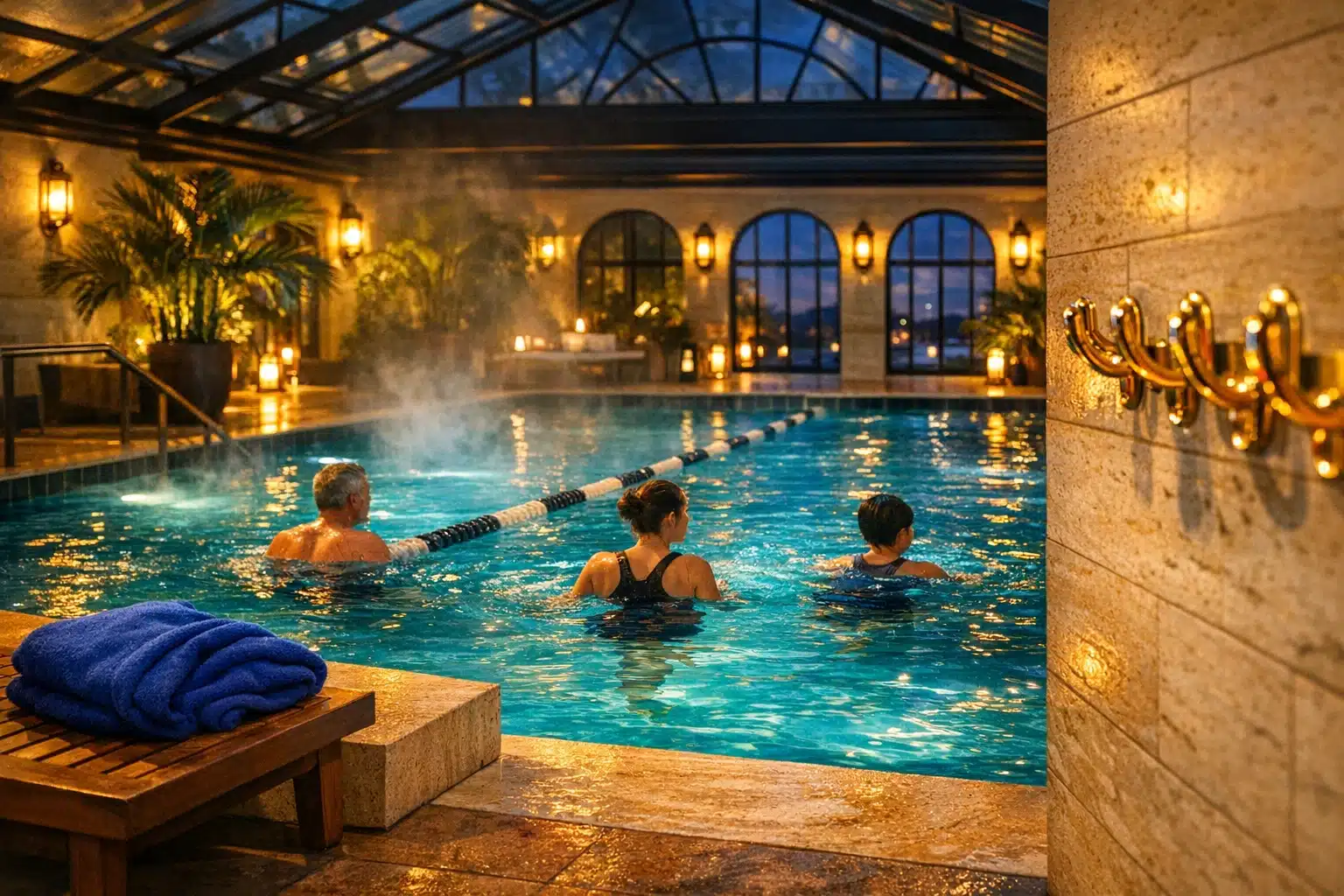
Explore the world of swimming
A pool can be a classroom, a training ground, and a quiet reset button at the same time. Few pursuits combine survival skill, recreation, competition, and rehabilitation as naturally as swimming, so its relevance stretches from early lessons to active older age. Water asks for coordination, patience, and steady breathing rather than brute force alone. That mix makes the subject richer than a simple workout topic.
Outline: This article covers five key areas: why swimming remains important for health and daily life, how the major strokes differ and what sound technique looks like, how to train safely with the right equipment, how swimmers of different ages and goals approach the water, and a practical conclusion for readers who want to turn curiosity into a lasting habit.
1. Why Swimming Matters Beyond the Lane Line
Swimming occupies a special place among physical activities because it is both useful and enjoyable. Many sports are excellent for fitness, but few are also basic life skills. Knowing how to move calmly and efficiently in water can reduce fear, improve safety, and open the door to travel, recreation, and confidence around beaches, lakes, and pools. That alone gives the subject weight. Add the fitness side, and the picture becomes even more compelling.
From a training perspective, aquatic movement works the body in a different way from walking, running, or cycling. Water provides resistance in every direction, which means even controlled motions ask the muscles to stay engaged. At the same time, buoyancy reduces the stress placed on joints, especially in the hips, knees, and lower back. This is one reason many people recovering from injury or managing arthritis are introduced to pool-based exercise before returning to harder impact work. A runner feels the ground push back with every stride; a swimmer feels the water surround, slow, and support the body all at once.
Health organizations commonly recommend at least 150 minutes of moderate aerobic activity each week for adults, and swimming can contribute meaningfully to that target. Depending on pace, session length, body size, and stroke choice, a workout in the pool can raise heart rate, strengthen the shoulders, back, core, and legs, and improve lung control through repeated breathing patterns. It may also support mental well-being. Many swimmers describe a session as part exercise, part meditation: the sound is muted, the visual field is simple, and the mind settles into rhythm.
Its benefits are broad:
• cardiovascular conditioning
• muscular endurance
• mobility and posture awareness
• stress relief through repetitive movement
• water confidence and safety knowledge
Swimming also suits a wide range of personalities. Some people love the quiet logic of lap counting. Others prefer social lessons, water games, or open-water adventure. In that sense, the sport behaves like water itself: it takes the shape of the person entering it. That flexibility helps explain why swimming remains relevant in schools, fitness centers, rehabilitation clinics, holiday resorts, and elite competition arenas alike.
2. The Main Strokes and the Technique Principles That Shape Them
If swimming had a secret, it would be this: effort matters, but efficiency matters more. Water is honest. It does not care how determined a person feels if the body position is poor, the breathing is rushed, or the stroke fights the surface instead of working with it. That is why technique sits at the center of progress, whether someone is learning to float for the first time or shaving fractions of a second off a race split.
The four competitive strokes are freestyle, backstroke, breaststroke, and butterfly. Freestyle, usually swum as front crawl, is typically the fastest and most commonly practiced. It uses alternating arm pulls, a flutter kick, and side breathing. Backstroke mirrors some of that rhythm while placing the swimmer on the back, which can feel more comfortable for those who dislike face-down breathing but requires strong alignment to avoid zigzagging. Breaststroke is slower and more timing-dependent, using a simultaneous arm action and whip kick; many beginners find its head position familiar, yet its leg mechanics can be surprisingly technical. Butterfly is the most demanding of the four, relying on powerful upper-body pulling, a dolphin kick, and wave-like body motion. It is beautiful when done well and exhausting when done poorly.
Despite their differences, good strokes share a few common principles:
• a long, balanced body line
• a stable head position
• controlled breathing
• propulsion that comes from both timing and leverage
• relaxed recovery rather than frantic splashing
For beginners, floating and streamlining are often more important than speed. A swimmer who can glide with a neutral head and steady exhale usually learns faster than someone who tries to muscle through the water. In freestyle, for example, over-lifting the head can drop the hips and create drag. In breaststroke, a mistimed kick can act like a brake. In butterfly, rushing the arms without a connected body rhythm quickly leads to fatigue.
Drills help translate theory into movement. Catch-up drill can improve front-crawl timing. Kicking on the side can teach body rotation. Single-arm backstroke can sharpen balance. Breaststroke pull timing drills can reduce dead spots. Coaches rely on these patterns because swimming technique is built through repetition with awareness, not random mileage. The most graceful swimmers are rarely those who fight hardest; they are the ones who have learned to travel through water with precision.
3. Training, Safety, and Equipment: Building Good Habits in the Water
A useful swimming routine is not simply a matter of doing more laps. Strong training balances technique, aerobic work, speed, recovery, and safety. This matters because the water can disguise poor habits. Someone may finish a session feeling productively tired while still reinforcing flawed breathing, a weak kick, or a shoulder-heavy stroke. A thoughtful plan prevents that drift and makes each visit to the pool more effective.
A well-structured session often includes four parts: warm-up, drills, main set, and cooldown. The warm-up gradually raises body temperature and wakes up movement patterns. Drills then sharpen one or two technical points, such as hip rotation or exhaling underwater. The main set carries the training purpose, which may focus on endurance, pace control, or shorter, faster intervals. A cooldown helps the body settle and gives the swimmer a moment to notice what felt smooth and what needs attention next time. Compared with unstructured lap swimming, this format usually creates clearer progress.
Safety should never be treated as a side note. Pool environments are controlled, but they still require attention. Open water adds currents, temperature changes, low visibility, and navigation challenges. Even confident athletes need respect for conditions. Smart practices include:
• learning the depth and layout before starting
• never overestimating ability in unfamiliar water
• using a lifeguarded venue when possible
• staying hydrated, even during pool sessions
• stopping early if dizziness, chest pain, or unusual shortness of breath appears
Equipment can be simple or specialized. A swimsuit that allows free movement is the true essential. Goggles protect the eyes and reduce the distraction of blurry vision. A swim cap is optional in some settings but useful for comfort and practicality. Beyond that, training tools can serve specific purposes. Kickboards isolate leg work. Pull buoys reduce kicking so swimmers can focus on the upper body. Paddles increase resistance and can reveal weaknesses in the catch, though they should be used carefully to avoid shoulder strain. Fins help with body position and ankle flexibility, especially during drills.
One more habit deserves mention: recovery. Shoulders, neck, and calves can tighten after repeated sessions, particularly for adults returning to the water after years away. Rest days, gentle mobility work, and gradual progression protect consistency. In swimming, the best training plan is not the toughest one on paper. It is the one a person can follow safely, enjoy enough to repeat, and refine over time.
4. Swimming for Children, Adults, Older Swimmers, and Competitive Goals
One reason swimming stays relevant across so many stages of life is that its purpose changes without losing value. For a child, the pool may first be about safety, comfort, and play. Lessons often begin with blowing bubbles, floating, and learning how to recover balance. That can look simple from the deck, but it is profound work. A child who learns calmness in the water gains more than a recreational skill; they gain a form of body awareness that can last for decades.
Adults often arrive with different motivations. Some want a low-impact workout after years of running or team sports. Some return because an old hobby suddenly sounds appealing again. Others start from scratch, sometimes carrying a fear of water they never addressed earlier. For them, progress is less about age and more about patient instruction. A good adult beginner class respects dignity, explains movement clearly, and builds trust one repeat at a time. No one needs to look elegant on day one.
Older swimmers frequently value the combination of joint-friendly exercise and cardiovascular benefit. Water exercise classes, gentle lane sessions, and technique-based swimming can all support mobility and endurance without the pounding associated with some land sports. That does not make the activity effortless. It simply changes the kind of effort required. In many communities, master’s programs and senior aquatic classes provide both structure and social connection, which can be just as important as the physical gains.
Then there are goal-specific swimmers. Triathletes often approach the water with efficiency in mind, aiming to conserve energy for cycling and running later. Competitive pool swimmers chase speed, pacing, turns, and race strategy. Open-water swimmers must handle sighting, temperature management, and the psychology of distance. Their needs differ, but the planning logic is similar:
• define the goal clearly
• match training intensity to present ability
• review technique regularly
• track progress with realistic benchmarks
Rehabilitation is another major area. Physical therapists and exercise professionals often use water to help people rebuild movement after injury because buoyancy can reduce load while still allowing resistance. That said, the best aquatic approach depends on the person’s condition and professional guidance. The beauty of swimming is not that it solves every problem. It is that it can be adapted with unusual precision. In one lane you may see a child learning to float, and in the next an experienced athlete preparing for a race. Both belong there.
5. Conclusion: How to Make Swimming a Lasting Part of Your Life
If this topic feels broad, that is because swimming reaches more than one kind of reader. It matters to parents choosing lessons, adults searching for sustainable exercise, former athletes looking for a fresh routine, and beginners who simply want to feel less intimidated near water. The encouraging news is that nobody needs to enter as an expert. Progress in the pool tends to reward regularity, curiosity, and patience more than natural flair.
For most people, the best starting point is modest. One or two weekly sessions can be enough to build familiarity. Early success often comes from narrowing the focus instead of trying to master everything at once. Perhaps the first goal is to breathe out smoothly underwater. Perhaps it is swimming one relaxed length without stopping. Perhaps it is learning the difference between working hard and tensing up. Those are small milestones, yet they accumulate quickly.
A practical path forward could look like this:
• begin in a supervised, comfortable setting
• ask for feedback from a qualified instructor or coach
• choose simple goals for the next four to six weeks
• keep sessions consistent rather than heroic
• notice which format suits you best, whether lessons, solo laps, or group training
It also helps to remember that enjoyment is not a trivial factor. People stay with activities that fit their lives and temperament. Some thrive on interval sets and pace clocks. Others prefer easy continuous swimming that clears the mind after work. Some eventually discover open water and the strange thrill of moving through a lake at sunrise, when the surface looks like brushed metal and every stroke seems to write a line across it. The ideal version of swimming is the one that keeps bringing you back.
For the target audience of this guide, the central message is straightforward: treat swimming as both a skill and a practice. Learn its basics carefully, respect safety, give technique the attention it deserves, and let improvement happen steadily. Whether your aim is fitness, confidence, recovery, or sport, the water offers a demanding but generous environment. Step in with patience, and it will teach you plenty.