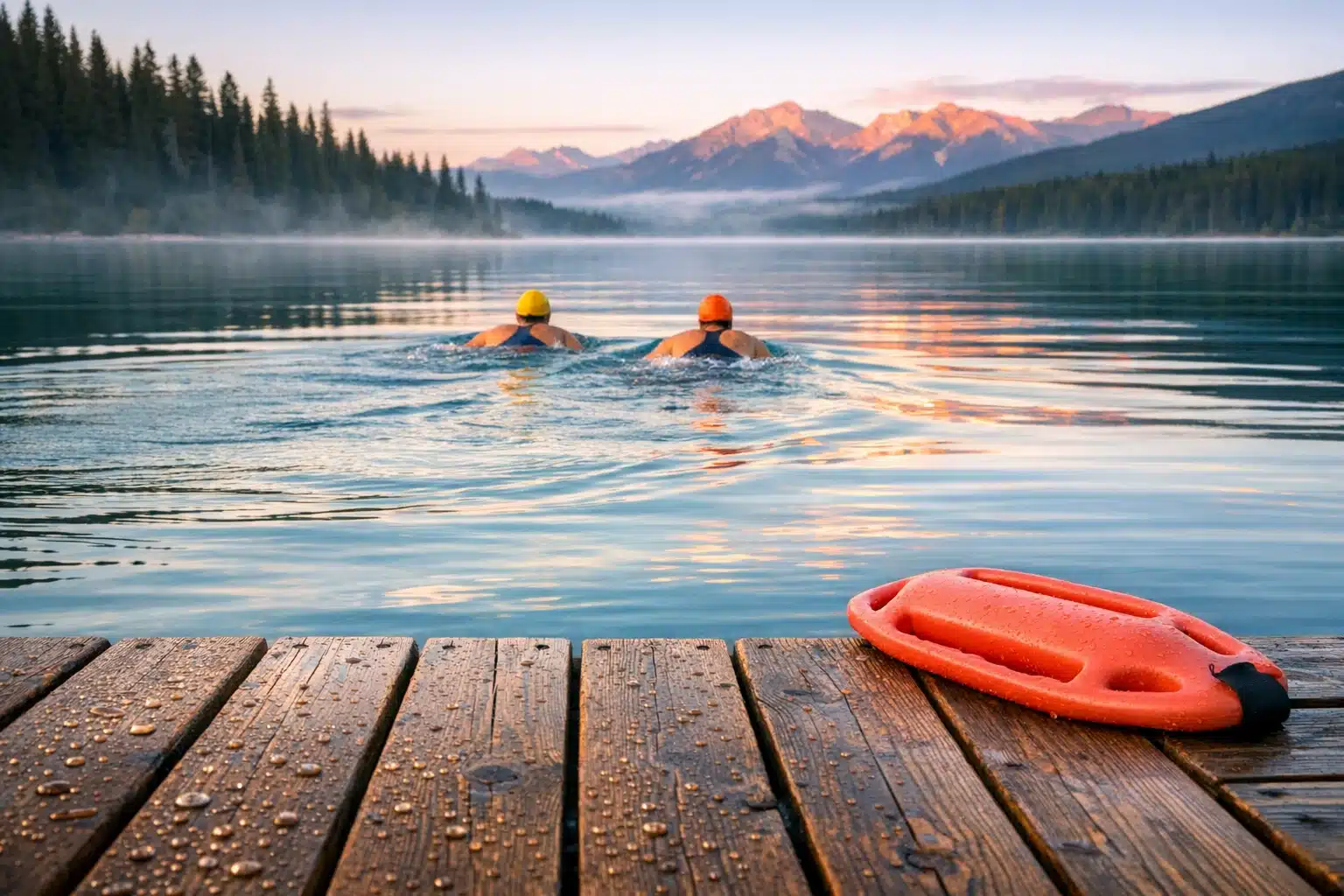
Explore the world of swimming
Outline and Introduction: Why Swimming Still Matters
Swimming is one of those rare activities that can feel playful on the surface while demanding remarkable coordination underneath. It matters because it blends fitness, safety, confidence, and recreation into one skill that serves people from childhood to old age. Whether practiced in a neighborhood pool, a lake at sunrise, or an Olympic lane, it teaches the body to move efficiently in an unfamiliar environment. That mix of usefulness and freedom makes it worth exploring in depth.
Water changes the rules of movement. On land, the body relies on impact, balance, and friction. In water, buoyancy lifts, resistance slows, and breathing becomes rhythmic rather than automatic. That shift is exactly why swimming fascinates so many people. A beginner may enter the pool simply hoping to stay afloat, while an experienced swimmer might chase smoother turns, stronger kicks, or a faster split time over 100 meters. Both are learning the same truth: the water rewards technique as much as effort.
This article follows a clear path so readers can understand swimming from several useful angles.
- First, it introduces why swimming remains relevant as both a practical skill and a meaningful form of exercise.
- Second, it compares the main strokes and explains how technique shapes efficiency.
- Third, it explores physical and mental health benefits supported by widely accepted training principles.
- Fourth, it covers safety, learning methods, and realistic ways to improve.
- Finally, it looks at swimming as a lifelong activity shaped by culture, competition, and community.
Swimming has ancient roots, yet it remains strikingly modern. It appears in school programs, rehabilitation plans, elite sports, military training, and holiday leisure. Public health organizations consistently treat water competency as important because swimming ability can reduce risk in aquatic settings, while fitness experts value it because it trains the heart, lungs, muscles, and coordination with relatively low joint impact. That combination is difficult to match. Running develops endurance, cycling builds stamina, and strength training improves power, but swimming pulls several of those qualities together in a single environment.
There is also something quietly compelling about the atmosphere around swimming. Pools are structured and echo with measured laps, while open water feels less predictable, almost cinematic. A lane line suggests discipline; a calm lake suggests patience. Either way, the swimmer enters a space where progress is tangible. A smoother breath, a longer glide, or an extra uninterrupted lap can feel like a small but real victory. That sense of steady improvement is one reason swimming keeps drawing people back.
Understanding Swimming Technique and the Main Strokes
Technique is the hidden engine of swimming. Two people can appear equally strong on land, yet once they enter the water, the more efficient swimmer usually moves farther with less effort. The reason is simple: water creates much more resistance than air. Small errors in head position, arm entry, kick timing, or breathing pattern can waste energy quickly. Good technique reduces drag, improves propulsion, and makes the sport feel smoother rather than harder.
The four competitive strokes each teach different movement patterns, and even recreational swimmers benefit from understanding their strengths.
- Freestyle, usually swum as front crawl, is the fastest and most energy-efficient stroke for distance training. It relies on a streamlined body line, alternating arm pulls, and a flutter kick.
- Backstroke shares a similar alternating rhythm but is performed face up, which can make breathing easier for some learners while demanding strong body alignment.
- Breaststroke is slower but often feels more intuitive because the head can rise naturally and the motion is symmetrical.
- Butterfly is the most demanding for many swimmers, combining a wave-like body action with simultaneous arm recovery and a powerful dolphin kick.
Freestyle is often the first stroke people develop seriously because it balances speed and endurance. A well-timed side breath allows continuous motion, and efficient rotation through the hips and shoulders helps the swimmer avoid muscling every stroke. Backstroke, by contrast, teaches spatial awareness and body control. Because the face stays above water, it can feel less restrictive, yet it exposes technical flaws immediately. If the hips drop, momentum disappears. Breaststroke offers a different lesson: timing matters more than force. An early pull or rushed kick can create drag, while a calm sequence of pull, breathe, kick, and glide produces better travel.
Butterfly deserves respect not because it is flashy, but because it punishes disorder. It demands rhythm, core strength, and coordinated breathing. For that reason, many coaches use butterfly drills not only to teach the stroke itself but also to sharpen body awareness. Across all strokes, a few principles remain constant: keep the body long, reduce unnecessary splash, maintain a controlled kick, and treat breathing as part of the stroke rather than a break from it.
A useful comparison is to think of swimming as a conversation between effort and shape. On land, brute force can sometimes cover up poor mechanics. In the water, shape wins more often. The swimmer who slices cleanly forward usually outperforms the swimmer who fights the water head-on. That is why lessons, video feedback, drills, and patient repetition matter so much. Technique is not decoration in swimming; it is the difference between struggling through a length and flowing through it.
Health, Fitness, and the Mental Benefits of Time in the Water
Swimming earns lasting respect because it asks a lot from the body without punishing it in the same way high-impact exercise can. Buoyancy reduces the load placed on joints, which is one reason swimming is often recommended for older adults, people returning from injury, and those looking for a sustainable cardiovascular workout. At the same time, the resistance of water makes even moderate movement meaningful. Unlike walking across a room, moving across a pool requires the muscles to work against continuous drag.
From a fitness perspective, swimming can support several goals at once. It can improve aerobic endurance, strengthen major muscle groups, and help with body awareness and mobility. Depending on pace, body size, and stroke choice, a 30-minute swim session can burn a substantial number of calories, often falling within a range comparable to other popular workouts. More importantly, it can be adapted easily. A beginner may alternate one lap of easy effort with one lap of rest, while an experienced swimmer might complete interval sets designed to raise heart rate and improve speed.
Health authorities such as the World Health Organization recommend that adults aim for regular moderate to vigorous physical activity each week, and swimming fits that guidance well. It trains the cardiovascular system by challenging the heart and lungs, especially when sets are structured with consistent movement and controlled recovery. Because breathing in swimming is paced by stroke rhythm, many swimmers also develop greater awareness of breath control and respiratory efficiency.
The mental side is just as valuable. Swimming can be social in a club setting, but it can also be deeply solitary in a restorative way. Repeated laps create a predictable pattern: push off, glide, catch, pull, breathe, turn. That rhythm can quiet mental clutter. Many swimmers describe the pool as a place where problem-solving happens almost by accident, somewhere between the third and tenth lap. The effect is not magical, and it should not be overstated, yet regular exercise is widely associated with better mood regulation and lower stress, and swimming often delivers those benefits in a gentle, structured format.
- It offers full-body movement with limited joint impact.
- It can be scaled for beginners, athletes, and people in rehabilitation.
- It improves endurance, coordination, and posture awareness.
- It often supports stress relief through rhythm and repetition.
There is also a confidence factor that statistics do not fully capture. When people become more capable in water, they often feel more at ease during travel, family outings, and recreational activities. Fitness matters, of course, but swimming gives something extra: a sense of competence in an environment that once may have felt uncertain. That practical confidence can be as meaningful as the workout itself.
Safety, Learning, and Smart Training for Beginners and Improvers
Swimming is enjoyable, but it should never be treated casually when safety is involved. Water can feel inviting and still demand respect. That is why learning to swim properly matters just as much as using swimming for exercise. A strong beginner program usually starts with breath control, floating, kicking, and safe recovery to the pool wall before it worries about speed or distance. Those basics create trust between the swimmer and the water, and that trust is essential.
For children, formal lessons are especially valuable because they build habits early. For adults, lessons can be transformative because they replace fear with method. Many adults assume they are simply “not natural swimmers,” when in reality they were never shown how buoyancy, balance, and exhalation work together. Good instruction breaks the skill into manageable parts. A person who cannot yet swim a full length may still be making excellent progress by learning to float calmly, put the face in the water, or exhale continuously instead of holding the breath.
Safety needs also change depending on where a person swims. Pools are controlled environments, but they still require awareness of lane etiquette, depth, fatigue, and supervision. Open water introduces a broader set of variables: visibility, temperature, currents, waves, weather, and distance from shore. Even experienced pool swimmers can be surprised by how different a lake or sea feels. Sighting becomes important, wetsuits may affect buoyancy, and cold water can alter breathing almost instantly.
- Never assume confidence in a pool equals readiness for open water.
- Use lifeguarded areas whenever possible.
- Swim with a partner or group rather than alone.
- Build distance gradually instead of chasing a dramatic first session.
- Stop when technique collapses from exhaustion, because poor form increases risk.
Training smart also means understanding progression. Improvement usually comes from consistency, not heroic effort. A practical weekly structure might include one easy technique session, one endurance-focused swim, and one mixed session with short intervals. Drills such as kickboard work, single-arm freestyle, or sculling can sharpen specific skills without requiring huge volume. Rest matters too. Swimming may feel smooth on the joints, but it still stresses the shoulders, back, and core if load rises too quickly.
Equipment should remain simple at first. A comfortable swimsuit, goggles that fit well, and a cap if desired are enough for many people. Extras such as pull buoys, paddles, fins, and snorkels can be helpful, but they should support learning rather than distract from it. The best training plan is often the one a swimmer can repeat week after week without dread. In swimming, patience is not a compromise; it is part of the craft.
Swimming for Life: Culture, Competition, and Final Thoughts for New Readers
Swimming occupies an unusual place in modern life because it belongs to many worlds at once. It is a competitive sport measured to fractions of a second, a recreational pastime tied to summer memories, a survival skill taught in schools, and a therapeutic activity used in recovery settings. Few pursuits shift so easily between intensity and ease. One person chases national qualifying times, another drifts through gentle laps before work, and a third joins an aqua fitness class for low-impact movement. All three are participating in the same broad culture of swimming.
Competition has helped shape the public image of swimming. Olympic races showcase power, technique, and precision in a highly visible form. Relay exchanges, underwater phases, and world-record pace make the sport feel almost mechanical in its detail. Yet the culture around swimming is not only about elite performance. Masters programs welcome adults returning to the pool after years away. Community pools create spaces where families learn together. Open water events attract people who prefer adventure to lane lines. In many places, the social side is as meaningful as the athletic side.
Swimming also teaches a particular kind of humility. Progress rarely arrives in dramatic leaps. It appears in subtler ways: cleaner turns, less panic during breathing, a stronger catch, or an easier relationship with distance. That makes the sport rewarding for people who appreciate steady development rather than quick rewards. Even talented swimmers spend years refining details that casual observers barely notice. The water is honest that way. It gives clear feedback without much argument.
For readers wondering whether swimming is worth starting, the practical answer is yes, provided the approach is realistic. Begin with safety and comfort, not performance. Choose a pool, lesson, or local program that feels manageable. Expect awkward moments early on, because nearly everyone has them. Then notice how quickly small improvements add up. A relaxed exhale becomes a smoother stroke. A smoother stroke becomes more distance. More distance becomes confidence.
That is the strongest conclusion for a general audience: swimming is useful, demanding, adaptable, and surprisingly generous to those who stay with it. It can support health goals, reduce stress, build skill, and open the door to travel, recreation, and community with greater ease. You do not need to become a racer to benefit from it. You only need curiosity, consistent practice, and enough patience to let the water teach you its pace. Once that happens, swimming stops being merely an activity and starts becoming a lifelong resource.