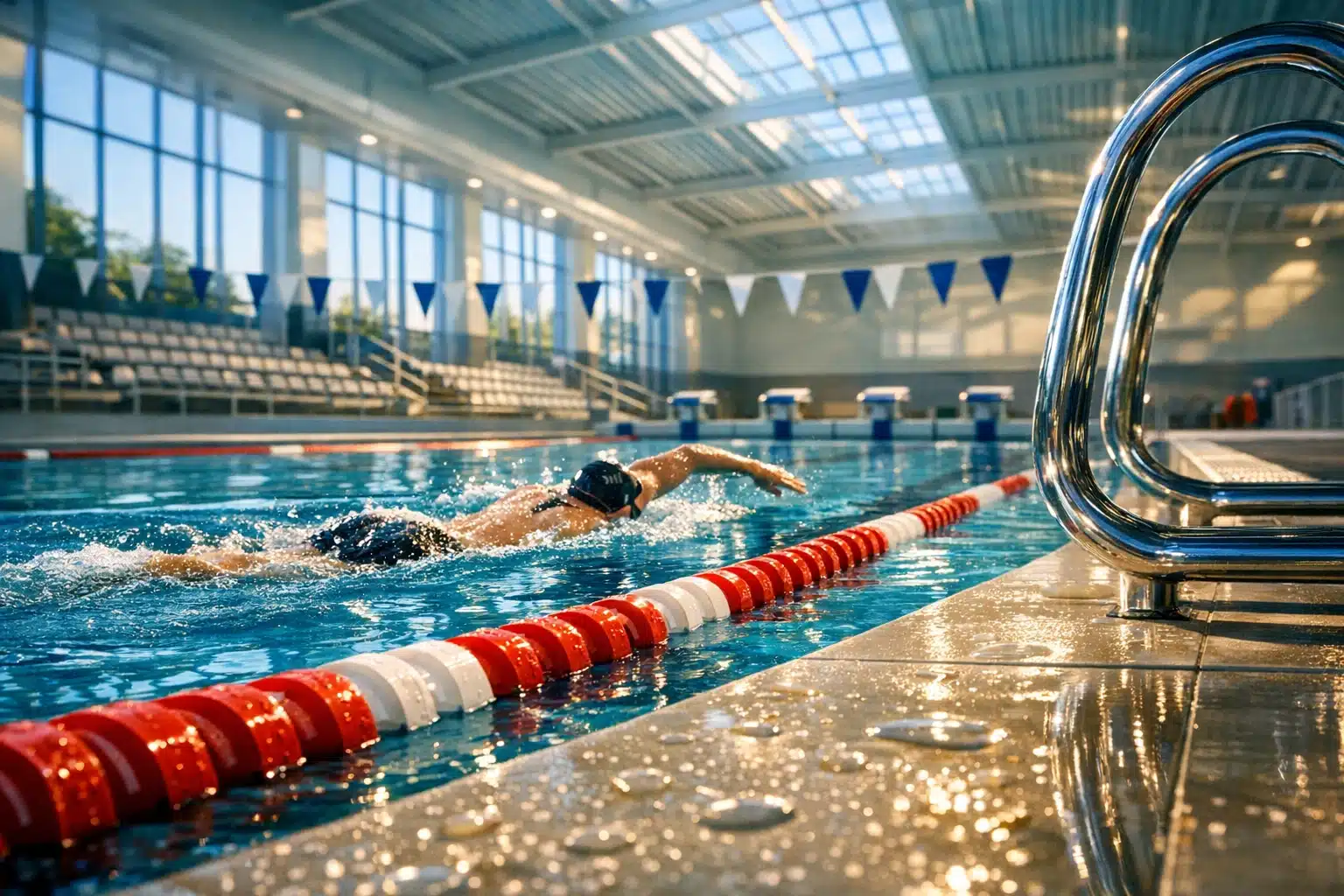
Explore the world of swimming
Swimming sits at an unusual crossroads where sport, survival, recreation, and therapy meet in the same lane. A child splashing for confidence, a triathlete chasing seconds, and an older adult protecting sore joints can all benefit from the water for different reasons. Because it challenges the heart without pounding the body, it stays relevant across ages and fitness levels. This article explores the craft, science, and culture of swimming so readers can see why it rewards curiosity as much as effort. From pool etiquette to stroke mechanics, there is more going on beneath the surface than many beginners expect.
This article follows a clear path so the topic feels manageable rather than overwhelming.
- The first section explains why swimming matters as both a life skill and a major sport.
- The second section compares the main strokes and shows how technique shapes speed and efficiency.
- The third section examines physical and mental benefits with a balanced look at what swimming can and cannot do.
- The fourth section covers practical training, essential gear, and habits that improve safety in pools and open water.
- The fifth section offers a focused conclusion for beginners, returners, and fitness-minded readers who want realistic next steps.
Why Swimming Matters: More Than Exercise in a Pool
Swimming matters because it solves several human needs at once. It is a method of movement, a survival skill, a competitive discipline, and a form of recreation that can remain useful for an entire lifetime. That range is unusual. Running is accessible, but it does not teach water safety. Weight training builds strength, but it does not help someone stay calm if they fall from a boat. Cycling develops endurance, yet it depends heavily on equipment and road conditions. Swimming occupies a broader space, which is one reason it continues to appeal to families, schools, clubs, and health professionals.
Public health organizations regularly treat swim ability and water awareness as important tools in drowning prevention. Knowing how to float, tread water, and reach a safe exit can make a meaningful difference during emergencies. This does not mean that every swimmer is automatically safe in every setting. Rivers, oceans, and cold lakes can humble even confident athletes. Still, basic competence in the water gives people more options than panic ever will. That alone makes swim instruction worth taking seriously.
Swimming also has deep cultural and sporting roots. Ancient civilizations used water for transport, ritual, and physical training. Modern swimming later became one of the foundational Olympic sports, and today it spans casual community lessons, school teams, masters clubs, para swimming, and elite international competition. The sport can be intensely technical while remaining inviting at beginner level. A lap pool may host a child learning bubbles at one end and a serious interval session at the other. Few environments bring those worlds together so naturally.
Another reason swimming remains relevant is its unusual sensory experience. Water provides constant feedback. If a swimmer lifts the head too high, the hips often sink. If the hand enters at an awkward angle, the stroke feels heavy. If breathing becomes rushed, rhythm breaks apart almost immediately. The medium itself becomes teacher, resistance tool, and mirror. That instant honesty can frustrate new swimmers, yet it is also what makes improvement satisfying.
For many people, swimming offers something harder to quantify but easy to recognize: a rare blend of effort and calm. The pool can feel like a workshop for the body and a quiet room for the mind at the same time. That dual character helps explain why the activity is not merely popular, but enduring.
Understanding the Main Strokes and Why Technique Changes Everything
To an untrained eye, swimming can look simple: arms move, legs kick, body travels forward. In practice, technique changes almost everything. Good mechanics reduce drag, improve breathing, and allow a swimmer to cover more distance with less wasted effort. Poor mechanics do the opposite. The difference is not always dramatic from deck level, yet it feels enormous in the water. Two swimmers may work equally hard, but the one with better timing often looks smoother and arrives first.
The four competitive strokes are freestyle, backstroke, breaststroke, and butterfly. Freestyle, usually swum with front crawl technique, is typically the fastest because the stroke can maintain continuous propulsion while the body stays long and streamlined. Backstroke shares some of that efficiency, but the face stays upward and orientation depends on body awareness rather than direct sight. Breaststroke is slower for most athletes because each pull and kick includes a brief glide and a greater change in body shape, which increases drag. Butterfly is the most physically demanding for many people, requiring strength, timing, and a wave-like rhythm that breaks down quickly when fatigue arrives.
Beginners often assume that harder kicking automatically means faster swimming. That idea sounds logical, but it is incomplete. Speed comes from a combination of body position, propulsion, and timing. If the head lifts forward instead of staying neutral, the hips usually drop. If the hand slips through the water instead of catching it firmly, energy leaks away. If breathing interrupts alignment every stroke, momentum fades. Skilled swimmers do not merely move more; they move with cleaner organization.
A helpful comparison looks like this:
- Freestyle rewards efficient rotation, relaxed recovery, and controlled side breathing.
- Backstroke relies on stable hips, consistent kick rhythm, and awareness of lane position.
- Breaststroke depends heavily on timing, especially the sequence of pull, breath, kick, and glide.
- Butterfly demands coordinated undulation and patient breathing rather than frantic force.
Technique also determines comfort. A swimmer with sound breaststroke timing may feel less winded than someone muscling through freestyle with tense shoulders and hurried breaths. That is why lessons and drills matter. Coaches often use short, targeted exercises such as side kicking, single-arm freestyle, or sculling to isolate specific flaws. These drills may look modest, yet they sharpen the exact details that separate struggle from fluency.
In a standard Olympic pool, a long-course race measures 50 meters per length. That distance can expose every technical weakness. By the final meters, efficiency becomes visible: the cleaner swimmer keeps shape, while the less economical one appears to fight the water itself. In swimming, technique is not decorative. It is the engine room.
Health, Fitness, and Mental Benefits: What the Water Does Well
Swimming earns a strong reputation in health and fitness circles for good reasons. It is an aerobic activity that can improve cardiovascular endurance, challenge major muscle groups, and offer a low-impact option for people who find land-based exercise uncomfortable. The heart and lungs work steadily during sustained swimming, especially when sets are long enough to keep effort consistent. At the same time, the body moves against resistance from every direction, which means even non-weightlifting sessions can feel physically complete.
One of swimming’s biggest advantages is reduced joint stress. Water supports body weight, which lowers impact on knees, hips, and ankles compared with activities like running or court sports. That makes it useful for some older adults, people returning from certain injuries, and exercisers managing soreness from high-impact training. It can also complement other routines. A runner may use easy swims for recovery days. A strength athlete may add pool sessions to build endurance without taking another pounding on tired legs.
The benefits extend beyond heart health and muscular endurance. Many swimmers describe a mental reset that feels different from gym training. The environment encourages repetitive rhythm: stroke, breath, kick, turn, repeat. That pattern can quiet mental clutter in a way that resembles moving meditation. There is also a practical reason for the calming effect. During a focused set, attention narrows toward breathing, pace, and body position. Multitasking becomes difficult, and the brain gets a rare break from constant digital interruption.
That said, balance matters when discussing fitness claims. Swimming is excellent, but it is not magic. For example, it may not support bone density as strongly as weight-bearing activities such as walking, hiking, or resistance training. If someone’s goal includes maximum skeletal loading, a mixed program may be more effective than pool work alone. Likewise, technique limitations can cap intensity. A beginner who tires after one length may not yet get the same conditioning effect as an experienced swimmer able to sustain structured intervals. The solution is not disappointment; it is progression.
Several common benefits make swimming especially attractive:
- It trains endurance without repetitive foot strike.
- It engages upper body, core, and lower body in one session.
- It can be adapted for gentle recovery or demanding athletic work.
- It often improves confidence around water as skills grow.
In short, swimming serves health best when viewed honestly. It is adaptable, efficient, and mentally refreshing, yet it works even better when matched to personal goals. Someone seeking mobility, stamina, and stress relief may find it close to ideal. Someone chasing maximum sprint power or bone-loading stimulus may benefit from pairing it with dryland work. The strongest case for swimming is not that it does everything. It is that it does many important things unusually well.
Training Smart: Lessons, Gear, Drills, and Safety Habits That Matter
Training smart in swimming begins with humility. Water punishes shortcuts more quickly than many other training environments. A person can bluff through a jog with clumsy form for a while, but poor breathing and alignment tend to reveal themselves within a few lengths. That is why lessons remain one of the best investments a beginner can make. Even a handful of sessions with a capable instructor can prevent months of frustration. For returning swimmers, technique refreshers often unlock progress faster than simply adding more distance.
A practical training plan should match both skill level and purpose. New swimmers benefit from short, manageable sessions that emphasize comfort, body position, and breath control. Intermediate swimmers can use structured sets to build aerobic capacity and technical consistency. Competitive athletes often divide the week into different themes such as endurance, speed, race pace, and recovery. In every case, quality usually beats mindless volume. Fifty sloppy lengths teach less than a focused practice built around a few clear objectives.
Useful priorities for beginners often include:
- Learning to exhale steadily underwater rather than holding the breath.
- Maintaining a long body line so the hips do not drag.
- Practicing relaxed kicking from the hips instead of frantic bending at the knees.
- Developing comfort with floating, rolling, and pushing off the wall.
Drills help translate these ideas into repeatable habits. Kickboard work can isolate leg action, though it should not dominate every session because it can encourage awkward head position if overused. Pull buoys reduce leg demand and let swimmers concentrate on the catch and torso alignment. Fins can help learners feel speed and improve ankle flexibility, but they should support technique rather than mask flaws. Paddles increase resistance and can sharpen awareness of hand position, yet they require care to avoid shoulder strain.
Gear choices are simple compared with many sports, which is part of swimming’s appeal. A basic setup often includes a well-fitting swimsuit, goggles that seal comfortably, and a cap if hair management or pool rules require one. Beyond that, equipment should serve a purpose rather than collect in a mesh bag like forgotten promises. Fancy tools do not replace skill.
Safety deserves equal weight. Pool swimmers should know lane etiquette, check depth before diving, and respect posted rules. Open-water swimmers need stronger caution because conditions shift quickly. Cold temperatures, currents, low visibility, and boat traffic introduce risks that a calm pool never presents. Sensible habits include:
- Swimming with a partner or organized group.
- Using a bright cap and, when appropriate, a tow float for visibility.
- Checking weather, water quality, and local warnings before entering.
- Understanding that confidence in a pool does not automatically transfer to the sea or a lake.
Smart training is not glamorous, but it is powerful. When lessons, drills, equipment, and safety habits work together, progress becomes steadier, and the water starts to feel less like an obstacle and more like an ally.
Conclusion for Beginners, Returners, and Fitness-Minded Readers
If you are new to swimming, coming back after years away, or simply looking for exercise that feels different from treadmills and weight benches, swimming is worth serious consideration. It offers practical value beyond fitness, teaches skills that can increase confidence around water, and creates a kind of physical challenge that rewards patience over ego. You do not need to resemble a competitive swimmer for the activity to matter. You only need a sensible starting point and a willingness to improve one piece at a time.
For beginners, the first goal should not be speed. It should be comfort, breath control, and safe movement. Learning to float calmly, exhale underwater, and travel one relaxed length with decent form is a genuine milestone. For returning swimmers, the smartest move is often technical cleanup rather than nostalgic overreaching. The body may remember more than expected, but timing, flexibility, and endurance usually need a respectful rebuild. For readers focused on health, swimming can become a sustainable pillar of weekly exercise, especially when joints dislike impact or mental stress makes repetitive land workouts feel stale.
A realistic way to begin might look like this:
- Take one lesson or ask a qualified coach for a form check.
- Swim two or three short sessions per week instead of one exhausting marathon workout.
- Alternate easy lengths with rest so technique stays organized.
- Add variety gradually through drills, stroke practice, or gentle interval sets.
- Keep safety habits non-negotiable, especially outside the pool.
What makes swimming compelling is not only its efficiency, though it has plenty of that. It is the way the activity grows with the person doing it. A child may begin with bubbles and floating. An adult may discover stress relief after work. A competitor may chase tenths of a second for years. Later in life, the same water can become a place to maintain mobility, routine, and confidence. The lane remains, but its meaning changes.
For the audience most likely reading this article, the message is simple: start where you are, learn the basics well, and let consistency do the heavy lifting. Swimming does not demand perfection on day one. It asks for attention, respect, and practice. In return, it offers skill, resilience, and a way of moving that can stay useful long after trendier workouts have drifted away.