Explore the world of swimming
An Outline of the Journey and Why Swimming Matters
Swimming sits at a rare crossroads where survival skill, competitive sport, and restorative exercise meet. It asks the body to work against the pressure of water while teaching the mind to settle into rhythm, breath, and balance. For children it can build confidence, for adults it can reopen the door to movement, and for older people it can offer gentle but meaningful activity. This article begins with a clear outline, then moves through technique, health benefits, safety, and practical ways to make swimming part of everyday life.
A good swimming article needs structure because the subject itself is broad. One person arrives at the pool wanting to learn not to panic in deep water. Another wants to shave seconds off a lap time. Someone else is looking for exercise that feels kinder to the knees than running or court sports. Those different goals matter, and swimming has room for all of them. In schools, community centers, clubs, rehabilitation settings, and elite competitions, it serves different purposes without losing its core value: it teaches people how to move effectively in an environment humans were not naturally designed to master.
Here is the outline this article follows:
- Why swimming remains relevant as a life skill, sport, and fitness practice
- How the major strokes differ in rhythm, breathing, and efficiency
- What physical and mental benefits regular swimming can offer
- Which safety habits, training methods, and tools make the biggest difference
- How beginners and returning swimmers can build a sustainable routine
The importance of swimming is not only athletic. In many regions, access to beaches, rivers, or pools makes water safety an essential skill rather than a luxury. Learning to float, tread water, and stay calm can matter far beyond recreation. At the same time, swimming remains one of the few activities that can be playful and disciplined in equal measure. A relaxed family swim and a structured interval session may happen in the same lane space, yet they feel like different worlds linked by the same medium.
There is also a quiet democratic quality to swimming. It can be adapted for children, seniors, beginners, and experienced athletes. It can be social, with team relays and group classes, or almost meditative, where the repeated sound of exhaling underwater becomes a metronome for thought. Water has a way of stripping exercise down to essentials. There is no road to conquer, no hill to climb, no machine to hide behind. There is only body position, breath, timing, and patience. That simplicity is part of the sport’s enduring appeal, and it is the reason swimming deserves a closer look.
Technique, Strokes, and the Craft of Moving Through Water
Swimming may look smooth from the deck, but the calm surface often hides a technical conversation between body alignment, propulsion, and breath control. Small changes in hand entry, kick timing, or head position can noticeably affect efficiency. Unlike land sports, where athletes push against solid ground, swimmers work in a setting that shifts and resists every movement. That is why technique is not an optional refinement. It is the foundation.
The four competitive strokes offer a useful framework for understanding how swimmers move. Freestyle, usually performed as front crawl, is the fastest and most common stroke in training and racing. It relies on a long body line, alternating arm recovery, a steady flutter kick, and side breathing. For many beginners, freestyle feels frustrating at first because breathing interrupts rhythm. Once timing improves, however, it often becomes the most natural stroke for distance and conditioning.
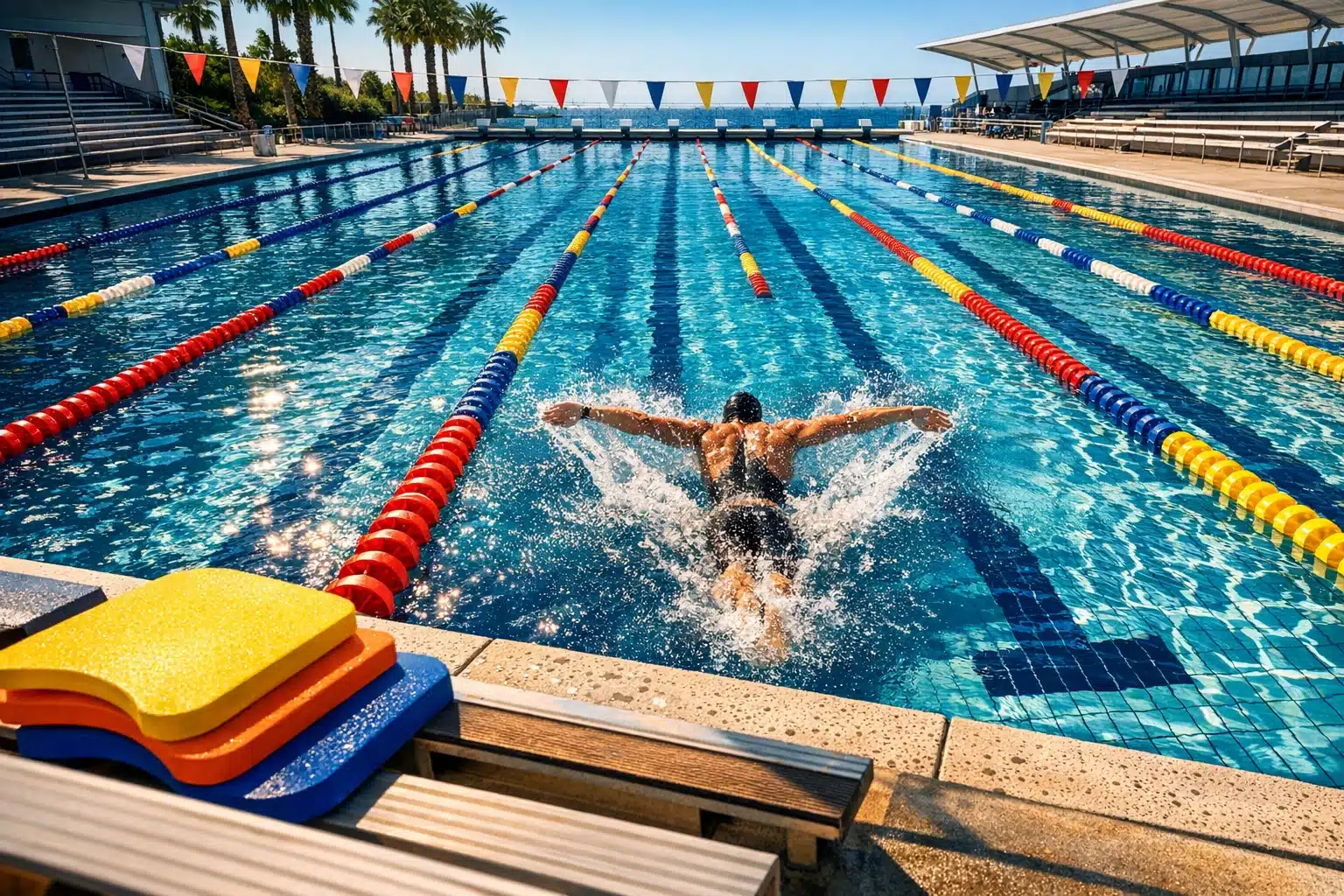
Backstroke flips the equation. Because the face stays above water, some swimmers find it easier for breathing and confidence. Yet it introduces a different challenge: swimming straight without looking forward. Strong backstroke depends on hip rotation, an even kick, and shoulder mobility. Breaststroke is usually the easiest stroke to recognize because of its distinctive glide and simultaneous arm and leg action. It can feel accessible to beginners, but efficient breaststroke is surprisingly technical. Poor timing wastes energy quickly. Butterfly is the most physically demanding for many people. Its wave-like body motion, paired arm recovery, and dolphin kick require strength, flexibility, and rhythm. Done well, it looks almost theatrical, as if the swimmer is briefly negotiating with gravity before falling back into the water.
A simple comparison shows how each stroke serves different goals:
- Freestyle is often best for speed, fitness laps, and endurance work.
- Backstroke helps with posture awareness and varied training balance.
- Breaststroke allows a clearer forward view and a distinct pacing style.
- Butterfly develops power and timing but usually demands the most energy.
Across all strokes, several technical ideas remain constant. Streamlining matters because water creates far more resistance than air. A lifted head can sink the hips. A rushed pull can shorten distance per stroke. A powerful kick cannot fully compensate for poor alignment. Skilled swimmers learn to reduce drag before trying to increase force. That lesson is useful for novices and advanced athletes alike.
Breathing deserves special attention because it shapes confidence as much as performance. New swimmers often hold their breath underwater and then rush to inhale, which creates tension and disrupts body position. More effective breathing follows a simple sequence: exhale steadily in the water, rotate or lift only as needed, inhale quickly, and return to alignment. It sounds modest, but this single change can transform a swimmer’s comfort level. In swimming, progress is not always loud. Sometimes it arrives in the quiet miracle of one calm breath after another.
Health, Fitness, and Mental Benefits Beyond the Lap Count
Swimming is often praised as a full-body workout, and that description is justified, but it is still too narrow to capture the whole picture. Regular swimming can support cardiovascular fitness, muscular endurance, mobility, coordination, and stress management at the same time. It is not magic, and it is not the right choice for every person in every season of life, yet it remains one of the most adaptable physical activities available.
From a fitness perspective, swimming challenges both the heart and the muscles. Moving through water requires continuous effort, especially during sustained sets. Arms, shoulders, back, core, hips, and legs all contribute, though the exact balance changes with stroke and intensity. Because the body is supported by water, swimming is often more comfortable for people who want lower-impact exercise. That makes it appealing for individuals managing joint discomfort, returning to activity after a long break, or seeking variety beyond walking, cycling, or gym circuits.
Public health guidance commonly recommends at least 150 minutes of moderate aerobic activity per week for adults. Swimming can help meet that target while also adding resistance-based work through the natural drag of water. A relaxed technique session, an interval workout, and a recovery swim do not feel the same, but each can contribute to overall movement goals. The pool also encourages pacing awareness. Swimmers learn quickly that charging through the first few laps usually leads to early fatigue. This makes the activity a quiet teacher of restraint and efficiency.
The mental side is just as important. Many swimmers describe a training session as both demanding and calming. That dual effect makes sense. Water limits outside noise, imposes a breathing rhythm, and rewards steady attention. In a world full of alerts, tabs, and interruptions, swimming can feel almost monastic. The line at the bottom of the pool becomes a narrow road that asks only one thing: keep going with purpose.
Potential benefits often mentioned by swimmers include:
- Improved aerobic capacity through consistent lap work
- Better muscular endurance from repeated resistance in water
- Reduced impact stress compared with many land-based activities
- A structured environment that can support focus and mood regulation
- Flexible intensity for rehabilitation, recreation, or sport training
Swimming also serves people with different motivations. Some use it to complement running or team sports, balancing high-impact training with recovery-friendly conditioning. Others rely on it as their main exercise because they enjoy the environment more than a gym floor or treadmill. Parents often appreciate that it combines safety education with physical literacy for children. Older adults may value the way it allows regular movement without the same pounding experienced in some other activities.
Still, context matters. Pool length, water temperature, coaching quality, and individual technique all shape the experience. A person with poor form may tire quickly and assume swimming is simply too hard. Often the real issue is not effort but inefficiency. With even modest instruction, many people discover that swimming becomes far more sustainable. When that happens, the sport reveals one of its finest qualities: it can be serious exercise without always feeling severe.
Safety, Training Habits, and Equipment That Deserve Attention
Swimming rewards confidence, but it punishes carelessness. Because of that, safety should never be treated as a boring footnote. It is central to the experience, whether someone is learning in a shallow community pool or training in open water before sunrise. A strong swimmer is not merely fast. A strong swimmer understands limits, conditions, and preparation.
The first safety principle is simple: learn fundamentals properly. Floating, controlled breathing, treading water, basic propulsion, and safe entries matter more than stylish strokes in the early stages. Lessons from qualified instructors can shorten the learning curve and reduce panic. This is especially important for children, but adults benefit just as much. Many adults carry quiet fear around water because no one ever taught them systematically. Good instruction replaces guesswork with sequence.
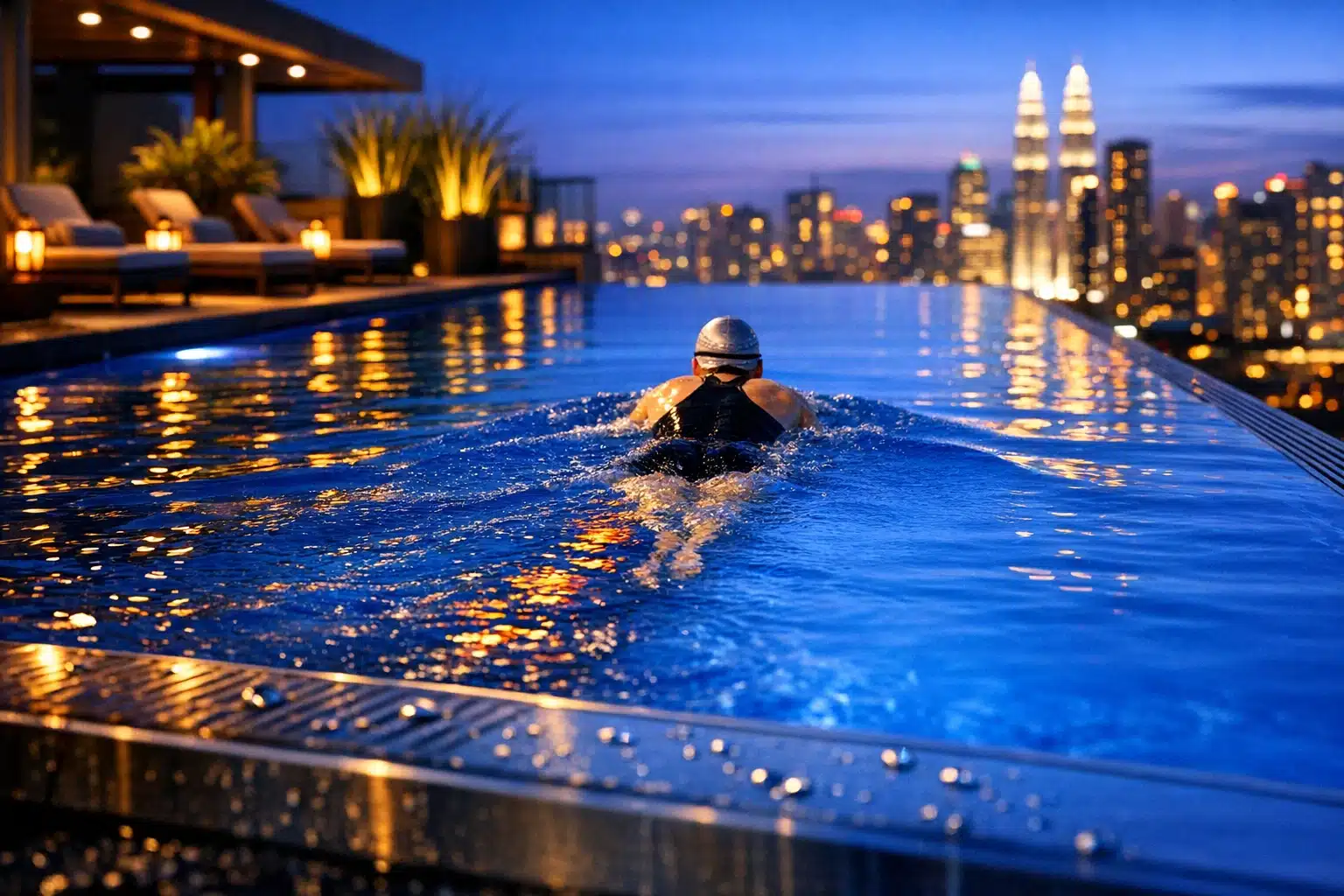
Pool safety includes habits that seem obvious until people ignore them. Diving into unknown depth, rough play near the edge, breath-holding contests, or swimming alone all increase risk. In open water, the list of concerns expands. Currents, boat traffic, limited visibility, sudden temperature changes, and fatigue can turn an ordinary swim into a dangerous one. Open water also removes the reassuring geometry of lane lines and walls. Without those references, even experienced pool swimmers can feel disoriented.
A practical safety checklist includes:
- Swim in supervised areas when possible, especially as a beginner
- Use a brightly visible cap or buoy in open water
- Check weather, water conditions, and temperature before entering
- Warm up gradually rather than sprinting from the first minute
- Stop if cramping, dizziness, chest discomfort, or unusual breathlessness appears
Training quality matters almost as much as safety. Many swimmers improve more from consistent moderate sessions than from occasional heroic efforts. A sensible program often mixes technique drills, aerobic sets, recovery laps, and rest intervals. Drills using a kickboard, pull buoy, or fins can isolate parts of the stroke, but equipment should support learning rather than disguise flaws. For example, fins may help a swimmer feel body position and ankle movement, yet they can also create false confidence if overused. Similarly, paddles may increase strength demands, but poor mechanics with paddles can strain the shoulders.
Essential gear is fairly modest compared with many sports:
- A comfortable swimsuit suited to the setting
- Goggles that seal well without causing pressure headaches
- A cap for hygiene, warmth, visibility, or hair control
- A towel, water bottle, and simple post-swim layer for comfort
The beauty of swimming equipment is that it can remain minimal, but the details still matter. Ill-fitting goggles can ruin concentration. A crowded lane with poor etiquette can derail a workout. Skipping recovery after a hard set can accumulate fatigue just like in any other sport. Swimming may appear graceful and forgiving from a distance, yet it asks for discipline behind the scenes. Respect that reality, and the water becomes a place of progress rather than a place of avoidable mistakes.
Conclusion for Beginners and Returning Swimmers: Building a Lifelong Habit
If you are the kind of reader who likes practical takeaways more than grand speeches, swimming offers a reassuring truth: you do not need to start dramatically to benefit from it. You do not need a racing background, perfect technique, or expensive gear. What you need is access, patience, and a willingness to improve a little at a time. That makes swimming especially useful for beginners, returning exercisers, busy adults, and anyone searching for an activity that can evolve over the years.
Starting small is often the smartest route. A beginner may begin with two short sessions a week focused on comfort, floating, and simple lengths with rest. A returning swimmer might rebuild fitness with easy intervals rather than trying to recreate the pace of years past. Parents can look for programs that teach both water confidence and structured skills. Older adults may prefer quieter pool times and instructor-led sessions that emphasize mobility and technique. The path changes, but the principle stays consistent: sustainable progress beats rushed ambition.
Swimming also works well because it scales. The same pool can host playful learning, serious conditioning, technical drill work, and social recreation. A swimmer can train for a triathlon, recover after a stressful week, or simply enjoy the feeling of weightlessness for half an hour. Few activities offer that range. On difficult days, even a modest session can reset the mind. On energetic days, the water becomes a training partner that never quite gives anything away for free.
For readers deciding whether swimming deserves a place in their routine, the strongest arguments are clear:
- It combines practical life skill value with physical training
- It can support fitness across a wide range of ages and abilities
- It offers lower-impact movement without removing challenge
- It teaches patience, breath control, and body awareness
- It can remain useful from first lessons to lifelong recreation
The world of swimming is larger than medals, lane clocks, or summer memories. It includes the child who learns not to fear deep water, the office worker who rediscovers movement after years of sitting, the older swimmer who keeps returning for strength and calm, and the athlete chasing technical refinement one stroke at a time. If that world seems broad, that is because it is. Swimming belongs to many kinds of people for many reasons.
So the most sensible conclusion is also the simplest one. Start where you are. Learn well. Stay safe. Let the water teach you its particular language of rhythm and resistance. Over time, what first feels unfamiliar can become one of the most reliable and rewarding parts of your week.