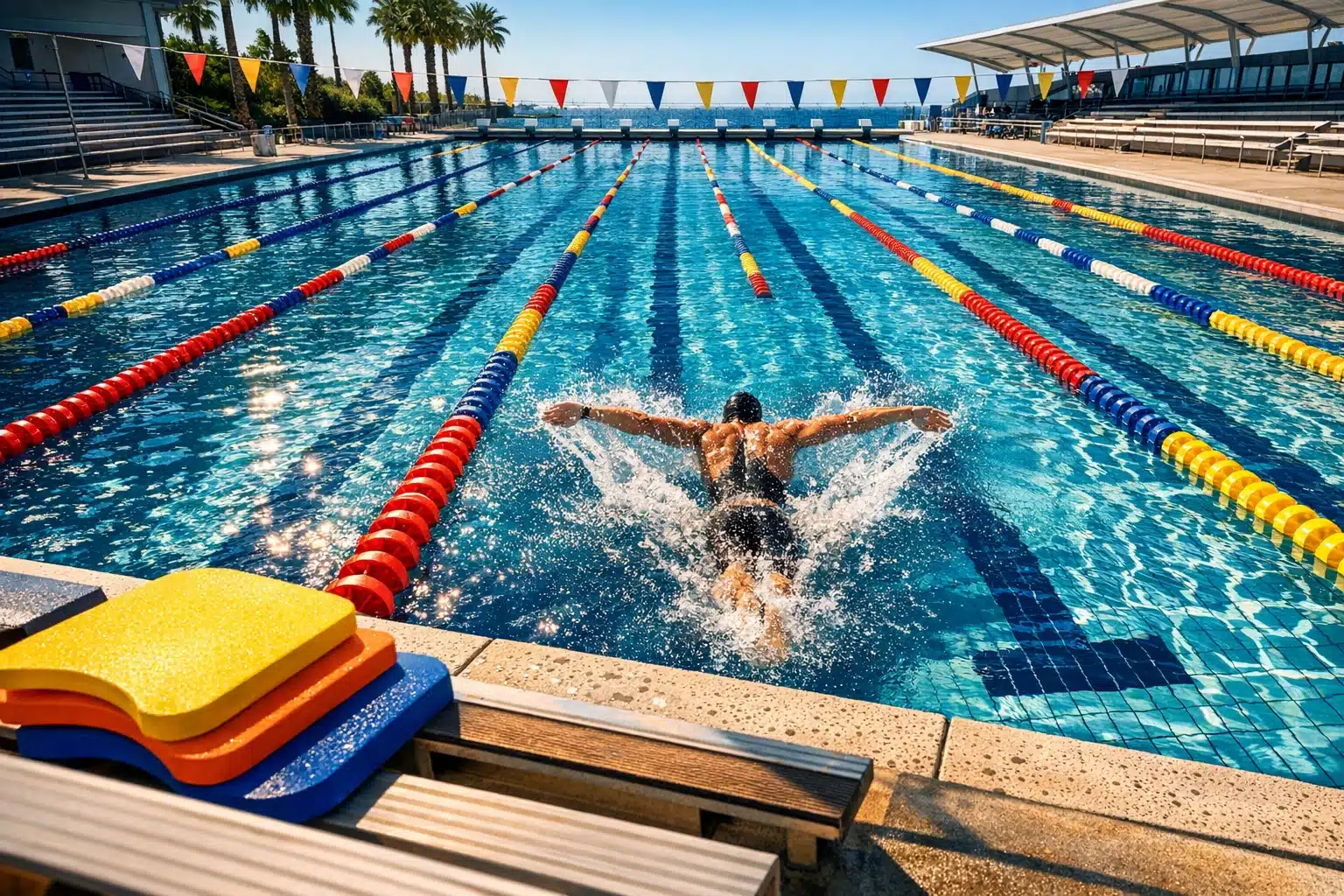
Explore the world of swimming
Step into a pool and the rules of movement quietly change: gravity softens, breathing gains rhythm, and effort becomes almost musical. Swimming matters because it builds endurance without the pounding common in many land sports, while also teaching water competence that can help prevent accidents. From casual lap sessions to serious training blocks, it serves beginners, athletes, and families with unusual flexibility. The outline below maps that journey from benefits and stroke basics to training methods, safety essentials, and practical long-term value.
Article Outline
- The importance of swimming for fitness, health, confidence, and daily life
- The major strokes and how they differ in technique, speed, and effort
- How beginners and improving swimmers can train with purpose
- The role of gear, pools, open water, and safety habits
- A concluding guide for readers who want to make swimming part of their routine
Why Swimming Matters: Fitness, Health, and Confidence in One Activity
Swimming occupies a rare space in sport and exercise because it is both highly practical and deeply rewarding. Unlike many activities that focus mainly on competition, swimming teaches a life skill while delivering meaningful physical benefits. Water supports the body, which reduces impact on joints, yet it also pushes back with steady resistance. Because water is far denser than air, every stroke asks the muscles to work through a broad range of motion. That is one reason swimming can feel gentle on the knees and back while still becoming a serious workout for the shoulders, core, hips, and lungs.
For general health, swimming fits neatly into widely accepted fitness advice. Public health guidelines often recommend at least 150 minutes of moderate aerobic activity each week for adults. Lap swimming, aqua fitness, and even structured recreational sessions can help meet that target. Depending on stroke choice, pace, and body size, many people burn roughly 200 to 500 calories in 30 minutes. Freestyle intervals at a brisk effort demand more from the cardiovascular system than a relaxed backstroke session, while breaststroke often feels more accessible to new swimmers because the breathing pattern is easier to manage. That variety makes swimming useful for very different goals, including weight management, endurance, stress relief, and recovery from periods of inactivity.
Its mental value is easy to overlook but hard to deny once experienced. Swimming creates a focused environment with fewer distractions than many gym settings. The repeated cycle of inhale, stroke, kick, and glide can become meditative, almost like turning pages in water instead of paper. Many swimmers describe a calm, alert state after training, especially after moderate sessions that are challenging without being frantic. That response makes sense: rhythmic exercise can reduce stress and improve mood, and the sensory effect of water often adds an extra layer of relaxation.
Swimming also matters because confidence in water has real-world importance. Beaches, lakes, hotel pools, and family outings all become safer when basic water skills are present. Learning to float, tread water, and move efficiently is not only about sport; it is about preparedness. In that sense, swimming offers three benefits at once:
- a full-body form of exercise
- a low-impact training option for many ages
- a practical safety skill with lifelong relevance
Few activities can make that claim so convincingly. Whether a person is training for speed or simply hoping to feel less tired after climbing stairs, swimming offers a sturdy bridge between health, enjoyment, and everyday competence.
Understanding the Main Strokes and What They Teach the Swimmer
To an observer, swimming strokes can look like four different languages spoken in the same blue room. In practice, each stroke teaches a distinct lesson about movement, timing, and control. Freestyle, usually the fastest and most commonly trained stroke, rewards efficiency above brute force. A strong freestyle swimmer keeps the body long and balanced, rotates through the torso, and catches water with the forearm rather than slapping at the surface. Good breathing is crucial here. Lifting the head too high sinks the hips, while a smooth side breath keeps the line of the body cleaner and the stroke more economical.
Backstroke flips the swimmer onto the back and changes the sensory experience entirely. Because the face stays out of the water, breathing feels less restrictive, which can help beginners relax. Yet backstroke has its own technical demands. A stable head position, steady kick, and body rotation are essential, and navigation becomes tricky in a pool because the swimmer cannot look forward without disturbing alignment. Competitive backstrokers rely on ceiling lines, flags, and stroke counts to judge the wall. Recreational swimmers often enjoy backstroke because it opens the chest and breaks the monotony of face-down swimming.
Breaststroke is usually slower, but it is often the public favorite among casual swimmers. The stroke uses a sweeping arm action and a frog-like kick, followed by a glide that can feel wonderfully smooth when timed correctly. Its greatest appeal is the breathing pattern: the head comes forward naturally during each cycle. The challenge is coordination. If the kick is too wide or mistimed, the stroke becomes tiring and inefficient. Proper breaststroke is less about force and more about shape, timing, and streamlining.
Butterfly is the most dramatic stroke and often the most misunderstood. It looks explosive because both arms move together and the body undulates through the water, but strong butterfly is built on rhythm rather than chaos. A well-timed dolphin kick drives the stroke, and the chest, hips, and arms move in sequence like links in a chain. Butterfly is demanding on technique, mobility, and conditioning, which is why many swimmers learn it later or train it in short repeats.
Each stroke has a different personality:
- Freestyle is usually the most efficient choice for distance and speed.
- Backstroke offers easier breathing and valuable balance work.
- Breaststroke feels intuitive for many learners but requires sharp timing.
- Butterfly develops power and rhythm, though it carries the highest energy cost for most swimmers.
Together, the strokes build a more complete swimmer. Even if someone mainly uses freestyle for fitness, exposure to the others improves coordination, body awareness, and technique. In the water, variety is not decoration; it is education.
Learning to Swim and Training Smarter Rather Than Simply Harder
Learning to swim often begins long before the first proper stroke. The first victory is comfort: putting the face in the water, exhaling underwater, floating without panic, and trusting that the body can be supported. For children, these lessons may come through games and repetition. For adults, especially those who did not grow up around pools, the process can feel more emotional. That is perfectly normal. Water magnifies tension, so progress depends as much on calm breathing and patience as on technical instruction. A swimmer who learns to relax usually improves faster than one who tries to overpower the water.
A sensible learning path often moves through several stages. First comes water familiarity, including submersion, floating, and kicking with support. Next comes propulsion, where the swimmer learns how arm actions and body position create forward movement. Then breathing control and stroke timing begin to connect the pieces. Only after those basics settle in should speed become a real focus. This order matters because early bad habits, such as cycling the arms too quickly or holding the breath, can become stubborn obstacles later.
For improving swimmers, structure makes a major difference. Many people swim the same easy pace every visit and wonder why progress stalls. Smarter training mixes technique work, aerobic swimming, and short efforts at higher intensity. A basic session might include:
- a warm-up of easy laps and mobility-focused strokes
- drills such as catch-up freestyle, side kicking, or single-arm work
- a main set with timed repeats, for example 8 x 50 meters with rest intervals
- a cool-down to restore rhythm and reduce fatigue
Short, regular sessions usually beat rare marathon workouts. Three swims of 30 to 40 minutes often build more skill than one long session where technique falls apart from exhaustion. This is especially true for newer swimmers, because coordination improves through frequent contact with the water. Fitness matters, but swimming is also a technical sport, and technique responds well to repetition performed at manageable quality.
Tracking progress helps too. Swimmers can note lap times, stroke counts per length, rest intervals, and perceived effort. If a swimmer covers the same distance with fewer strokes, that often signals better efficiency. If interval sets feel easier at the same pace, endurance is likely improving. Masters swimmers, triathletes, and recreational lap swimmers all use these simple markers because they reveal far more than mood alone.
The deeper lesson is this: hard work matters, but clear practice matters more. Water is honest. It rewards balance, timing, and patience, then exposes rushed habits without mercy. Anyone willing to learn its logic can improve, even if the starting point is timid kicking in the shallow end.
Pools, Open Water, Equipment, and the Safety Habits That Matter Most
Where you swim changes how you swim. A calm indoor pool is controlled, measured, and forgiving. Distances are known, lane lines reduce chop, and walls provide regular turns and rest opportunities. Standard competitive pools are commonly 25 meters or 50 meters long, which makes pacing and workout design straightforward. For beginners, that predictability is a gift. The environment supports learning because fewer variables are competing for attention.
Open water is different. Lakes, rivers, and oceans replace neat lines with shifting light, uncertain depth, changing temperatures, and currents that do not care about a swimmer’s training plan. That does not make open water inferior; in fact, many swimmers find it magical. The horizon feels expansive, and the stroke settles into a natural rhythm that pools sometimes interrupt. Still, open water demands respect. Sighting, weather awareness, entry and exit planning, and the ability to stay calm when visibility drops are all essential. A swimmer who feels smooth in a pool may be surprised by how different breathing becomes when waves or chop appear.
Equipment also shapes the experience. Some items are nearly universal, while others are training-specific. A practical gear list often includes:
- well-fitting goggles that seal comfortably without excessive pressure
- a swimsuit designed for secure movement rather than fashion alone
- a swim cap for hair control, warmth, or reduced drag
- a kickboard, pull buoy, fins, or paddles for targeted drills
- a towel, water bottle, and sandals for basic poolside comfort
For open water, swimmers may add a brightly colored tow float, a wetsuit in colder conditions, and anti-chafing products. None of these replace judgment, but they can improve visibility, warmth, and confidence.
Safety deserves plain language, not vague optimism. Children should always be supervised near water, even if they have some lessons. Adults should know their limits and avoid treating fatigue as a badge of honor. In pools, lane etiquette prevents collisions and frustration: circle swim when required, allow faster swimmers to pass, and rest in corners rather than blocking the wall. In open water, never underestimate cold shock, current strength, or sudden weather shifts. Swimming with a partner or under organized supervision is a smart habit, not a timid one.
The best swimmers are not just fit or fast. They are attentive. They read water temperature, notice signs of cramping, check conditions before entering, and understand that confidence should travel with caution. That mindset keeps swimming joyful instead of reckless.
Conclusion: Making Swimming Part of Your Life
If you are reading this as a beginner, the most important message is simple: you do not need to look graceful on day one to belong in the water. If you are returning after years away, you do not need to chase your younger self to make progress. And if you already swim regularly, there is still plenty to refine, from breathing efficiency to smarter session design. Swimming is unusually generous in that way. It meets people where they are, then offers several directions forward at once: health, skill, challenge, recreation, and peace of mind.
Its value across the lifespan is one of its strongest arguments. A child may begin with floating games and basic safety lessons. A teenager may discover racing, water polo, or lifesaving skills. An adult may use swimming to complement running, recover from joint stress, or simply escape a crowded day with 40 quiet minutes in a lane. Older swimmers often appreciate the same water that once felt playful now feeling supportive, allowing movement with less impact than many land-based workouts. Few activities adapt so well to changing bodies and changing schedules.
For readers wondering how to start or improve, the path does not need to be complicated. A useful approach is to focus on a handful of practical habits:
- swim consistently rather than heroically
- learn correct breathing early
- use drills to improve technique, not just distance to prove effort
- treat safety as a skill set, especially outside the pool
- choose goals that fit your real life, whether that means three laps without stopping or a timed 1500-meter set
There is also room for joy here, and that should not be underestimated. Some people swim for medals, some for health markers, some for rehab, and some because the water is the one place where the mind finally stops chattering. All of those reasons are valid. Swimming does not ask for a single identity from its participants. It welcomes the competitor, the cautious learner, the weekend parent, the early-morning lap swimmer, and the open-water wanderer who follows a buoy line like a trail through another element.
So the practical conclusion for the target audience is this: start with technique, build with consistency, protect yourself with sound safety habits, and let progress arrive in layers. In time, swimming becomes more than exercise. It becomes a dependable skill, a form of resilience, and for many people, a small but steady source of freedom.