Explore the world of swimming
Swimming is one of those rare activities that feels playful and serious at the same time, welcoming a child in the shallow end and an athlete chasing tiny gains. It builds endurance, strengthens the whole body, teaches practical water safety, and offers a mental reset that many land-based workouts cannot match. From steady lap sessions to open-water exploration, it remains relevant because it combines skill, health, and a sense of discovery.
Outline
This article moves through five connected parts so the subject is easy to follow from foundation to wider meaning.
- Why swimming matters for physical health, mental balance, and lifelong fitness
- The main strokes and the technical ideas that make movement in water efficient
- How swimmers improve through practice, structure, drills, and recovery
- Safety, equipment, and the differences between pool swimming and open water
- How swimming fits into recreation, competition, rehabilitation, and community life
Why Swimming Matters: Health, Access, and Everyday Relevance
Swimming stands out because it blends exercise, skill, and safety in a single activity. Many sports train the body well, but fewer also teach a practical life skill that can reduce risk around water. That dual value matters. In communities with beaches, rivers, lakes, or pools, being able to swim is not only recreational; it can be part of basic personal safety. At the same time, swimming is widely appreciated as a form of exercise that places less impact on joints than running or many court sports. Water supports body weight, which can make movement more comfortable for older adults, people returning from injury, and those carrying extra weight.
Its physical benefits are broad rather than narrow. A swimmer uses the shoulders, back, chest, core, hips, and legs in coordinated patterns, while the heart and lungs work to sustain effort. Because water is far denser than air, even simple movement meets resistance from all directions. That means moderate sessions can develop both aerobic fitness and muscular endurance. Public health guidance often encourages adults to accumulate at least 150 minutes of moderate-intensity activity per week, and swimming can contribute meaningfully to that target. Unlike some gym routines that focus on isolated muscle groups, swimming tends to reward whole-body rhythm and efficient movement.
The mental side is just as important. Many swimmers describe the pool as a place where attention narrows in a helpful way. Breath timing, stroke count, and the repeating line at the bottom of the lane create a steady pattern that can quiet mental clutter. It is not magic, and it is not a cure-all, but it can provide a reliable form of stress relief. The sensory experience also matters: the cool water, muted sound, and weightless feeling often make a session feel less mechanical than exercise on land.
Swimming is also unusually flexible in how it fits real life. It can be gentle or intense, solitary or social, structured or casual. People engage with it for different reasons:
- fitness and weight management
- injury recovery and low-impact conditioning
- water confidence and safety skills
- competition and performance goals
- relaxation, recreation, and family time
That range helps explain why swimming stays relevant from childhood through old age. A teenager may use it to train for races, a busy adult may use it to stay active without pounding the knees, and a retiree may value the mobility and routine it supports. Few activities adapt so smoothly across different bodies and different stages of life. Swimming does not ask everyone to chase the same outcome. It simply offers a medium where health, confidence, and enjoyment can grow together.
Understanding the Strokes: Technique, Efficiency, and Comparison
To someone watching from the pool deck, swimming can look deceptively simple. Arms move, legs kick, the swimmer advances, and the water closes behind them as if nothing happened. In practice, technique changes everything. Good swimming is not just effort applied harder; it is force applied more cleanly. Small adjustments in body position, breathing, or timing can make the difference between gliding and struggling.
The four competitive strokes offer a useful map of how humans move through water. Freestyle, usually swum with the front crawl, is the fastest and most common stroke in fitness swimming. It rewards a long body line, steady rotation, and side breathing that does not lift the head too high. Backstroke uses a similar alternating arm action but places the swimmer face-up, which changes orientation and breathing comfort. Breaststroke is slower for most swimmers yet often feels more approachable because the head can rise more easily and the rhythm is distinct. Butterfly is the most demanding of the four for many people, requiring coordinated power, timing, and strong body undulation.
Each stroke develops the swimmer differently. Freestyle is efficient and versatile, making it ideal for conditioning. Backstroke helps balance shoulder use and improves awareness of alignment. Breaststroke can be useful for rhythm and timing, though poor technique may strain the knees if the kick is forced carelessly. Butterfly builds power and coordination but can punish sloppy mechanics faster than the other strokes. The comparison is not about declaring one stroke superior. It is about understanding purpose:
- Freestyle: fastest, most economical for many swimmers, excellent for endurance
- Backstroke: good for posture awareness and varied shoulder movement
- Breaststroke: strong timing demands, approachable pace, unique kick pattern
- Butterfly: high power, high fatigue, strong technical precision required
Beginners often focus first on the visible parts of technique, especially the arms, but efficient swimming starts with body position. Hips that sink create drag. A head lifted too high interrupts balance. Kicking wildly may feel energetic while actually wasting oxygen. Breathing is another turning point. In freestyle, many novices hold their breath underwater and rush the inhale, which creates tension and panic. Experienced swimmers usually exhale into the water and turn smoothly to breathe, preserving rhythm instead of breaking it.
There is also a useful contrast between swimming and land exercise here. On land, powering harder often produces some result even if form is rough. In the water, inefficiency is exposed quickly. The pool is an honest teacher. If a swimmer rushes, stiffens, or fights the water, progress stalls. If they learn to streamline, catch the water effectively, and coordinate breath with movement, distance becomes easier. That is one reason swimming feels so satisfying over time: improvement is not only about becoming fitter, but about becoming more skillful. The water rewards patience, attention, and technique with uncommon clarity.
How Swimmers Improve: Training Structure, Drills, and Consistency
Improvement in swimming rarely comes from a single breakthrough session. More often, it arrives quietly through repetition, better structure, and smarter awareness. A swimmer who wants progress needs a mix of technical practice, aerobic work, recovery, and realistic goal setting. That is true whether the goal is finishing a first 200 meters without stopping, preparing for a triathlon, or lowering a race time.
One of the biggest differences between casual swimming and deliberate training is intention. Casual lap swimming can still be healthy, but structured sessions make improvement easier to measure. Instead of entering the pool and swimming until tired, a swimmer might divide the workout into a warm-up, drills, main set, and cool-down. That approach creates focus. It also prevents every session from becoming the same medium-hard effort, which is a common plateau point in endurance sports.
Drills are especially valuable because swimming is technical. A few laps of rushed practice can reinforce bad habits, while a short, well-chosen drill can teach better movement. For example, kick drills help body alignment and leg timing, fingertip-drag drills can encourage relaxed recovery in freestyle, and single-arm work can highlight imbalances. Tools such as kickboards, pull buoys, fins, and paddles may help when used thoughtfully, though they should support skill rather than replace it.
A practical training plan often includes several ingredients:
- easy aerobic swimming to build endurance
- short technique-focused drill sets
- interval training to improve pacing and cardiovascular capacity
- occasional faster efforts for speed and confidence
- recovery days to reduce fatigue and protect motivation
Consistency matters more than heroic bursts. Two or three well-planned swims each week often produce better long-term gains than one punishing workout followed by long gaps. This is partly physical and partly neurological. Repeated exposure helps the body adapt, but it also refines the swimmer’s feel for the water, that hard-to-measure sense of pressure, timing, and balance that experienced swimmers develop. A person who swims regularly begins to notice details that once seemed invisible: when the catch slips, when the kick is late, when the stroke shortens under fatigue.
Land training can help too. Mobility work for shoulders and ankles, core stability, and general strength training may support better mechanics in the pool. Still, swimming-specific progress depends heavily on time in the water. Reading about technique is useful; feeling it is decisive. Progress can be tracked in simple ways, such as time for a repeat distance, stroke count per length, or how controlled breathing feels during longer efforts.
There is also a psychological side to training. Improvement is rarely linear. Some weeks feel smooth and quick, others feel heavy. Good swimmers learn to treat that variation as normal rather than as proof of failure. They adjust, recover, and return. In that sense, swimming teaches patience as much as performance. The water does not respond well to panic or ego, but it responds remarkably well to steady, attentive practice.
Safety, Equipment, and the Difference Between Pool and Open Water
Swimming becomes far more rewarding when safety is treated as a foundation rather than an afterthought. Confidence in water is valuable, but overconfidence can be risky. Even experienced swimmers respect conditions, fatigue, and the reality that water changes quickly. A calm-looking lake may hide currents, a hot day may tempt people beyond their skill level, and even a familiar pool requires attention to rules, visibility, and personal limits.
Pool swimming is the more controlled environment. Lanes are marked, distances are known, temperatures are usually regulated, and lifeguards are often present in public facilities. That predictability makes pools ideal for learning technique, building fitness, and measuring progress. Open water, by contrast, adds complexity. Distances are less precise, sight lines replace lane ropes, and natural elements affect performance. Wind, waves, current, water temperature, and visibility all change the experience. Many swimmers love open water for its freedom and adventure, but it should be approached with preparation and humility.
Some safety principles apply everywhere. Swimmers should know their ability level, avoid training alone when possible, and stop if they feel dizzy, cramp-prone, or unusually breathless. Children require close supervision near any body of water, not casual observation from a distance. Learning to float, tread water, and remain calm while breathing steadily can be as important as learning formal strokes.
Useful safety habits include:
- swimming in designated areas with supervision when available
- checking weather, currents, and water conditions before open-water sessions
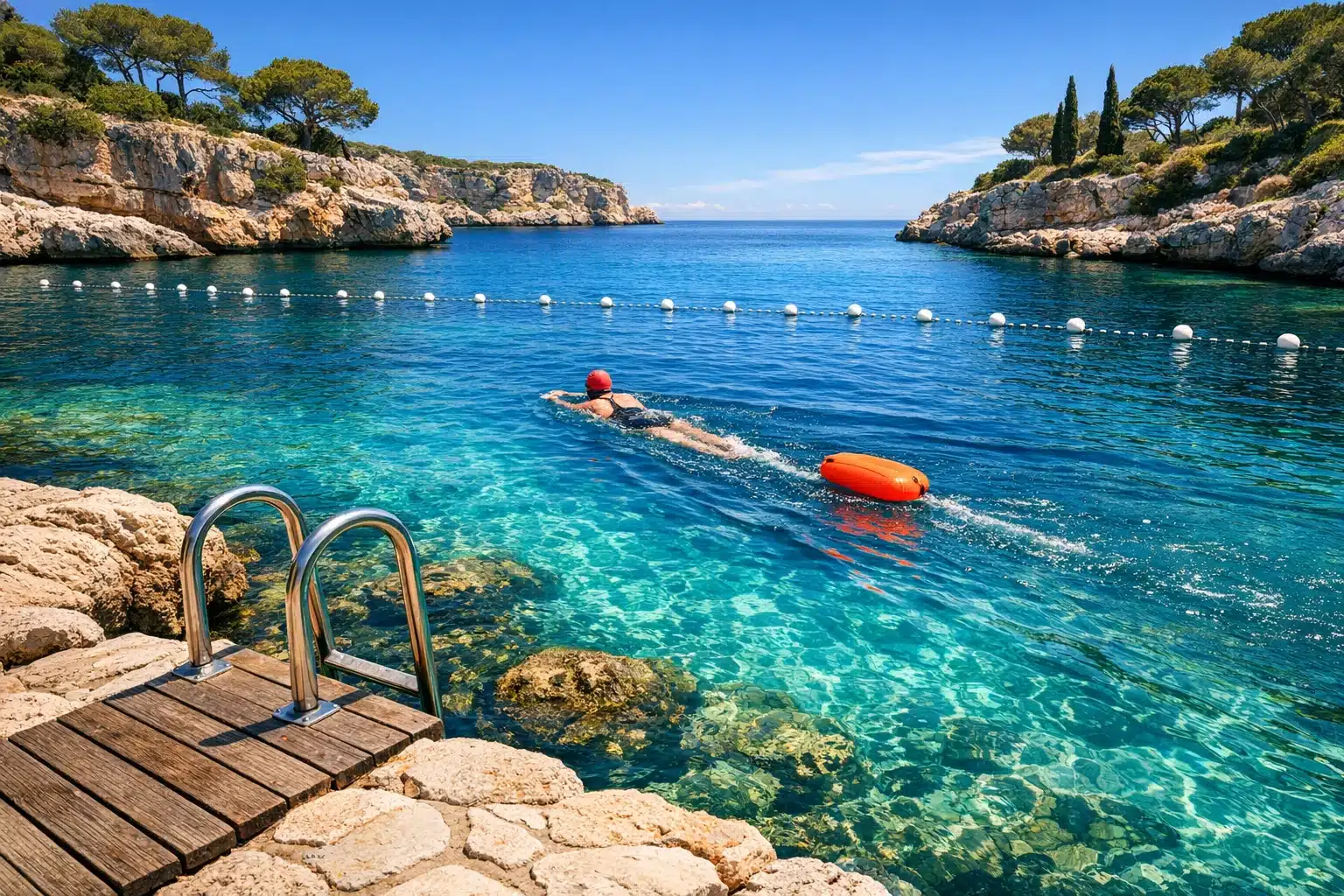
- using bright caps or tow floats for visibility in natural settings
- entering cold water gradually and understanding cold-shock risk
- respecting fatigue, because the trip back is part of the swim
Equipment also shapes comfort and performance, though the essentials remain simple. Goggles improve visibility and reduce irritation. A well-fitted swimsuit supports movement without distraction. Swim caps help some swimmers with comfort, warmth, or reduced drag. Training tools like fins or paddles can assist specific drills, but they are optional. In open water, additional items may matter more, such as a wetsuit for temperature management where conditions and regulations allow it.
There is an important comparison here between skill and gear. Good equipment can improve the experience, but it does not replace judgment. Expensive goggles will not teach pacing. A sleek wetsuit will not eliminate the need to understand currents. For beginners, the most valuable investments are often lessons, practice, and local knowledge. Ask lifeguards, coaches, or experienced swimmers about conditions and etiquette. Learn lane sharing in pools and safety signals in groups.
The image of swimming is often carefree: blue water, clean strokes, a peaceful horizon. That image is part of its appeal, but the responsible version is better. Safe swimming preserves freedom. When people learn the environment, respect the risks, and prepare properly, the water becomes not only enjoyable but trustworthy. That trust is earned, and once earned, it opens the door to deeper enjoyment and lasting confidence.
Swimming as Recreation, Competition, Rehabilitation, and Lifelong Culture
Swimming is easy to underestimate if it is viewed only as a workout or only as a sport. In reality, it sits at the crossroads of several worlds. It is recreation on a summer afternoon, disciplined training before sunrise, rehabilitation after injury, social connection in clubs and community pools, and elite competition measured in hundredths of a second. That breadth gives swimming a cultural life that extends far beyond the lane line.
For many families, swimming begins as leisure. Children splash, learn to float, and slowly connect water with confidence rather than fear. Those early experiences can shape lifelong habits. A child who grows comfortable in water may later join lessons, then a team, then perhaps discover diving, water polo, lifeguarding, triathlon, or open-water events. Even without formal sport, the ability to move confidently in water expands travel, recreation, and safety options throughout adulthood.
Competition adds another dimension. Swim meets are fascinating because they combine intense effort with strict simplicity. The race is direct. There is no ball to control and little tactical hiding place. The clock tells the truth. That clarity appeals to many athletes. Yet competitive swimming also demands patience because progress is often incremental. Dropping a second in a short race can represent months of disciplined training. The sport teaches respect for detail: starts, turns, underwater phases, pacing, and finishes all matter.
Swimming also plays a meaningful role in rehabilitation and long-term physical care. Because water supports the body and allows controlled resistance, it can be useful in some recovery settings and for people managing joint discomfort. It is not a universal solution and should not replace professional guidance when injury or medical conditions are involved, but it is widely valued for gentle movement and gradual conditioning. In that sense, swimming can be unusually democratic. It meets people where they are.
Its lifelong value becomes clearer when viewed across age groups:
- children gain safety skills, coordination, and confidence
- students and athletes gain discipline, fitness, and competitive opportunities
- working adults gain efficient exercise and stress relief
- older adults gain mobility, social routine, and low-impact movement
There is also a quieter culture around swimming that deserves attention. Pools create recurring communities. Regular swimmers recognize one another, share lanes, exchange brief advice, and build routines around the same early or late hours. Open-water groups often add a sense of shared adventure, where weather, route, and mutual care shape the experience. This social layer may seem secondary, but for many people it is the reason a healthy habit lasts.
Perhaps that is the deepest strength of swimming: it can be serious without becoming joyless. It leaves room for play, ambition, discipline, and reflection. A person may enter the water to train harder, recover gently, or simply feel lighter for half an hour. All of those reasons are valid. Few activities carry so many meanings without losing their essential character. In every form, swimming remains a conversation between body, mind, and water.
Conclusion for Readers Considering Swimming
If you are curious about swimming, the most useful next step is not to wait for perfect fitness or perfect technique. Start with safe access to water, realistic expectations, and a willingness to learn gradually. Swimming rewards patience more than bravado, and even modest practice can build confidence, health, and skill over time. Whether your goal is better fitness, stress relief, stronger water safety, or a new sport to grow into, swimming offers a rare combination of practicality and enjoyment that can stay with you for years.