Explore the world of swimming
Swimming sits at a rare crossroads where sport, survival skill, therapy, and recreation meet. A quiet lane in a pool can become a training ground for endurance, a place to recover from injury, or simply a break from a noisy day on land. Because water supports the body while still providing resistance, swimming remains relevant to children, adults, older learners, and elite athletes alike. Understanding how it works makes every lap more purposeful and every visit to the water safer.
Outline
This article begins with the broad value of swimming, then moves into the mechanics of the main strokes, practical training advice, and the safety habits that matter most in different aquatic settings. It closes by looking at how swimming fits into real life across ages, goals, and ability levels.
- The physical and mental benefits of swimming
- A comparison of the major swimming strokes
- How beginners and improving swimmers can train effectively
- Safety, equipment, and the difference between pools and open water
- Why swimming matters in recreation, recovery, competition, and community
Why Swimming Matters: Health, Movement, and Mental Reset
Swimming matters because it combines exercise, skill, and accessibility in a way few activities can. On land, high-impact movement can be hard on joints, especially for older adults, people carrying injuries, or anyone returning to fitness after a long break. In water, buoyancy reduces some of that stress while resistance remains constant. Every stroke asks the body to push against a medium far denser than air, which means even smooth, controlled movement can become meaningful work. That is one reason swimming is often recommended as part of a balanced lifestyle for people with very different bodies and goals.
Its physical benefits are broad rather than narrow. A well-structured swim session can improve cardiovascular endurance, muscular coordination, breathing control, and flexibility. Unlike activities that emphasize only the lower body or only explosive power, swimming asks the shoulders, back, core, hips, and legs to cooperate. It is also adaptable. A gentle recovery swim, a technique session, and a sprint set may all happen in the same pool, but they challenge the body in very different ways. For many adults, swimming can help contribute to the commonly recommended goal of at least 150 minutes of moderate aerobic activity per week, depending on intensity and consistency.
The mental side is just as important. Water changes the noise of the world. Sounds soften, vision narrows to a lane line or horizon, and the rhythm of breathing becomes impossible to ignore. That combination can feel meditative. Many swimmers describe a session as a reset button rather than just a workout. There is evidence that regular exercise supports mood and stress management, and swimming adds a sensory environment that many people find especially calming.
- Low-impact movement for joints and connective tissue
- Full-body coordination instead of isolated effort
- Built-in breath awareness that can improve pacing
- A recreational option that can scale into serious training
Swimming also carries a practical importance beyond fitness. Knowing how to float, tread water, and move efficiently through water is a genuine life skill. In that sense, swimming is not only about health or sport. It is also about confidence, autonomy, and safety. A child learning to exhale underwater, an adult returning after years away, and a triathlete sharpening race technique are all participating in the same larger idea: becoming more capable in an environment that rewards patience and punishes panic. The water is honest, and that honesty is part of its value.
Understanding the Main Strokes and How They Compare
Swimming is often discussed as if it were a single skill, but it is really a family of techniques. Each major stroke has its own rhythm, mechanical demands, and ideal use. Learning the differences helps swimmers choose the right stroke for fitness, comfort, speed, or skill development. It also makes swim training more interesting, because changing strokes changes the challenge.
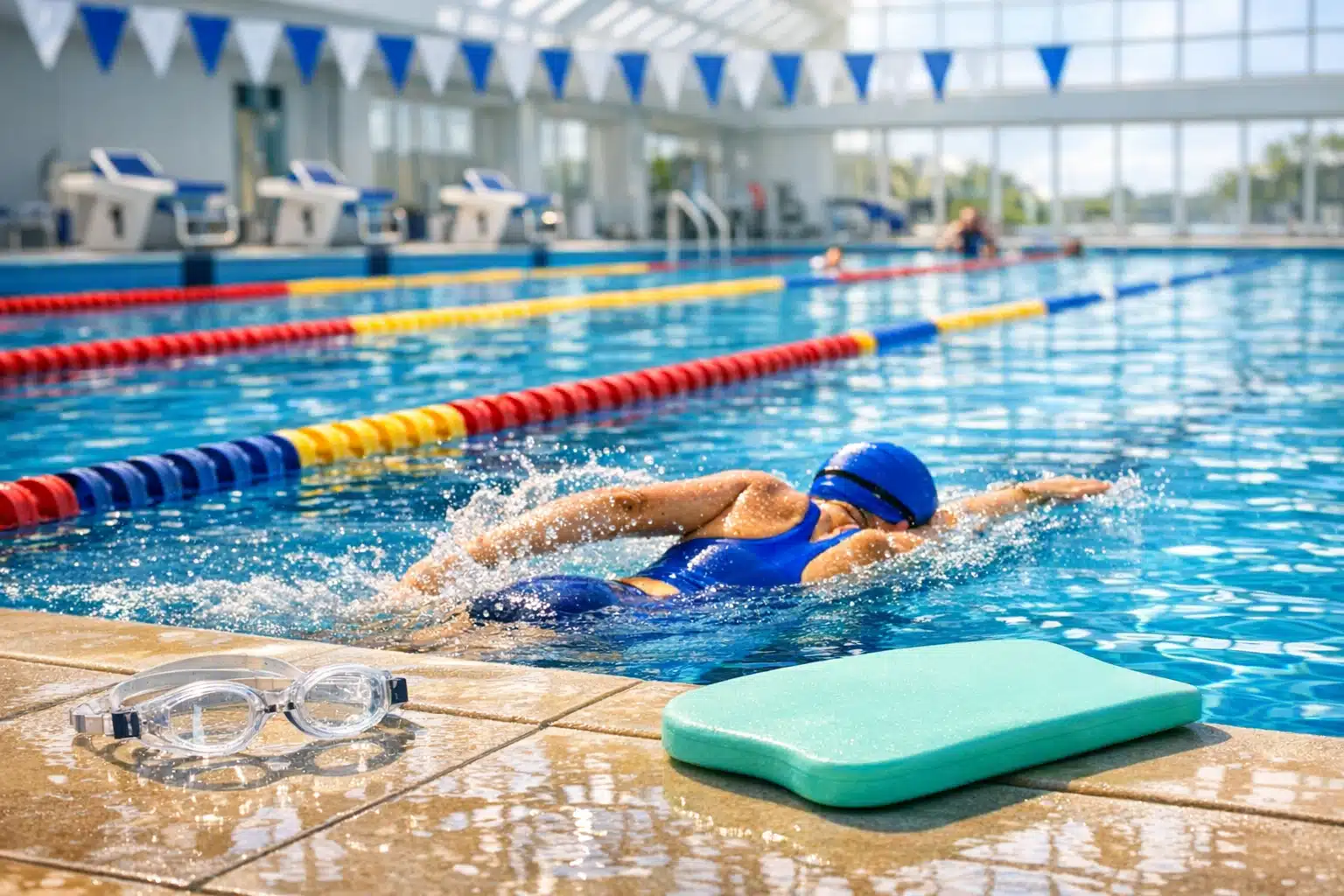
Freestyle, usually swum as the front crawl, is the most common stroke for fitness and racing. It is generally the fastest and often the most efficient over distance once technique improves. The body stays long, the kick remains relatively compact, and the arms recover over the surface in alternating rhythm. Breathing happens to the side, which can feel awkward for beginners but becomes natural with practice. Freestyle rewards balance and streamlining. Small improvements in body position often create surprisingly large gains in speed and ease.
Backstroke is almost the mirror image in spirit rather than in mechanics. Swimmers lie on their back, which allows free breathing and makes the stroke less stressful for some learners who dislike turning the head to inhale. It develops shoulder coordination and body alignment, but it has its own challenge: navigation. In a pool, a swimmer must track flags and wall distance without seeing directly ahead. Backstroke can feel graceful, almost like moving under a moving ceiling of light, yet it quickly exposes poor posture and overreaching arms.
Breaststroke is slower for most swimmers, but it is popular because the breathing pattern feels straightforward and the head can lift more easily. Its timing is precise: pull, breathe, kick, glide. When that sequence breaks down, the stroke becomes tiring fast. Because the kick is so specialized, breaststroke often suits swimmers who enjoy rhythm and control more than raw speed. It is also the stroke many casual swimmers default to in crowded public pools.
Butterfly is the most demanding of the four competitive strokes. It requires synchronized arm recovery, a strong core, and a wave-like body motion powered by two dolphin kicks per cycle. When done well, it looks dramatic and smooth. When done poorly, it feels like wrestling the water. Butterfly builds power and timing, but it is rarely the first stroke people master.
- Freestyle: fastest, efficient, widely used for fitness and racing
- Backstroke: easier breathing, excellent for posture and body control
- Breaststroke: slower but intuitive for many recreational swimmers
- Butterfly: powerful, technical, and physically demanding
Beyond these, open-water swimmers may adapt their stroke for waves, sighting, and long-distance pacing. Some people also learn sidestroke or elementary backstroke for comfort and water safety. No stroke is universally best. The right choice depends on purpose. A beginner may prefer breaststroke for confidence, a distance swimmer may rely on freestyle for economy, and a coach may assign backstroke drills to fix alignment problems. Understanding the comparison helps swimmers train with intention instead of just moving up and down the pool on habit alone.
Learning to Swim Well: Technique, Breathing, and Training Progressions
Learning to swim well is not the same as merely staying afloat. Good swimming is built on a sequence of small skills that support one another: comfort in the water, breath control, body position, propulsion, and timing. Beginners often want to skip ahead to speed, but the fastest progress usually comes from slowing down and solving the basics first. In swimming, efficiency is not a luxury reserved for advanced athletes. It is the foundation that keeps the sport enjoyable.
Breathing is the first major hurdle. On land, people breathe automatically and rarely think about it. In water, breathing becomes a task with rules. Swimmers need to exhale smoothly while the face is in the water and inhale quickly when the mouth clears the surface. Many beginners hold their breath instead, which builds tension and makes the body feel heavy. A simple fix is practicing repeated bubbles at the wall or in shallow water. Once exhalation becomes relaxed, the rest of the stroke often improves.
Body position comes next. Water rewards length and alignment. A head lifted too high usually sinks the hips, increasing drag and effort. The goal is not stiffness, but a balanced line from head to heel. Kickboards, floating drills, and side-glide exercises can help, though they should support learning rather than replace full-stroke practice. The swimmer who learns to travel farther per stroke usually progresses faster than the swimmer who simply turns the arms over harder.
Training should also follow a progression. New swimmers do better with short repeats and frequent rests than with one long, exhausting effort. Technique fades quickly under fatigue, and poor repetition can turn bad habits into permanent ones. A sensible session may include a warm-up, a drill block, a short main set, and a calm finish. That structure gives the swimmer clear focus instead of random laps.
- Start with floating, gliding, and safe breath control
- Use drills to fix one problem at a time
- Build distance gradually instead of forcing long sets too early
- Alternate effort and rest so technique stays clean
A beginner-friendly pool session might look like this: 5 minutes of easy water comfort work, 4 x 25 meters of kick or glide drills, 6 x 25 meters of relaxed freestyle with rest between lengths, then 4 x 25 meters mixing another stroke for variety. Intermediate swimmers can move toward interval training, stroke counts, and pace awareness. Tools such as pull buoys, fins, and paddles may help, but they should be used deliberately. None of them replaces sound mechanics.
Perhaps the most important training principle is patience. Swimming has a steep early learning curve because mistakes are magnified by the water. Yet once the core skills click, improvement can feel wonderfully sudden. One day the lane feels like a struggle, and the next it feels like a path. That moment usually arrives not through force, but through repetition guided by attention.
Safety, Equipment, and the Difference Between Pool and Open Water
Swimming is enjoyable precisely because water can hold the body, cool the skin, and turn exercise into something almost weightless. The same environment, however, demands respect. Safety is not a side topic in swimming; it is part of the sport itself. Strong swimmers still need judgment, and beginners especially benefit from clear habits that reduce risk before problems begin.
Pool safety starts with the obvious but important basics: know the depth, respect lane direction, and never assume everyone around you is paying attention. Crowded public sessions can create collisions, sudden stops, and shared-space confusion. Simple etiquette goes a long way. If others are circling in a lane, stay to one side, allow faster swimmers to pass at the wall, and avoid pushing off directly into traffic. For parents, formal supervision matters even in shallow water. A child who seems confident one moment can panic the next.
Open water changes the equation completely. Lakes, rivers, and the sea do not offer lane ropes, tiled lines, or fixed temperatures. Visibility may be poor. Currents can shift. Wind can turn a calm swim into a tiring return. Even highly fit pool swimmers are sometimes surprised by how different open water feels. There is no wall every 25 or 50 meters, and the absence of visual reference can disrupt rhythm and orientation. Sighting, which means briefly looking forward to stay on course, becomes essential.
- Never swim alone in unfamiliar open water
- Use a bright swim cap or tow float for visibility
- Check weather, water temperature, and local warnings
- Enter gradually to assess footing, depth, and current
Equipment supports safety and comfort, though it does not replace skill. The basics are simple: a well-fitting swimsuit, goggles, and in some cases a cap. Goggles improve visibility and reduce eye irritation from pool chemicals or saltwater. In colder open water, wetsuits may add warmth and buoyancy. For training, swimmers sometimes use kickboards, fins, pull buoys, snorkels, or paddles, but these are tools, not necessities.
It is also worth mentioning hygiene and recovery. Showering before entering a pool supports water quality. Showering afterward helps remove chlorine or salt from the skin. Ear care, hydration, and gradual cooldowns matter more than many casual swimmers realize. People often underestimate fluid loss because they do not feel sweaty in the water, but a demanding session can still be dehydrating.
Ultimately, the safest swimmer is not always the strongest one. It is the person who reads the environment, knows personal limits, and treats preparation as part of the swim. Confidence in water should feel calm, not careless. That distinction can make all the difference.
Swimming Across Life Stages: Recreation, Competition, Recovery, and Community
One of swimming’s greatest strengths is that it can remain relevant across an entire lifetime. A child may begin with water familiarization and basic safety. A teenager might join a club team and discover the discipline of structured training. An adult may return to the pool after years away, looking for fitness that feels sustainable rather than punishing. Later in life, swimming can stay valuable as a low-impact form of exercise that supports mobility and independence. Few activities travel so well across changing bodies and changing schedules.
For children, swimming offers more than sport. It builds confidence around water, teaches listening and body awareness, and can reduce fear through familiarity. Lessons that emphasize floating, safe entry and exit, and basic propulsion often matter more at first than polished stroke technique. For parents, that distinction is important. A child who can move through water a little is not automatically safe in water. Supervision and repeated practice remain essential.
For adults, swimming often fills a practical gap. Some people take it up because running aggravates joints. Others use it as cross-training beside cycling, rowing, or strength work. Many simply enjoy that a swim session can be intense without leaving the body pounded afterward. Time efficiency helps too. A focused 30 to 45 minute workout can cover aerobic conditioning, mobility, and mental reset in one visit.
Swimming also plays a role in rehabilitation and adaptive sport. Under professional guidance, aquatic exercise may support people recovering from certain injuries or managing conditions that make high-impact exercise difficult. Water’s support can reduce loading while still allowing controlled movement. At the same time, paraswimming and adaptive aquatics show how flexible the sport can be when coaching and facilities are inclusive.
- Children benefit from skill building and confidence
- Adults often use swimming for fitness and stress relief
- Older swimmers may value joint-friendly endurance work
- Athletes use the pool for cross-training and recovery
Competition adds another dimension. From local masters meets to the Olympic stage, swimming rewards discipline, pacing, technical refinement, and resilience. The race clock is brutally fair, but that is part of the appeal. Improvement is measurable, sometimes by wide margins, sometimes by a fraction of a second. Even recreational swimmers borrow lessons from competitive culture: consistency matters, starts do not define finishes, and tiny technical details can change the entire feel of a session.
Then there is community. Pools are shared spaces where retirees, school teams, rehab patients, beginners, and serious racers often overlap. That mix gives swimming a social depth people do not always expect. The lane may be narrow, but the sport itself is wide enough to hold many purposes at once.
Conclusion: A Practical Path for New and Returning Swimmers
If you are curious about swimming but unsure where to begin, the most useful takeaway is simple: start with comfort, not speed. Learn how your body feels in the water, practice relaxed breathing, and build consistency before chasing distance or intensity. The people who stay with swimming are rarely the ones who force the hardest first session. They are usually the ones who discover a rhythm they can return to.
For beginners, that might mean adult lessons, short pool visits, or a few lengths at a time with plenty of rest. For returning swimmers, it may mean letting go of old expectations and rebuilding technique patiently. For fitness-minded readers, swimming can become a powerful complement to walking, cycling, strength training, or rehabilitation work. And for parents or caregivers, helping children develop safe, respectful habits around water may be the most important reason to invest in the skill early.
What makes swimming special is its range. It can be quiet or competitive, restorative or demanding, solitary or social. It can challenge an athlete to refine tenths of a second or help a nervous learner enjoy the feeling of floating for the first time. Few activities offer that kind of breadth without losing their core purpose.
The next step does not need to be dramatic. It can be as modest as booking a lesson, visiting a local pool, checking open-water guidelines, or committing to one swim a week. Progress in water often arrives through repetition that seems small at first and meaningful later. With sound technique, sensible safety habits, and realistic expectations, swimming becomes more than exercise. It becomes a skill you can carry for life.