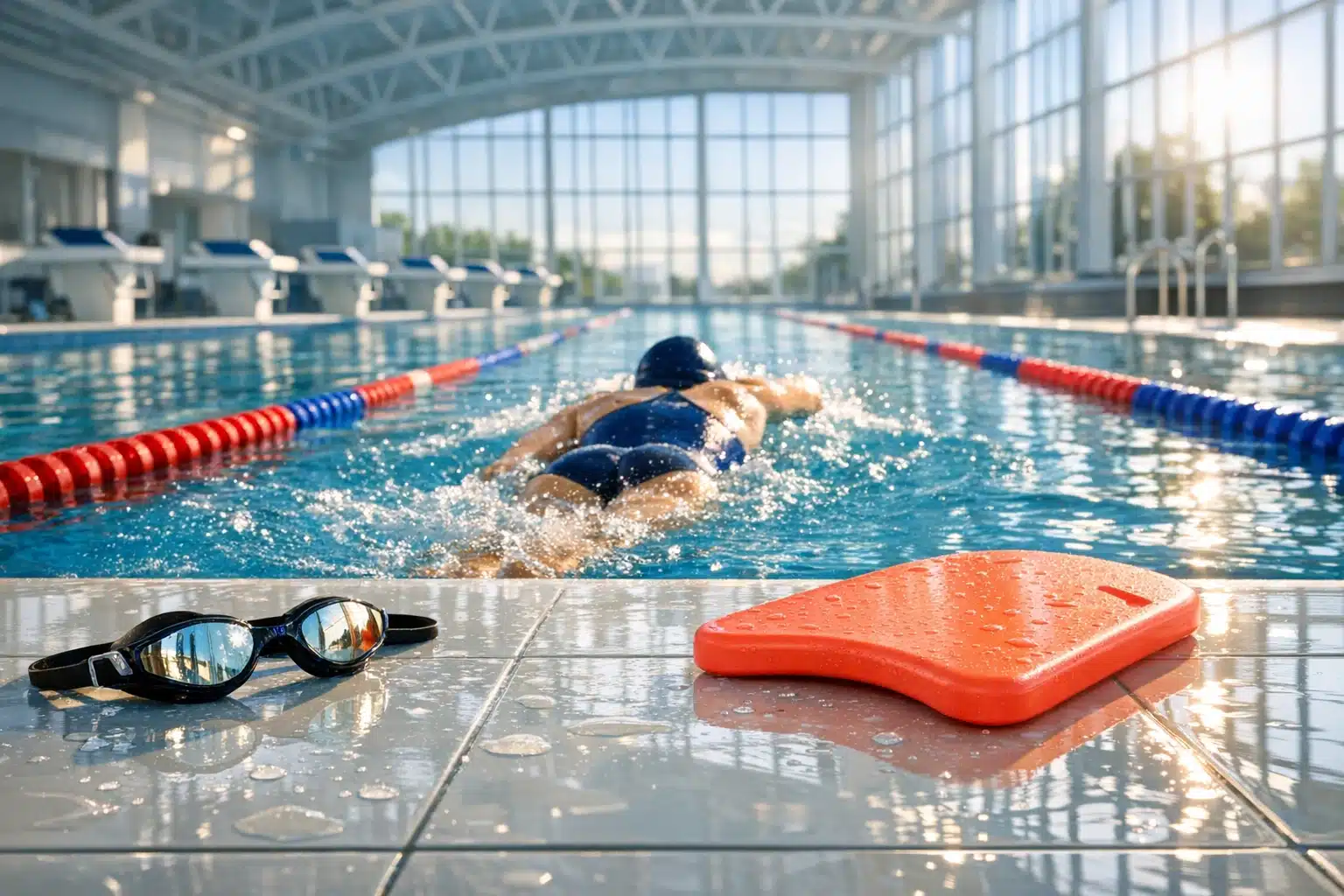
Explore the world of swimming
Swimming sits at a rare crossroads where sport, survival skill, recreation, and therapy meet in the same body of water. A child learning to float, an athlete chasing tenths of a second, and an older adult easing stiff joints can all find value in the pool. Because it blends technique with endurance and freedom with discipline, swimming remains relevant across ages and cultures. This article explores its history, health benefits, core skills, safety demands, and place in everyday life.
Outline of the article:
- The history and cultural meaning of swimming
- Why swimming is one of the most complete forms of exercise
- How strokes, breathing, and technique shape performance
- Why safety, access, and good instruction matter
- How swimming fits into sport, lifestyle, and long-term well-being
1. Swimming in History, Culture, and Human Life
Long before swimming became a lane-marked sport with stopwatches and split times, it was a practical human skill. People swam to cross rivers, fish, travel short distances, escape danger, and survive floods. Ancient artwork and written records from regions such as Egypt, Greece, and Rome show that swimming was known and practiced thousands of years ago. In military history, the ability to move through water could be as valuable as riding a horse or handling a spear. That early usefulness still explains part of swimming’s power today: unlike many sports, it is not only a game, but also a life skill.
As societies urbanized, swimming slowly shifted from necessity to recreation and competition. Public bath culture in parts of Europe and the Middle East helped preserve water-based movement as a social activity. By the nineteenth century, organized swimming clubs, formalized strokes, and dedicated pools began to spread. Competitive swimming entered the first modern Olympic Games in 1896 for men, while women’s Olympic swimming events arrived in 1912. Since then, the sport has expanded into sprint races, distance events, relay formats, diving, artistic swimming, water polo, and open-water competition. Today, international governing structures such as World Aquatics help standardize rules and organize major championships.
Swimming also carries different meanings across cultures. In coastal communities, it may feel almost woven into childhood. In colder or landlocked regions, access can depend more heavily on school programs, municipal facilities, or seasonal opportunities. That difference matters. A place with pools, trained instructors, and safe public access often produces stronger swimming culture than a place where lessons are expensive or rare. The contrast is not merely social; it affects confidence, health, and safety outcomes.
It is also useful to compare the main settings in which people swim:
- Pool swimming emphasizes precision, repeatable training, and controlled conditions.
- Open-water swimming demands navigation, adaptability, and comfort with changing environments.
- Recreational swimming focuses more on enjoyment, play, and basic movement.
- Competitive swimming turns efficiency into performance, where small technical gains matter enormously.
There is something quietly democratic about water. It does not care about job titles, fashion, or noise from the street. Once a swimmer enters, the body must negotiate with buoyancy, breath, and rhythm. That is why swimming continues to matter: it connects human history, public health, sport, and personal experience in a way few activities can match.
2. Why Swimming Is One of the Most Complete Forms of Exercise
Swimming is often described as a full-body workout, and that phrase is not empty praise. In the water, the arms pull, the legs kick, the core stabilizes, and the lungs work in a steady rhythm with movement. Because water is denser than air, every stroke meets resistance, which means the body is training even when the motion appears smooth and graceful. At the same time, buoyancy reduces impact stress on joints. That combination makes swimming unusual: it can be challenging without being punishing.
From a cardiovascular perspective, swimming helps strengthen the heart and improve endurance. Lap sessions that keep the body moving continuously can raise heart rate in a controlled way, much like running, cycling, or rowing. The difference is that swimming usually involves less pounding on knees, ankles, and hips. For people managing joint discomfort, recovering from certain injuries, or looking for lower-impact conditioning, that matters a great deal. Water exercise is frequently used in rehabilitation settings because it allows movement with support rather than repeated impact.
Energy expenditure can also be significant. Depending on body size, stroke choice, and intensity, swimming may burn roughly 400 to 700 calories per hour, and vigorous sessions can exceed that. Butterfly and fast freestyle typically demand more energy than easier backstroke or relaxed breaststroke, though technique affects the total. Unlike some land-based exercise, swimming also challenges breathing control. A runner can usually breathe whenever needed, but a swimmer must coordinate breaths with body rotation, head position, and stroke timing. That skill develops respiratory efficiency and body awareness together.
Its benefits extend beyond fitness metrics. Many swimmers report that water reduces mental clutter. The repetitive sound, the cool pressure against the skin, and the need to focus on breathing can make a practice session feel almost meditative. For some people, the pool is where stress finally quiets down. For others, it is a place to rebuild confidence after illness, inactivity, or burnout.
Swimming can serve different health goals:
- General fitness through moderate lap swimming
- Weight management when paired with appropriate nutrition
- Mobility and circulation support for older adults
- Cross-training for runners, cyclists, and team-sport athletes
- Active recovery on days when high impact would be unhelpful
No exercise solves every problem, and swimming is not ideal for every preference or schedule. Access to a safe facility, comfort in water, and time for travel and changing clothes can all be barriers. Yet when those barriers are manageable, swimming offers rare range: strength, stamina, coordination, and relief from impact in one session. It is both physically demanding and strangely gentle, which explains why it remains a favorite among beginners, elite athletes, and lifelong movers alike.
3. Strokes, Technique, and the Craft of Moving Efficiently
Swimming rewards effort, but it rewards efficiency even more. Two people can work equally hard in the same lane and travel very different distances because technique matters so much. Water magnifies inefficiency. A dropped elbow, a lifted head, or a rushed kick can create drag that tires the swimmer quickly. That is why learning to swim well is less like brute exercise and more like acquiring a craft. Every good stroke is a quiet argument against wasted motion.
The four competitive strokes each ask for a different kind of coordination. Freestyle, usually swum as front crawl, is typically the fastest and most energy-efficient over distance. It relies on body rotation, a streamlined head position, and rhythmic breathing to the side. Backstroke uses similar alternating arm mechanics but places the swimmer face up, which removes the stress of timed inhalation while introducing challenges in direction and body alignment. Breaststroke is slower for many swimmers but highly technical, with a glide phase that rewards timing. Butterfly is the most physically demanding for most people, combining simultaneous arm recovery with a powerful wave-like body action.
A useful comparison of the strokes looks like this:
- Freestyle: best for speed, fitness, and long continuous swimming
- Backstroke: excellent for posture awareness and shoulder balance when done correctly
- Breaststroke: easier for some beginners to understand, but difficult to master efficiently
- Butterfly: powerful and dramatic, yet highly taxing and technique dependent
For beginners, the first technical priorities should usually be balance, breathing, and relaxation. Many new swimmers kick too hard, hold their breath, or lift the head in search of air. That creates a chain reaction: the hips sink, drag increases, and fatigue arrives early. A better approach is to learn steady exhalation into the water, gentle rotation for breathing, and a long body line from fingertips to toes. Swimming becomes easier when the body rides higher and moves forward instead of fighting downward.
Training tools can help when used with intention. Kickboards isolate lower-body work, pull buoys reduce leg involvement to highlight upper-body mechanics, and fins can support body position while teaching rhythm. Pace clocks, stroke counting, and short drill sets allow swimmers to measure progress beyond simple distance. For example, if a swimmer covers one pool length in fewer strokes while maintaining time, efficiency has improved. That matters because faster swimming is often the result of better movement rather than only harder effort.
Even at the highest level, races are shaped by details. Starts, turns, and underwater phases can decide outcomes measured in hundredths of a second. Yet the same principle applies to everyday lap swimmers: smooth technique conserves energy, reduces frustration, and makes practice more enjoyable. In swimming, elegance is not decoration. It is function. The water always tells the truth, and good technique is the clearest way to hear it.
4. Safety, Learning, and the Importance of Respecting Water
Swimming brings joy, health, and freedom, but water demands respect. That is not a dramatic slogan; it is a practical reality. Drowning remains a major public health issue worldwide, and global health agencies regularly note that it causes hundreds of thousands of deaths each year. Children are especially vulnerable, particularly where supervision is inconsistent and swimming instruction is limited. Because of that, learning to swim should never be framed as a luxury or an optional extra. It is a useful skill with real safety value.
Formal swim lessons can improve confidence, floating ability, breath control, and basic movement, but lessons are only one layer of protection. A child who can swim still needs active adult supervision. An adult who swims well can still be at risk in rough surf, cold water, or medical distress. Safety is strongest when it works as a system rather than a single promise. Pools need trained lifeguards where appropriate, homes need barriers around private pools, boaters need properly fitted life jackets, and open-water swimmers need awareness of weather, currents, and visibility.
Pool and open-water environments present different risks. In a pool, common concerns include slips on wet surfaces, diving in shallow areas, overestimating skill, and poor lane awareness. In lakes, rivers, and oceans, the hazards expand to include cold shock, waves, tides, currents, sudden depth changes, low visibility, and water quality concerns. A calm-looking surface can hide strong movement underneath. That is why experienced pool swimmers should not assume their abilities transfer perfectly to natural water without adaptation.
Strong safety habits include:
- Never swimming alone, especially in open water
- Checking depth before diving
- Using flotation aids or life jackets when skill or conditions require them
- Following weather alerts, flag systems, and lifeguard instructions
- Stopping immediately if cramps, dizziness, or unusual fatigue appear
Good learning environments matter too. Beginners often progress best in warm, shallow water with patient instruction and predictable conditions. Fear can slow learning more than lack of fitness. A calm teacher who breaks skills into floating, kicking, breathing, and short glides usually gets better results than one who pushes distance too soon. Adults who missed lessons in childhood may carry embarrassment, but that should never block them from starting. Adult swim education is increasingly common, and many instructors now recognize that nervous beginners need dignity as much as technique.
Respecting water also means respecting others. Lane etiquette, clear communication, basic hygiene, and awareness of shared space make swimming safer and more pleasant for everyone. The best swimmers are not only fast or strong. They are attentive. They understand that water can support life, sharpen health, and create memorable fun, but only when approached with care. Confidence in the water should be built on skill and judgment, not assumption.
5. Swimming as Sport, Lifestyle, and a Lifelong Practice
One reason swimming remains so compelling is that it scales beautifully across a lifetime. A young child may begin by blowing bubbles and learning to float. A teenager may join a club team and discover competition. An adult may return to the pool for stress relief, rehabilitation, or fitness after years away. Later in life, the same person may keep swimming because it remains comfortable when high-impact exercise no longer does. Few activities adapt so well to changing goals, schedules, and bodies.
As a sport, swimming offers several pathways. Some people pursue pool racing, where events range from explosive 50-meter sprints to grueling distance swims. Others choose open-water racing, triathlon, lifesaving sport, masters swimming, or Paralympic competition. Each format highlights different strengths. Pool racing emphasizes pacing, turns, and technical precision. Open water adds navigation, pack dynamics, and environmental adaptation. Masters swimming is especially important because it shows that performance and enjoyment do not expire at a certain age. In many communities, masters programs welcome both former competitors and newer adult swimmers.
Swimming also builds a distinct kind of discipline. Progress can be slow, and improvement is often measured in small increments: a smoother breath, a more relaxed kick, a slightly faster interval, a calmer mind in deep water. That slow-burn progress teaches patience. It also encourages objective goal setting. A practical weekly plan might include:
- One technique-focused session with drills and short repeats
- One endurance session built around continuous swimming or longer intervals
- One speed or skills session featuring starts, turns, or pace changes
- One optional recovery swim with easy movement and mobility work
The lifestyle side of swimming matters just as much as the competitive side. Swimmers often build routines around early mornings, quiet pools, and steady habits. Gear tends to stay simple compared with many sports: a suit, goggles, cap, and sometimes fins or a pull buoy are enough to begin. That simplicity can be refreshing. The challenge is not collecting equipment but showing up, focusing, and learning to move better.
There is also a social dimension that outsiders sometimes miss. Lane sharing, club training, relay events, and open-water groups create community. A swimmer may spend much of a session staring at a black line on the pool floor, yet the sport rarely feels isolated for long. Shared effort has its own language. People compare splits, celebrate first lengths without stopping, and trade advice about breathing, race nerves, or shoulder care.
In the end, swimming lasts because it offers more than exercise. It gives people a way to test themselves without violence, to find calm without passivity, and to stay connected to their bodies over time. Whether practiced seriously or casually, it remains one of the clearest examples of movement that is both useful and meaningful.
Conclusion for New and Returning Swimmers
For beginners, parents, fitness seekers, and former swimmers thinking about a return, swimming offers unusual value. It teaches a practical safety skill, improves endurance, strengthens the body with relatively low impact, and can remain enjoyable long after many other activities become harder to maintain. The key is to approach it patiently: learn sound technique, respect water conditions, and build consistency before chasing speed or distance. If you are just starting, small milestones matter more than dramatic ones. A relaxed exhale, a confident float, or one smooth length can become the foundation for years of progress. For experienced swimmers, the sport still has room to deepen through better efficiency, smarter training, and new settings such as open water or masters competition. Swimming is not only about crossing a pool. It is about gaining confidence, protecting health, and discovering a rhythm that can carry through every stage of life.