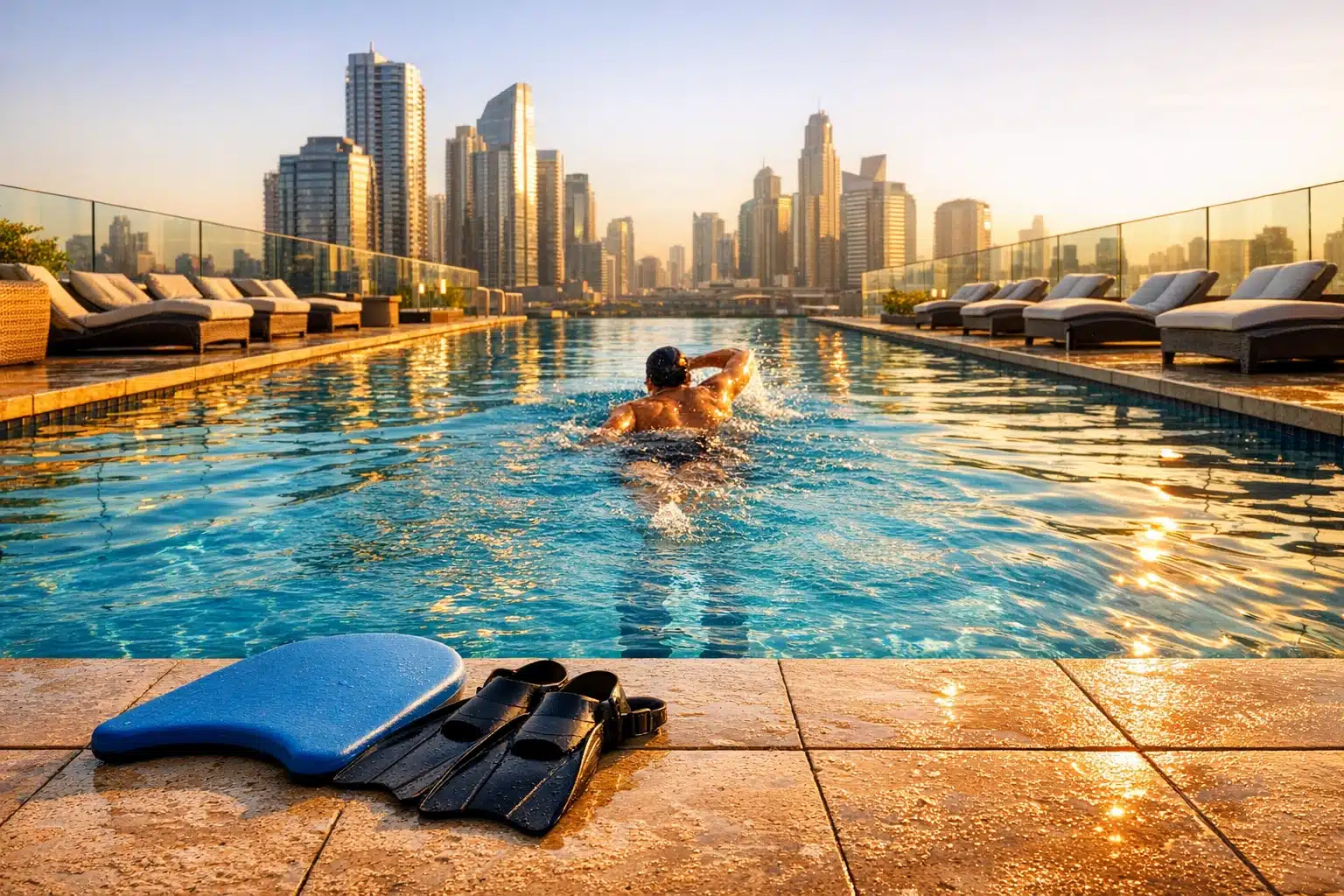
Explore the world of swimming
Swimming sits at a rare crossroads where survival skill, exercise, sport, and quiet pleasure all meet. A beginner may enter the water simply to learn balance and breathing, while an experienced swimmer may chase lap times, open-water distance, or recovery after injury. That range makes swimming relevant to children, adults, athletes, and older people alike. In a world crowded with high-impact routines and screen-heavy habits, the pool offers movement that is both demanding and forgiving.
Before diving into the detail, here is a clear outline of what this article covers.
- Why swimming matters beyond medals, including its place in health, recreation, and public safety.
- How swimming affects the heart, lungs, muscles, joints, and mind.
- The core techniques behind efficient movement, breathing, and the major strokes.
- Training methods, equipment choices, and the difference between pool swimming and open water.
- Safety, access, and practical advice for readers who want to make swimming part of everyday life.
Swimming as Skill, Sport, and Life Practice
Swimming is easy to underestimate when viewed only through the lens of competition. Televised races often frame it as a contest of speed, hundredths of a second, and remarkable physiques. Yet that narrow image misses something essential. Swimming is also a life skill, a recreational habit, a therapeutic tool, and for many people, a form of freedom. Knowing how to move calmly in water can expand where people travel, how they exercise, and how secure they feel around lakes, rivers, beaches, and pools. In that sense, swimming is not only about performance. It is also about capability.
One reason swimming matters so much is that water changes the rules of movement. On land, gravity places a constant burden on joints, especially during running, jumping, and heavy strength work. In water, buoyancy reduces that load and gives the body a different kind of support. This makes swimming attractive to people recovering from injury, older adults managing stiffness, and beginners who want exercise without relentless impact. At the same time, the resistance of water is far greater than the resistance of air, so even steady, smooth movement can become real work for the muscles and cardiovascular system. The result is a rare combination: lower impact with meaningful effort.
Swimming also carries cultural and practical importance. Around the world, communities treat water in very different ways. Some grow up near the coast, where swimming becomes part of daily life. Others meet it mainly through school lessons, public pools, or summer holidays. In both cases, the ability to swim can influence safety. Public health organizations regularly stress the value of water competence because drowning remains a serious global issue. That does not mean every swimmer must become a lifeguard or a racer. It means the skill deserves respect. A person who can float, breathe steadily, and move toward safety has gained something far more valuable than a recreational trick.
As a sport, swimming has layers. At one end, a child learns to put their face in the water without panic. At the other, elite swimmers train with detailed stroke analysis, pacing strategies, and race plans built around turns, starts, and underwater phases. Between those points sits the everyday swimmer: the office worker fitting in early laps, the triathlete building endurance, the parent joining adult lessons, or the retiree using the pool to stay active. Few physical activities serve such a broad spread of needs.
It also offers different emotional textures. A sprint set can feel sharp and electric. A long, steady session can feel meditative, almost like writing a sentence again and again until it becomes music. Many swimmers talk about the unique quiet of being underwater, where external noise softens and attention narrows to breath, rhythm, and reach. That sensory difference helps explain why swimming lasts in people’s lives. It is not merely exercise completed in a different setting. It is a different conversation between body, mind, and environment.
The Health Benefits of Swimming for Body and Mind
Swimming is often described as a full-body workout, and that phrase is accurate when used carefully. A properly structured swim session recruits the shoulders, back, chest, core, hips, and legs while also challenging the heart and lungs. Different strokes emphasize different muscles, but almost all swimming depends on coordinated movement from head to toe. Unlike some gym routines that isolate one area at a time, swimming asks the body to work as an integrated system. That makes it useful not only for building fitness but also for improving movement awareness.
From a cardiovascular perspective, swimming can help people meet widely recommended activity goals. Health authorities such as the World Health Organization advise adults to accumulate at least 150 minutes of moderate-intensity aerobic activity per week, or 75 minutes of vigorous activity, along with muscle-strengthening work. Swim sessions can contribute meaningfully to those targets. A moderate lap workout raises heart rate, improves circulation, and can support long-term heart health when practiced consistently. Because water conducts heat away from the body efficiently, some swimmers may not feel as sweaty or overheated as they would during a run, even while working hard. That subtle difference often makes longer workouts feel more manageable.
The joint-friendly nature of swimming deserves special attention. People with arthritis, excess body weight, or a history of impact-related discomfort may find that the pool opens a door that seemed closed on land. The water supports the body, which can reduce strain on knees, ankles, and the lower back. Of course, swimming is not automatically pain-free. Poor technique, especially with repetitive overhead motion, can irritate shoulders or necks. Still, when taught well and progressed sensibly, it offers a training environment many people tolerate better than pounding pavement. For rehabilitation and active recovery, that advantage is significant.
The mental side matters just as much. Repetitive, rhythmic swimming can lower stress for many people by narrowing attention to a manageable set of sensations: bubbles, arm entry, body roll, the counted laps, the timed breath. In an overstimulated day, that focus can be deeply settling. Some swimmers describe a session as mental housekeeping. Nothing magical happens; bills still exist and emails still wait. Yet the water interrupts the usual pace of thought. That can improve mood and create a sense of reset.
There are also practical benefits that often go unmentioned.
- Swimming can improve confidence in water-heavy environments such as beaches, boats, and family pool gatherings.
- It can support healthy aging by maintaining mobility, endurance, and routine.
- It allows easy adjustment of intensity, from gentle aqua movement to demanding interval work.
- It can complement other sports by building aerobic fitness without additional impact.
No exercise is perfect for every person. Some people dislike pool access issues, chlorine, or the learning curve of breathing technique. Yet swimming remains one of the most versatile forms of physical activity available. It can be gentle without being trivial, challenging without always being punishing, and social without requiring constant noise. For a fitness method that respects both effort and longevity, that balance is hard to ignore.
Technique, Breathing, and the Four Main Strokes
Many new swimmers assume that success in the water depends mostly on strength. In reality, technique often matters more. Water punishes wasted motion. A tense neck, dropped hips, rushed kick, or mistimed breath can make a short distance feel exhausting. By contrast, a swimmer with modest strength but sound mechanics can move smoothly and efficiently. That is why coaches spend so much time on body position, balance, and rhythm. In swimming, form is not decoration. It is the engine room.
The most common entry point is freestyle, also called front crawl. It is usually the fastest and most efficient stroke for sustained swimming. Good freestyle depends on a horizontal body line, steady flutter kick, relaxed but purposeful arm recovery, and side breathing that does not lift the head too far out of the water. Beginners often make the same early mistakes: they look forward instead of down, which sinks the hips; they kick from the knees instead of the hips; or they hold their breath underwater and then gasp when turning to inhale. A simple correction changes everything: exhale gently into the water, then rotate to breathe rather than jerking the head upward.
Backstroke feels very different because the face stays above the surface. For many learners, that reduces anxiety and allows better attention to arm timing and body rotation. However, backstroke presents its own challenge: orientation. Without a lane line overhead or practice counting strokes, beginners may drift. Breaststroke is often considered intuitive because the breathing pattern is obvious and the pace can be slower, yet efficient breaststroke is technically demanding. Timing the pull, breath, kick, and glide is crucial. Butterfly, famous for its power and dramatic appearance, is the most physically taxing of the four main competitive strokes. Done well, it resembles a wave traveling through the body. Done poorly, it becomes a fight against the water.
Comparing the strokes helps reveal why swimming is such a rich discipline.
- Freestyle rewards rhythm and efficiency over long distances.
- Backstroke teaches alignment and rotational control while keeping breathing unrestricted.
- Breaststroke emphasizes timing, patience, and propulsion from a distinct kick pattern.
- Butterfly demands coordination, strength, and excellent timing between the upper and lower body.
Technique improves fastest when complex skills are broken into smaller pieces. Kick drills with a board, single-arm freestyle, side-glide balance work, sculling, and pull buoy sets all help isolate specific elements. Video feedback can be especially valuable because swimming often feels different from how it looks. A swimmer may believe they are streamlined while their legs quietly sink behind them like a trailing anchor. Seeing the mismatch closes the learning gap.
For readers starting out, the core priorities are straightforward: become comfortable putting the face in the water, learn to float, practice relaxed exhalation, and build a stable body position before chasing speed. Strong technique is like learning good handwriting before writing faster. Once the pattern is clean, everything else becomes easier. The water does not reward force first. It rewards control, then consistency, and finally power applied at the right moment.
Training, Equipment, and the Many Ways to Swim
Swimming can look simple from the deck: dive in, move forward, repeat. In practice, training can be organized in many ways depending on the swimmer’s goal. A casual swimmer may use the pool for general fitness and stress relief, while a competitive athlete may divide sessions into aerobic endurance, sprint work, stroke technique, race pace, and recovery. This flexibility is one of the sport’s strengths. The same lane can host a teenager preparing for a meet, an adult learning flip turns, and someone using gentle lengths to ease back into exercise after years away.
A typical structured workout often includes four parts: warm-up, drill set, main set, and cool-down. The warm-up prepares muscles and breathing patterns. A drill set focuses on skills such as catch position, kick timing, or rotation. The main set delivers the primary training effect, whether that means stamina, threshold work, or short, hard efforts. The cool-down helps the body transition out of higher intensity. Even a beginner benefits from this logic, though on a smaller scale. Instead of swimming until exhausted, it is usually better to divide effort into manageable repeats with rest.
For example, a new swimmer might build a session like this:
- 200 meters or yards easy, mixing kicking and easy freestyle
- 4 x 25 focusing on steady exhalation
- 6 x 50 at a comfortable pace with 20 to 30 seconds rest
- 4 x 25 practicing streamlined push-offs
- 100 easy cool-down
Equipment can help, though it should support learning rather than replace it. Goggles improve visibility and comfort. A well-fitted swimsuit reduces drag and distraction. Swim caps are practical for hygiene, hair management, and, in some settings, warmth. Kickboards isolate leg work, pull buoys reduce lower-body demand to emphasize upper-body mechanics, and fins can help swimmers feel better body position and propulsion when used thoughtfully. Paddles increase resistance and can build strength, but they should be introduced carefully because poor technique under added load may irritate the shoulders.
The environment also shapes the experience. Pool swimming offers controlled conditions, marked distances, and easier supervision. Open-water swimming introduces currents, sighting, temperature changes, and the psychological effect of depth and distance without walls. Some swimmers find open water liberating; others find it intimidating. Neither setting is inherently better. They simply demand different skills. Pool swimmers learn precision through turns and intervals, while open-water swimmers often develop navigation, adaptability, and comfort with uncertainty.
Technology has also changed training. Waterproof watches can track pace, stroke count, and distance. Underwater video can reveal technical flaws that were previously guesswork. Online coaching and community platforms allow swimmers to share programs and progress. Still, the essential truth remains old-fashioned: improvement comes from consistent practice. Fancy tools cannot replace time spent learning how your body moves through water.
Perhaps the most encouraging aspect of swim training is that it scales so well. A person can begin with a few cautious lengths and, months later, complete a kilometer without stopping. Another may shift from recreational laps to masters competitions or triathlons. Swimming leaves room for ambition, but it does not demand it. You can train for a podium, for peace of mind, or simply for the quiet satisfaction of moving better than you did last season.
Safety, Access, and a Practical Conclusion for New and Returning Swimmers
No article about swimming is complete without a serious look at safety. Water is inviting, but it is not casual. Confidence in the pool should grow from skill, awareness, and judgment rather than bravado. The most important rule is simple: never overestimate your ability. People get into trouble not only because they cannot swim, but also because they misread fatigue, temperature, weather, depth, or distance from shore. Strong swimmers can struggle in cold water. Fit athletes can panic if goggles flood in open water. Respect is the foundation of safe swimming.
Basic safety habits are worth repeating because they prevent avoidable problems.
- Swim where supervision is available whenever possible, especially if you are inexperienced.
- Learn floating, treading water, and safe entry before attempting longer distances.
- Check conditions in open water, including currents, visibility, temperature, and local guidance.
- Use clearly visible gear in open water, such as a bright cap or swim buoy where appropriate.
- Stop early if technique falls apart, shivering begins, or breathing becomes erratic.
Access is another major part of the conversation. Swimming is valuable, but not everyone reaches it easily. Pools may be expensive, crowded, or far from home. Lesson availability varies by region, and some adults hesitate to start because they feel embarrassed learning later in life. That hesitation is understandable, yet it should not become a permanent barrier. Adult beginners are common, and good instructors know how to teach without judgment. In fact, older beginners often progress well because they listen carefully, practice intentionally, and appreciate the process.
Swimming can also be adapted. Children may learn through games and supported exploration. Older adults may prefer water walking, gentle lane work, or technique-focused sessions. People with disabilities can benefit from adaptive instruction, specialized support, and thoughtful facility design. This adaptability strengthens the case for swimming as a lifelong activity rather than a short phase. The same person may engage with it differently at age eight, thirty-eight, and seventy-eight, yet still belong in the water each time.
For readers wondering how to begin, the smartest path is modest and steady. Start with lessons if you are not comfortable in water. If you already know the basics, aim for consistency rather than heroic single sessions. Two or three short swims each week will usually teach more than one exhausting effort followed by long gaps. Pay attention to breathing, streamline, and relaxation before chasing pace. If possible, mix guidance with self-practice so that correction and confidence grow together.
The deeper value of swimming is not limited to calories burned or distances completed. It teaches patience because technique takes time. It teaches humility because water exposes wasted effort immediately. It teaches calm because breath must be managed rather than ignored. For beginners, returning swimmers, and dedicated athletes alike, that makes swimming more than a workout. It becomes a durable skill, a health resource, and a companion through different seasons of life. If you have been curious about starting, this is the audience-centered conclusion: begin where you are, learn carefully, and let the water become familiar one deliberate stroke at a time.