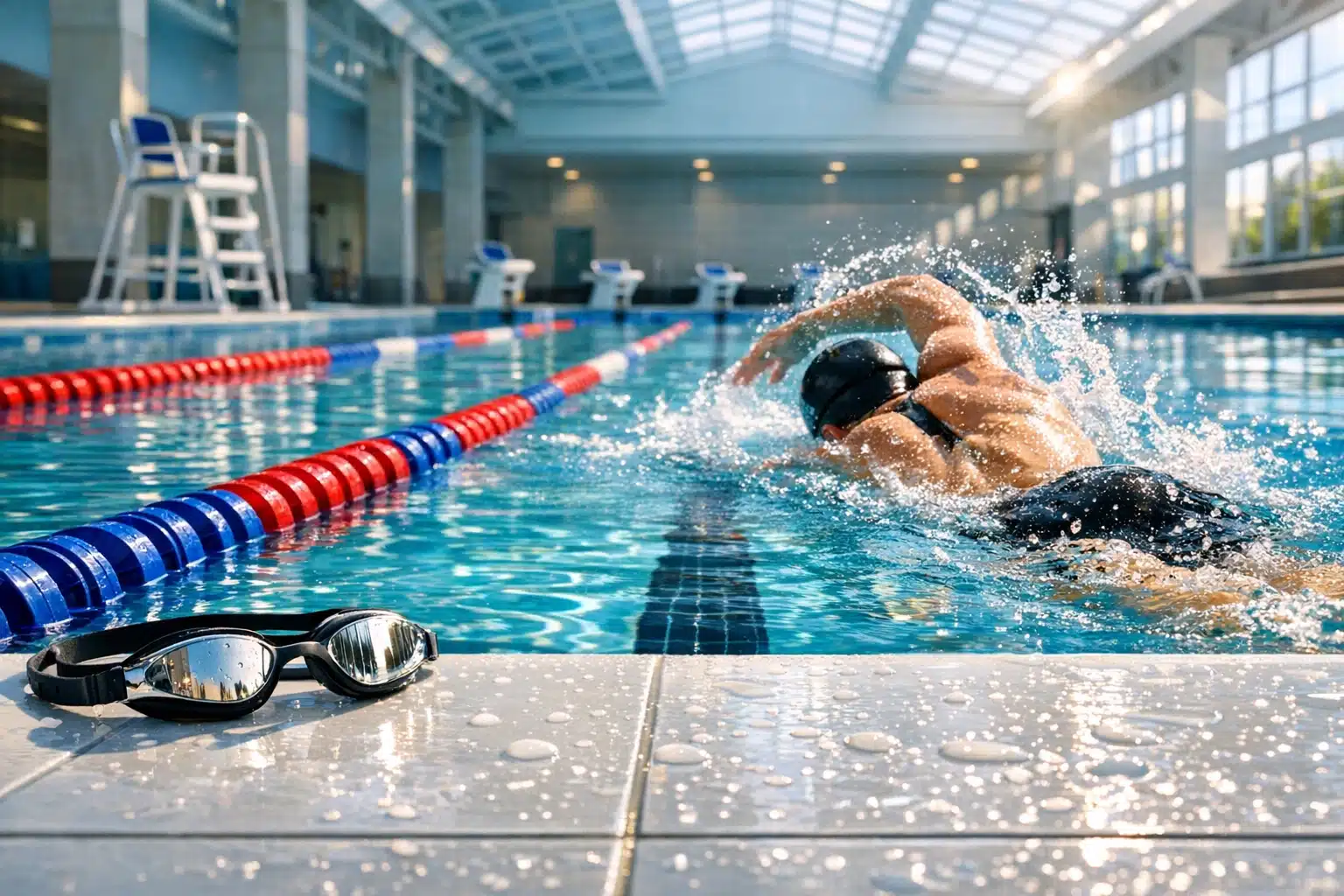
Explore the world of swimming
Swimming is one of those rare activities that can feel playful, disciplined, social, and deeply practical all at once. It builds endurance without the constant pounding many land-based sports place on the joints, and it teaches a life skill that can matter far beyond fitness. From a child’s first floating lesson to a master’s swimmer chasing smoother turns, the water offers both challenge and relief. This article explores why swimming continues to matter in health, sport, and everyday life.
Outline of the Article and Why Swimming Deserves Attention
Before getting into drills, fitness gains, and training habits, it helps to understand why swimming deserves a broader view than many people give it. Swimming is not only a competitive sport seen in Olympic pools and local meets. It is also a safety skill, a lifelong exercise option, a form of rehabilitation, and for many people, a reliable way to clear the mind after a noisy day. Few activities move so easily between these roles. A person might learn to float for safety as a child, use swimming for injury-friendly exercise as an adult, and later return to the water for stress relief, social connection, or performance goals.
This article is organized to guide the reader from the big picture into the practical details. The first goal is to show why swimming remains relevant in modern life, even for people who do not think of themselves as athletes. The second is to explain what the body and mind gain from regular time in the water. After that, the focus shifts to the main strokes, because swimming is not one single movement but a family of techniques, each with its own rhythm, strengths, and learning curve. Then comes safety, which is non-negotiable in any discussion of water activity. Finally, the conclusion speaks directly to beginners, returning swimmers, and readers looking for a realistic way to make swimming part of everyday life.
The journey through the article follows this path:
- Why swimming stands apart from many other forms of exercise
- How regular swimming affects endurance, strength, mood, and recovery
- What makes freestyle, backstroke, breaststroke, and butterfly different
- How to learn safely, train sensibly, and build confidence over time
In other words, this is not just a celebration of the sport. It is a practical map. If running feels too hard on your knees, swimming offers an alternative. If crowded gyms leave you cold, the pool can feel like a cleaner, quieter world with its own pace and rules. If you already enjoy swimming but want to understand it better, the sections ahead provide comparisons and clear explanations that make the water less mysterious and far more useful.
The Physical and Mental Benefits of Swimming
Swimming is often praised as a full-body workout, and that description is not just a slogan. When done with steady effort, it asks the heart and lungs to work continuously while also engaging the shoulders, back, chest, core, glutes, and legs. Freestyle relies heavily on rotation and pulling strength, breaststroke adds timing and leg power, and backstroke challenges posture and shoulder control. Unlike many land-based activities, swimming spreads the effort across the body in a smooth, repeating pattern. That is one reason it can feel demanding without always feeling harsh.
The comparison with running is useful. Running is excellent for bone loading and cardiovascular fitness, but it can be tough on the ankles, knees, and hips, especially for beginners, older adults, or people carrying injuries. Swimming, by contrast, takes place in a medium that supports the body. Water reduces impact, and chest-deep immersion can substantially lessen the load on weight-bearing joints. This does not mean swimming is effortless. It simply means the body can work hard without absorbing the same repeated shock that comes from pavement or even treadmills.
From a fitness perspective, regular swimming can help people meet widely accepted activity goals. Public health guidance commonly recommends at least 150 minutes of moderate aerobic activity per week for adults, and lap swimming can contribute meaningfully to that target. Energy use varies by size, stroke, and intensity, but many adults burn roughly 200 to 350 calories in 30 minutes of moderate swimming, with vigorous sessions going higher. More importantly, swimming is scalable. A beginner may start with short intervals and rest breaks, while a trained swimmer may cover several kilometers in a session.
The mental side matters just as much. Water changes sensory input. Sound softens, breathing becomes deliberate, and movement settles into rhythm. For many swimmers, that rhythm creates a near-meditative state. The black line at the bottom of the pool becomes a guide, almost like a metronome for the mind. Stress does not vanish, but it often loosens its grip when attention turns to breath timing, body position, and the next wall.
Common benefits include:
- Improved cardiovascular endurance
- Greater muscular coordination across the whole body
- Reduced joint impact compared with many land exercises
- Structured breathing that can support relaxation and focus
- An activity option suitable for a wide range of ages
Of course, swimming is not perfect for every need. It does less for bone density than impact-based exercise, and poor technique can irritate the shoulders. Still, as a balanced, adaptable, and often enjoyable form of movement, it remains one of the most versatile choices available.
Understanding the Main Strokes and Building Efficient Technique
To an observer, swimming can look deceptively simple: arms move, legs kick, body travels forward. In practice, technique changes everything. Two swimmers may expend the same effort, yet the one with better timing and body position will glide farther, breathe more calmly, and finish less fatigued. That is why learning the main strokes is not only about variety. It is about understanding how water responds to the body and how efficiency is built one detail at a time.
Freestyle, often called front crawl, is the fastest and most efficient stroke for most swimmers over distance. Its alternating arm action and flutter kick allow for steady momentum, and the body rotates from side to side rather than staying flat. That rotation matters. It helps lengthen the stroke, protects the shoulders when done properly, and makes side breathing easier. Many beginners struggle because they lift the head too high to inhale, which causes the hips and legs to sink. A calmer solution is to roll slightly, keep one goggle in the water, and let the breath happen quickly instead of forcing it.
Backstroke is sometimes underestimated, but it teaches valuable skills. Because the swimmer faces upward, breathing is less stressful than in freestyle. At the same time, straight swimming becomes harder because the ceiling offers fewer orientation cues than the pool floor. Good backstroke depends on a stable core, narrow kicking, and a long body line. It can feel wonderfully open, as if the swimmer is sliding under the sky, but only when posture stays organized.
Breaststroke is often seen as beginner-friendly because the face can stay above water more often. Yet technically, it is one of the most precise strokes. The kick must whip outward and snap inward at the right moment, and the arm pull should not become overly wide. When timing slips, breaststroke slows dramatically. Still, it remains popular for recreational swimming because its pace feels manageable and its rhythm is easy to appreciate.
Butterfly is the most dramatic stroke and usually the most physically demanding. It uses simultaneous arm recovery and a dolphin kick driven from the hips and core. When performed well, butterfly looks like a wave passing through the body. When performed poorly, it becomes exhausting almost immediately. That contrast is why coaches often teach butterfly in short pieces before asking swimmers to complete full lengths.
A few technique principles apply across all strokes:
- Streamline matters more than people expect
- Breathing should fit the stroke rather than interrupt it
- Relaxation and tension must be balanced, not random
- Short, focused drills often improve form faster than endless tired laps
In swimming, speed is not only power. It is also patience, timing, and the willingness to let water teach you where resistance lives.
Learning Safely: Water Confidence, Pool Etiquette, and Training Basics
Swimming can be joyful, but water deserves respect. Safety is not a gloomy side note to the sport; it is the foundation that allows enjoyment and progress to happen at all. Strong swimmers still follow safety rules, and beginners should never feel embarrassed about starting with basic water confidence. Floating, controlled breathing, entering and exiting the pool safely, and knowing what to do when tired are meaningful achievements, not tiny steps to rush through.
This is especially important because drowning remains a serious public health issue. In the United States and many other countries, drowning is a leading cause of unintentional injury death for young children, and adults are not immune to risk either. Lessons reduce danger, but lessons alone are not enough without supervision, judgment, and repeated practice. For children, active adult attention near water matters more than casual observation from a distance. For adults, overconfidence can be its own hazard, particularly in open water.
Pool safety begins with habits. Swimmers should know the depth of the water, obey lifeguard instructions, avoid running on wet decks, and stay aware of others in the lane. Pool etiquette also shapes the experience. In shared lanes, circle swimming, leaving room at the wall, and choosing a lane that matches your speed help everyone train more smoothly. The best swimmers in public pools are often not the fastest ones, but the most predictable and considerate.
Open water adds a different layer of complexity. Lakes, rivers, and the sea do not behave like pools. Visibility changes, currents shift, temperatures drop, and the distance back to shore can look much longer once fatigue sets in. Anyone moving from pool swimming to open water should treat it as a new discipline rather than a simple change of scenery. A bright cap, a swim buddy, local knowledge, and honest assessment of conditions are basic precautions, not optional extras.
Smart beginner training is simple rather than heroic. Two or three sessions each week can be enough to build confidence and fitness. A session might include a warm-up, a few short technique drills, several manageable swimming repeats, and a cool-down. Rest is part of learning because tired swimmers often lose form first and awareness second.
Useful safety and training reminders include:
- Take lessons from a qualified instructor if you are unsure in water
- Never assume pool skill automatically transfers to open water
- Use goggles that fit well and allow clear vision
- Increase distance gradually instead of chasing sudden big goals
- Stop early if sharp pain, dizziness, or panic appears
Swimming rewards confidence, but it rewards caution even more. The best progress happens when skill grows side by side with respect for the environment.
Conclusion for Beginners, Fitness Swimmers, and Curious Readers
Swimming asks for patience, but it gives back in unusually broad ways. It can improve endurance, support strength, sharpen coordination, and create a calmer mental space within the same hour. Just as importantly, it offers a practical life skill that reaches beyond recreation. That combination is why swimming matters to so many different people, from schoolchildren learning basic safety to adults looking for a sustainable way to stay active without punishing their joints.
If you are a beginner, the most useful goal is not speed. It is comfort. Learn to float, breathe out underwater, and move through short distances with control. Once those pieces settle into place, progress becomes far less intimidating. If you are returning after years away, do not measure yourself against old times or old habits. The water has a way of telling the truth quickly, but it is never rude about it. A few steady sessions can rebuild feel and confidence faster than many people expect. If you are already comfortable in the pool, focus on efficiency. Small technique improvements often produce bigger gains than simply trying to swim harder.
For readers wondering how to begin, the path can be very practical:
- Choose one or two regular swim times each week
- Start with short, realistic sessions instead of marathon efforts
- Use lessons, videos from credible coaches, or club support to refine form
- Mix technique work with easy endurance so training stays interesting
- Treat safety habits as part of skill, not as extra rules
Swimming also has a rare emotional quality. The pool can be noisy with splashes and whistles, yet once your face is in the water, the world narrows in a helpful way. The next breath matters. The next stroke matters. The next wall arrives, then another. In that pattern, many people find not only exercise, but steadiness.
For beginners, parents, lap swimmers, and anyone simply curious, the message is clear: swimming is worth learning, worth practicing, and worth keeping for life. You do not need to chase medals to benefit from it. You only need a safe place to start, a willingness to learn, and enough curiosity to come back for one more length.