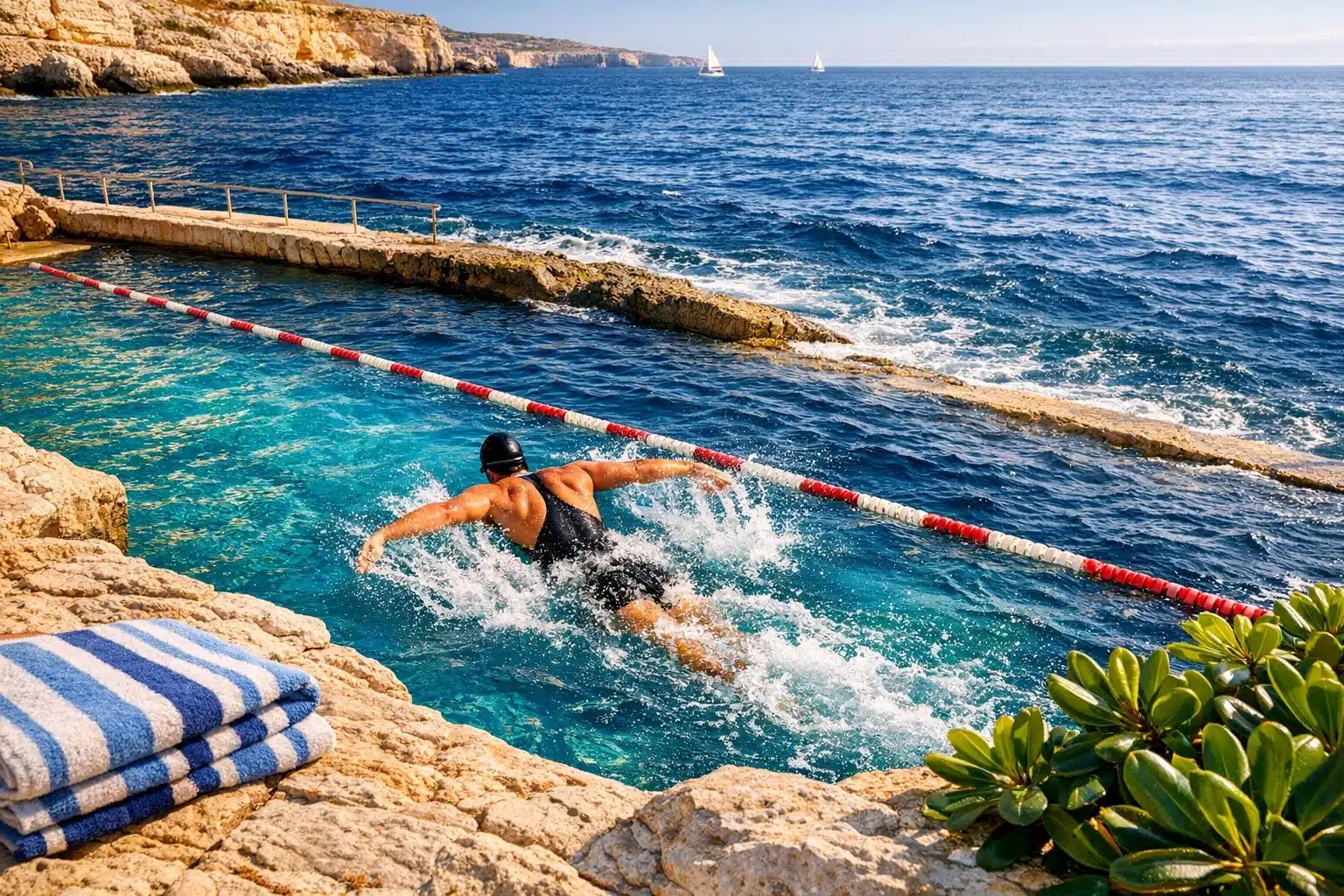
Explore the world of swimming
Swimming is one of the rare activities that feels playful at first glance yet asks for precise timing, controlled breathing, and steady concentration. It suits children gaining water confidence, adults rebuilding fitness, and older swimmers searching for movement that is kind to the joints without becoming easy. In pools, lakes, and coastal water, it offers exercise, safety knowledge, and a quiet mental reset. This guide follows the sport from basic purpose to practical long-term progress.
Article Outline
- Why swimming matters as both a sport and a life skill
- How the main strokes differ in technique, pace, and effort
- What exercise science says about swimming and overall health
- How beginners and improving swimmers can train safely and effectively
- Why swimming remains valuable for families, busy adults, and lifelong learners
Why Swimming Matters: More Than Exercise in a Pool
Swimming occupies a special place among physical activities because it combines recreation, athletic development, and practical safety in one setting. A person can swim for fun on holiday, use it to recover after a demanding workday, train seriously for competition, or learn it simply to feel safer around water. Few pursuits carry that kind of range. Running is accessible and effective, cycling builds endurance beautifully, and strength training sharpens power, yet swimming adds a quality those activities cannot fully reproduce: buoyancy. Water supports body weight, which reduces impact on the knees, hips, and spine while still creating resistance in every direction.
That combination explains why swimming appeals to such a broad audience. It can challenge elite athletes chasing fractions of a second, while also welcoming people who have never followed a structured fitness plan. Public health recommendations often encourage at least 150 minutes of moderate aerobic activity each week, and swimming can help meet that target in a way that feels refreshing rather than punishing. For many people, that emotional difference matters. A workout is easier to repeat when it leaves the body pleasantly tired instead of battered.
Swimming is also a life skill, not merely a leisure option. Water is part of daily life across much of the world, whether through beaches, rivers, lakes, hotel pools, or school programs. Knowing how to float, breathe calmly, and move efficiently can reduce panic and improve safety in unexpected situations. Parents often introduce children to lessons for that reason alone, but adults benefit just as much from learning later in life. There is no expiration date on becoming more capable in water.
Its relevance grows further when you consider the mental side. Water has a way of quieting the day. The repeated pull of the arms, the patterned kick, and the sound of breathing create a rhythm that feels almost meditative. Many swimmers describe a session as both effortful and calming, which seems contradictory until you experience it. That dual effect helps explain the sport’s longevity.
- It develops endurance without heavy impact.
- It teaches a useful safety skill.
- It can be social, solitary, playful, or highly competitive.
- It adapts well to different ages, goals, and fitness levels.
Seen this way, swimming is not just time spent in water. It is a blend of movement, confidence, and self-reliance that stays relevant across an entire lifetime.
Understanding the Main Strokes and How They Compare
To an inexperienced eye, swimming may look like simple forward movement, but each stroke has its own logic, rhythm, and demand profile. Learning these differences helps swimmers choose the style that fits their goals, whether those goals involve speed, efficiency, comfort, or technical challenge. The four classic competitive strokes are freestyle, backstroke, breaststroke, and butterfly, and each one asks the body to solve the same problem in a different way.
Freestyle, often called front crawl in technical discussions, is generally the fastest and most efficient stroke for sustained lap swimming. The body stays relatively long and horizontal, the legs produce a flutter kick, and the arms pull in alternating cycles. Because the swimmer turns the head to breathe rather than lifting it forward, freestyle can maintain good momentum once technique improves. It is commonly the first stroke adults want to master for fitness because it covers distance well and suits interval training. The drawback is coordination. Beginners often hold tension in the neck, kick too hard, or breathe late, which disrupts balance and increases fatigue.
Backstroke offers a useful contrast. Since the face remains above water, many learners find breathing less stressful. It improves body alignment and shoulder control, yet it can feel disorienting because movement happens without seeing where you are going. In crowded lanes, that matters. Breaststroke usually feels intuitive at first because the head can rise more naturally, but efficient breaststroke is more technical than it appears. Timing the pull, kick, and glide is crucial. When done poorly, it becomes slow and tiring; when done well, it feels smooth and economical.
Butterfly stands apart as the most physically demanding of the four for most recreational swimmers. It uses a wave-like body motion, a simultaneous arm recovery, and a dolphin kick. Spectators often admire its drama, but the stroke punishes rushed timing and rewards patience, strength, and flexibility. It is typically learned after a swimmer has developed better control in the other styles.
- Freestyle: fastest for distance and common in fitness training
- Backstroke: easier breathing and strong posture benefits
- Breaststroke: approachable in appearance but highly technical in timing
- Butterfly: powerful, demanding, and least forgiving of poor rhythm
Outside the pool, open-water swimming introduces currents, temperature changes, and navigation, making even familiar strokes feel different. A lap pool is precise and measured; a lake or sea is a moving conversation. Understanding stroke choices gives swimmers the vocabulary to adapt rather than simply endure.
Swimming and Health: What the Body Gains from Time in the Water
Swimming earns its reputation as a complete workout because it challenges multiple systems at once. The heart and lungs work continuously to support movement, the muscles generate propulsion against resistance, and the nervous system coordinates timing, balance, and breath control. Unlike some forms of exercise that emphasize one quality over another, swimming sits at an interesting intersection of endurance, mobility, and muscular engagement. That is part of what keeps it valuable over the long term.
From a cardiovascular perspective, regular swimming can improve aerobic capacity and support overall heart health when performed consistently at an appropriate intensity. A gentle session may function as active recovery, while interval training can become a serious conditioning tool. Moderate lap swimming can also burn a meaningful amount of energy, often somewhere in the range of roughly 400 to 700 calories per hour depending on body size, stroke choice, and pace. Exact numbers vary widely, so it is smarter to think in patterns rather than promises. Harder strokes such as butterfly demand more energy, while relaxed breaststroke or easy backstroke may feel more sustainable for longer sessions.
The muscular benefits are equally notable. Water provides resistance during both the pull and the recovery phases of movement, especially when technique is efficient. Shoulders, back, chest, core, hips, and legs all contribute. This does not mean swimming replaces every other form of training. It usually does not build maximal strength the way heavy resistance work can. Instead, it excels at developing coordinated strength-endurance. That distinction matters for people choosing activities based on goals.
Swimming is often praised for being joint-friendly, and that reputation is mostly deserved. Because water reduces impact, many people who find running uncomfortable can still train productively in the pool. Rehabilitation professionals sometimes use water-based exercise for that reason, though individual guidance remains important after injury. Beyond the physical mechanics, swimmers often report a psychological lift after sessions. Repetitive movement, measured breathing, and the sensory environment of water can reduce stress and improve mood.
Some of the clearest advantages appear across age groups:
- Children gain coordination and water familiarity.
- Adults can build fitness without heavy pounding.
- Older swimmers often appreciate mobility work paired with aerobic training.
- People returning to exercise may find the environment less intimidating than a busy gym floor.
Swimming is not magic, and it does not solve every health problem on its own. What it offers is more realistic and therefore more useful: a sustainable, adaptable, science-supported way to keep the body working well.
Learning Safely and Training Smart: A Practical Guide for Beginners
For new swimmers, the biggest obstacle is rarely strength. It is comfort. Water changes posture, vision, breathing, and confidence all at once, so the early stages of learning should focus on familiarity before performance. That means practicing floating, exhaling into the water, holding a streamlined position, and understanding how calm breathing supports every other skill. People often want to skip straight to laps, yet the smoother route begins with control. A swimmer who can relax tends to learn faster than one who fights the water in every movement.
Formal lessons can accelerate progress because technique errors are difficult to spot from inside the experience. An instructor can notice whether the head sits too high, whether the kick comes from the knees instead of the hips, or whether the pull loses power halfway through. These small details matter. In swimming, inefficiency stacks quickly. A slight mistake repeated dozens of times can turn a manageable workout into a draining one.
Safety deserves equal attention. Pools may look predictable, but careless habits still create risk. Open water introduces even more variables, including visibility, weather, current, depth changes, and temperature. Beginners should understand that confidence and ability are not identical. Feeling brave is helpful; respecting conditions is wiser.
- Never swim alone in unfamiliar open water.
- Learn how to float and rest before attempting longer distances.
- Use clearly designated swim areas whenever possible.
- Tell someone your plan if you are training outdoors.
- Stop immediately if you feel dizzy, unusually cold, or short of breath.
Training structure also matters. A simple session often works better than a heroic one. Many improving swimmers do well with a short warm-up, a technical drill set, a main set based on manageable repeats, and an easy cooldown. For example, a beginner session might include 5 to 10 minutes of easy movement, several lengths practicing breathing or kick balance, then a few short swims with rest between them. Rest is not failure in swimming; it is part of learning quality movement.
Basic equipment can help when used thoughtfully. Goggles improve comfort and orientation. A kickboard isolates lower-body work, while a pull buoy highlights body position and arm mechanics. Fins can teach propulsion and streamline awareness, though they should not become a permanent shortcut. Good etiquette also improves training for everyone: circle swim correctly, leave space at the wall, and communicate when sharing lanes. Those customs may seem small, but they keep the pool orderly and make new swimmers feel welcome rather than lost.
Conclusion: How Swimming Can Fit Real Life and Stay There
If you are curious about swimming but unsure where it belongs in your routine, the most useful answer is also the simplest one: it belongs wherever consistency becomes possible. You do not need to train like a racer to benefit from the water. A parent squeezing in two morning sessions a week, a student learning to breathe without panic, a retiree protecting sore joints, and an athlete cross-training after hard road miles can all be “real” swimmers. The label is not awarded by speed. It is earned by returning.
That is why swimming often becomes more valuable over time instead of less. At first, progress may appear technical. You breathe more smoothly, cover more distance, or stop gripping the lane wall after every length. Later, the rewards widen. You begin to trust your body in water. Your stamina improves in subtle ways outside the pool. You may sleep better after evening swims, think more clearly after morning sessions, or feel a quiet satisfaction that comes from moving well without noise or impact. Water has a way of teaching patience, and patience is useful far beyond sport.
For most readers, the smartest path forward is modest and specific. Choose a realistic schedule, keep sessions short enough to finish feeling capable, and focus on one improvement at a time. Perhaps that means learning bilateral breathing in freestyle, becoming more relaxed on your back, or simply swimming continuously for ten minutes without rushing. Small wins matter because they stack. A person who stays engaged for six months will usually gain more than one who trains furiously for two weeks and disappears.
Here is a practical takeaway for different kinds of swimmers:
- Beginners should prioritize lessons, breath control, and safety habits.
- Fitness-focused adults should blend technique work with steady aerobic sets.
- Families should treat swimming as both recreation and essential life preparation.
- Older adults can use the pool as a dependable space for low-impact conditioning.
In the end, swimming offers something rare: challenge without constant punishment, skill without unnecessary complexity, and progress that can remain meaningful at almost any age. If you have been waiting for the right time to begin, improve, or return, the water is patient. Start with one session, learn with intention, and let the habit grow from there.