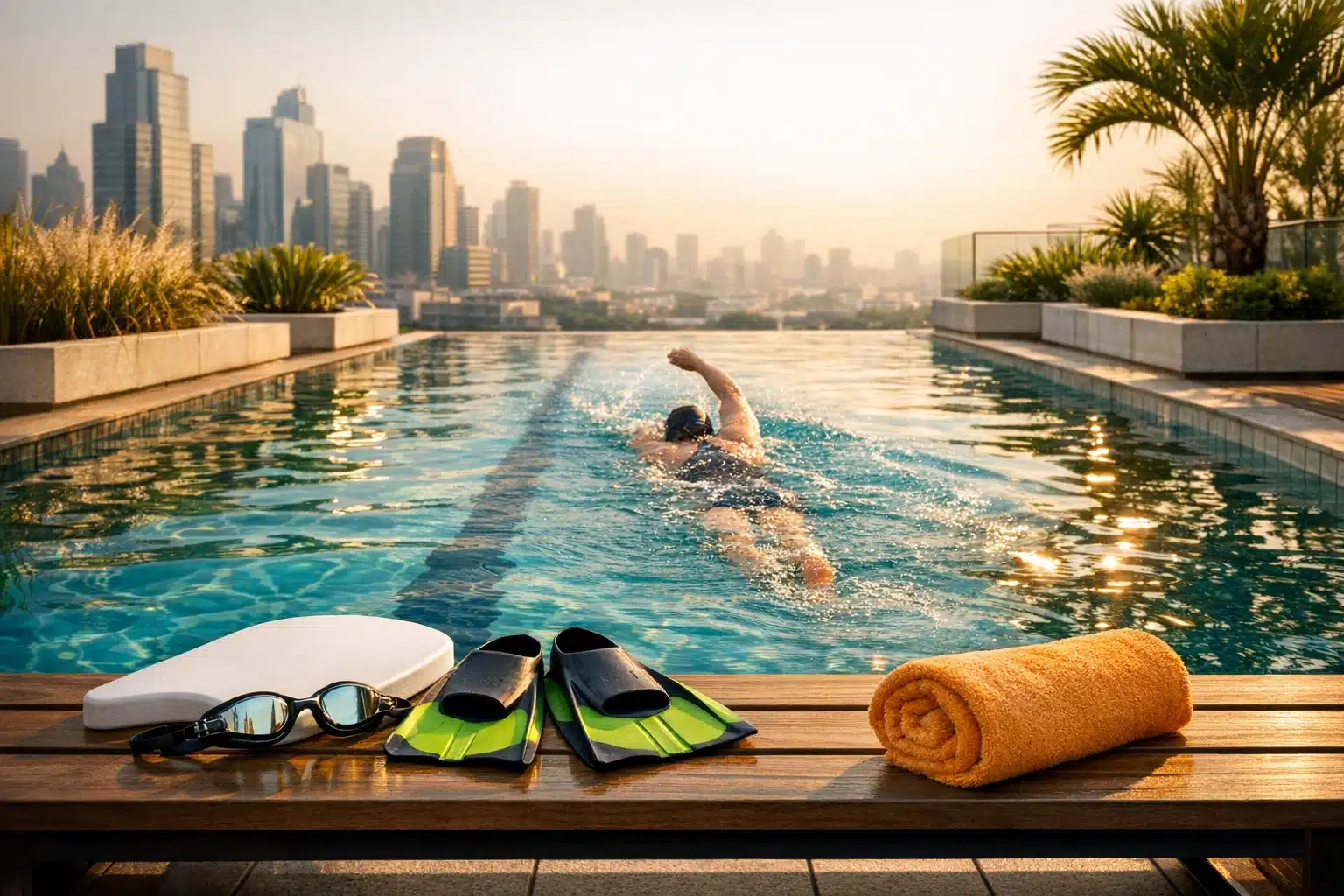
Explore the world of swimming
Swimming sits at the crossroads of sport, survival, and simple pleasure, making it one of the few activities that can feel playful while delivering serious physical benefits. From children learning to float to masters athletes chasing split times, the water offers challenge without the pounding impact of many land-based exercises. It can calm a busy mind, strengthen the heart, and build confidence stroke by stroke. This article maps the essentials, from technique and training to safety and lifelong value.
Article outline: this guide moves through five main ideas. First, it explains why swimming matters for health, movement, and daily life. Second, it compares the major strokes and the techniques that shape efficiency. Third, it looks at how swimmers learn, practice, and improve over time. Fourth, it covers equipment, training environments, and safety habits. Fifth, it closes with the wider role of swimming in competition, community, and long-term fitness.
Why Swimming Matters for Health, Confidence, and Everyday Life
Swimming earns its place among the most useful physical activities because it blends exercise, recreation, and safety in a single skill. Unlike many workouts that ask the body to absorb repeated impact, swimming takes place in an environment where buoyancy supports much of a person’s weight. That means the joints often experience less stress than they do during running or jumping activities. For people recovering from injury, older adults managing stiffness, or beginners who feel intimidated by high-impact exercise, the pool can feel less like a battlefield and more like an invitation.
The physical benefits are broad. Swimming challenges the cardiovascular system, asks large muscle groups to work together, and develops coordination in a way that feels smooth rather than jarring. Public health guidance commonly recommends at least 150 minutes of moderate aerobic activity each week, and swimming can contribute meaningfully to that goal. Because water is much denser than air, even simple movements create resistance. Every pull, kick, and body rotation becomes a small negotiation with the water. That constant resistance helps build muscular endurance, especially in the shoulders, back, core, and legs. At the same time, controlled breathing can improve rhythm and body awareness.
There is also a mental side that deserves equal attention. Many swimmers describe the pool as a place where outside noise goes quiet. The repetitive sound of breathing, the line at the bottom of the lane, and the cool pressure of water can create a focused state that feels almost meditative. Stress does not disappear by magic, of course, but structured movement and steady breathing can lower tension and improve mood. For children, learning to swim often builds confidence through clear milestones. For adults, it can restore trust in the body after long periods of inactivity.
Swimming also carries practical value beyond fitness. It is a safety skill. Knowing how to float, tread water, and move calmly through deep water can make beaches, lakes, rivers, and pools far less intimidating. In that sense, swimming is not just about performance. It is about freedom, access, and a quiet kind of competence that can stay useful for life.
The Four Main Strokes and How They Compare
To understand swimming, it helps to know the four strokes most commonly taught and raced: freestyle, backstroke, breaststroke, and butterfly. Each stroke has its own rhythm, body position, and technical demands. If swimming were a language, these strokes would be its major dialects. They all move a person through water, yet each one tells the story differently.
Freestyle, usually performed as front crawl, is generally the fastest and most efficient stroke for covering distance. The body stays long and horizontal, the arms alternate in a continuous pulling pattern, and the legs use a flutter kick. Breathing is timed to body rotation, usually every two, three, or more strokes depending on pace and comfort. Freestyle rewards balance and streamlining. Even strong athletes can waste energy if the head lifts too high or the kick becomes frantic. That is why good freestyle often looks calm. Fast swimmers seem to slip through the lane rather than fight it.
Backstroke uses a similar alternating arm action and flutter kick, but the swimmer faces upward. Many beginners appreciate that the mouth and nose stay clear of the water most of the time, making breathing less stressful. Still, backstroke introduces other challenges. Swimmers must maintain a stable body line without seeing where they are going, and small errors in arm entry or hip position can create drag quickly. It is often called graceful, but it is not effortless.
Breaststroke is slower for most swimmers, yet it is highly technical and widely loved. The arm pull and leg kick happen in a more symmetrical pattern, followed by a glide. Timing matters enormously. Done well, breaststroke feels efficient and measured; done poorly, it feels like pushing a shopping cart through mud. It is popular among recreational swimmers because the head can rise more easily for orientation and breathing, but elite breaststroke is one of the most specialized forms in the sport.
Butterfly is the powerhouse of the group. Both arms recover together over the water while the body moves in a wave-like motion supported by a dolphin kick. It is visually dramatic and physically demanding. Beginners often assume butterfly is just about strength, yet timing is just as important as power. A well-timed butterfly can look almost theatrical, like a swimmer borrowing momentum from the water itself. In simple comparison: freestyle is usually the most economical, backstroke emphasizes alignment and awareness, breaststroke prioritizes timing and precision, and butterfly demands coordinated strength and rhythm.
Learning to Swim and Training with Purpose
Progress in swimming rarely comes from brute effort alone. More often, it comes from patience, repetition, and a willingness to improve small details. Beginners usually start with comfort in the water: blowing bubbles, floating on the front and back, pushing off the wall, and learning how to recover composure after a mistake. These steps may appear simple from the deck, but they form the real foundation. A swimmer who can relax in the water learns faster than one who panics and fights every sensation.
Once basic comfort is in place, technique becomes the next priority. Body position is the hidden engine of swimming. If the hips sink, if the head lifts too high, or if the arms cross awkwardly in front of the body, speed disappears quickly. Good instruction often focuses on a few repeatable ideas rather than a dozen corrections at once: long posture, steady exhalation into the water, balanced rotation, and consistent kicking. Drills matter here because they isolate parts of the stroke. A kickboard can help a swimmer notice leg rhythm. Single-arm freestyle can sharpen awareness of body rotation. Side-kicking drills can teach balance in a very direct way.
Training structure also matters. Swimming responds well to interval work because the sport naturally breaks effort into lengths and rest periods. A short set can teach more than random laps. For example, a beginner session might include: • 4 x 25 meters easy with focus on exhaling underwater • 4 x 25 meters kicking with rest between repeats • 4 x 25 meters freestyle concentrating on a long reach. A more experienced swimmer may progress to sets such as: • 6 x 100 meters at a steady aerobic pace • 8 x 50 meters with controlled speed changes • 200 meters easy recovery between rounds. These formats build discipline and allow measurable improvement.
It is also useful to compare swimming training with gym-based exercise. In the weight room, form often breaks down under fatigue. In the pool, poor technique punishes the swimmer almost instantly by increasing drag. That is why rest, feedback, and consistency are so important. Many swimmers keep a simple log of distance, stroke focus, and how the session felt. Over time, those notes reveal patterns. Some people improve with frequent short swims, while others respond better to fewer but more structured sessions. The best plan is not the one that looks hardest on paper. It is the one a swimmer can sustain while steadily moving better through the water.
Equipment, Training Environments, and Essential Safety
One reason swimming is so approachable is that the basic equipment list is short. A swimsuit, goggles, and access to safe water are enough to begin. Still, gear can shape comfort and performance more than many beginners expect. Goggles improve visibility and reduce eye irritation, which makes it easier to maintain good head position. Swim caps help keep hair out of the face and can slightly reduce drag. Kickboards, pull buoys, fins, and paddles are common training tools, though they should support technique rather than replace it. A fin set can help a swimmer feel speed and body alignment, while a pull buoy can highlight upper-body mechanics. Used carelessly, however, training aids can hide weaknesses.
The environment matters just as much as the equipment. Pool swimming is usually the most controlled setting. Lane lines reduce waves, water quality is monitored, and distance can be measured accurately. Most competitive pools are 25 or 50 meters long, which helps swimmers track sets and pacing clearly. Public pools also introduce etiquette. Swimmers may need to share lanes, circle swim, and choose a speed-appropriate lane. These habits sound minor, yet they shape the quality and safety of every session.
Open water offers a completely different experience. Lakes, rivers, and oceans can feel expansive and exhilarating, but they add variables that do not exist in a pool: currents, waves, colder temperatures, reduced visibility, and navigation challenges. The first time a swimmer leaves the black line at the bottom of a pool, the experience can feel thrilling and slightly humbling. Distance becomes less exact, and comfort depends more heavily on judgment. Open-water swimmers often use bright caps, tow floats, and planned entry-exit points. Swimming with a partner or support group is strongly recommended.
Safety should never be treated as an optional side note. Strong swimmers still need caution, and beginners especially benefit from clear habits: • choose supervised areas when possible • learn local rules and water conditions • avoid overestimating your ability • stop if cold, fatigue, or cramping changes your control • respect weather and visibility. Children should always be closely supervised near water, even when they have taken lessons. The water can be friendly, but it is never casual. The smartest swimmers are usually the ones who combine confidence with respect.
Conclusion: Swimming as a Sport, a Habit, and a Lifelong Companion
Swimming remains relevant because it adapts to different goals without losing its core appeal. For some people, it is a competitive sport measured in splits, turns, and race strategy. For others, it is a practical skill learned for safety and peace of mind. Many people meet it somewhere in the middle: as an exercise habit that feels better on the body than pounding miles on pavement, or as a weekly ritual that clears mental clutter after long days. Few activities can serve so many purposes without becoming unrecognizable from one setting to the next.
Its social dimension is easy to overlook, but it matters. Swim lessons often give children their first structured experience of risk, patience, and progress. Club teams teach routine and resilience. Adult lap lanes create quiet communities built on nods, shared space, and mutual respect. Open-water groups turn solitary endurance into a collective adventure. Even when swimming looks individual, it is often held together by coaches, lifeguards, training partners, parents, and facility staff. Behind every smooth length is usually a small ecosystem of support.
For the target audience of this article, the key message is simple: swimming does not require a dramatic identity shift to become worthwhile. You do not need to aim for medals to benefit from better breathing, stronger endurance, improved technique, or increased confidence in deep water. Start where you are. If you are new, learn floating, breathing, and basic stroke mechanics. If you already swim, refine one technical detail at a time. If you have been away from the pool for years, return with patience rather than comparison.
The world of swimming is wide enough for casual swimmers, serious athletes, children, older adults, and anyone looking for movement that feels both demanding and forgiving. It can be calm or competitive, structured or playful, solitary or social. That flexibility is part of its enduring charm. In the end, swimming offers more than exercise. It offers competence, perspective, and the rare joy of moving well in a place where humans were never meant to feel fully at home, yet somehow learn to belong.