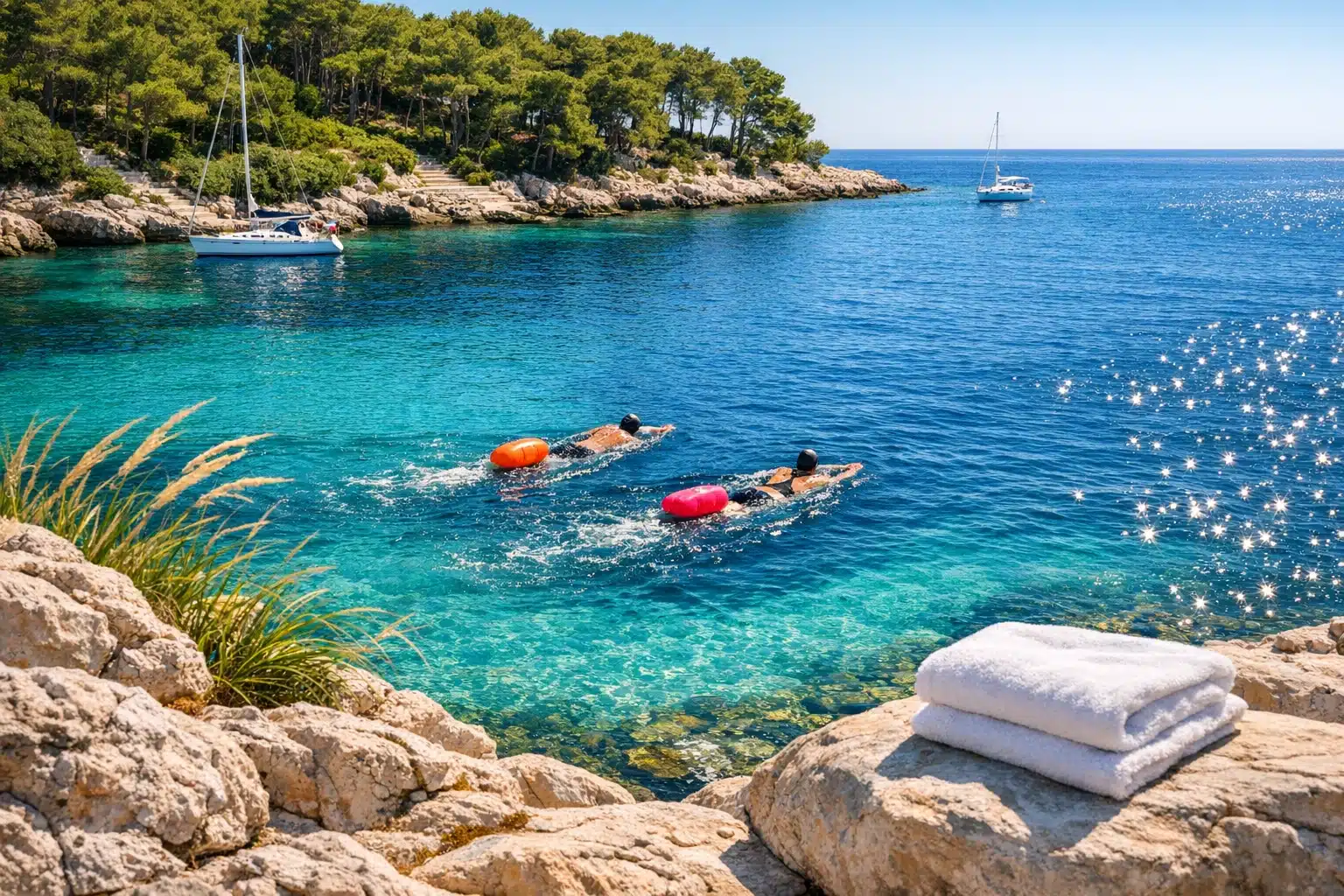
Explore the world of swimming
Swimming blends survival skill, sport, and recreation in a way few activities can match. It builds strength and stamina without the constant impact common in many land-based workouts. From a child’s first lesson to an adult’s long, steady laps, water teaches confidence, focus, and respect. This article explores why swimming matters, how it works, and what readers can gain by stepping in.
Outline: • Swimming as a human skill, sport, and cultural practice • The physical and mental benefits that make it broadly useful • The major strokes and the techniques that shape efficient movement • Safety, training habits, and essential gear • A practical conclusion for beginners, parents, fitness-minded adults, and curious readers who want to make swimming part of everyday life
Swimming as a Human Skill, Sport, and Shared Culture
Swimming is one of the oldest physical skills humans have practiced, and its importance reaches far beyond fitness. Before it became a lane-marked sport with clocks, goggles, and starting blocks, it was a means of survival. People crossed rivers, worked near coastlines, fished, traveled, and learned to move through water because life demanded it. Over time, that practical ability grew into recreation, military training, competition, and therapy. Today, a single pool can hold many versions of the same activity at once: a child learning to float, a triathlete tracking split times, an older adult doing gentle laps, and a family escaping summer heat for an hour.
What makes swimming so widely relevant is its flexibility. It can be competitive or calm, technical or playful, solitary or social. Unlike sports that require a team, a field, or specialized seasonal conditions, swimming can adapt to many settings. A heated indoor pool supports year-round practice. Lakes and oceans add the thrill and unpredictability of open water. Competitive programs range from school teams to international events such as the Olympic Games, where differences of a fraction of a second can separate medal positions. At the same time, many people value swimming precisely because it removes noise and hurry; once the face turns into the water, the world becomes bubbles, rhythm, and breath.
Swimming also has a strong cultural footprint. Coastal communities often treat it as a natural part of growing up, while urban areas rely on public pools and lesson programs to build access. In some countries, swim education is promoted as a public safety issue because drowning remains a major global concern. World Health Organization reporting has consistently shown that drowning is a significant cause of unintentional injury death, especially in settings where supervision, barriers, or instruction are limited. That fact alone gives swimming a seriousness that many leisure activities do not carry.
Yet swimming never loses its sense of wonder. Water changes movement completely. A person who feels ordinary on land can feel smooth, weightless, and strangely efficient in a pool. That combination of utility, discipline, and quiet delight is a large part of why swimming has remained relevant across centuries. It is not just an exercise choice. It is a life skill with a remarkable ability to meet people where they are.
The Physical and Mental Benefits of Swimming
Swimming is often praised as a full-body workout, and that description is accurate, but it is also incomplete. The deeper value of swimming lies in how many systems it engages at the same time. It challenges the heart and lungs, asks the muscles to coordinate against resistance, trains balance and timing, and does all of this while reducing impact stress on joints. Water is denser than air, so every pull and kick meets resistance. That means a lap session can develop endurance and muscular control without the pounding associated with repetitive running on hard surfaces.
For general health, swimming fits well within standard physical activity guidance. Public health recommendations commonly advise adults to aim for at least 150 minutes of moderate aerobic activity per week, and lap swimming can contribute meaningfully to that target. Intensity can be adjusted in simple ways: slower steady lengths for beginners, intervals for more experienced swimmers, or stroke variation to challenge different muscle groups. Freestyle tends to emphasize the shoulders, back, chest, core, and legs in a coordinated pattern, while breaststroke and butterfly shift the demands in different ways. Because the body is supported by water, many people with joint discomfort, previous injuries, or higher body weight find swimming more approachable than high-impact exercise.
The mental side is just as important. Swimming creates a rhythm that can be deeply calming. Breath cycles become regular, stroke counts turn attention inward, and visual distractions fade. Many swimmers describe a session as mentally clearing, almost like a moving form of meditation. That is not just poetic language. Repetitive aerobic exercise is associated with improved mood, reduced stress, and better sleep in many people, and swimming adds the sensory effect of water pressure and buoyancy, which some find especially soothing.
Its broad accessibility is another strength. Different groups benefit in different ways:
• Children can build coordination, water confidence, and safety awareness.
• Adults can use swimming for cardiovascular fitness and stress relief.
• Older adults may appreciate the reduced joint strain and support for mobility.
• Athletes in other sports often use the pool for cross-training and active recovery.
Swimming does have limits. It is not automatically safe, and progress can be slow if technique is ignored. Still, the combination of conditioning, reduced impact, and mental refresh is hard to match. Few activities allow a person to work hard while feeling almost suspended from gravity. That is part of swimming’s quiet genius: it can be demanding without feeling punishing, and restorative without feeling passive.
Understanding the Main Strokes and the Logic of Good Technique
Swimming rewards effort, but it rewards technique even more. Two people can have similar fitness levels and move through the water at very different speeds simply because one holds a better body position, breathes more efficiently, and wastes less energy. Water magnifies errors. Lift the head too high, and the hips sink. Rush the arms, and the stroke loses grip. Kick wildly, and energy disappears in splash instead of propulsion. Learning the main strokes helps swimmers understand not only how to move, but why certain movements work.
Freestyle, often called front crawl, is the fastest and most commonly practiced stroke. Its efficiency comes from a long body line, alternating arm recovery, a steady flutter kick, and controlled side breathing. Good freestyle is not about thrashing harder; it is about slipping forward with less resistance. Many beginners improve dramatically when they focus on three simple ideas: keeping the head neutral, rotating the body instead of swimming flat, and exhaling underwater so the breath to the side feels quick rather than panicked.
Backstroke shares freestyle’s alternating rhythm but changes orientation completely. Because the swimmer faces upward, backstroke can feel less claustrophobic for people who dislike putting the face in the water continuously. It still demands strong body alignment. If the hips drop, the stroke becomes slow and tiring. Competitive backstroke also requires spatial awareness, since swimmers must judge the wall while moving on their backs.
Breaststroke is often seen as friendly to beginners because the face comes out of the water regularly, but good breaststroke is deceptively technical. The pull, breath, kick, and glide must be timed with care. The kick, driven by a whip-like motion of the legs, provides much of the propulsion. Done poorly, breaststroke becomes exhausting and inefficient. Done well, it looks almost composed, as if the swimmer is negotiating with the water rather than fighting it.
Butterfly is the most demanding of the four competitive strokes. It uses a simultaneous arm action and a dolphin kick driven by the core and hips. To an observer, butterfly can look dramatic, even theatrical, but its best versions are based on rhythm rather than brute force. The stroke rises and falls like a wave, and when that timing clicks, it seems to borrow motion from the water itself.
Across all strokes, a few technical principles matter again and again:
• Streamline reduces drag.
• Breath control supports relaxation and timing.
• Consistent kicking helps body position, not just speed.
• Efficient hand entry and pull mechanics improve propulsion.
• Drills can isolate weak points far better than endless careless laps.
This is why coaching, video feedback, or even one well-structured lesson can change a swimmer’s experience. Technique turns effort into progress. Without it, swimming can feel like labor. With it, the water starts to feel less like an obstacle and more like a partner.
Safety, Training Habits, and the Gear That Actually Matters
Swimming has many benefits, but it asks for respect. Water is inviting right up until the moment conditions change, fatigue sets in, or attention drifts. That is why safety should be treated as part of swimming itself, not as an optional lecture added afterward. The most important rule is simple: confidence and competence are not the same thing. A person may feel comfortable in shallow water, enjoy floating, or manage a few lengths in a warm pool, yet still struggle badly in deep water, cold water, surf, or open-water currents.
Formal instruction remains one of the best investments a beginner or parent can make. Lessons teach more than strokes. They cover floating, breathing, body orientation, basic rescue awareness, and what to do when something goes wrong. Supervision matters just as much. Children should never be left near water without close attention, and adults should avoid overestimating their own endurance. Even strong swimmers benefit from using lifeguarded pools or swimming with partners when possible. In open water, risks expand quickly: waves, drop-offs, changing weather, poor visibility, boat traffic, and cold shock can all affect safety.
Practical training habits also shape the experience. A good swimming routine usually includes a warm-up, some skill work, a main set, and an easy finish. Beginners often make the mistake of trying to prove fitness by swimming too hard, too early, and with sloppy form. A better approach is to build gradually. For example, someone new to lap swimming might start with short repeats and brief rest periods rather than attempting nonstop distance. Quality matters more than dramatic suffering.
Gear should support learning, not distract from it. The essentials are modest:
• A comfortable swimsuit that allows free movement
• Goggles that seal well without painful pressure
• A cap if needed for comfort, hair management, or pool rules
• A kickboard or pull buoy for specific drills, used with purpose rather than dependence
• A clearly visible tow float for open-water swimmers where appropriate
Some tools are useful, but none replace judgment. Fancy watches can track distance, pace, stroke count, and heart rate estimates, yet a swimmer still needs to notice fatigue, technique breakdown, and changing conditions. Likewise, fins can help body position and ankle flexibility, but overuse may hide weaknesses that should be corrected directly.
The strongest safety mindset is calm, humble, and prepared. Know the environment. Respect weather and depth. Learn the basics well. Swim within your limits while gently expanding them. Water can be playful, restorative, and exhilarating, but it rewards people who bring awareness into the pool along with their towel.
Conclusion: Why Swimming Deserves a Place in Modern Life
For readers wondering whether swimming is worth the time, the answer depends less on ambition and more on fit. You do not need to chase races, perfect turns, or elite training plans to benefit from the water. Swimming can meet very different needs with unusual grace. A parent may value it as a safety skill for a child. A desk-bound adult may turn to it for low-impact conditioning and a mental reset after long workdays. An older beginner may appreciate the way water supports movement without making every step feel heavy. An athlete may use it to build endurance while giving the joints a break. Very few activities serve all of those audiences so well.
What makes swimming especially modern is the way it counters common problems of modern life. Many people spend hours sitting, staring at screens, and carrying tension in the neck, shoulders, and back. Swimming interrupts that pattern. It asks the body to lengthen, rotate, breathe steadily, and move in coordinated sequences. It also creates a rare environment where distractions fade. Phones stay on the bench. Notifications do not follow into the lane. For half an hour, the task is wonderfully simple: breathe, reach, kick, repeat.
If you are new to swimming, start small and start smart. One lesson can remove weeks of uncertainty. A short weekly session is more useful than a heroic burst followed by a month away. If you already know the basics, adding structure can keep the activity fresh. Alternate easy days with technique work, moderate endurance sets, or relaxed stroke variety. If you are a parent, remember that comfort in water is not the same as safety, and formal instruction matters. If you are returning after years away, patience is essential; the body often remembers more slowly than the mind expects.
In the end, swimming offers something rare: it is practical, protective, physically demanding, and quietly enjoyable all at once. It can teach discipline without harshness and confidence without noise. Whether your goal is health, safety, competition, recovery, or simple pleasure, the water has room for you. Step in with respect, keep learning, and let the next length begin.