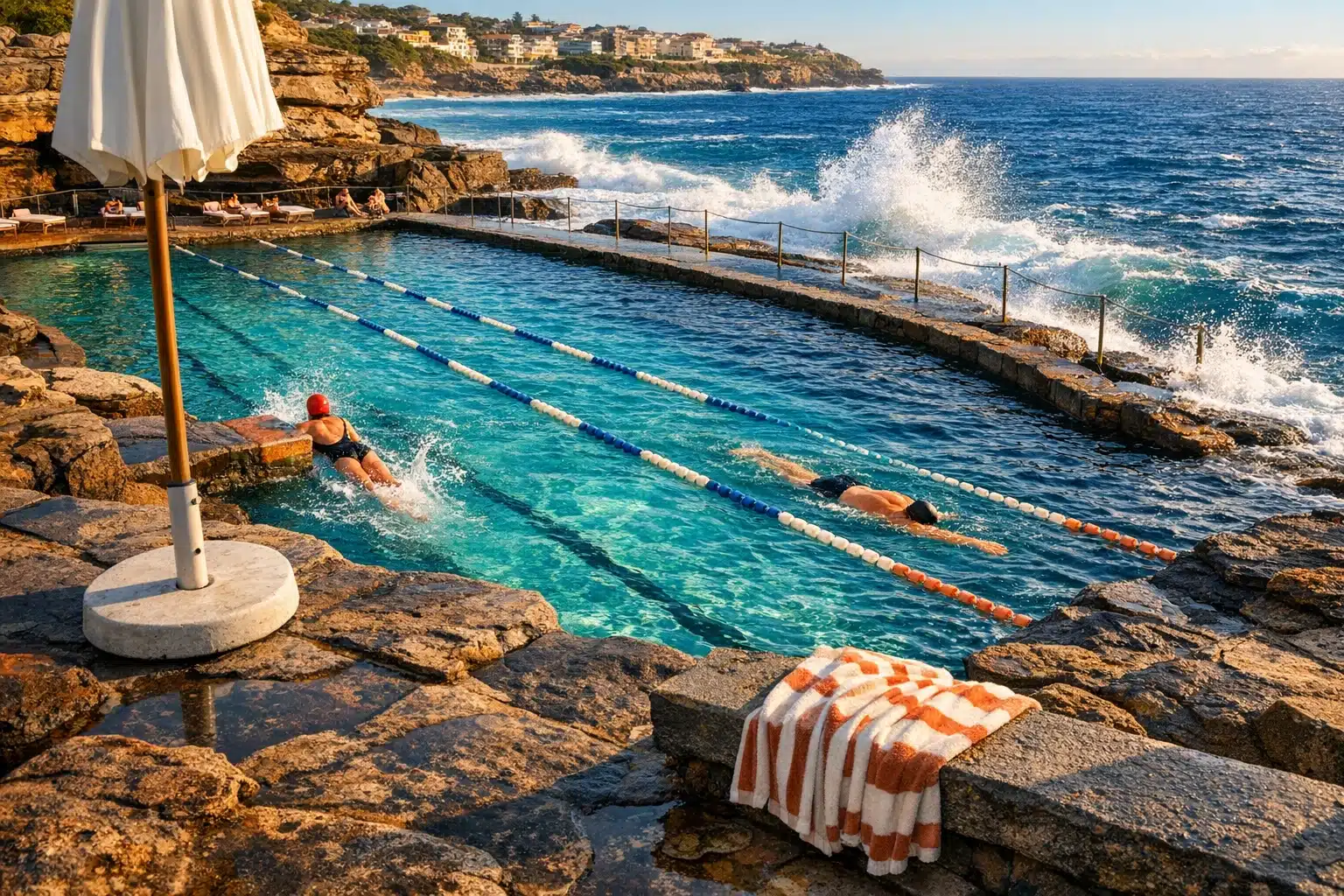
Explore the world of swimming
Swimming sits at a rare intersection of sport, skill, and simple human delight. It can teach a child confidence, give an office worker a low-impact way to train, and offer an athlete a demanding test of control and endurance. Whether you glide through a quiet lake at sunrise or chase split times in a crowded pool, swimming rewards patience, technique, and rhythm in ways few activities can match.
Outline of the article:
- The history and cultural importance of swimming
- The physical and mental benefits of swimming as exercise
- The major strokes, techniques, and skill-building methods
- Safety, equipment, and smart training habits
- How swimming serves different goals and why it remains a lifelong activity
Swimming as a Human Skill, Sport, and Cultural Practice
Swimming is one of the oldest physical skills practiced by human beings, long before it became a timed sport with lanes, whistles, and electronic touchpads. Historical evidence suggests that people swam in ancient Egypt, Greece, Rome, India, and Japan, often for survival, transport, military training, and recreation. In that sense, swimming is unusual: it began as a necessity and later evolved into both art and competition. Many activities follow one path or the other. Swimming somehow managed to keep both.
As an organized sport, swimming took shape in the nineteenth century, especially in Europe, where clubs, public baths, and standardized rules helped turn a basic skill into a measurable athletic discipline. It entered the modern Olympic Games in 1896, and over time expanded into a wide program that now includes multiple strokes, distances, relays, and open-water events. Women’s Olympic swimming followed in 1912, a milestone that helped widen participation and public visibility. Today, swimming is watched globally, taught locally, and practiced by millions who will never race at all.
The cultural reach of swimming is broad because water itself means different things in different places. In coastal communities, swimming may be linked to the sea, fishing culture, and beach life. In cities, it often revolves around public pools, school lessons, and fitness clubs. In some countries, swimming is strongly tied to national sporting success; in others, it is emphasized as a public safety issue because drowning prevention depends heavily on access to lessons. This gives swimming a dual identity:
- It is a form of exercise and recreation.
- It is a life-saving skill with clear social value.
- It is also a competitive sport with elite pathways.
That social value matters. According to major public health and safety organizations, learning to swim can reduce drowning risk, especially when paired with supervision and water-safety education. This makes swimming different from many sports that are beneficial but not essential. A tennis lesson can enrich a life. A swimming lesson can also protect it.
There is also something quietly poetic about the way swimming changes the body’s relationship to movement. On land, gravity dominates every step. In water, the body is suspended, supported, and challenged by resistance from every angle. That is why swimming can feel both ancient and fresh at the same time. It connects people to survival, sport, freedom, and discipline in one continuous motion. Few activities carry that many meanings in such a simple act: enter the water, breathe, and move forward.
Why Swimming Is One of the Most Complete Forms of Exercise
Swimming is often described as a full-body workout, and that label is more than casual praise. Water is far denser than air, so every kick, pull, and body rotation meets constant resistance. At the same time, buoyancy reduces the impact placed on joints compared with many land-based activities. This combination helps explain why swimming can be challenging enough for elite athletes and accessible enough for older adults, people returning from injury, and beginners who want exercise without repeated pounding on knees and hips.
From a cardiovascular perspective, swimming can improve heart and lung function when practiced regularly at an appropriate intensity. Public health guidelines in many countries recommend at least 150 minutes of moderate aerobic activity per week, and swimming can contribute directly to that target. A steady lap session can raise the heart rate, strengthen aerobic capacity, and improve endurance over time. Faster interval work adds another layer by stressing speed, recovery, and pacing. In simple terms, the pool can be gentle on joints while still being serious work for the circulatory system.
Swimming also engages a large range of muscle groups. Freestyle relies heavily on shoulders, back, core, and legs. Breaststroke emphasizes timing and leg drive in a different way. Butterfly demands power and coordination, while backstroke develops body awareness and postural control. Because the body must remain aligned in an unstable environment, the core is active almost constantly. This is one reason swimmers often build balanced strength rather than isolated force in a single area.
The benefits are not only physical. Many swimmers describe the water as a place where mental noise becomes quieter. Rhythmic breathing, repetitive motion, and the muffled sound of the pool can create a calming effect that resembles moving meditation. While swimming is not a cure for stress, it can support mental well-being by offering routine, focus, and a break from screens and crowded schedules.
Common benefits of regular swimming include:
- Improved aerobic fitness and stamina
- Lower-impact movement for joints compared with running
- Greater muscular endurance across the whole body
- Enhanced breath control and coordination
- A structured way to reduce stress and build consistency
Calorie use varies depending on body size, stroke, intensity, and session length, so broad estimates should be treated with caution. Still, moderate to vigorous swimming can contribute meaningfully to weight management when combined with sensible nutrition and regular practice. It also tends to suit people who dislike repetitive gym machines, because every length offers feedback through timing, technique, and feel for the water.
In that sense, swimming is not merely exercise done in a different setting. It changes the workout experience itself. Land asks you to carry yourself. Water asks you to cooperate with it. When that cooperation develops, fitness stops feeling like punishment and starts feeling like skill.
Understanding the Main Strokes and the Role of Technique
If fitness explains why many people begin swimming, technique explains why they stay interested. Swimming is not just about effort; it is about efficiency. Two swimmers can cover the same distance with very different levels of fatigue, and the difference often comes down to body position, timing, breathing, and how cleanly they move through the water. Because water magnifies small mistakes, swimming rewards technical patience in a way few activities do.
The four competitive strokes are freestyle, backstroke, breaststroke, and butterfly. Freestyle, usually swum as front crawl, is generally the fastest and most commonly taught for fitness laps. Its alternating arm action and flutter kick make it efficient over a wide range of distances, but only when the swimmer maintains a long body line and relaxed breathing pattern. Beginners often lift the head too high, which drops the hips and increases drag. A small correction in head position can make a surprising difference.
Backstroke uses a similar alternating pattern but flips the body face-up. Many swimmers find it useful for posture and shoulder rhythm, though it demands strong spatial awareness because the swimmer cannot easily see the wall. Breaststroke is slower but highly technical. Its whip kick, glide phase, and timing sequence require precision, and poor timing can turn the stroke into hard work with little reward. Butterfly is the most physically demanding of the four. It requires coordinated arm recovery, dolphin kick, and body undulation, making it beautiful when executed well and brutally tiring when rushed.
A helpful comparison looks like this:
- Freestyle: fastest, efficient, widely used for fitness and racing
- Backstroke: useful for balance and body awareness, easier breathing position
- Breaststroke: slower pace, technical timing, popular with recreational swimmers
- Butterfly: powerful and advanced, best learned in short, controlled segments
Skill development usually works best when swimmers break the whole stroke into parts. Drills can isolate one element at a time, such as kicking, body rotation, catch position, or bilateral breathing. Coaches often stress streamlining because reducing drag is as important as creating propulsion. A swimmer who learns to move cleanly can improve even before becoming stronger.
Other technical factors matter as well. Starts and turns save time in competition, but even casual swimmers benefit from learning efficient wall push-offs. Breathing rhythm influences relaxation and endurance. Stroke count can reveal whether a swimmer is slipping through the water efficiently or wasting effort. Good technique does not mean looking perfect; it means solving movement problems with control.
This is where swimming becomes especially engaging. Progress is measurable, yet it does not come only from working harder. Sometimes improvement arrives through a quieter lesson: soften the hands, lengthen the reach, wait half a beat before breathing. In the water, tiny changes can open large doors.
Safety, Equipment, and Training Habits That Matter
Swimming is enjoyable and beneficial, but it should never be treated casually when safety is involved. Water is forgiving on joints, not on inattention. Strong swimmers can still misjudge fatigue, temperature, currents, or depth, especially in open water. For beginners, confidence can rise faster than actual skill, which is one reason formal instruction remains so valuable. A swimmer does not need to be fearful, but a respectful mindset is essential.
Pool safety starts with fundamentals: know the depth, follow posted rules, avoid diving in shallow water, and understand lane etiquette. Circle swimming in busy lanes prevents collisions, and resting at the wall rather than in the middle of a lane reduces risk and frustration. Supervision matters even when a lifeguard is present, especially for children. Adults sometimes assume that a crowded pool is automatically a safe pool. It is not. Good supervision is active, not decorative.
Open-water swimming adds another layer of complexity. Lakes, rivers, and oceans introduce currents, waves, changing visibility, and temperature shifts that are absent in most pools. Cold water in particular can affect breathing and muscle control. Weather conditions also matter. Wind can alter surface conditions quickly, and storms raise obvious hazards. Swimmers entering open water should ideally use a buddy system, understand the route, and wear visible gear such as a bright cap or safety buoy when appropriate.
Basic equipment can make the experience safer and more comfortable:
- Well-fitted goggles improve visibility and reduce eye irritation.
- A comfortable swimsuit allows free movement without distraction.
- Swim caps can help with visibility, hygiene, and hair control.
- Kickboards, pull buoys, and fins are useful training tools when used correctly.
- For open water, a tow float or brightly colored cap can increase visibility.
Training habits are just as important as equipment. Many beginners start too fast, lose form, and conclude that swimming is harder than expected. A better approach is to build sessions around short repeats with rest, such as several lengths at a controlled pace. Warm-ups prepare the shoulders and breathing system, while cool-downs help the body return to baseline. Hydration should not be ignored simply because the swimmer is surrounded by water; people still sweat during sessions, especially in warm pools.
Consistency is more useful than heroic but irregular effort. Three manageable sessions a week often produce better results than one punishing workout followed by several missed days. Rest also has value. Shoulder overuse can become an issue in swimmers who increase distance too quickly or ignore technical flaws.
Good swimming habits create a simple but powerful formula: learn the environment, use appropriate gear, train with intention, and respect limits without becoming timid. Safety is not the opposite of enjoyment. In swimming, it is what allows enjoyment to last.
Swimming for Different Goals and a Practical Conclusion for Readers
One of swimming’s strongest qualities is its flexibility. People enter the water for very different reasons, and the activity can adapt to almost all of them. A child may begin with basic lessons to build safety and confidence. A teenager may join a school team and discover competition. An adult with a desk job may use lap swimming to improve fitness without adding impact to sore joints. An older swimmer may value mobility, circulation, and the simple pleasure of moving smoothly in water. The same pool can serve all of them, even though their goals are completely different.
For beginners, the smartest aim is not speed but comfort and control. Learning how to float, exhale underwater, and travel short distances with calm breathing builds a foundation that prevents panic and supports future progress. For fitness swimmers, structure matters more than endless distance. Alternating easy laps, technique work, and moderate intervals often produces better results than mindlessly collecting lengths. Competitive swimmers, meanwhile, focus on details that casual swimmers may overlook: pace awareness, starts, turns, underwater work, and race strategy.
Swimming also suits people with mixed goals. A triathlete may use it for performance. Someone recovering from a stressful workweek may use it for mental reset. Parents may see it as a practical life skill for their children. Travelers may connect it with beaches, lakes, and outdoor adventure. In each case, the water offers something slightly different, which helps explain why swimming remains relevant long after novelty fades.
If you are deciding whether swimming deserves a place in your routine, consider these practical entry points:
- Start with one clear goal: safety, fitness, stress relief, or skill improvement.
- Choose an environment that matches your confidence level, usually a supervised pool.
- Invest first in instruction and consistency rather than fancy accessories.
- Track simple progress markers such as comfort, distance, breathing, or attendance.
- Allow technique to improve gradually instead of expecting instant efficiency.
For the reader who is curious but hesitant, this is the most useful conclusion: swimming does not demand that you begin as an athlete. It asks only that you begin with respect, patience, and a willingness to learn. Over time, the rewards can be wide-ranging: better fitness, more confidence in water, improved coordination, and a reliable way to step out of daily noise. Some sports feel like a contest against the body. Swimming often feels like a conversation with it.
That is why swimming endures. It can be practical, competitive, meditative, social, and deeply personal all at once. For children, it is protection. For adults, it is training with purpose. For older readers, it can be movement that stays available when other forms of exercise feel less inviting. If you are looking for an activity that teaches as much as it strengthens, swimming remains one of the clearest places to start.