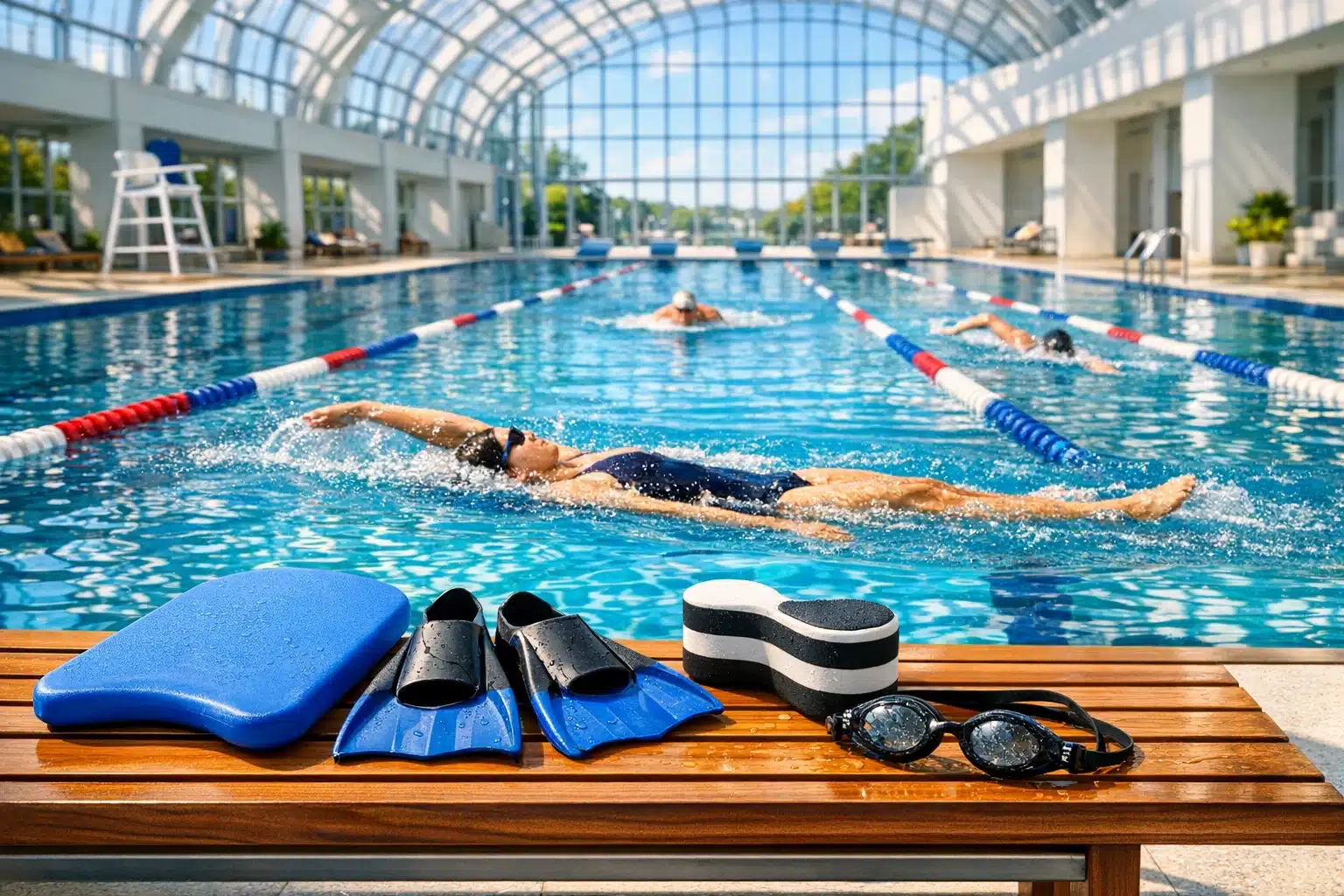
Explore the world of swimming
Swimming sits at the crossroads of sport, life skill, and leisure, which is why it remains relevant from childhood lessons to elite competition. It can challenge the heart and lungs, train nearly every major muscle group, and still feel gentler on joints than many land-based workouts. Just as importantly, confidence in water supports safety, independence, and access to beaches, lakes, and pools that shape everyday recreation around the world.
Outline: this article begins with the broad importance of swimming, then looks at its physical and mental benefits, compares the main strokes and their techniques, explains training methods, gear, and safety, and closes with practical guidance for readers who want to start, improve, or return to the water with a clear plan.
Why Swimming Matters: A Life Skill, a Sport, and a Global Habit
Swimming matters for reasons that go well beyond medals, lap times, or polished technique. At the most basic level, it is a survival skill. Public health organizations, including the World Health Organization, recognize drowning as a major and largely preventable cause of injury-related death, which makes basic water competency more than a hobby. Being able to float, tread water, breathe calmly, and move to safety can change the outcome of an emergency. That alone gives swimming a level of relevance few other sports can claim.
Its importance also comes from range. Some activities are tied to a narrow phase of life or a specific body type, but swimming can serve many people at once. Children often begin with lessons focused on safety and comfort. Adults may use swimming to build fitness, manage stress, or return to exercise after a long break. Older adults frequently appreciate its lower-impact nature, especially when compared with activities that repeatedly load the knees, hips, or lower back. In that sense, swimming is unusually democratic. It meets people where they are, whether they want structured training or a calm half hour in the water after work.
Swimming also has deep cultural and sporting significance. Humans have swum for transport, work, ritual, and recreation for centuries, and the modern Olympic program has included swimming since 1896, with women’s events added in 1912. Today, it spans local learn-to-swim classes, school teams, Masters clubs, triathlon training, para swimming, and open-water events. That breadth is part of its appeal. A single activity can connect a child in a community pool, a retiree doing water exercise, and an elite athlete chasing fractions of a second.
There is another reason swimming remains widely valued: it combines discipline with a certain kind of freedom. Pools are measured, lane lines are orderly, and workouts can be precise, yet the feeling of moving through water often feels less mechanical than moving on land. A few core advantages explain this enduring appeal:
• it blends safety and exercise in one skill
• it can be adapted for recreation, therapy, or competition
• it offers year-round participation in many communities
• it creates social spaces, from swim classes to club training
For readers who wonder whether swimming deserves serious attention, the answer is simple. It is not just a pastime for summer afternoons. It is a practical capability, a public-health asset, and a sport with room for nearly every level of ambition.
Health and Fitness Benefits: What Swimming Does for the Body and Mind
Swimming is often described as a full-body workout, and that label is earned rather than decorative. A typical session recruits the shoulders, chest, back, core, hips, and legs while asking the heart and lungs to keep pace with continuous movement. Unlike many gym routines that isolate one region at a time, swimming links body parts into coordinated patterns. When technique improves, the body does not merely work harder; it works together better. That makes swimming useful not only for conditioning but also for developing rhythm, control, and postural awareness.
One of its most practical strengths is the balance between intensity and joint comfort. Water provides constant resistance, yet buoyancy reduces the effective load on the body. For many people, that means swimming can feel demanding without producing the same pounding associated with repeated impact on hard surfaces. This does not make it effortless, and it does not make it suitable for every injury without guidance, but it does explain why swimming is often recommended as a lower-impact option. People recovering from periods of inactivity, managing body weight, or seeking variety in their training often find it easier to sustain than running or jumping-based exercise.
From a cardiovascular perspective, swimming can help support the same broad goal found in public-health advice: regular moderate to vigorous aerobic activity. Adults are often encouraged to accumulate at least 150 minutes of moderate aerobic exercise per week, and swimming can contribute meaningfully to that target. A steady lap session can raise the heart rate, improve endurance, and challenge breathing control. Faster intervals or demanding strokes such as butterfly can push the intensity much higher. The exact energy cost varies according to stroke, pace, body size, and skill, but there is no doubt that swimming can be a serious aerobic training tool when structured well.
The mental side matters too. Water changes the sensory environment. Noise softens, attention narrows, and breathing becomes deliberate. For some swimmers, that creates a meditative pattern: reach, kick, exhale, turn, repeat. For others, it offers a clear task that cuts through a cluttered day. While swimming is not a replacement for clinical care when mental health support is needed, many people report that regular sessions help them manage stress, regulate mood, and sleep more consistently.
Its benefits are especially visible across different groups:
• beginners can build baseline fitness without complex equipment
• athletes can use swimming for endurance and active recovery
• older adults may appreciate the reduced impact
• people with busy schedules can get an efficient whole-body workout in a relatively short session
In practical terms, swimming rewards patience. The first gains may appear in breathing comfort and coordination before they show up in speed. That progression is part of what makes the activity satisfying. Improvement is not only visible on a stopwatch; it can be felt in smoother strokes, calmer breathing, and the simple pleasure of moving through water with less effort than before.
Main Strokes and Technique: Comparing How Swimmers Move Through Water
Every stroke writes a different sentence on the surface of the pool. Some are quick and narrow, some broad and measured, and some demand timing so exact that a small error can feel like trying to sprint through wet sand. Understanding the major strokes helps swimmers choose the right tool for the right goal, whether that goal is speed, comfort, endurance, or technical development.
Front crawl, often called freestyle in competition, is usually the fastest and most efficient stroke over distance for trained swimmers. Its alternating arm action and flutter kick allow continuous forward motion, which is one reason it dominates races and fitness laps alike. Freestyle rewards streamlined body position, relaxed head alignment, and well-timed side breathing. When beginners struggle with it, the issue is often not strength but coordination. Lifting the head too high, kicking from the knees, or crossing the arms in front can slow the stroke dramatically. Once those habits improve, freestyle often becomes the easiest stroke to maintain over longer distances.
Backstroke shares some mechanical features with freestyle, including alternating arm action and a flutter kick, but it changes the breathing and orientation entirely. Because the face stays above the water, many swimmers find breathing less stressful. At the same time, swimming on the back introduces new challenges: keeping the hips high, rotating through the torso, and traveling straight without seeing where you are going. Backstroke can feel freeing, almost like gliding under an open ceiling, but in a crowded lane it also demands awareness and control.
Breaststroke is often popular with recreational swimmers because the head rises regularly and the pace feels more conversational. Yet it is not a simple stroke when taught correctly. The timing of pull, breath, kick, and glide must be carefully sequenced. A rushed breaststroke becomes tiring and inefficient very quickly. When done well, it can be smooth and sustainable, but it is generally slower than freestyle and backstroke over the same distance.
Butterfly is the most dramatic and, for many swimmers, the most technically demanding of the four competitive strokes. Both arms recover together, the body undulates, and the kick usually comes in a paired dolphin rhythm. Butterfly is powerful, but it punishes mistimed breathing and poor body position. New swimmers often see it as a strength event, yet experienced coaches know it is just as much about timing and wave-like coordination.
A simple comparison helps:
• freestyle: fastest, efficient, ideal for fitness and distance
• backstroke: easier breathing, useful for balance and posture, harder to steer
• breaststroke: comfortable pacing, technical timing, generally slower
• butterfly: powerful and impressive, but demanding on fitness and technique
Across all strokes, a few principles remain constant. Streamlining reduces drag. Controlled exhalation makes breathing easier. Body rotation can add efficiency. Good timing saves energy better than brute force. That last point matters especially for new swimmers. Progress often arrives when movement becomes quieter, not just more forceful. In water, elegance is not decoration; it is efficiency made visible.
Learning, Training, Gear, and Safety: Building Skill the Smart Way
Learning to swim well is usually less about bravery than about sequence. Many people assume they must simply “get used to the water,” but real progress comes from breaking the skill into manageable parts. Comfort with submerging the face, controlled exhalation, floating, kicking with support, and basic arm patterns all create a foundation. Lessons matter because they shorten the trial-and-error phase. A good instructor can spot issues that a swimmer cannot easily feel, such as a sinking head position, tense ankles, or breath-holding that turns every length into a struggle.
Once the basics are in place, training becomes far more productive when it has structure. Random laps can still provide exercise, but even a simple plan leads to better improvement. A balanced swim session often includes a warm-up, a technical focus, a main set, and a cool-down. For example, a beginner workout might include easy lengths, short kick drills with a board, a few repetitions of controlled freestyle, and rest intervals long enough to maintain form. Intermediate swimmers may add pull work, pacing sets, or mixed-stroke training. Competitive swimmers use highly specific programs that target endurance, speed, turns, starts, and race strategy.
Gear can help, but it should support technique rather than replace it. A few basics go a long way:
• goggles improve comfort and visibility
• a well-fitted suit reduces distraction
• a swim cap can keep hair managed and reduce drag slightly
• a kickboard isolates leg work
• a pull buoy shifts attention to body position and the upper body
• fins may help beginners feel alignment and propulsion, though overuse can mask flaws
More advanced tools, such as paddles, tempo trainers, or resistance equipment, have a place, but they are best introduced with purpose. Bigger gear does not automatically mean better training. In fact, too much assistance can hide weaknesses that deserve correction.
Safety deserves equal weight. Pool swimming and open-water swimming are not the same environment, and each requires judgment. In pools, lane etiquette, depth awareness, and basic hygiene are essential. In lakes, rivers, or the sea, swimmers also need to consider currents, water temperature, visibility, entry and exit points, and whether a lifeguard is present. A confident pool swimmer can be surprised by open-water conditions very quickly.
Strong safety habits are simple but non-negotiable:
• never overestimate your ability
• supervise children closely and continuously near water
• do not swim alone in unfamiliar places
• learn how weather, waves, and currents affect open water
• stop if you feel pain, dizziness, or unusual fatigue
• respect local rules and lifeguard instructions
The smartest approach to swimming is steady, not dramatic. Technique improves through repetition with feedback. Fitness builds through consistency rather than heroic one-off sessions. Safety grows from honest self-assessment. Put those elements together, and swimming becomes not just possible, but reliably rewarding.
Swimming for Different Goals: A Conclusion for New and Returning Swimmers
One of swimming’s greatest strengths is that it does not force everyone into the same definition of success. For one person, success may mean learning to float without panic. For another, it may be completing a kilometer without stopping, racing in a local meet, training for triathlon, or simply finding an exercise routine that feels sustainable after years of inconsistency. That flexibility makes swimming unusually useful in real life, where goals shift with age, work, health, and access to facilities.
If you are new to swimming, the first priority should be comfort and safety rather than speed. There is no benefit in chasing long distances while basic breathing still feels chaotic. A few well-taught lessons can save months of frustration. If you already know the basics but want better fitness, consistency matters more than complexity. Two or three purposeful sessions per week often do more than an occasional exhausting workout followed by long gaps. If you are returning after years away, expect the water to feel unfamiliar at first. Skills usually come back faster than many people expect, but patience is still part of the process.
Swimming also fits different personalities. Some people love the quiet repetition of lane swimming. Others need the social structure of a club, class, or coach on deck. Some enjoy the measured certainty of a 25-meter pool, while others are drawn to open water, where distance is felt as much as counted. None of these choices is inherently better. The right version of swimming is the one that keeps you engaged, safe, and willing to come back next week.
There are, of course, practical barriers. Pool access can be limited. Lessons may cost money. Adults sometimes feel self-conscious about starting late. These are real concerns, not excuses. Still, swimming remains one of the more adaptable activities available. Community pools, public programs, off-peak lane times, and beginner-friendly classes often provide workable entry points. Progress does not require a perfect environment; it requires a realistic plan.
For the reader deciding whether swimming deserves a place in daily or weekly life, the case is strong. It develops a skill with safety value, supports cardiovascular health, challenges the whole body, and offers options ranging from gentle movement to serious athletic training. Start where you are. Learn the basics well. Build stamina gradually. Respect the water even as you grow more comfortable in it. That is the practical heart of swimming, and it is exactly why so many people stay with it for years.