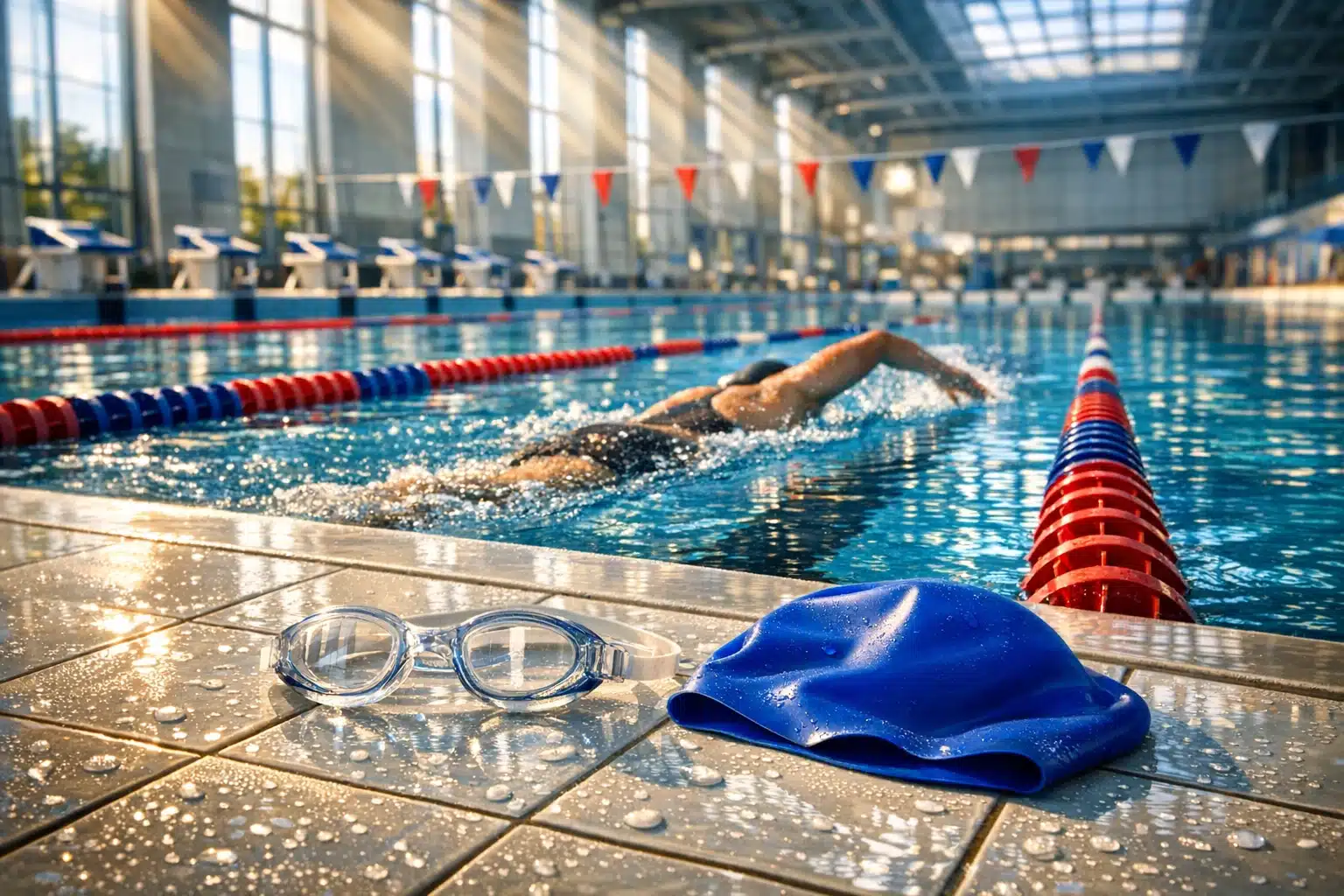
Explore the world of swimming
Swimming sits at a rare crossroads where skill, fitness, safety, and joy meet in one body of water. It can be a lifesaving ability, a low-impact workout, a competitive sport, and a quiet escape from noisy routines. From a child learning to float to an adult training for open-water races, the pool offers room to grow at every level. This guide maps the essentials and the deeper layers, so each lap makes a little more sense.
Outline: this article begins with why swimming matters in history and modern life, then moves into stroke technique and the physics of moving through water. Next comes a close look at fitness, health, and mental well-being, followed by a practical section on training, safety, and steady improvement. The final section explores equipment, competition formats, and the ways people keep swimming enjoyable for years rather than weeks.
Why Swimming Matters Beyond the Pool
Swimming is one of those human activities that feels both ancient and immediate. Long before lane ropes, stopwatches, and sleek goggles, people entered water to travel, gather food, stay alive, and cool down in hard climates. Archaeological and historical evidence shows that humans have been swimming for thousands of years, and that long relationship still shapes how the sport is viewed today. Unlike a niche pastime that depends on fashion, swimming remains relevant because it sits at the overlap of recreation, public safety, fitness, and competition. A tennis racket can stay in a closet without much consequence, but the ability to float, breathe calmly, and move through water can genuinely matter in everyday life.
Its importance also grows from its unusual versatility. A beginner can treat swimming as confidence-building movement, while an elite athlete can turn it into a precise science of pacing, biomechanics, and race strategy. Public health experts often encourage water familiarity because drowning remains a serious risk in many countries, especially for children and inexperienced adults around pools, rivers, lakes, and coastlines. Lessons do not make anyone invincible, but they can improve comfort, judgment, and reaction in aquatic settings. That practical side gives swimming a significance that many sports simply do not carry.
Swimming also has a remarkable social footprint. It appears in school programs, community centers, rehabilitation clinics, summer traditions, military training, triathlons, and the Olympic Games. Competitive swimming was part of the first modern Olympics in 1896, and women’s Olympic swimming events followed in 1912, showing how the sport gradually expanded its reach. Today, people encounter swimming in different forms:
• learn-to-swim classes for children
• lap swimming for fitness
• masters programs for adults
• open-water races and triathlons
• therapy and recovery sessions
There is something quietly democratic about water. In a pool, titles and job descriptions fade beneath a swim cap. The water does not care whether a person is a student, retiree, surgeon, or cashier; it responds to balance, rhythm, and effort. That simple fairness is part of the sport’s enduring pull. Swimming matters because it teaches self-control, rewards patience, and gives back in many currencies at once: health, skill, calm, safety, and sometimes a little hard-earned pride at the wall after a difficult set.
Understanding the Strokes and the Craft of Technique
At first glance, swimming can look deceptively simple. Arms move, legs kick, and the swimmer travels from one end of the pool to the other. In reality, technique is the difference between gliding like a clean arrow and feeling as if the water has turned into wet cement. Because water is far denser than air, small technical errors create noticeable drag. A dropped elbow, rushed breath, or mistimed kick can waste energy quickly. That is why swimmers, from novices to Olympians, spend enormous amounts of time refining details that spectators may barely notice.
Competitive swimming formally recognizes four strokes: freestyle, backstroke, breaststroke, and butterfly. Freestyle, usually swum as front crawl, is generally the fastest because it combines efficient body rotation with continuous propulsion. Backstroke mirrors some of that rhythm but places the swimmer face-up, changing balance, breathing, and navigation. Breaststroke is slower but highly technical, with a unique pull-kick-glide timing that punishes impatience. Butterfly is often seen as the most physically demanding, pairing a symmetrical arm recovery with a wave-like body motion that requires coordination more than brute force alone.
Good technique begins with body position. Swimmers who stay long and level in the water reduce resistance and preserve momentum. Breathing is another major separator. New swimmers often lift the head too high to inhale, which makes the hips sink and turns each breath into a braking action. Skilled swimmers rotate or time the breath so the inhale feels woven into the stroke rather than bolted onto it. Coaches often return to a few core ideas:
• maintain a streamlined line from head to hips
• exhale steadily underwater instead of holding tension
• catch water with purpose rather than slapping at the surface
• keep the kick supportive, not frantic
Each stroke asks different questions of the body. Freestyle rewards rotation and a strong underwater pull. Backstroke tests spatial awareness and steady rhythm. Breaststroke demands timing and flexibility, especially through the ankles and hips. Butterfly asks for pulse, tempo, and confidence under fatigue. Comparing them is like comparing musical instruments: all can play the same distance, but each has its own sound, difficulty, and style. Technique work, drills, and patient repetition are what turn splashing into swimming. That is also what makes the sport satisfying. Improvement is visible, measurable, and strangely elegant when it clicks. One day the water feels argumentative; the next day it feels like a conversation.
Health, Fitness, and the Mental Rewards of Time in Water
Swimming has a reputation as a “full-body workout,” and in this case the phrase is not just a lazy cliché. The sport recruits the shoulders, back, chest, core, hips, and legs while asking the heart and lungs to support sustained movement. Water adds resistance in every direction, so even controlled movement has a training effect. At the same time, buoyancy reduces impact on joints compared with many land-based activities, which is one reason swimming is often recommended for people who want exercise with less pounding on knees, ankles, or hips. That does not mean it is easy; it means the challenge arrives in a different shape.
For general health, swimming aligns well with widely accepted fitness guidance. Organizations such as the World Health Organization recommend at least 150 minutes of moderate aerobic activity per week for adults, and lap swimming can contribute meaningfully to that total. Intensity is flexible. A relaxed session of drills and easy lengths may help a beginner build endurance, while harder interval sets can push trained swimmers into demanding cardiovascular work. Unlike some gym routines that isolate body parts, swimming tends to train systems working together: breathing, posture, timing, muscular endurance, and pacing.
The benefits are not only physical. Many swimmers talk about the mental reset that comes from the repetitive sound of bubbles, the narrow focus of a black line on the pool floor, and the clear, countable nature of each lap. For some, it functions almost like moving meditation. There is structure without noise. The mind has just enough to manage that anxious clutter often loses its grip. Research on exercise more broadly supports links between regular physical activity and improved mood, stress regulation, and sleep quality, and swimming often fits that pattern well.
It can also serve different populations effectively:
• older adults looking for sustainable movement
• people returning from certain injuries with professional guidance
• athletes cross-training to reduce repetitive impact
• beginners who prefer skill-based exercise over crowded gym culture
One useful nuance is that effort in water does not always feel identical to effort on land. Heart rate can behave differently during swimming because of body position, cooling, and water pressure, so runners or cyclists should not assume that the same numbers tell the same story. Learning to judge pace by breathing, stroke control, and repeat consistency is part of becoming a smarter swimmer. Done regularly, swimming offers a rare package: conditioning, strength, mobility, stress relief, and the satisfying sense that the body has worked hard without being hammered by the ground.
Training Smart, Staying Safe, and Building Real Progress
Swimming rewards consistency more than heroic one-off effort. Many people enter the pool expecting immediate fluency, then feel frustrated when they become breathless after a few lengths. That reaction is common, and it usually says less about fitness than about unfamiliar mechanics. Water punishes tension and poor timing. A new swimmer who can run for miles may still struggle with relaxed breathing or horizontal balance. Real progress comes from dividing the skill into manageable pieces and practicing them without ego.
A sensible beginner path often starts with comfort before speed. Floating, exhaling underwater, pushing off the wall in a streamlined shape, and learning how to stand calmly after a breath are not minor basics; they are the foundation. From there, short repeats with rest tend to work better than one long, discouraging grind. A simple session might include:
• 5 to 10 minutes of easy warm-up and water adjustment
• short kick or glide drills
• several repeats of 25 or 50 meters with rest between efforts
• one focused technique goal, such as smoother breathing
• a relaxed cool-down
As swimmers improve, training can become more structured through interval sets, pacing work, stroke drills, and aerobic endurance sessions. More advanced athletes may use tools like pace clocks, stroke counts, and split times to measure efficiency. Yet training hard is only half the story. Safety matters in every aquatic setting. In pools, that means understanding depth, lane etiquette, signage, and personal limits. In open water, the list gets longer: temperature, currents, visibility, weather, boat traffic, and navigation all change the risk profile. Open water can feel magnificent, but it should be approached with respect rather than romance.
Practical safety habits are not glamorous, but they matter:
• swim where supervision or lifeguards are available when possible
• avoid unfamiliar water alone
• use bright caps or visible safety buoys in open water
• learn local conditions, especially tides and currents
• stop early if dizziness, cramping, or panic begins to build
Research and public safety guidance consistently suggest that formal swim lessons can reduce risk for children and improve competence for adults, though no lesson removes the need for supervision and caution. That balance is important. Confidence is useful; overconfidence is dangerous. The strongest swimmers often look calm not because they assume nothing can go wrong, but because they prepare well and respond early. Progress in swimming is rarely dramatic from day to day. It is more like watching a shoreline appear through morning mist: first vague, then definite, then suddenly close enough to touch.
Gear, Competition, and Keeping Swimming Enjoyable for Life
Swimming does not require endless equipment, which is part of its charm, but the right gear can make learning and training noticeably easier. For most people, the essentials are straightforward: a comfortable swimsuit, goggles that seal well, and access to safe water. A swim cap is optional in some settings yet useful for keeping hair contained and reducing drag. Beyond that, training tools can help target specific skills. Kickboards isolate lower-body work, pull buoys shift emphasis toward the upper body, fins can support body position and ankle movement, and hand paddles add resistance for experienced swimmers who can maintain sound technique.
Equipment, however, should support skill rather than replace it. A swimmer who relies on fins for every set may feel fast but miss the chance to develop a natural kick and balanced body line. Good goggles matter more than expensive gadgets. Comfort matters more than looking elite. That practical truth extends into competition formats too. Swimming offers several pathways, and each creates a different experience:
• pool racing in sprints and distance events
• open-water swimming in lakes, rivers, or the sea
• triathlon, where swimming begins a multi-sport challenge
• masters swimming for adults who want training and community
• recreational lap swimming with personal goals rather than medals
Pool competition is controlled and measurable. Distances are fixed, walls provide turns, and times can be compared cleanly across meets. Open water is more adventurous and less predictable. Sighting, drafting, temperature, chop, and nerves all become part of the event. One format feels like architecture; the other feels like weather. Neither is inherently better. They simply reward different strengths. Some swimmers love the clean mathematics of a 50-meter split. Others want sunrise on a lake and the strange thrill of not seeing the bottom.
The real long game is sustainability. People stay with swimming when it fits their lives rather than fighting them. That may mean early-morning laps before work, family sessions on weekends, masters practice twice a week, or casual lengths for recovery after another sport. Improvement helps, but enjoyment keeps the habit alive. The beauty of swimming is that it can age with a person. It can be playful at eight, ambitious at twenty-five, restorative at fifty, and quietly essential at seventy. Few activities travel so well across a whole lifetime.
Conclusion for Readers Ready to Get in the Water
For beginners, swimming offers a skill that can improve safety and open the door to lifelong exercise. For recreational athletes, it provides a demanding but joint-friendly way to build endurance, control breathing, and sharpen discipline. For experienced swimmers, the sport remains deep enough to reward technical curiosity for years. If you are wondering whether swimming is worth the effort, the honest answer is simple: start small, learn well, stay patient, and let the water teach you one length at a time.