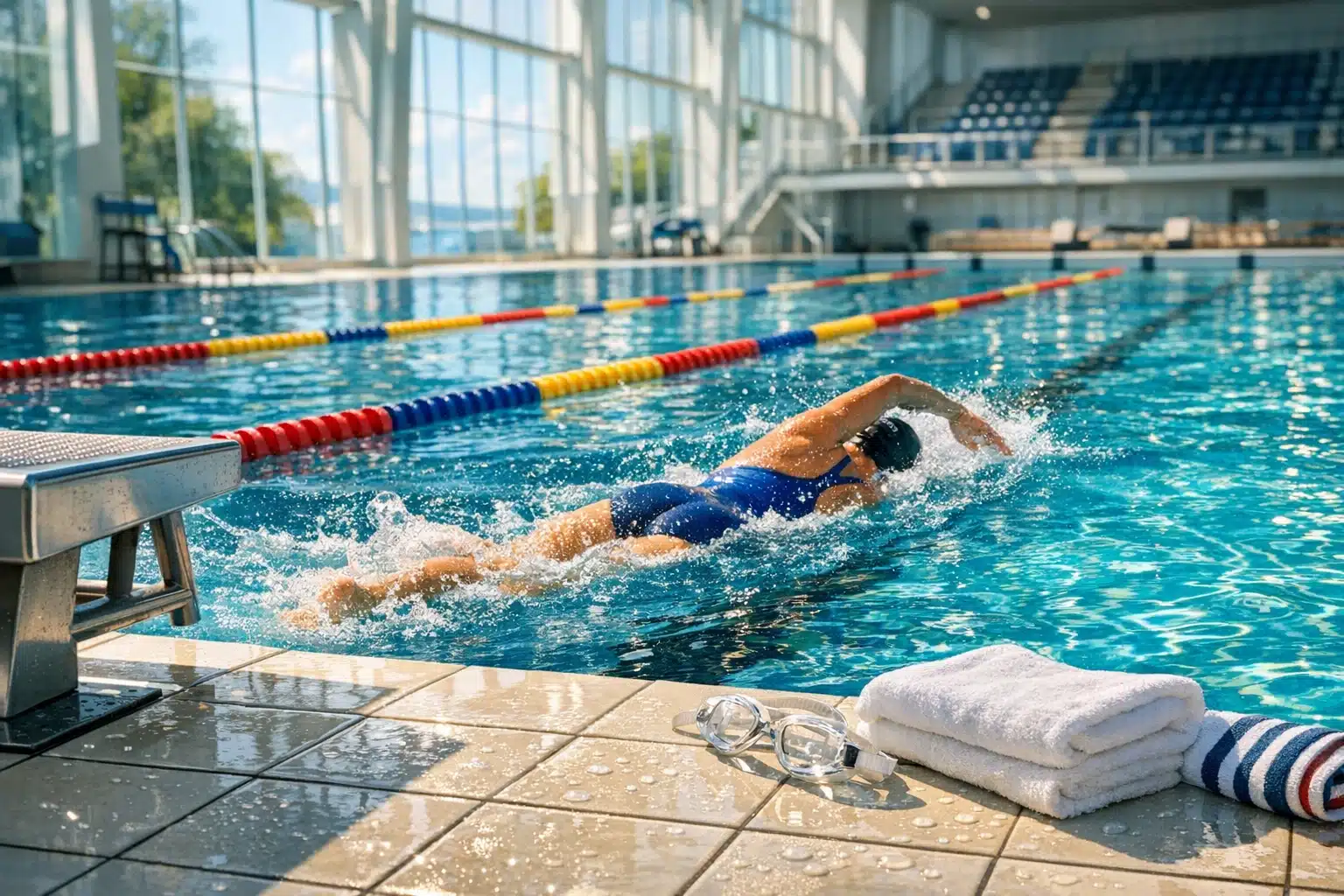
Explore the world of swimming
Introduction and Outline: Why Swimming Matters
Swimming occupies a rare space in sport: it can test an elite racer, rebuild confidence after injury, and teach a child a skill that may one day save a life. Water supports the body while resisting every movement, so the pool becomes both playground and training ground. This article maps the essentials of swimming, from technique and fitness to safety, equipment, and the many ways people make it part of daily life.
Few activities combine usefulness and enjoyment as naturally as swimming. It serves as recreation on a hot afternoon, structured exercise in a training lane, therapy for people managing joint stress, and a practical survival skill in everyday life. That range gives swimming unusual relevance. A person may begin with a simple goal such as learning to float and later discover better stamina, sharper discipline, and a calm mind that arrives somewhere between the first push off the wall and the final easy glide. Unlike many land-based sports, swimming asks the body to cooperate with an environment that does not forgive panic or poor timing, which is exactly why learning it can be so rewarding.
Swimming also stands out because water changes the rules of movement. In the air, a rushed motion might simply look awkward; in the pool, it creates drag and wastes energy immediately. Efficient swimmers learn to respect body position, breathing, rhythm, and balance. Strength helps, but technique often matters even more. That is good news for beginners, because improvement does not depend only on natural power. Small changes such as lifting the elbows correctly, exhaling underwater, or keeping the hips near the surface can make the difference between fighting the water and moving through it with purpose.
The article follows a practical outline so readers can build understanding step by step.
- First, it explains the main strokes and how each one works.
- Next, it looks at the physical and mental benefits that keep swimmers coming back.
- Then, it covers safety, basic equipment, and the learning path for new swimmers.
- Finally, it explores how swimming fits different lifestyles, from leisure and fitness to competition and open water.
Whether you are a parent considering lessons, an adult returning to the pool after years away, or a fitness-minded reader searching for a sustainable activity, swimming deserves a closer look. It is one of those rare disciplines where practical skill, graceful movement, and long-term health meet in the same lane.
Understanding the Main Strokes and the Mechanics of Efficient Movement
Swimming looks smooth when done well, yet that smoothness rests on a surprisingly technical foundation. Water is far denser than air, which means every misplaced hand entry, every dropped hip, and every breath taken too late creates resistance. Swimmers often describe the goal as “holding the water,” but a better image may be this: you are shaping your body into the most efficient vessel you can, then asking it to stay long, balanced, and coordinated while the water tries to slow it down. That is why stroke technique matters so much. A modest athlete with good mechanics often travels farther and more comfortably than a stronger athlete who thrashes.
Freestyle, commonly taught as front crawl, is usually the fastest and most efficient stroke for covering distance. Its alternating arm action and flutter kick allow for steady momentum, and its side breathing pattern lets swimmers maintain a streamlined body line. When freestyle works, it feels like the swimmer is reaching forward into empty space and then pulling a quiet line beneath the body. When it fails, common problems appear quickly: the head lifts, the legs sink, breathing becomes rushed, and the stroke turns into hard labor. Good freestyle depends on rotation through the torso, a relaxed recovery above the water, and an underwater pull that moves back rather than down.
Backstroke shares several features with freestyle but places the swimmer on the back, which changes the experience in important ways. Breathing is easier because the face stays above the surface, making the stroke appealing to learners who still feel uneasy about inhaling around splashing water. At the same time, backstroke demands spatial awareness, since swimmers cannot see where they are going without counting strokes or using lane markers. It develops shoulder coordination, body rotation, and a strong flutter kick, yet it also rewards a calm head position and stable hips.
Breaststroke is often the stroke casual swimmers recognize first, partly because the head can rise more frequently and the pace seems gentler. In reality, it is highly technical. Timing matters enormously: pull, breathe, kick, glide. If the kick starts too early or the body line collapses during the breath, momentum disappears almost at once. Breaststroke is slower than freestyle in racing terms, but many swimmers enjoy its rhythm and clear pattern. It can feel almost conversational when done efficiently.
Butterfly is the most visually dramatic of the four competitive strokes, with simultaneous arm recovery and a wave-like body motion powered by the dolphin kick. It is also the most demanding for many swimmers, requiring strength, timing, and relaxation under stress. Beginners often assume butterfly is mainly about force, but experienced coaches know the opposite is closer to the truth: the stroke improves when movement becomes better timed, less frantic, and more connected from chest to hips to feet.
Across all strokes, several principles repeat.
- Body position should remain as long and level as possible.
- Breathing must fit the stroke rhythm rather than interrupt it.
- Propulsion works best when the hands and feet apply pressure with purpose, not panic.
- Efficiency grows when tension decreases.
That last point matters more than many newcomers expect. In swimming, trying harder is not always the same as moving better. Often the breakthrough comes when the swimmer stops wrestling the water and starts working with it.
Health, Fitness, and Mental Benefits Across the Lifespan
Swimming earns its reputation as excellent exercise because it combines cardiovascular work, muscular engagement, and controlled breathing in one activity. A steady lap session challenges the heart and lungs, while the arms, back, core, hips, and legs all contribute to forward movement. Unlike some gym routines that isolate one area at a time, swimming spreads the demand across the whole body. That does not mean every session must be hard. A gentle swim can support recovery and mobility, while an interval set with short rest periods can feel every bit as demanding as a run or cycling workout. The intensity depends on pace, stroke choice, distance, and rest structure.
One reason swimming remains popular across age groups is its low-impact nature. Water buoyancy reduces stress on joints, which can make movement more comfortable for people with arthritis, excess body weight, or a history of impact-related discomfort. For that reason, swimming and water exercise are often recommended as part of broader fitness plans, though personal medical guidance still matters when someone is managing a condition or returning after injury. The pool can be forgiving, but it is not effortless. Muscles still work against constant resistance, and the resistance comes from all directions. That is what gives swimming its distinctive training effect: the workout can feel kind to the joints while still being demanding to the body.
There is also a practical public-health angle. Health guidelines in many countries encourage adults to accumulate regular moderate or vigorous physical activity each week, and swimming can help meet that target in a way some people find more enjoyable than repetitive land exercise. Because pace is adjustable, a swimmer can progress gradually. A beginner might start with short lengths and frequent rests; an experienced lap swimmer may build structured sessions around drills, aerobic endurance, and sprint work.
The mental benefits deserve equal attention. Swimming has a rhythm that many people find settling. The repeated cycles of stroke and breath can narrow focus and reduce mental clutter. In a noisy week, a pool often feels strangely honest: no alerts, no crowded to-do list, just the sound of water and the immediate feedback of movement. That meditative quality does not erase stress, but it can make stress easier to manage. People also gain confidence from measurable progress. The first unbroken length, the first correct tumble turn, or the first time open water feels manageable can leave a strong impression because the improvement is felt, not merely recorded.
Different groups benefit in different ways.
- Children gain water familiarity, coordination, and an important safety skill.
- Adults often value swimming for fitness, stress relief, and schedule flexibility.
- Older swimmers may appreciate the lower impact and the way technique rewards patience.
- Athletes from other sports use it for conditioning, recovery, or cross-training variety.
Perhaps the best argument for swimming is not that it does one thing better than every other activity, but that it does many things well at once. It trains the body, asks the mind to focus, and remains adaptable enough to follow a person through different seasons of life.
Safety, Equipment, and the Learning Path for Beginners
Swimming’s appeal should never obscure a simple truth: water demands respect. Confidence grows through learning, not assumption. A person who can move a short distance in a warm pool is not automatically prepared for deep water, strong currents, waves, cold temperatures, or fatigue. That is why water safety belongs at the center of any honest discussion about swimming. Skill and judgment must develop together. For children, constant supervision remains essential. For adults, overestimating ability is a common mistake, especially after long breaks from regular swimming.
Several safety habits matter in almost every setting. Swimmers should learn the depth of the water before entering, pay attention to posted rules, and avoid swimming alone when possible. In open water, conditions become even more important: visibility, water temperature, weather changes, boat traffic, and current direction can alter difficulty quickly. Pool swimmers sometimes forget how much the environment helps them. A lane line, wall, predictable depth, and lifeguard create structure. Lakes, rivers, and the sea offer beauty, but they also remove many of those protections.
- Choose supervised locations whenever available.
- Warm up before harder efforts, especially in cool water.
- Rest at the first signs of dizziness, cramping, or unusual breathlessness.
- Use flotation aids for learning when appropriate, but do not mistake them for true swimming ability.
- Teach children that rules around water are not optional.
Equipment can help, though beginners do not need a large collection. A comfortable swimsuit and well-fitting goggles usually come first. Goggles improve visibility and reduce eye irritation, allowing new swimmers to keep the face in the water more comfortably. Swim caps are useful for people with long hair or for those training regularly, but they are not mandatory for everyone. Kickboards support drill work, helping swimmers isolate the legs or practice body position. Pull buoys allow focus on the upper body by reducing leg involvement. Fins can improve ankle awareness and make drills more approachable, though they should support technique rather than cover up poor habits. More specialized tools such as hand paddles are better introduced later and ideally with coaching, because improper use can overload the shoulders.
The learning process works best when broken into manageable stages. First comes water comfort: entering the pool calmly, submerging the face, and exhaling underwater without tension. Then come floating and balance, which teach the swimmer that the water can support the body when posture improves. Kicking and streamlined gliding usually follow. Only after those basics feel more natural does coordinated stroke work begin in earnest. Lessons often seem slow to impatient adults, yet that slower sequence is sensible. If breathing is panicked or floating is unstable, every later skill becomes harder than it needs to be.
Good instruction shortens the learning curve because teachers can spot errors that learners rarely notice on their own. A coach may see that the head lifts before every breath, the kick bends too much at the knees, or the hands cross the center line underwater. These are small details with large consequences. In swimming, progress often arrives through refinement rather than dramatic change. The beginner who accepts that process usually improves faster than the one who tries to skip it.
From Leisure Lanes to Competition: Finding Your Place in Swimming and Final Takeaways
One of swimming’s quiet strengths is that it does not demand a single identity from the people who practice it. Some swim to relax after work. Some train for races measured to the hundredth of a second. Some join masters groups for fitness and community. Others drift toward triathlon, surf entries, or open-water events where the black line at the bottom of the pool is replaced by a shifting horizon. Swimming makes room for all of them. That flexibility helps explain its staying power. People can change goals without abandoning the activity itself.
Recreational swimming often begins with comfort and enjoyment. A person may use a local pool for casual laps, water play with family, or gentle exercise that feels sustainable rather than punishing. In this setting, progress can mean many things: moving more smoothly, resting less between lengths, or simply feeling more at ease in deeper water. There is real value in that kind of development. Not every meaningful achievement needs a medal or a stopwatch.
Competitive swimming offers a different appeal. It turns technique into measurable performance and teaches the discipline of repeated practice. Training sets build endurance, speed, and pacing awareness. Starts, turns, underwater phases, and stroke efficiency become decisive details. In formal competition, even tiny technical gains matter because races are often close. Yet competition is not only about results. It also teaches patience, because improvement usually arrives gradually through many sessions that look ordinary from the outside. A swimmer may spend weeks refining a turn or adjusting a breathing pattern before the benefit finally appears in race time.
Open-water swimming introduces another dimension. Without lane ropes and walls, navigation, sighting, and environmental judgment become part of the challenge. Many swimmers find it exhilarating because the experience feels larger and less controlled than pool work. The water can appear calm one minute and lively the next, and that unpredictability demands humility. It also adds a sense of adventure that some athletes find irresistible. Proper preparation is essential here: visible swim caps, knowledge of local conditions, and group support are far more than accessories.
For readers wondering where to begin, the answer depends less on image and more on purpose.
- If you want a life skill, start with lessons that emphasize comfort, floating, breathing, and safety.
- If you want fitness, build a simple lap routine and track consistency before intensity.
- If you want challenge, join a coached group and learn how structured sessions work.
- If you want variety, explore different strokes and settings instead of swimming one way forever.
The best conclusion for most readers is straightforward. Swimming rewards patience, respect, and repetition. It can be playful, rigorous, social, solitary, practical, or ambitious, sometimes all within the same month. For beginners, the goal should be confidence built on sound basics. For returning adults, the smartest move is to focus on technique before ego. For dedicated athletes, the long game still matters: efficient habits outlast bursts of effort. Step into the water with curiosity, and swimming has a way of giving back for years.