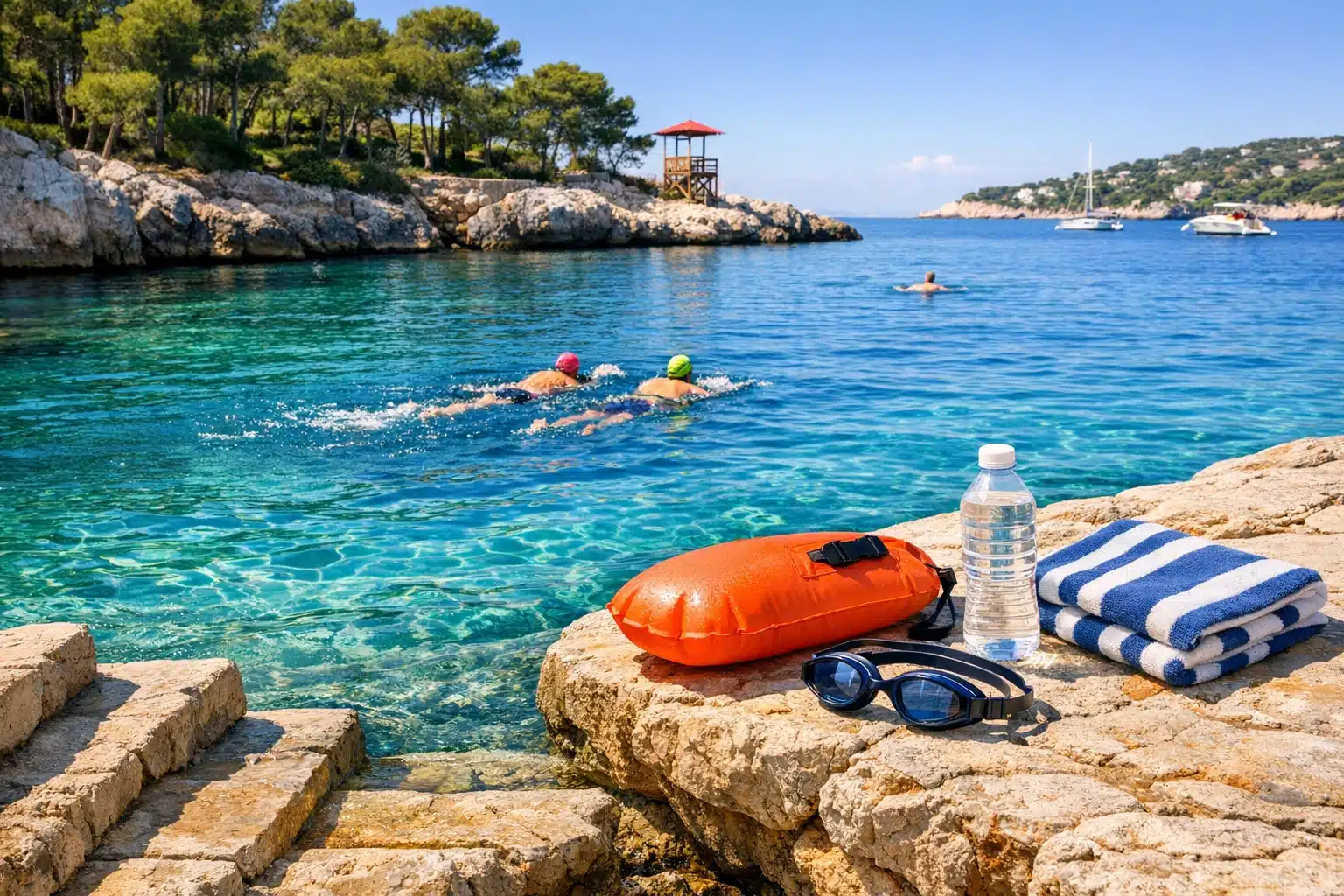
Explore the world of swimming
Swimming is more than a way to cross water; it is a life skill, a competitive sport, and a steady form of exercise for people of many ages. In a pool, lake, or along a quiet shoreline, it asks the body to work while sparing the joints from the pounding common in land-based training. That rare blend of challenge, safety value, and broad appeal keeps swimming relevant in schools, fitness plans, rehabilitation programs, and elite sport worldwide.
Outline: 1) swimming as a human skill and modern sport; 2) physical and mental benefits; 3) comparison of the main strokes; 4) training habits, equipment, and safety; 5) a practical conclusion for beginners, families, and goal-oriented swimmers.
Swimming as a Life Skill, Exercise, and Global Sport
Swimming occupies a rare place in human life because it serves several purposes at once. At its most practical level, it is a safety skill. A person who can float, breathe calmly, and move through water has a better chance of handling an unexpected fall into a pool, river, or shoreline break. At the same time, swimming is a form of recreation, a tool for structured exercise, and one of the oldest organized sports in the world. Ancient art and written records show that people have been swimming for thousands of years, but modern swimming has become highly systematized through lessons, lane etiquette, national governing bodies, and international competition.
What makes swimming distinctive is the environment itself. On land, gravity dominates every movement. In water, buoyancy reduces the load placed on bones and joints, while drag creates resistance in nearly every direction. Water is far denser than air, which means even simple movements demand control and energy. That is why a quiet lap session can feel gentle on the knees yet surprisingly tiring for the lungs and shoulders. In comparison with activities such as jogging or field sports, swimming tends to produce less impact stress. In comparison with gym-based strength work, it asks the entire body to coordinate continuously rather than move in short, isolated efforts.
Swimming also branches into several worlds. Competitive pool swimming centers on measured distances, legal stroke rules, turns, starts, and pacing. Open-water swimming brings in currents, temperature, visibility, and navigation, turning the environment into part of the challenge. Recreational swimming may focus on fun, family, cooling off, or general well-being. Instructional swimming emphasizes comfort, breath control, and confidence before speed ever becomes important.
That wide range of uses explains why swimming can belong to many kinds of people at once. A six-year-old learning to float, a triathlete sharpening endurance, an older adult protecting sore joints, and an Olympic finalist chasing hundredths of a second are all participating in the same broad activity. The water does not care why someone enters it; it simply asks for respect, rhythm, and technique. That quiet demand is part of swimming’s lasting fascination.
Physical and Mental Benefits of Swimming
Swimming is often praised as “full-body exercise,” and in many cases that description is accurate. A typical session recruits the shoulders, chest, back, core, hips, and legs while also challenging the heart and lungs. Unlike walking on level ground, where momentum can carry part of the effort, swimming requires the body to keep producing force just to stay moving through resistant water. That means even moderate training can build cardiovascular endurance and muscular stamina at the same time. For adults following public health guidance, swimming can contribute to the widely cited recommendation of at least 150 minutes of moderate aerobic activity per week, provided the sessions are consistent and purposeful.
One of swimming’s greatest strengths is that it offers hard work with relatively low impact. For people with knee discomfort, some back issues, or a history of repetitive pounding from running, the pool can feel like relief without becoming easy. This does not mean swimming is risk-free; shoulders, necks, and lower backs can become irritated by poor mechanics or excessive volume. Still, when technique is reasonable and workload is managed well, swimming often provides a sustainable option for people who want endurance training without heavy landing forces.
The mental side matters just as much. Water has a way of narrowing attention. A swimmer listens to breathing, counts strokes, tracks the wall, and settles into repetition. That rhythm can reduce mental clutter and create a strong sense of presence. Many swimmers describe a good session as meditative, especially during smooth aerobic work. Research on exercise in general consistently links regular physical activity with better mood, lower stress, and improved sleep, and swimming can fit comfortably within that picture.
Its benefits are also flexible across age groups and goals. For children, swimming supports coordination and body awareness while teaching valuable safety habits. For adults balancing work and family, it offers an efficient workout that can be scaled from relaxed lengths to demanding interval sets. For older swimmers, it can help maintain mobility and circulation while remaining kinder to stiff joints than some court or contact sports.
Useful reasons people choose swimming include:
• improving aerobic capacity without constant impact
• strengthening multiple muscle groups through one activity
• supporting rehabilitation or return to exercise with professional guidance
• creating a calming routine built around breath and rhythm
• developing water confidence that has practical safety value
Not every session needs to be fast to be effective. A slow technical workout, a moderate continuous swim, and a hard sprint set all train different qualities. That variety helps swimming remain useful long after novelty fades.
Understanding and Comparing the Main Swimming Strokes
To an inexperienced observer, lap swimming can look simple: arms circle, legs kick, and the swimmer moves forward. In reality, each stroke has its own logic, timing, and physical demand. Learning the differences helps new swimmers choose where to begin and gives spectators a better appreciation of what they are watching. The four competitive strokes are front crawl, backstroke, breaststroke, and butterfly, and each one rewards different strengths.
Front crawl, commonly called freestyle in everyday conversation, is usually the fastest and most efficient stroke for covering distance. The body stays relatively long and horizontal, with alternating arm recovery and a flutter kick. Breathing is turned to the side rather than lifted upward, which helps reduce drag when done well. Because speed and efficiency are closely tied to body position, front crawl teaches an important lesson early: small technical mistakes can feel expensive in the water. A dropped elbow, a rushed kick, or a breath taken too high can slow progress noticeably.
Breaststroke is slower but often more approachable for beginners because the movement is symmetrical and the swimmer can keep visual awareness ahead more easily. The challenge lies in timing. The pull, breath, kick, and glide must connect cleanly, or the stroke becomes tiring and choppy. Breaststroke also differs from the others because the kick provides a large share of propulsion. When done poorly, it can strain the knees; when done well, it feels smooth and economical, almost like the water is briefly holding the swimmer between each cycle.
Backstroke turns the swimmer face up, which removes the urgency of side breathing but introduces a new demand: alignment. Without a stable core and steady hip position, the legs sink and resistance increases. Many learners enjoy backstroke because breathing feels less pressured, yet they often drift side to side until they develop control. Butterfly is the most dramatic stroke and, for many people, the hardest to sustain. It uses simultaneous arm recovery and a dolphin kick driven by a wave-like body action. When rhythm clicks, butterfly looks powerful and fluid. When it breaks apart, it becomes exhausting almost immediately.
A simple comparison can help:
• Front crawl: fastest, versatile, efficient for fitness and racing
• Breaststroke: slower, technically specific, often comfortable for learners
• Backstroke: face-up breathing, strong demand for balance and body line
• Butterfly: powerful, advanced, and physically demanding
Choosing a starting point depends on the swimmer’s goal. Someone training for general fitness may build most of a workout around front crawl and backstroke. A learner seeking confidence may begin with floating, kicking, and early breaststroke patterns. A competitive swimmer, meanwhile, must treat every stroke as its own craft. In water, style is never just appearance; it is the architecture of movement itself.
Training, Equipment, and Safety in Pools and Open Water
Swimming does not require a huge amount of equipment, but it does reward structure. For a beginner, progress usually comes from mastering a sequence rather than forcing distance too soon. The first steps are often breath control, floating, streamlined gliding, and basic kicking. Only after those pieces become more natural does coordinated stroking begin to feel less like a struggle. This matters because many new swimmers try to “work harder” when the real issue is that their body position is inefficient. In water, better shape often beats greater effort.
For training purposes, variety helps. A session may include an easy warm-up, drills, controlled main sets, and a calm finish. Drills can isolate specific skills such as side breathing, catch position, balance, or kick timing. Tools like kickboards, pull buoys, fins, paddles, and tempo trainers can be useful, but they should support learning rather than replace it. A pull buoy may help a swimmer feel body alignment, yet it can also hide weakness in the kick. Fins may improve confidence and ankle mobility, but they can encourage over-speed if used carelessly. Thoughtful practice matters more than a bag full of gear.
Basic equipment is refreshingly simple:
• a comfortable swimsuit that stays secure during movement
• goggles that seal well without causing pressure
• a cap if desired for comfort, hair management, or club rules
• a towel, water bottle, and, for outdoor sessions, sun protection
Safety deserves equal attention. In pools, swimmers should understand lane direction, depth changes, wall spacing, and the difference between supervised and unsupervised conditions. In open water, the list grows longer. Temperature, waves, current, boat traffic, visibility, and entry or exit points all influence risk. Even a strong pool swimmer can feel unsettled in dark, moving water, especially when sight lines disappear and the bottom is out of view. Open-water swimmers often use bright caps or tow floats so they are easier to spot.
Good habits reduce avoidable problems:
• never swim alone in uncertain conditions
• respect lifeguard instructions and posted warnings
• warm up gradually, especially in cold water
• stop if dizziness, chest pain, severe cramping, or confusion appears
• build distance progressively instead of letting enthusiasm outrun preparation
The best training plans balance ambition with patience. A swimmer who practices two or three focused sessions each week often improves more reliably than someone who attacks one punishing workout and disappears for ten days. Water rewards consistency, and safety is part of that consistency, not an obstacle to it.
Conclusion: Why Swimming Deserves a Place in Modern Life
For readers wondering whether swimming is worth their time, the clearest answer is that few activities offer such a useful blend of practicality and possibility. It can begin as a safety lesson, grow into a fitness routine, become a family tradition, or develop into serious competition. That range gives swimming unusual staying power. People do not need the same reason to keep returning to the pool; they only need a reason that fits their present life.
If you are a beginner, the smartest starting point is not speed but comfort. Learn to float, exhale underwater, relax the neck, and move with calm intention. If you are a parent, prioritize supervised instruction and regular exposure so confidence builds before fear has a chance to set the tone. If your goal is health, aim for consistency rather than dramatic sessions that are difficult to repeat. Two or three planned swims each week can do more for endurance and routine than a burst of motivation followed by long gaps. If you are older, returning from injury, or managing joint discomfort, swimming may offer a workable path back to movement, especially when supported by qualified advice.
For athletes, swimming teaches patience and precision in a way many sports do not. You cannot bluff the water for very long. Poor timing, rushed breathing, and uneven posture are all revealed quickly. Yet that honesty is part of the reward. Improvement becomes tangible: a quieter stroke, a longer glide, a more relaxed exhale, a set that once felt impossible now completed with control. Progress may arrive in seconds on a clock, but it is also felt in confidence and ease.
A practical next step can be simple:
• book a lesson or technique assessment
• choose a nearby pool with beginner-friendly hours
• start with short, repeatable sessions
• keep expectations realistic while tracking small gains
• stay curious enough to keep learning
Swimming asks for humility at first, then returns something valuable: strength without harsh impact, focus without noise, and a direct relationship with a challenging element. For the casual reader, the fitness-minded adult, the cautious parent, or the aspiring racer, that is a strong case for stepping closer to the water and seeing what it can teach.